06.09.2026
111
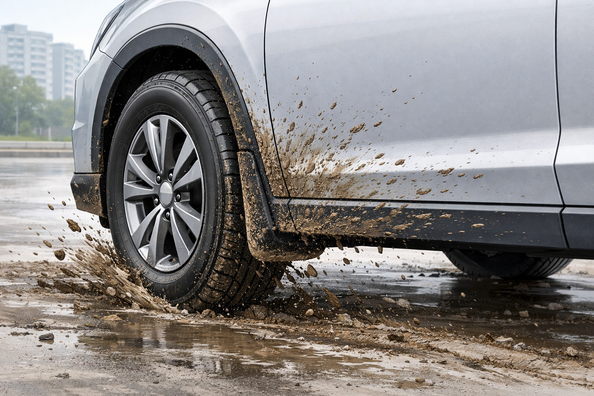
If dirt splashes onto the doors and arches even in the city, the problem is almost never the road itself, but how the wheel throws water and road slush in relation to the body. Most often, the culprit is a combination of a wider tire, an incorrect offset, spacers, short mud flaps, or damaged arch protection. On wet asphalt, that’s enough for the lower part of the doors and the sills to be dirty after just a few kilometers.
It’s not one accessory that works, but a chain of solutions: checking wheel fitment, the condition of the fender liners and drains, proper washing of the wheel wells and underbody, and only then choosing protection. If you skip the root cause and immediately buy the first kit you see, there won’t be less dirt—and sometimes you’ll even get rubbing on turns.
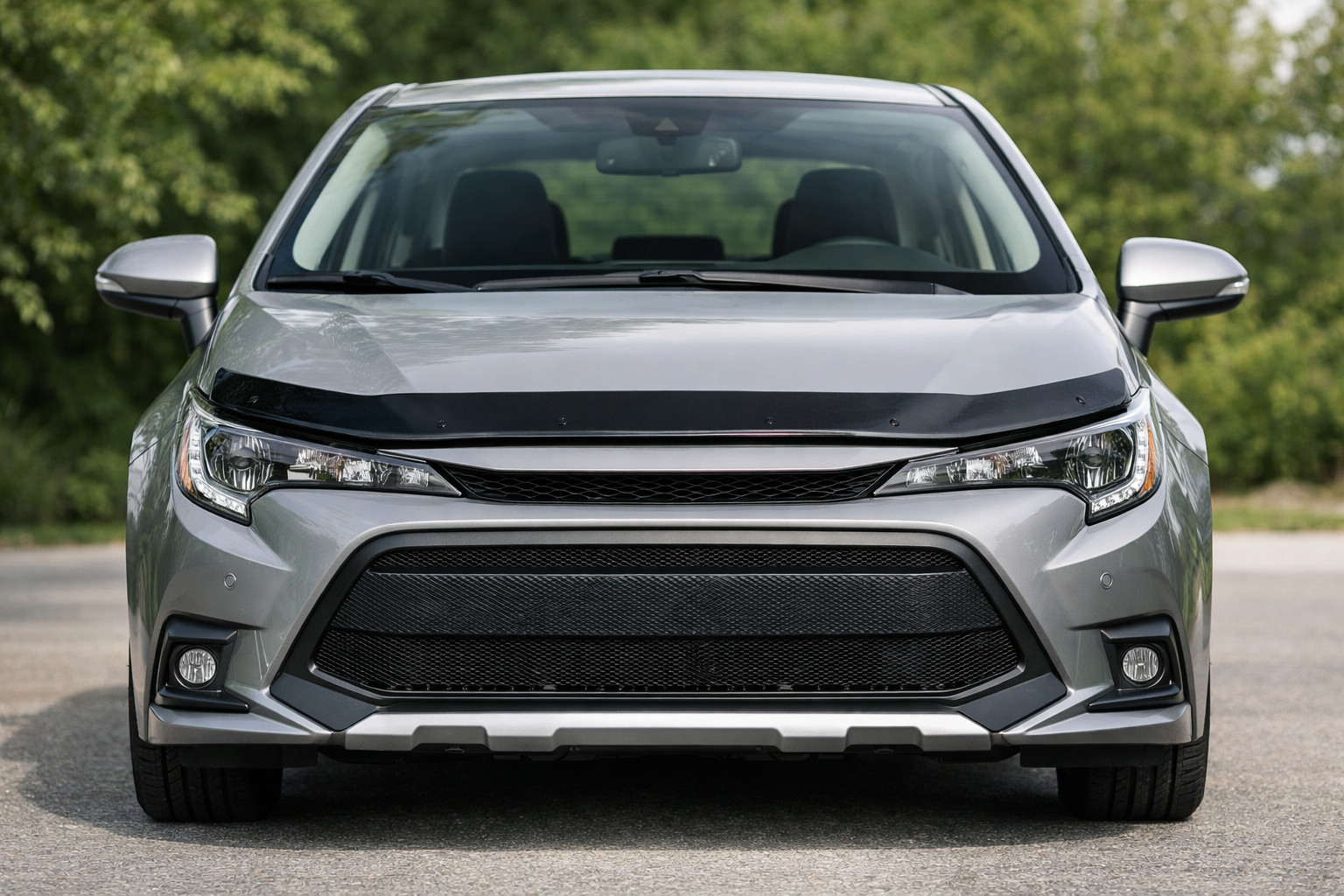
While driving, a wheel works like a pump: it picks up water, sand, and dirt from the road and throws them upward and backward. If the tire edge sits close to the outer line of the fender or even sticks out, the spray stream doesn’t go inside the arch—it goes straight onto the doors, sill, and rear part of the fender.
In the city this is easy to spot after rain, in winter, or on streets under repair where there’s a lot of fine dirt. Speed can be low, but a wet surface and fine suspension particles easily fly onto the side of the body, especially when the arch protection is short or has gaps.
DD Tuning expert comment: the most common mistake is installing longer mud flaps without checking whether the wheel sticks out beyond the body. If the tire is already pushed outward, the mud flap intercepts only part of the stream and may start rubbing on turns. Start with inspecting wheel fitment, clearances, and fender-liner mounting—not with a random purchase.
| Symptom | Likely cause | What to do |
|---|---|---|
| A stripe of dirt along the bottom of all doors | Short or missing mud flaps | Install a full-size set and make sure it sits close enough to the road without rubbing |
| After changing wheels, there’s noticeably more dirt | Wider tires, different offset, or spacers | Compare fitment to stock; if possible remove spacers or return to the correct offset |
| Only one side of the car gets sprayed more | Alignment out of spec, different suspension height, or a skewed fender liner | Check geometry and inspect the arch specifically on the problem side |
| Wet dirt constantly sticks in the wheel well | Damaged fender liner or missing fasteners | Restore fasteners, replace the cracked part, thoroughly wash the wheel well |
| Dirt and moisture stay on the lower edge of the doors | Clogged drain holes | Clean the drains and regularly rinse the sills and lower part of the doors |
| Mud flap rubs when turning or under load | Wrong mud flap size or the wheel sits too far outward | Check clearance, choose a different set, or correct wheel fitment |
The best results come from full-size mud flaps that cover the stream trajectory at the lower part of the wheel. They won’t make the car spotless, but they noticeably reduce the amount of water, salty mist, and fine dirt on the doors and sills.
The second effective step is intact fender liners and tight arch protection. They prevent dirt from accumulating in cavities that later blow back onto the body. If a liner is cracked or pulling away from the body, even a good mud flap won’t fully solve the problem.
Third is proper wheel geometry. If the tire sits within the body line, splashes are easier to intercept. If the wheel is pushed outward, dirt will still find a way onto the doors. In salt season, regular washing of the wells and underbody at least once a month also helps: not just rinsing, but actually removing the built-up layer.
Frequent body washing alone doesn’t solve anything: you’re removing the consequence, not the cause. The same goes for wax or protective coatings—the body becomes easier to clean later, but the dirt doesn’t stop flying.
Short decorative mud flaps are also weak. They change the look, but the plume from the lower part of the tire often passes by. A simple rinse of the arch without removing packed dirt doesn’t give a stable result either: the wet layer quickly comes back.
Another common mistake is installing a universal kit without checking clearances. If the part is too long or shifted, it will start catching the wheel or reducing ground clearance, and the benefit will be less than expected.
If the car is on stock—or close to stock—fitment, and dirt mostly runs along the lower part of the doors, it makes sense to start with mud flaps. This is the first real barrier that intercepts the stream from the tire.
If there are gaps in the arch, broken fasteners, or stuck-on dirt constantly sitting behind the trim, you need fender liners or replacement of damaged parts. Here the accessory works not as decoration, but as restoring proper arch protection.
When the wheel slightly protrudes beyond the body and you don’t plan to change fitment, arch extensions can also make sense. But it’s a secondary solution: they don’t replace correct offset and won’t fix the situation if the tire is pushed out too far.
| Solution | When it works | When it’s not worth spending money |
|---|---|---|
| Full-size mud flaps | When the wheel is close to stock geometry and the main dirt comes from below onto the doors and sill | When the tire protrudes far beyond the body or there is constant rubbing on turns |
| Replacing fender liners and fasteners | When the arch has gaps, cracks, missing clips, and constantly collects wet dirt | When the liners are intact and the main issue is caused by incorrect wheel offset |
| Returning to correct offset or removing spacers | When contamination got sharply worse after changing wheels or tires | When wheel fitment didn’t change and the problem started due to missing arch protection |
| Arch extensions | When you need to slightly increase fender coverage with minor wheel protrusion | When the car is fully stock and the problem can be solved with mud flaps and fender liners |
| Regular washing of arches and underbody | When you need to reduce salt, moisture, and dirt buildup, especially in winter | When it’s the only action while wheel fitment is clearly incorrect |
| Wax or another body coating | When you want dirt to wash off more easily | When the goal is specifically to reduce the amount of spray on the doors |
From a customer’s experience: an estate owner complained that after every rain, mud covered the rear doors and sills, even though he drives almost only in the city. During inspection it turned out that after a wheel change, spacers were installed, and one rear fender liner was cracked and pulling away from the arch. After restoring proper wheel fitment, replacing the liner, and installing longer mud flaps, dirt remained only on the lower edge of the sill rather than across the entire door.
If dirt splashes onto the doors and arches even in the city, don’t look for a single cause—look for a combination of factors: wheel fitment, the condition of the arch, drains, and the presence of a proper barrier behind the wheel. In most cases, this sequence works: check geometry, clean the wells and drains, restore fender liners, and only then choose mud flaps or additional arch coverage.
The key is not to waste money on random accessories if the wheel already sits outside the body line or the arch has gaps. This material is based on real selection experience, hands-on practice, and real usage scenarios—so the conclusion is simple: what works best isn’t a “magic” part, but a properly assembled combination of protection and correct wheel fitment.
Shipping to EU
Wholesale and retail
Own warehouse
Опис продукту
Подарунки не надаються при оформленні покупки у кредит під 0,01% або при покупці частинами.