10.01.2026
1866
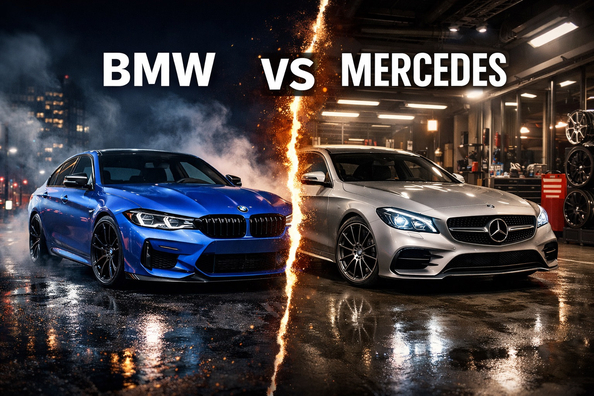

The rivalry between BMW vs Mercedes has lasted for decades, and tuning enthusiasts feel it especially strongly. Both German brands offer powerful platforms for modifications and have dedicated communities of enthusiasts. This article provides a comparison of BMW and Mercedes using new models relevant to the European and Ukrainian markets. We will look at design and visual tuning options, dynamics and engine characteristics, reliability and maintenance (including spare parts prices), comfort and interior, electronics and driver assistance systems, as well as the market value of these cars in Europe and Ukraine. The result will be an objective review of which car is better suited as a car for tuning – BMW or Mercedes, from the perspective of modification fans.
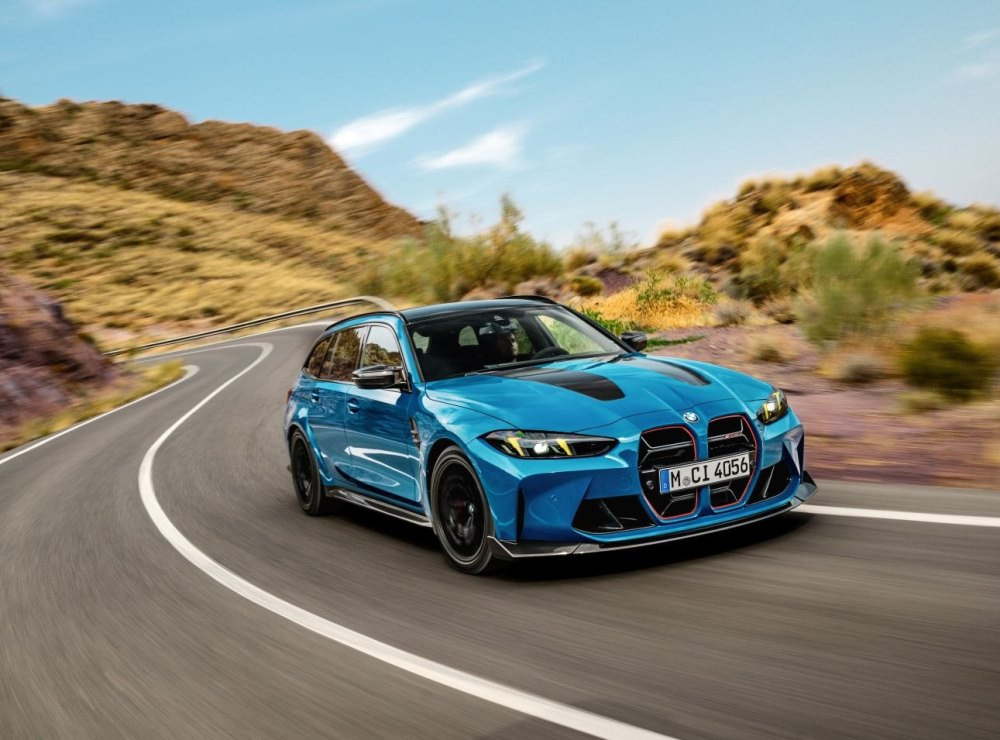
Car design defines its character and affects how easily and effectively visual tuning can be done. BMW traditionally focuses on a sporty spirit and dynamics – this is reflected in aggressive body lines, bold proportions, and the signature kidney grille. Modern BMW models have a distinctive appearance that attracts young tuning enthusiasts: for example, M Performance extended bumpers, carbon spoilers, or diffusers are easy to install and complement the aggressive style. Visual BMW tuning is popular thanks to the wide range of available body kits and components – from legendary ateliers like AC Schnitzer and Alpina to numerous mass accessory manufacturers. New BMWs (such as the latest 3 Series G20 or 4 Series G22 coupe) already offer M Performance Parts packages from the factory for personalization: black grilles, splitters, mirror caps, etc., emphasizing the car’s sporty look.
Mercedes-Benz, in turn, emphasizes elegance and luxury, following the “Sensual Purity” design philosophy. Mercedes models stand out with smooth lines, chrome accents, and refined proportions that radiate status. For tuning fans, this means a slightly different approach: Mercedes tuning often aims to preserve the premium image while adding individuality. Popular visual modifications include stylish AMG or Brabus body kits, replacing the grille with a Panamericana-style one (like on the AMG GT), installing larger forged wheels, and lowering the suspension to highlight the solid silhouette. The design of new Mercedes models (for example, C-Class W206 or E-Class W214) is already very expressive: matrix LED headlights, striking taillights, and the signature “diamond” grille pattern make the car recognizable. Therefore, even minimal tuning – such as a carbon trunk spoiler or diffuser – looks organic and emphasizes restrained sportiness without compromising Mercedes’ overall luxury style.
Interior design is also important for fans, as the cabin can be personalized. In this aspect, the brands differ: the BMW interior is driver-oriented and sporty. In new BMW models, the dashboard is angled toward the driver, modern materials are used, but the design remains concise and technical. Tuning enthusiasts often add sporty accents to the BMW interior – for example, an Alcantara M Performance steering wheel, Recaro seats, or additional gauges – which fits well with the restrained premium style of the Bavarian brand. Meanwhile, the Mercedes interior embodies luxury and technology. New models are equipped with large touchscreens (for instance, the latest E-Class W214 has three screens on the front panel), luxurious 64-color Ambient Lighting, and decorative inserts in “wood” or brushed aluminum. Mercedes interior tuning mostly involves customizing materials (reupholstering in unique leather colors, installing hi-end audio systems like Burmester) and adding exclusive details while maintaining a comfortable atmosphere. Thus, both brands’ designs allow room for creativity: BMW suits an aggressive “sport” style, while Mercedes fits a stylish “luxury” tuning concept.
Mercedes accessories, exterior and interior tuning – always in stock in our tuning store.
For tuning fans, a car’s dynamic characteristics are crucial. BMW has historically been known as a “driver’s car” – its vehicles offer sharp steering, refined suspension, and an engaging road feel. New BMW models maintain this philosophy: even the business sedan 5 Series G30/G60 offers balanced handling, near 50:50 weight distribution, and rear-wheel drive in most versions (or optional xDrive). This means BMW dynamics are more driver-focused: the car responds sensitively to driver input and corners predictably with minimal body roll. Mercedes-Benz, on the other hand, is famous for a smoother ride and high-speed confidence – Mercedes engineers tune the chassis more for comfortable stability, though modern models are no less capable in handling. The latest C-Class and E-Class generations use adaptive suspension (optional AIRMATIC or electronically controlled dampers), allowing Mercedes to switch between comfortable cruising and sporty modes.
Engines and power. Both brands keep up with the times, offering high-tech powertrains. In new BMW and Mercedes models, the main lineup consists of turbocharged 2.0L 4-cylinder engines, often with a 48V mild hybrid system. For tuning enthusiasts, such engines are a starting point: stock 180–258 hp can be increased with ECU remapping, sports exhaust, or intake upgrades. For example, the BMW 330i (2.0 TwinPower Turbo, ~258 hp) has a strong margin of safety: chip tuning can raise power by 20–25% without harming reliability. Similarly, the Mercedes C300 (2.0 Turbo, ~258 hp) responds well to software tuning, though due to different injection and compression settings, the gain may be slightly smaller than BMW’s. Higher trims of both brands feature inline 6-cylinder turbo engines (BMW’s famous B58 3.0L, Mercedes’ new M256 3.0L). These engines produce ~340–380 hp from the factory (e.g., BMW M340i xDrive ~374 hp, Mercedes E 450 ~367 hp), and their tuning potential is even higher: additional boost, larger turbochargers, or remapping can push output to 450–500 hp without major modifications. The flagship versions (BMW M and Mercedes-AMG) are true road-going race cars: **BMW M3/M5** and **Mercedes-AMG C63/E63** come factory-tuned for 500–600+ hp, with reinforced components (pistons, transmissions) optimized for track use. Tuning fans appreciate these versions because even they can be “spiced up” – projects with M5 F90 or E63 S W213 reaching 700+ hp using hybrid turbos and remaps are not uncommon.
Despite similar technologies, tuning results differ: BMWs are usually lighter and sharper in acceleration, while Mercedes cars are smoother yet incredibly fast. To illustrate, let’s compare mid-size sports sedans:
| Parameter | BMW 3 Series (G20) 330i | Mercedes-Benz C-Class (W206) C300 |
|---|---|---|
| Engine (type, volume) | Petrol 2.0L Turbo (inline 4) | Petrol 2.0L Turbo (inline 4) |
| Power, hp | 258 @ 5000 rpm | 258 @ 5800 rpm |
| Torque, Nm | 400 @ 1550–4400 rpm | 370 @ 1800–4000 rpm |
| 0–100 km/h | ~5.5 s | ~6.0 s |
| Drive | RWD (xDrive optional) | RWD (4Matic optional) |
| Transmission | 8-speed automatic (Steptronic) | 9-speed automatic (9G-Tronic) |
| Average fuel consumption | ~7.0 L/100 km (petrol) | ~7.2 L/100 km (petrol, mild hybrid) |
| Starting price (Germany) | ~€45,000 | ~€47,000 |
| Starting price (Ukraine) | ≈1.65 million UAH (≈€50k) | ≈1.85 million UAH (≈€56k) |
| Approx. maintenance cost over 5 years* | ~€8,000 | ~€7,200 |
*Note: figures are approximate for comparison (with average mileage); actual costs depend on vehicle condition and usage.
As we can see, both sports sedans have similar power, but the BMW accelerates slightly faster to 100 km/h (confirmed by tests – Auto Bild recorded 5.5 s for the BMW 330i vs 6.0 s for the Mercedes C300). This is due to higher torque and more aggressive gearbox tuning in the BMW. Thus, for those who value pure dynamics and acceleration, the **BMW 3 Series** offers a slightly more driver-focused experience. Meanwhile, the **Mercedes C-Class** delivers smoother power delivery – acceleration is softer but more predictable, which many drivers appreciate. Both cars are available with rear- or all-wheel drive, which is important for tuning: AWD versions (BMW xDrive, Mercedes 4Matic) grip better and accelerate more effectively after power upgrades.
The same applies to the business class. The new BMW 5 Series (G60) and Mercedes-Benz E-Class (W214) in base versions have similar 2.0L engines (~190–204 hp) and nearly identical 0–100 km/h times (~7.5 s). The difference lies in feel: the BMW 520i is more responsive at low speeds, with a sharp throttle response, while the Mercedes E 200 delivers power very smoothly thanks to its 48V starter-generator that fills turbo lag. In higher trims (e.g., 540i vs E 450), the comparison again shows parity: both have ~3.0L inline sixes around 340–380 hp, 0–100 km/h in about 5 seconds, and a top speed limited to 250 km/h. So, by “passport” specs, neither BMW nor Mercedes has a clear advantage – the tuning fan’s choice depends on which power delivery style they prefer. Some tuners note that modern BMW engines handle extreme remaps slightly better (for example, the stock fuel pump and turbo in the B58 can safely add +80 hp), while Mercedes engines are more conservative (the M256 gains less without component upgrades). Still, with proper tuning, both brands achieve excellent engine tuning results.
For any car enthusiast, especially those planning serious tuning, vehicle reliability and maintenance cost are critical. Increased load after tuning requires durability. Both BMW and Mercedes are premium brands known for build quality and longevity. However, there are nuances. Historically, Mercedes-Benz had a slight advantage in reliability ratings: its cars (especially business and luxury classes) often showed better component durability. For example, the **Mercedes E-Class** has often been called “the most reliable luxury sedan” – these cars can run 300–500k km without major repairs, and many E-Klasse taxis still operate across Europe (the best proof of endurance). **BMW** also builds strong cars, but in the past had some missteps: models from the late 2000s (E65 7 Series, E60 M5, early X5 E53) gained a reputation for electronic and mechanical issues within the first 150k km. Owners faced oil leaks and failures of complex systems (active stabilizers, air suspension) more often than Mercedes owners of the same class. However, modern BMW generations have improved significantly – according to a 2022 US reliability ranking, BMW rose to 3rd place (on par with Toyota!), while Mercedes dropped lower. Experts explain that BMW’s leap came from successful new models (3 and 4 Series received great reviews), while Mercedes suffered from electronic glitches – multimedia systems occasionally froze or failed, affecting reliability stats. Thus, today both brands are nearly equal in dependability, and much depends on the specific model and maintenance.
Warranty and early ownership. Both BMW and Mercedes offer favorable warranty terms in Europe – usually 2 years with unlimited mileage (in Ukraine also 2 years, sometimes +1 year for an extra fee). The first 3–5 years of ownership for both brands usually pass without major expenses: scheduled maintenance costs are similar, and serious failures are rare. German studies show that during the first 6 years, BMW and Mercedes maintenance costs are nearly identical (for comparable models). Both brands ensure high durability and minimal issues during this period. Differences appear after 100–150k km: Mercedes’ official service performs extended diagnostics at each visit, proactively replacing minor worn parts – as a result, Mercedes cars break down less often between services. BMW’s official service follows the CBS (Condition Based Service) concept – only basic maintenance (oil, filters) until the car itself signals a problem. This reduces immediate service costs but may leave hidden issues undetected, appearing later. Consequently, at higher mileage, BMW may show slightly more failures if not carefully maintained.
Component durability. With proper care, both brands’ engines can last very long. There are known cases of Mercedes petrol engines (especially inline sixes and old V8s) running up to 1 million km before overhaul – confirmed by service records. BMW’s inline sixes (M54, N52 series) were also famous for 300–400k km without rebuilds. However, modern complex turbocharged engines with direct injection and electronics require careful treatment. Regular oil changes, quality fuel, and proper cooldown after spirited driving are essential for both tuned BMWs and tuned Mercedes cars.
Spare parts and repair costs. Maintenance cost is a sensitive topic for premium car owners. It’s often said Mercedes is more expensive to repair than BMW, but it depends on the part. Experts note that some Mercedes jobs are actually cheaper: for instance, timing chain replacement on a Mercedes-Benz costs about 1.5 times less than on a BMW (BMW petrol engines are more complex in this area). Conversely, clutches (for manual models) are about 20% cheaper for BMW than Mercedes. Overall, market analysts note that Mercedes maintenance is slightly more cost-effective – roughly 10% cheaper annually than BMW maintenance. The difference is small but may matter for tuning fans, as high-performance versions require more frequent replacement of consumables (brake pads, differential oil, etc.). Both brands have extensive dealer and service networks across Europe; in Ukraine, official service is also available, though labor rates may be higher due to market specifics.
In summary, in terms of reliability and durability, BMW and Mercedes show very high levels. Mercedes historically led in longevity (hence the phrase “a million-mile Mercedes”), but modern BMWs have nearly caught up, according to owner feedback and independent ratings. For tuning fans, the key is proper maintenance – both a “charged” BMW and a “boosted” Mercedes will reward you with stable performance.
Although driving dynamics and speed are priorities for tuning enthusiasts, comfort level and interior equipment also matter, especially for daily use. When it comes to comfort, Mercedes is often synonymous with luxurious smoothness. Modern Mercedes-Benz cars are indeed tuned for maximum ride comfort: for example, the E-Class offers optional AIRMATIC air suspension that “levels” the road, creating a “magic carpet” effect. Even compact C-Class models feature variable damping suspension – quite compliant in standard mode. As a result, during daily city driving or long trips, Mercedes provides slightly better noise and vibration isolation: the cabin is quieter, and bumps are less noticeable. Auto Bild tests comparing the 3 Series and C-Class noted that “on rough asphalt, the C300 suspension works more comfortably and quietly, while the BMW 330i (with M package) feels firmer over bumps.” This isn’t a flaw but a tuning choice – BMW’s sport package uses stiffer springs for better handling, affecting comfort.
Seating and ergonomics. In BMWs, the driver’s seating position is traditionally lower and more “embracing”: seats with pronounced side bolsters, a steering column that extends far – all designed to make the driver feel “one with the car.” On long trips, this may feel less relaxed, but for active driving, it’s a big plus. Mercedes offers a different approach: E-Class seats are wider, softer, with massage and memory functions – designed for relaxed cruising. While AMG versions have sporty bucket seats, standard models focus on comfort. Ergonomics are excellent in both: BMW and Mercedes have refined control layouts over the years. However, styles differ: BMW favors minimalism and driver focus (new models feature the curved BMW Curved Display angled toward the driver), while Mercedes emphasizes aesthetics (MBUX Hyperscreen in flagships, turbine-style vents, ambient lighting).
Cabin space and practicality. Both manufacturers pay attention to passenger space. The current 5 Series and E-Class offer ample rear legroom for adults, with trunks around 530–540 L. In the 3 Series vs C-Class segment, it’s also a tie: both have ~2850 mm wheelbases, so rear space is similar (critics note the BMW 3 has a slightly lower rear seat, while the Mercedes C has a narrower door opening; differences are minor). Thus, in terms of space and daily usability, neither BMW nor Mercedes has an edge – the choice depends on personal comfort preferences.
Material quality and finish. Modern premium cars use equally high-quality materials: genuine leather, wood inserts, metal handles – all present in both BMW and Mercedes in respective trims. But the sense of luxury differs. **Mercedes-Benz** appeals to those who prefer “classic” luxury: interiors feature decorative elements, inlays, and soft lines. For example, the S-Class is known for its lounge-like interior – smooth panels, minimal sharp edges, warm lighting. **BMW** follows a more technical style: cooler lighting tones, sharp lines, less decorative “shine,” but more driver-oriented ergonomics (even in the 7 Series, the central screen and dashboard are angled toward the driver). In conclusion, regarding comfort and interior in the tuning context, Mercedes provides an excellent base for creating a “VIP lounge” with maximum comfort, while BMW is ideal for building a “pilot’s cockpit” focused on driving. Each fan chooses what suits their taste.
If you’re interested in BMW accessories – for interior or exterior – we always have them in stock.
Modern cars are packed with electronic aids, and both BMW and Mercedes lead in implementing such technologies. Infotainment and connectivity: BMW’s iDrive and Mercedes’ MBUX represent two approaches to multimedia. The latest iDrive (7 and 8) offers an intuitive interface, voice control (“Hey, BMW…”) and wireless Apple CarPlay/Android Auto. New BMWs feature a large curved display combining the instrument cluster and central screen for a panoramic effect. Mercedes keeps pace: its MBUX system is renowned for intuitive operation and luxurious graphics, and the voice assistant (“Hey, Mercedes”) understands natural speech commands. The 2024 E-Class goes even further – integrating apps like Zoom, TikTok, and even allowing the passenger to play Angry Birds on a separate screen! This shows Mercedes’ focus on making the car a digital entertainment and work space. BMW, meanwhile, focuses more on driving integration: sports models feature a head-up display, M Mode for minimal distraction, and even an M Laptimer for track-day enthusiasts.
Driver assistance systems (ADAS). Both brands equip their new models with a full suite of assistants: adaptive cruise control with Stop&Go (maintains distance in traffic, including full stop and go), lane-keeping assist (actively steers to stay within lines), and automatic emergency braking for vehicles or pedestrians. For example, the **BMW 5 Series G60** with Driving Assistant Professional can semi-autonomously drive in traffic (Level 2 autonomy): maintaining lane, throttle, and braking while the driver keeps hands on the wheel. The **Mercedes E-Class W214** offers similar features in the Intelligent Drive package, including semi-automatic lane change – the driver activates the turn signal, and the car changes lanes if clear. Also noteworthy is the Night Vision system in Mercedes S-Class or BMW 7 Series – these flagships “see” in the dark using thermal imaging. For tuning fans, electronics aren’t the main priority, but they enhance safety at higher speeds. According to **EuroNCAP** crash tests, new BMW and Mercedes models consistently earn 5 stars, largely thanks to effective electronic assistants preventing accidents.
Electronics reliability. High tech also has a downside – complex systems can fail. The 2022 reliability study showed Mercedes recently had more electronic issues (especially with infotainment). BMW’s early iDrive generations were once criticized for complexity, but now operate very reliably. Therefore, when choosing a car for a tuning project, note: the more “tech” inside, the more carefully it must be configured after modifications. For example, recoding modules after installing non-standard parts can be trickier in Mercedes due to its integrated architecture. BMW tuners often note that BMWs are easier to reprogram (e.g., disabling electronic “overlays” after exhaust or brake upgrades). Still, both brands are so advanced today that serious electronic tuning should only be done by experienced specialists with proper equipment.
The final comparison aspect is market value and ownership economics. New BMW and Mercedes cars are similarly priced within the same class, though details vary by market. In Europe (e.g., Germany), base prices are close: the compact **BMW 3 Series** starts around €42–45k, and the **Mercedes-Benz C-Class** around €45–47k (Mercedes may be slightly pricier due to richer standard equipment). In the business segment, the **BMW 5 Series** (G60) starts around €55–60k, while the **Mercedes E-Class** (W214) starts around €60–62k. Thus, the price difference in Europe is small, depending more on dealer offers or options. Both brands are positioned as premium, hence the similar pricing.
Prices in Ukraine. In Ukraine, new BMW and Mercedes cars cost significantly more due to import duties and taxes. For example, the official starting price of the **BMW 520i** (190 hp, petrol) is about 1.77 million UAH (~$48k), while the **Mercedes E 200** starts from ~2.72 million UAH (~$72k)*. A similar pattern applies to other models: the difference can reach 30–50% in favor of BMW, though trim levels matter – Mercedes cars are often imported in richer specs. For instance, the new **Mercedes C-Class** in Ukraine was offered as C 200 4Matic from ~1.5–1.6 million UAH, while the **BMW 320i** could be bought from ~1.3–1.4 million UAH. Again, pricing depends on supply and exchange rates. Notably, in recent years, imported used cars from the US and Europe have become popular in Ukraine – here, BMW vs Mercedes prices depend on condition and year rather than brand. Overall, both brands hold value well on the used market: premium German cars remain in demand. Statistics show that 3–5-year-old **BMW** and **Mercedes** lose about 40–50% of their original value – their depreciation is comparable and typical for this class.
*Prices are based on 2024 data for the Ukrainian market and may change over time.
Ownership cost and resale prospects. If you plan to keep the car long-term or invest in tuning, consider total ownership costs. As mentioned, Mercedes maintenance is slightly cheaper (~10%) in the medium term, offering some savings. On the other hand, BMW sometimes offers service packages or extended warranties that offset this (in Europe, for example, you can buy a 3–5-year Service Inclusive package and forget about maintenance). Regarding fuel efficiency, both brands’ modern engines are very efficient: around 7–8 L/100 km for 2.0L versions and 8–10 L/100 km for 3.0L ones. Mercedes may have a slight edge due to wider hybridization – nearly all new models feature a starter-generator saving fuel in traffic. But BMW is also electrifying its lineup (hybrid 330e, 530e, and fully electric i4, i5 alongside regular versions). Thus, fuel consumption differences are minimal and depend more on driving style.
Also worth mentioning is used car market liquidity. In Ukraine, where purchasing power is lower than in Western Europe, powerful used models at reasonable prices are popular. Traditionally, used BMWs have slightly higher demand among younger buyers – perhaps due to their “youthful,” sporty image. Mercedes is often chosen by older drivers or for executive use, so these cars are valued among that audience. Overall, both BMW and Mercedes sell easily in Europe and Ukraine – the key is a clean history and no major accidents. Tuned cars can either attract or deter buyers: some appreciate quality modifications, others fear potential wear. Therefore, if you’re a tuning fan planning resale, keep all stock parts and consider selling the car in stock condition, offering tuning parts separately. This increases your chances of a quick sale for both BMW and Mercedes.
BMW vs Mercedes – an eternal question with no simple answer. Our comparison shows that both brands offer excellent tuning bases but with different characters. **BMW** suits those who value sharp sporty driving, aggressive design, and are willing to sacrifice some comfort for handling. **Mercedes-Benz** appeals to those who want to combine high speed and power with luxury and smoothness – offering a more “mature” balance of comfort and dynamics. A tuning fan will enjoy modifying both BMW and Mercedes: the former has a huge range of sporty accessories and technical upgrades, the latter offers no fewer premium tuning solutions from world-famous ateliers.
In terms of engines and performance, new models go head-to-head; maintenance costs are also close (though Mercedes historically had reliability advantages, BMW has caught up in recent years). Comfort and technology are a matter of taste: some will love Mercedes’ futuristic, illuminated cabin, others prefer BMW’s focused “cockpit” feel. The best car for tuning should be chosen with both heart and reason: assess your budget, set priorities (show car or track car?), and make your choice confidently. Both BMW and Mercedes, in skilled hands, become unique machines delivering incredible emotions. Regardless of your camp, the true enthusiast wins – whether it’s the “adrenaline aspirin under the BMW badge” or the “comfortable jet cruiser Mercedes” conquering the roads. In any case, with German premium cars, you’re playing in the top league of tuning, where every winner is you behind the wheel of your own creation.
Shipping to EU
Wholesale and retail
Own warehouse
Опис продукту
Подарунки не надаються при оформленні покупки у кредит під 0,01% або при покупці частинами.