
13.06.2026
302
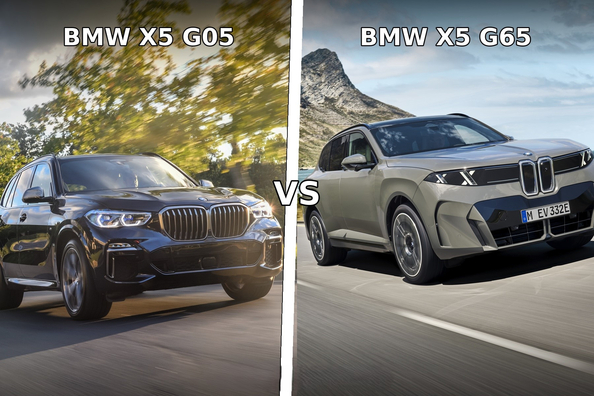

The choice between the BMW X5 G65 and G05 comes down to a simple question: do you want a newer, more comfortable and more technologically complex X5, or a proven, well-understood vehicle without the risk of being an early owner. The G65 promises more quietness, a softer ride and a wider range of powertrains, including an electric one. The G05, on the other hand, is strong because its weak points are already known, and the costs and nuances of ownership are easier to calculate.
The key is not to reduce the choice to horsepower figures. In real life, what matters more is road noise on your roads, the complexity of retrofits, component longevity, the practicality of a specific version, and how much you’re willing to pay not only upfront, but also after the purchase.
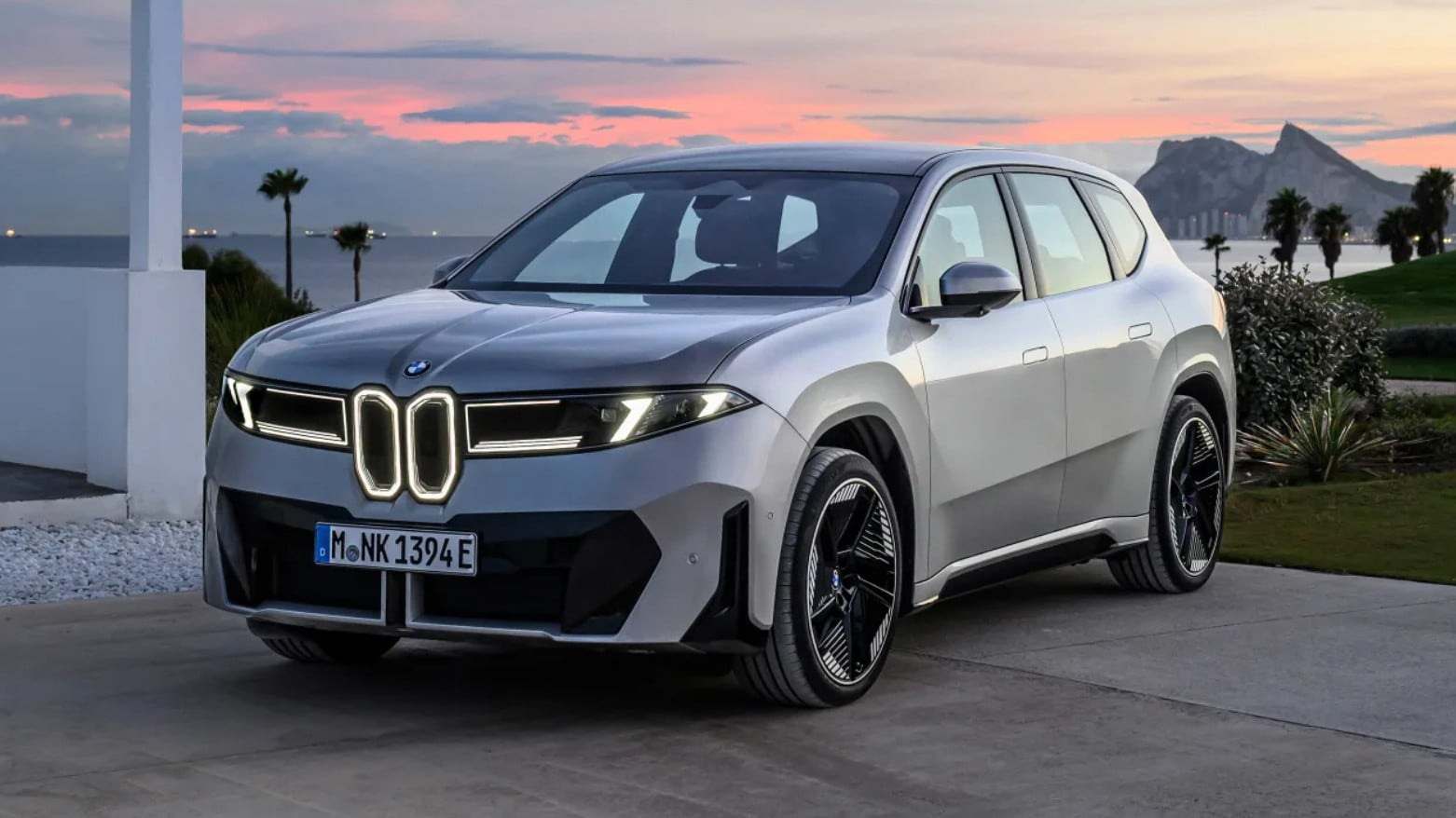
The G65 is not a facelift of the G05, but a different generation of the X5. It has a longer wheelbase, newer electronics, a different cabin interface and a broader lineup logic: from regular mild hybrids to a plug-in hybrid and an all-electric version. On paper, this looks like a step forward not so much in dynamics as in comfort, the digital side, and future headroom.
The G05 is already a mature vehicle. It’s not necessarily better in feel, but it is better in predictability. There are real owner reviews, typical issues are understood, there’s a secondary market, and there’s already an established set of solutions for maintenance and retrofitting.
So the essence of the choice is this: G65 is for those who want the freshest X5 and are ready to pay for novelty; G05 is for those who want a rational balance of status, comfort and manageable risks.
Separately, it’s worth looking at the powertrain. In the X5, power figures don’t always directly explain whether the car will be better in real life: a newer and more powerful version may not deliver a noticeable advantage in everyday driving, but it will add complexity and cost.
| Option | Strengths | Weaknesses | Who it’s for |
|---|---|---|---|
| BMW X5 G65 | Newer generation, longer wheelbase, more modern cabin, wider range of powertrains, stronger focus on comfort and quietness | No long-term reliability statistics, higher “first-wave” risk, higher entry price, fewer proven solutions for accessory installation | Those buying a new X5, wanting maximum tech and willing to live with a new model |
| BMW X5 G05 | Mature platform, known weak points, simpler interface, more predictable ownership, better base for choosing and installing add-ons | Older electronics, less novelty factor, typical issues are already known, comfort and noise depend more on wheel configuration | Those who want a rational X5 without experiments and with more transparent costs |
The G65’s strength isn’t brochure numbers, but the overall architecture. The wheelbase has grown by about 61 mm, the cabin has fully moved to a new control logic, and the chassis—based on first impressions—feels calmer over undulations and more composed on the highway. If you drive long distances, this is what you’ll notice first.
In terms of noise, the G65 looks more promising, but it’s easy to choose the wrong spec. The base concept is more comfort-oriented, yet large wheels, low-profile tires and sport tuning can take away part of the advantage. The same applies to accessory installation and retrofits: new sensors, different electronics and new body geometry mean you’ll need to check parts compatibility more carefully at first.
For practicality, the G65 needs to be evaluated by version. The base 40 xDrive looks like the most balanced. The 50e is interesting for strong torque and towing potential, but the hybrid packaging eats into usable volume. The electric iX5 only makes sense if you already have a solid charging routine; otherwise its advantages will remain on paper.
The G05 wins not with novelty, but with maturity. It’s already clear what to look at when buying: transfer case condition, drains, seals, A/C operation, air suspension, unusual wheel and wind noise. That doesn’t mean the car is problematic; it means the risks are known and can be checked before purchase, not after.
In daily use, the G05 is simply easier for many. Its interface is less overloaded with new digital logic, and it feels more familiar. The 40i remains the smartest option if you want an all-around X5 without extra complexity. The 50e makes sense for city use and short routes with regular charging, and the M60i is for those who value эмоції, but not necessarily rationality.
Another plus for the G05 is retrofit availability. There are already many ready-made solutions for it, and installation is more predictable in most cases: fewer unknowns on compatibility, more proven options, and a clearer logic when choosing practical upgrades.
If you’re buying new, want quietness and a softer ride, and don’t plan to save on options, the G65 looks stronger. It’s the choice for someone who wants the new generation for the long haul and is comfortable with the fact that the first years will still be building model statistics.
If you approach ownership coldly—considering service, resale liquidity, the used market, and already known weak points—the G05 is more logical. It doesn’t promise a revolution, but it less often puts the owner in a situation where everything has to be learned from scratch.
For hybrids and special scenarios, the picture is more nuanced. If towing matters, the new G65 50e looks strong. But if what matters more is not novelty, but a well-understood operating pattern and fewer real-life questions, the G05 is often the safer choice. And if you specifically need an electric X5, the G65 simply has no series alternative.
| Scenario | What’s better to choose | Why |
|---|---|---|
| Buying a new car for 4–6 years | BMW X5 G65 | Newer platform, more modern electronics, better potential for comfort and future relevance |
| Rational purchase without the “beta test” effect | BMW X5 G05 | There are already real cases, known weak points, and a more transparent cost forecast |
| Long highway trips, priority on quietness and smoothness | BMW X5 G65 | The longer wheelbase and newer chassis should deliver a more noticeable advantage in cruising |
| City use, daily driving, easier acclimation | BMW X5 G05 | Less new digital logic, more familiar usage scenarios and ready-made retrofit solutions |
| Hybrid with a focus on towing | BMW X5 G65 50e | Strong towing potential, but you have to accept the cargo layout compromise |
| You specifically need an electric X5 | BMW X5 G65 iX5 | G05 didn’t have a series battery-electric version in this format |
Paying extra for the G65 makes sense when you consciously buy a new X5 as a technologically newer vehicle, not just “another X5.” Here you pay for a different interface level, a fresher architecture, potentially better comfort, and access to new powertrain scenarios. If you want to track the appearance of compatible solutions for the model, it makes sense to look at the G65 page.
If your budget is limited but you want maximum benefit for every hryvnia spent, it’s often smarter not to jump into the new generation, but to choose a well-specified G05 in the right configuration. There’s already a clear set of practical upgrades for it in the G05 catalog, and everyday items like rubber floor mats sometimes deliver more real value than paying extra just for the fact of novelty.
The most expensive option shouldn’t be chosen just for status. If you’re not ready for the entry price, new electronics and possible early-batch rough edges, the mature G05 doesn’t look “older”—it simply looks smarter.
The G65 is objectively more interesting as a new generation: it’s more modern, conceptually softer, and broader in powertrain options. But it’s a choice for those who are ready to accept the premium for novelty and the uncertainty of the early stage.
The G05 isn’t about a wow effect, but about common sense. If you need an X5 that’s already studied, with known weak points, and easier to choose, own and retrofit, it looks like the safer solution. The key takeaway: choose not a generation “in words,” but a specific usage scenario, wheels, powertrain version, and a level of risk you find acceptable.
| ✔ | BMW X5 G65 is a newer generation with a longer wheelbase and more modern electronics, which should deliver better comfort on long drives. The article also notes that it is quieter and softer in its concept. |
| ✔ | G65 has a wider range of powertrain versions, including a plug-in hybrid and an electric version. This gives more options for different scenarios if you specifically want a new X5. |
| ✔ | BMW X5 G05 is already well known to the market, so its typical weak points are clear and it is easier to estimate costs before purchase. This reduces the risk of unpleasant surprises after buying. |
| ✔ | For the G05, there are many ready-made retrofit solutions and accessories, and parts compatibility is usually more predictable. This is practical if additional options or simple maintenance are planned. |
| ✔ | G05 looks more rational on the used market: it is cheaper to buy and more predictable in post-purchase costs. For a buyer who keeps an eye on budget, this is a strong advantage. |
| ✘ | BMW X5 G65 does not yet have a long-term track record, so the risk of early minor flaws is higher. In practice, it is a purchase with less certain long-term reliability. |
| ✘ | The newer electronics and G65 design make it harder to choose and install accessories at the start. Parts compatibility has to be checked more carefully than with the G05. |
| ✘ | In hybrid versions of the G65, some practicality is lost because of the battery packaging and floor layout. As a result, the usable trunk volume can be noticeably smaller than in gasoline versions. |
| ✘ | G05 is an older generation and does not deliver the effect of novelty, while comfort and noise in it depend more strongly on wheels and tires. On large rims or runflat tires, the car can become stiffer and louder. |
Shipping to EU
Wholesale and retail
Own warehouse
Опис продукту
Подарунки не надаються при оформленні покупки у кредит під 0,01% або при покупці частинами.