
































































 Author: Radomskyi Maksym Vasyliovych
This upgrade plan is for those who often drive on highways, gravel roads, or broken asphalt and already see stones hitting the lower front end, the radiator area, and the oil pan. If you need not the “look of protection” but a real reduction in the risk of punctures or costly repairs, the order is simple: first impact protection from below, then grille protection, and only after that smaller add-ons.
The main mistake in this scenario is mixing up different jobs. A metal skid plate takes the hit from below and from the front, a mesh screens out small stones and debris, and mud flaps only reduce what gets thrown from the wheels. When people lump this into one purchase, the budget goes to the wrong place.
What this upgrade should actually accomplish
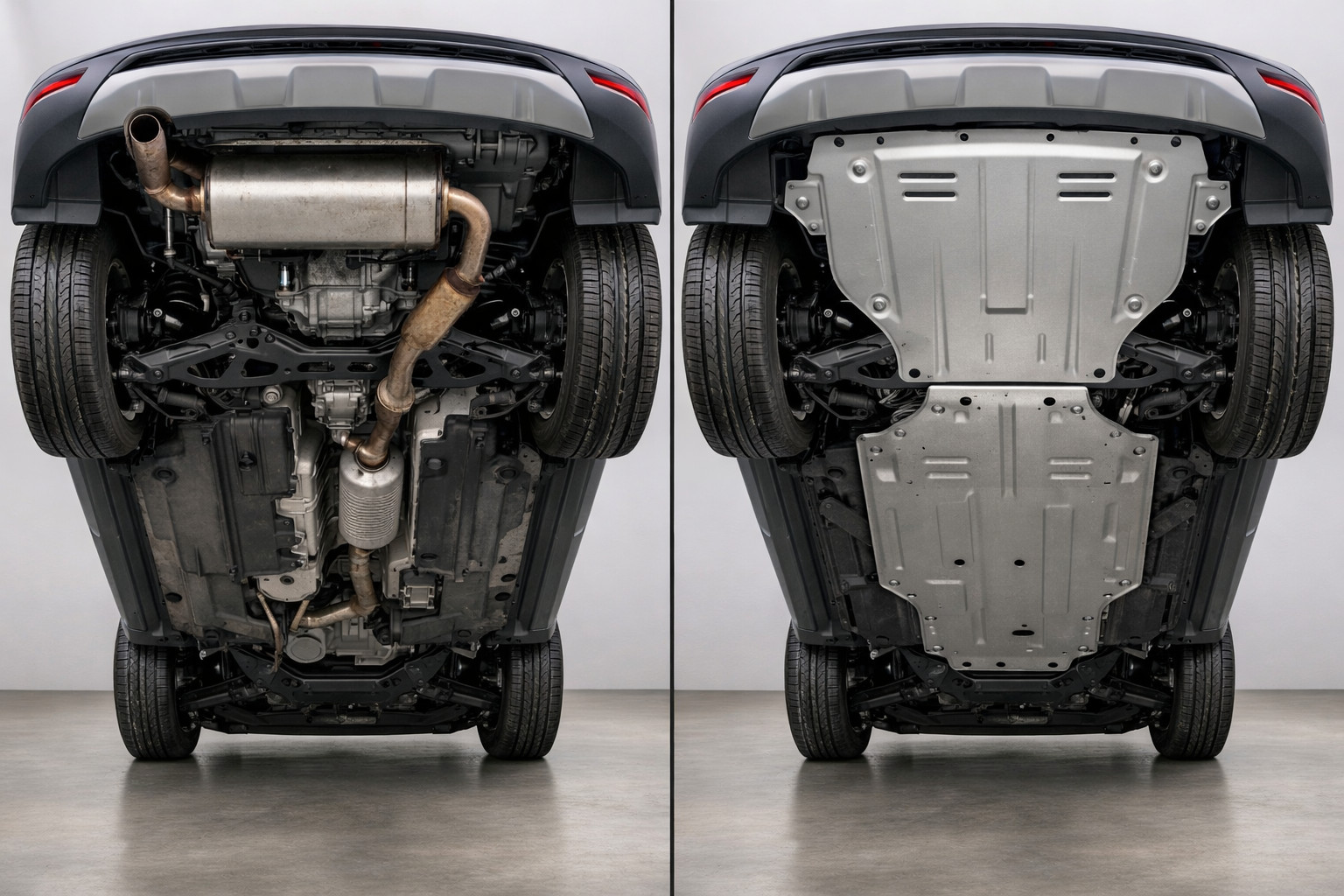
Here the upgrade should cover two vulnerable zones: the lower part of the front radiator assembly and the bottom of the engine bay, where the oil pan, the front crossmember, and the front transmission components can take a hit. If stones come from vehicles ahead, the front end suffers; if the car bottoms out on waves, potholes, or gravel, the underbody takes the damage.
For city driving with rare trips off asphalt, it’s enough to properly cover the front area. For frequent highway runs behind trucks or constant gravel roads, the priority rises: you need a vehicle-specific front protection piece, not a thin universal sheet. If your car already has a decent OEM undertray, sometimes it’s enough to reinforce only the front section and the grille.
What to upgrade first
The first item to install is a front engine/oil pan skid plate, preferably one that covers not only the pan but also the front crossmember and the lower front section. It’s the part that most often takes the hit that would otherwise reach the radiator from below or the crankcase. For your use case, this is more useful than starting with mud flaps or decorative trim.
Look not at loud names but at the design. For harsher conditions, a typical benchmark is a steel plate around 3 mm; a lighter option is thicker aluminum, about 6.35 mm. What matters is OEM mounting points without drilling, access to the oil drain and filter, and proper geometry so the protection doesn’t hang lower than necessary.
Upgrade: why it’s needed, who benefits (table)
| Upgrade | Why it’s needed | Who truly benefits |
|---|---|---|
| Front engine and oil pan skid plate | Takes impacts from stones from below, shields the pan, crossmember, and part of the front end | Those who drive highways, gravel, broken asphalt, or have low ground clearance |
| Lower radiator-area shield | Closes the lower sector in front of the radiator, where stones often fly from vehicles ahead | Cars with an open lower section under the bumper and a weak OEM plastic dust shield |
| Grille mesh with a not-too-fine cell size | Stops small stones and debris, but shouldn’t choke airflow | Those with a large grille area and frequent warm-season highway driving |
| Mud flaps | Reduce dirt, water, and small stones from your own wheels | Those who drive a lot on wet roads, gravel, or run wider tires |
| Full underbody protection kit | Adds protection for other components if impacts travel further along the underbody | Those who constantly drive bad roads, go to job sites, or truly hit the underside |
DD Tuning expert comment: most mistakes happen in two places—people buy a thin universal shield “to keep it cheaper,” or install an overly fine mesh and then wonder about overheating in hot weather. Another common mistake is looking only at metal thickness and not checking whether there’s service access without constant removal. If you already have impact marks, don’t look at ads—look at where they appear: the oil pan, the plastic under the radiator, or the grille itself.
What makes sense to add in the second stage
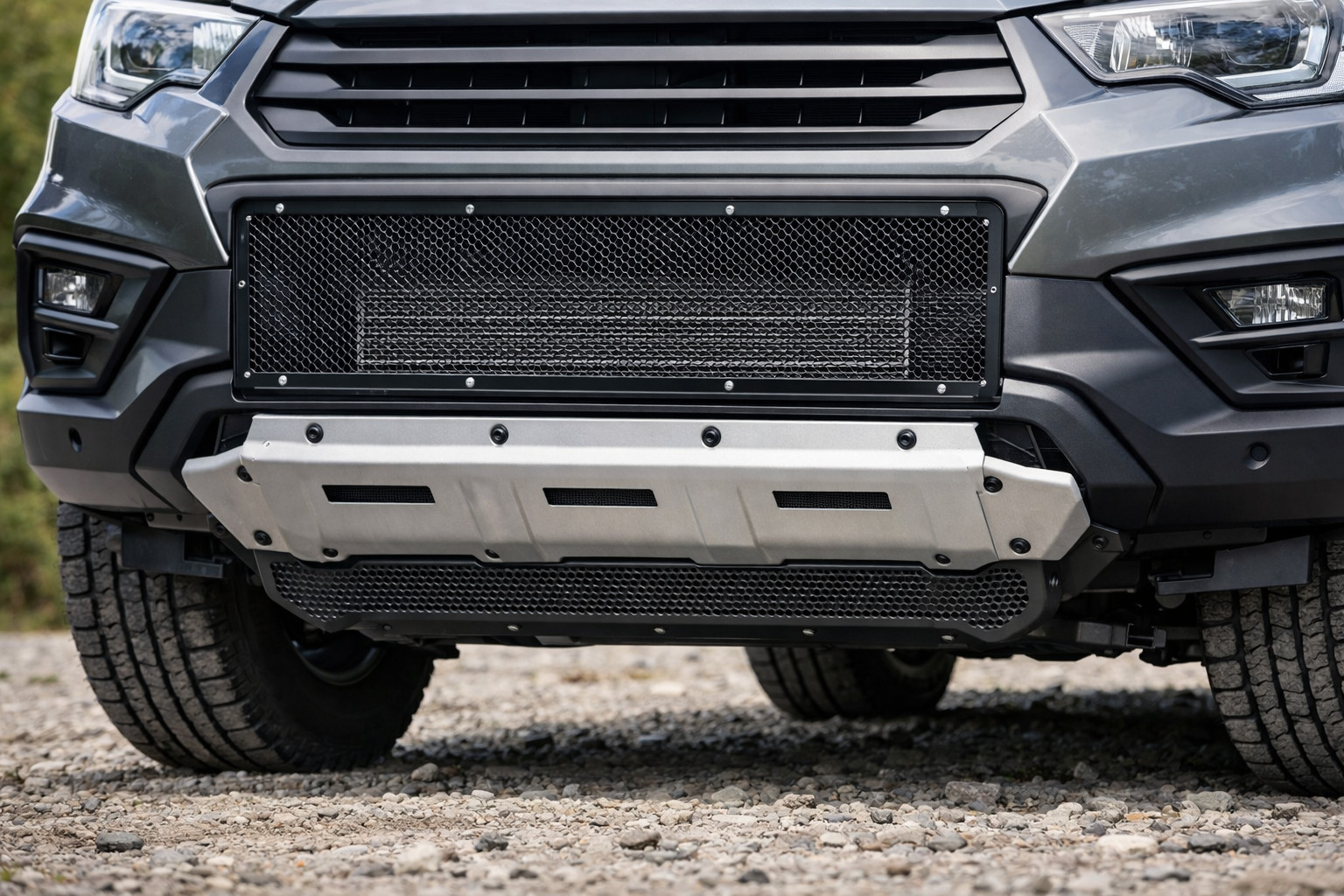
In the second stage, it’s logical to add mesh to the radiator grille. It addresses a different task: it won’t hold a hard impact like a plate, but it stops small stones that fly straight into the fins. For most road scenarios, the sensible compromise is a not-too-fine cell size; an overly dense mesh like 3.175 mm already noticeably hurts airflow, especially in heat, traffic jams, and with a loaded vehicle.
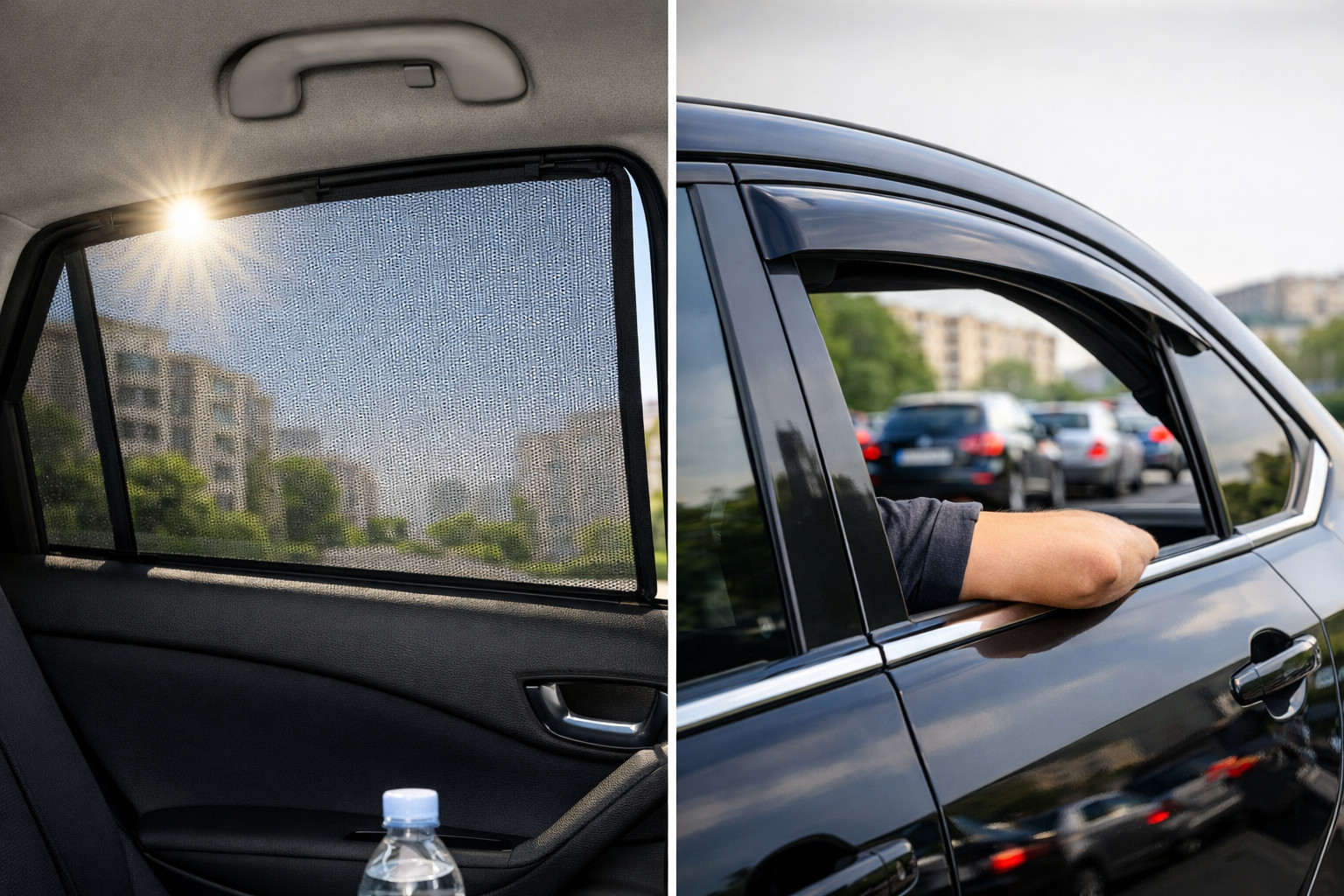
After that, you can install mud flaps. They really help if dirt and small gravel from your own wheels hit the rocker panels and lower body. But it’s important not to overestimate them: mud flaps don’t replace a metal plate where true impact protection is needed.
What’s more about comfort or looks
Painted or nicely perforated protection, logos on the metal, pricey “style” fasteners, oversized mud flaps—these are no longer about the main task. If stones are hitting the radiator and the bottom of the engine, how the plate looks solves nothing. What matters more is that it fits tight, doesn’t eat up ground clearance, and doesn’t interfere with service.
This also often includes “just in case” purchases: an expensive full package for components that don’t suffer in your driving pattern. For normal highway use and occasional gravel, protection for the tank, rear differential, or other far-underbody zones often doesn’t make a noticeable difference specifically against stones into the radiator and oil pan.
What people often buy for nothing
Most often, people waste money on thin decorative shields that only imitate protection, and on overly fine mesh that looks great in photos but works worse for cooling. Just as often, they overpay for a full underbody kit when the real issue is limited to the front area. Another bad purchase is a universal sheet without proper model fitment, which either hangs lower than it should or leaves critical spots exposed.
Separately, it’s worth mentioning mud flaps as a “cure-all.” They’re useful, but they won’t save the oil pan from an impact and they won’t cover the lower edge of the radiator the way a proper front shield does. If you have one budget, spending it on mud flaps first instead of a front plate is usually the wrong order.
What to install first, what to postpone, what’s optional (table)
| Scenario | What to install first | What can be postponed | What is not mandatory |
|---|---|---|---|
| City + highway | Front engine and oil pan skid plate | Grille mesh, if you often drive behind trucks | Full package for the entire underbody |
| Highway + gravel | Skid plate and closing off the lower front section | Mud flaps and mesh with the correct cell size | Expensive kit for rear components if there are no impacts there |
| Bad roads every day | Vehicle-specific front kit on OEM mounting points | Expand protection to other components after inspecting impact marks | Decorative elements instead of functional ones |
A ready upgrade plan for this scenario
- Inspect the underside of the front end: where impact marks are, what’s installed from the factory, and whether it’s metal or just plastic.
- Install a vehicle-specific front engine/oil pan protection piece that covers the most vulnerable front zone.
- Check serviceability: access to the oil drain, filter, and mounting without drilling.
- Add grille mesh with a not-too-fine cell size if the main risk is stones hitting the radiator from the front.
- Install mud flaps if you often drive on wet highways, gravel, or run wider tires.
- After a few weeks of use, re-inspect the car: if impact marks have moved further along the underbody, then consider an extended kit.
When it makes sense to choose more expensive solutions
More expensive solutions are justified when the car regularly operates not in occasional trips but in a constant heavy-duty mode: fast highway driving behind trucks, daily gravel, construction sites, winter ice, low ground clearance, or you’ve already had contact with the oil pan or the lower radiator area. In that case, it’s better to pay not for shine or a brand, but for accurate geometry, OEM-style installation, proper fasteners, recessed bolts, and access to service.
It’s worth starting with oil pan protection. If your main concern is puncturing the front end, also check the article about grille and radiator protection. And when the car often drives not only highways but also rough gravel roads, it makes sense to think broader and assess the underbody protection plan by components, rather than buying everything at once as a bundle.
From a customer’s experience: in a similar scenario, a person drove highways daily, replaced the lower plastic shield twice, and started noticing impact marks near the lower radiator-area section. First they installed a vehicle-specific metal front-and-pan protection piece, then added grille mesh, and left mud flaps for later. As a result, new punctures in the lower plastic disappeared, and service didn’t get harder because they chose a version with proper access from the start.
Conclusion
For a scenario with stones hitting the radiator and the bottom of the engine, the right order is: first a vehicle-specific front engine/oil pan skid plate, then grille mesh with a moderate cell size, then mud flaps. A full underbody package makes sense only when the driving mode is truly heavy or inspection already shows that impacts reach other components. This material is based on real selection experience, practice, and real usage scenarios, so the key advice is simple: buy not the kit from the picture, but protection for your specific routes and your car’s specific weak points.
How it works
- Inspect where the stones are actually hitting Look at the lower front end, the radiator area, and the oil pan to understand where impact marks are already appearing. If the problem is in the lower front section, you should start not with minor tweaks, but with impact protection.
- Install a front protective plate First of all, fit a model-specific engine or oil pan shield that also covers the front crossmember and the lower part of the front end. For harsher conditions, choose a steel plate of about 3 mm or thicker aluminum, preferably using the factory mounting points.
- Check service accessibility Before buying, make sure there is access to the oil drain, filter, and fasteners without drilling or permanent removal. The shield should not hang lower than necessary or interfere with servicing.
- Add a mesh to the radiator grille If the main risk is small stones hitting the radiator, install a mesh with not too fine a cell size. A mesh that is too dense reduces airflow, especially in hot weather and traffic jams.
- Install mud flaps if needed Mud flaps make sense when dirt, water, and small gravel fly from your own wheels onto the sills and lower body. But they do not replace a metal oil pan shield or lower radiator protection.
- Reassess the kit after a few weeks of driving After use, inspect the car again: if the impact marks have moved further along the underbody, then consider an expanded kit. If the problem is limited to the front area, a full package for the entire underbody may be unnecessary.
Pros and cons
The engine or sump front plate is the first to take stone impacts from below and partially covers the front crossmember and the lower front end. For highway driving, gravel, or rough asphalt, it is the most practical basic step.
The radiator grille mesh works separately from the metal shield: it catches small stones and debris flying straight into the fins. If you choose a mesh that is not too fine, you can maintain normal airflow.
Mud flaps are useful as a second or third stage when the problem also involves dirt and gravel thrown up by your own wheels. They help reduce contamination of the sills and the lower body.
The article recommends looking for model-specific protection with mounting in the factory points, access to the oil drain and filter, and without unnecessary reduction in ground clearance. This matters because the protection should be not only strong, but also service-friendly.
A priority-based approach saves budget: first, they cover the front area specifically, rather than buying a full underbody kit without the need. This makes it possible to invest money in components that actually take the impacts.
Thin universal shields often do not provide the desired effect: they may hang lower, leave critical areas exposed, or simply imitate protection. In such a scenario, that is money spent in the wrong place.
A mesh that is too fine in the grille worsens airflow, especially in heat, traffic jams, and on a heavily loaded car. In other words, it may help against stones, but create an overheating risk.
Mud flaps do not solve the main problem of puncturing the sump or the lower part of the radiator. If you install them instead of a front plate, the protection will be incomplete.
A full kit across the entire underbody often turns out to be unnecessary if impacts come only to the front area. This complicates and makes the upgrade more expensive without noticeable benefit for this route specifically.