29.05.2026
664
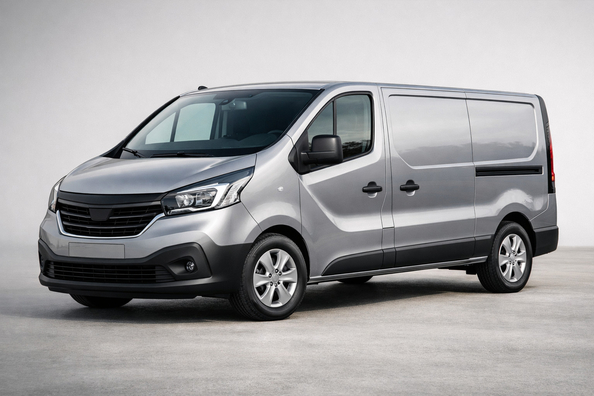
Renault Trafic III is a mid-size front-wheel-drive van that, since 2014, has worked at the intersection of city deliveries and intercity routes. Its point isn’t record payload figures, but a well-used body volume, a comfortable driving position, decent maneuverability, and straightforward work-oriented ergonomics.
For a buyer, the key is to distinguish early vehicles with the 1,6 dCi from later versions with the 2,0 Blue dCi. Formally it’s one generation, but in pull, noise levels, gearboxes, and the overall feel of the van the difference is noticeable—so Trafic III should be judged not only by price, but also by production phase and the exact configuration.
Trafic III sits in the center of the mid-size van class alongside Transit Custom, Transporter, Expert, Dispatch, Proace, and its close relative Primastar. It suits courier delivery, service crews, installers, and small businesses with regular trips around town and on the highway. It’s not the best option for those who need maximum payload in the class or frequent trips on badly broken roads.
The model’s strong point is the combination of relatively compact exterior dimensions with a roomy cargo bay: 5,8 m³ in L1H1 and 7,8 m³ in L2H1. If the job requires long items, Trafic is also interesting because the loading length can reach up to 4,15 m.
The third-generation Trafic with the X82 index debuted in 2014. The initial range featured 1,6 dCi diesels, front-wheel drive, and a 6-speed manual. A major update took place in 2019, with a further facelift dated 2021 or 2022 depending on the market and source.
It was the later versions that made the model feel more mature: 2,0-liter Blue dCi engines appeared, a 9-speed dual-clutch automatic on higher trims, more modern driver-assistance systems, and updated multimedia. Later, the Trafic E-Tech electric version was added to the lineup, but for long routes the main choice is still diesel.
On the used market, Trafic III effectively splits into two eras: the early 1,6 dCi and the later 2,0 Blue dCi. The former should be considered only with a transparent history; the latter are usually the more logical choice for daily work thanks to better pull and calmer behavior under load.
| Phase | Version | Displacement | Power | Torque | Gearbox |
|---|---|---|---|---|---|
| Early versions | 1,6 dCi 90 | 1 598 cm³ | 90 hp | 260 N·m | 6-speed manual |
| Early versions | 1,6 dCi 115 | 1 598 cm³ | 115 hp | 300 N·m | 6-speed manual |
| Early versions | 1,6 dCi 120 | 1 598 cm³ | 120 hp | 320 N·m | 6-speed manual |
| Early versions | 1,6 dCi 140 | 1 598 cm³ | 140 hp | 340 N·m | 6-speed manual |
| Late versions | Blue dCi 130 | 1 997 cm³ | 130 hp | 330 N·m | 6-speed manual |
| Late versions | Blue dCi 150 | 1 997 cm³ | 150 hp | 350 N·m | 6-speed manual |
| Late versions | Blue dCi 150 | 1 997 cm³ | 150 hp | 350 N·m | 9-speed dual-clutch automatic |
| Late versions | Blue dCi 170 | 1 997 cm³ | 170 hp | 380 N·m | 9-speed dual-clutch automatic |
For city use and light delivery, 130 hp is enough; 150 hp looks like the most balanced option; and 170 hp with the automatic makes sense for highway work, full loads, or frequent towing. All diesel versions are front-wheel drive. The official combined consumption for the modern range is roughly 6,7–7,1 l per 100 km, but in real life people more often see closer to 7,9 l.
Trafic III has two key working configurations: L1H1 and L2H1. Thanks to front-wheel drive, it has a low loading lip, and the suspension is tuned more for asphalt work than for bad roads. A 160 mm clearance is enough for curbs and yards, but not for regular off-road use.
| Parameter | L1H1 | L2H1 |
|---|---|---|
| Length | 5 080 mm | 5 480 mm |
| Wheelbase | 3 098 mm | 3 498 mm |
| Width without mirrors | 1 956 mm | 1 956 mm |
| Width with mirrors | 2 283 mm | 2 283 mm |
| Height | 1 971 mm | 1 967 mm |
| Cargo volume | 5,8 m³ | 7,8 m³ |
| Cargo bay length | 2 537 mm | 2 937 mm |
| Maximum loading length | up to 3 750 mm | up to 4 150 mm |
| Ground clearance | 160 mm | 160 mm |
| Loading lip height | 552 mm | 552 mm |
| Curb-to-curb turning circle | 12,4 m | 13,8 m |
For payload, you need to check the specific version: detailed tables show 1 050–1 112 kg, and some overview materials mention up to 1 222 kg for L1H1. Braked towing is up to 2 500 kg, unbraked is 750 kg, so there’s a margin for work trailers.
The cabin in Trafic is designed for everyday work. There are 84–88 l of storage, a 7-liter Easy Life drawer, a folding center backrest for documents or a laptop, USB ports, wireless charging, and an 8-inch EASY LINK multimedia system on later versions. It’s not a luxury interior, but it’s well thought-out for a working day.
On the highway the van is usually calm and not nervous, though at high speed wind noise can appear. The modern range lists rear parking sensors, a rearview camera, lane departure warning, automatic emergency braking, tire pressure monitoring, driver fatigue monitoring, and a set of airbags—but on used vehicles the equipment depends heavily on year and market.
In the city, Trafic is convenient thanks to the high seating position, a relatively tight turning circle for the class, and a low loading lip. On routes, an 80-liter fuel tank and predictable behavior at speed help, but real consumption is often higher than the brochure—especially with cargo, A/C, and long idling.
In practice, it’s a good choice for those who carry tools, parcels, equipment, or work as a small crew. A less successful scenario is constant operation near the weight limit, bad roads, or buying an early vehicle without a service history. The formal service interval is large—up to 38 624 km or 2 years—but for a used commercial van what matters more than a brochure number is the regularity of real maintenance.
| Area | Pros | Cons |
|---|---|---|
| Cargo bay | 5,8–7,8 m³ and loading length up to 4,15 m | Not a class-leading margin for payload |
| City | Decent maneuverability; camera and sensors make parking easier | Long wheelbase is still noticeably less convenient in tight yards |
| Route | 2,0 Blue dCi is more torquey and relaxed on the highway | Wind noise is audible at high speed |
| Costs | Brochure figures look moderate | Real-world consumption is often higher than official |
| Reliability | Some vehicles cover high mileage without surprises | There are complaints about AdBlue, the gearbox, and minor electrics |
Overall, Trafic III is strong where you need a large but not overly bulky working van. Its weak points are also typical for modern commercial vehicles: exhaust aftertreatment systems, electronics, and the very uneven condition of vehicles on the used market.
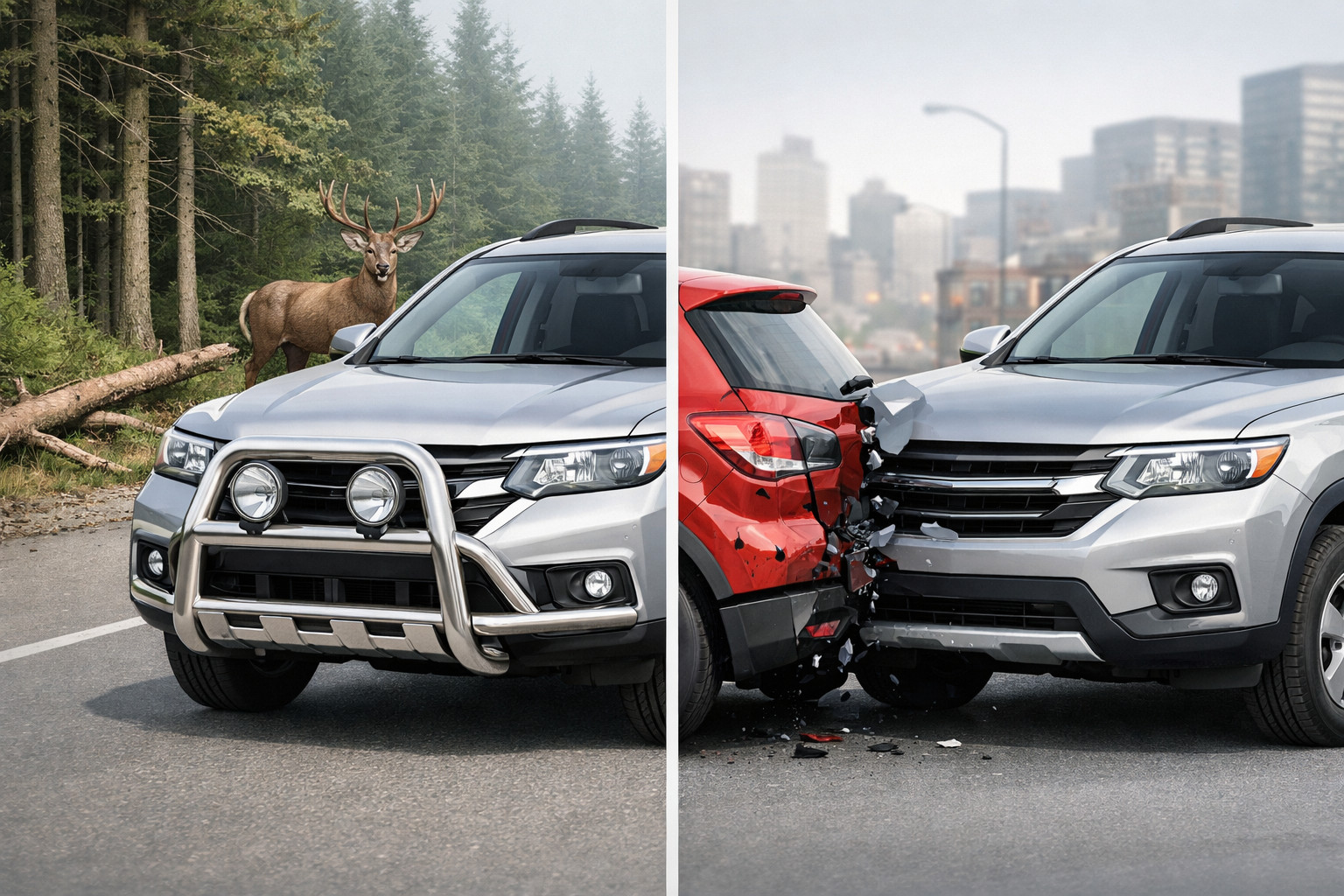
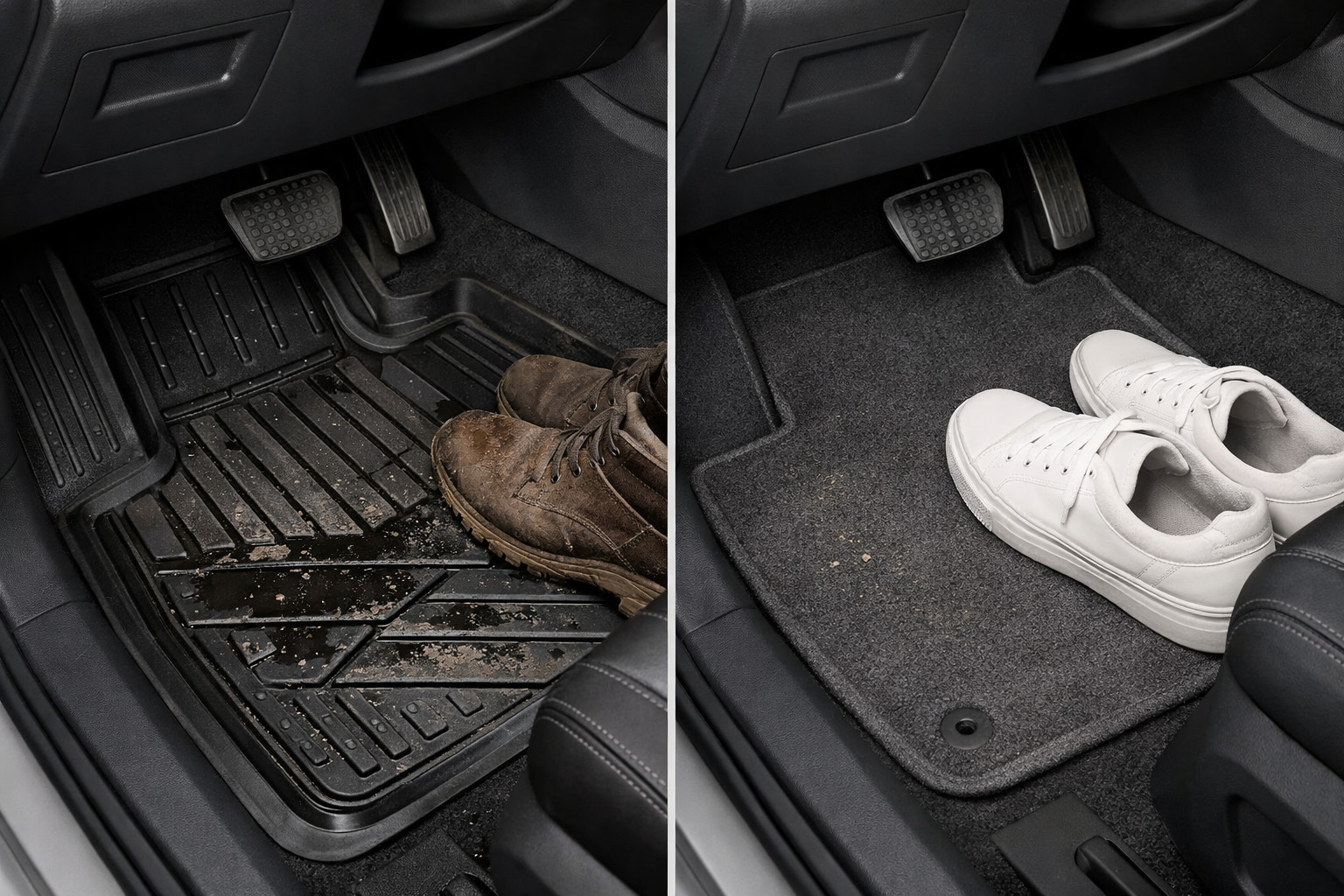
With Trafic, the main value is in practical accessories: protect the cabin from dirt, move some cargo onto the roof, make daily loading easier. For a commercial van, usefulness matters more than decorative details. An important nuance: the site has related items across the Trafic line, so before ordering you should verify the generation, wheelbase, and door configuration.
Renault Trafic III is a mature work van for those who need a balance of city use and route work, not maximum tonnage at any cost. The later 2,0-liter versions look the most sensible, especially 150 hp, while the early 1,6 dCi requires more careful checking. The model wins on volume, ergonomics, and suitability for everyday work, but it isn’t without compromises in real-world consumption, noise at speed, and certain components. The material is based on real selection experience, practice, and real usage scenarios—how Trafic is chosen and run in real work, not only on brochure figures.
| ✔ | Large cargo compartment for relatively compact dimensions: the L1H1 version offers 5.8 m³, the L2H1 — 7.8 m³, and the maximum load length reaches 4.15 m. This is convenient for long items, tools, and regular deliveries. |
| ✔ | Front-wheel drive and a low loading sill make the van convenient in the city and for everyday work. It is further helped by decent maneuverability and a turning circle that is shorter than average for its class. |
| ✔ | The later 2.0 Blue dCi versions look better than the early 1.6 dCi units thanks to stronger pulling power and calmer behavior under load. For route work and full loads, the 150 hp version looks especially sensible. |
| ✔ | The cabin is quite practical: there are plenty of storage spaces, a large Easy Life glovebox, a folding center seatback, and useful extras like USB and wireless charging. This makes daily work easier, not just the drive. |
| ✔ | For work tasks, Trafic can tow a trailer of up to 2,500 kg with brakes. This provides extra capacity for service crews, transporting equipment, or trips with additional cargo. |
| ✘ | The early 1.6 dCi should only be bought with a transparent service history. In the used market, this is the riskiest part of the lineup, so it is unsafe to buy one without checking it. |
| ✘ | The model’s weakest point is payload, as it is not a class record. If you often carry loads right up to the limit, Trafic will not be the optimal choice. |
| ✘ | At high speed, wind noise may be noticeable in the cabin. For long highway runs, this is not critical, but it noticeably reduces comfort compared with quieter rivals. |
| ✘ | Real fuel consumption is often higher than the official figures, especially with a load, air conditioning, and extended idling. In everyday use, this should be factored into the budget in advance. |
Shipping to EU
Wholesale and retail
Own warehouse
Опис продукту
Подарунки не надаються при оформленні покупки у кредит під 0,01% або при покупці частинами.