16.04.2026
318
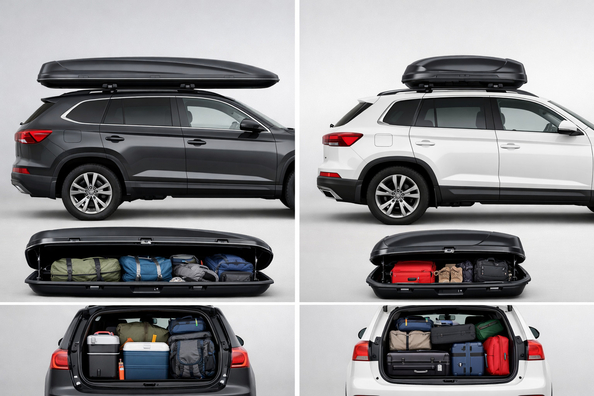

A short roof box is usually more convenient for the city, compact cars, and mixed use. A long one makes sense when you regularly carry skis, snowboards, a stroller, or other items over 2 m. If you look not at liters but at real dimensions, the mounting method, and compatibility with your car, the choice becomes simpler.
Below is a practical comparison without unnecessary theory: what affects convenience, where the short format wins, and when a long box truly justifies its price and size. If you need a basic guide for choosing, you can also check how to choose a roof box for a car.
The main question isn’t which box is “better,” but which format won’t get in the way in your specific use case. A short box is usually easier to install, it interferes less with the front of the roof, and it fits smaller cars better. A long box wins on volume and internal length, but requires more attention to clearance, weight, and storage space.
In short: a short one is for everyday practicality and versatility, a long one is for long cargo and frequent trips with lots of gear. The mistake starts when you choose by liters alone. Two 500 L boxes can differ so much that one works for skis and the other doesn’t.
You should compare not one parameter but five: mounting, noise, durability, practicality, and price. On top of that come cargo length, front clearance, and crossbar compatibility. These are what determine whether the box will be convenient day to day—or turn into a bulky problem.
| Option | Strengths | Weaknesses | Who it’s for |
|---|---|---|---|
| Short roof box | Easier to mount; more convenient for compact cars; less intrusive on the roof; leaves more room for other accessories | Quickly limits cargo length; not suitable for long skis and some sports gear | City driving, occasional trips, compact cars, mixed use |
| Long roof box | Suitable for skis, snowboards, a stroller, and other items over 2 m; usually fits more gear | Requires a more careful clearance check; heavier; less convenient to store | Families, ski trips, frequent outings with long cargo, taller vehicles |
A short roof box is usually up to 150 cm long and works best where maneuverability and simplicity matter. For city life, that’s a plus: it’s easier to remove, simpler to carry into storage, and on the roof it conflicts less with other solutions—for example, bike or water-sports mounts. For compact cars, this is often the only format that doesn’t look and feel excessive.
Its weak point is internal length. If you regularly carry skis, a snowboard, or a stroller, the short format stops being enough quickly. Here it’s important to look not only at liters, but also at the real usable length inside, because the internal size is usually about 7–10 cm smaller than the external.
A long roof box is the format for cases where cargo length is what matters. It has an obvious advantage for winter gear, long bags, and bulky items. In practice, this means fewer compromises when packing: you don’t have to force items to fit a short shell and look for unconventional ways to fold them.
But a long format requires more attention to fit on a specific car. For a hatchback or a car with a short roof, front clearance becomes critical: you need to check the distance from the front crossbar to the point where the roof transitions into the tailgate. If your car’s measurement is less than the box requirement, it will conflict with opening the tailgate. In addition, a long box is heavier, which means it’s less convenient to carry, mount, and store.
| Parameter | Short format | Long format |
|---|---|---|
| Mounting | Simpler, faster | More complex, higher compatibility demands |
| Noise | Often lower or easier to manage | Depends on aerodynamics; larger area can be more noticeable |
| Durability and storage | Less hassle in daily life and storage | Heavier and less convenient day to day |
| Practicality | Better for city and mixed tasks | Better for long gear |
| Price | Often more affordable in basic versions | More often pricier due to size and features |
For everyday city use, a short box usually wins. It puts less load on the roof, is easier to mount, and doesn’t require such careful matching to cargo length. If the family occasionally drives to the cottage, goes on vacation, or just needs to carry extra items from time to time, this is a more rational format.
A long box is better when the scenario is clear: skis in winter, snowboards, a stroller, long cases, active-outdoor gear. If the cargo is long and regular, the short format will force you to constantly find compromises. In that situation, paying extra for a longer box is often more reasonable than dealing with yearly inconveniences.
There are also premium long models. They may have better aerodynamics, dual-side opening, and faster mounting, which you really feel with frequent use. But it only makes sense if you truly use the box regularly, not just a few times a year.
| Scenario | What to choose | Why |
|---|---|---|
| City driving, daily use | Short | Less hassle with mounting, easier storage, better versatility |
| Compact car or low roof | Short | Easier to choose without front-clearance issues |
| Skis, snowboards, long bags | Long | You need length, not just liters |
| Stroller or large items over 2 m | Long | A short box quickly hits the cargo size limit |
| Bikes, kayak, other roof accessories | Short | Leaves more free space on the crossbars |
The first mistake is focusing only on liters. Volume can be calculated differently between brands, so the same numbers don’t mean the same convenience. The second is ignoring cargo length: if skis or a snowboard are longer than the box’s internal length, the problem will show up on the first trip.
The third mistake is not checking front clearance and hatchback compatibility. The fourth is not considering crossbars: you need to match the box not only to the roof, but also to the rail positions and mounting points. The fifth is buying a large box and then having nowhere to store it. Vertical storage is undesirable, so space in a garage or storage room matters too.
Another common issue is overloading. You must not exceed the lowest limit among the box itself, the crossbars, or the car roof. This matters both on the road and when loading. Even if the box is large, it doesn’t mean you can pack everything into it without limits.
A more expensive box makes sense when you use it often and want less hassle at every stage: installation, loading, access, and removal. What matters here isn’t “premium badges,” but specific things: better fit, dual-side opening, more convenient locks, straightforward mounting, and a more stable shape.
If you need the box once or twice a year, the extra cost for a more complex model often doesn’t pay off. But if it becomes a regular tool for travel or sports, saving on convenience quickly becomes annoying. In that sense, an expensive model wins not by “quality in general,” but by everyday comfort in real use.
If you want to narrow the choice down to specific parameters, go back to the basic roof box selection guide: it’s a convenient way to check compatibility, cargo length, and mounting before you buy.
If you need a versatile, practical option for the city, a compact car, or mixed use, a short roof box more often comes out on top. If your main cargo is skis, snowboards, a stroller, or other long items, then it’s more logical to choose a long format, even if it’s more expensive and more demanding for the car.
The smartest approach is simple: first check cargo length, front clearance, crossbar compatibility, and storage space, and only then look at liters. That’s how the choice stops being random and becomes practical.
| ✔ | A short roof box is easier to install and remove, so it’s less troublesome in everyday use. This is especially convenient for city driving and for those who do not keep the box on the roof all the time. |
| ✔ | It is better suited to compact cars and does not clash as much with other roof accessories. There is more room left for bike or water mounts. |
| ✔ | The short format is easier to store and carry because it is usually smaller and not as heavy. For everyday use, this reduces inconvenience outside of trips. |
| ✔ | For city and mixed-use tasks, a short box is more practical if the cargo does not require much length. For occasional trips and transporting ordinary items, it looks more reasonable. |
| ✔ | A long roof box provides extra internal length, making it easier to load skis, snowboards, a stroller, and other bulky items. This reduces the need to adjust the cargo to fit the box shape. |
| ✘ | A short roof box quickly limits cargo length, so it is not suitable for skis, snowboards, and some large gear. Because of this, you have to make compromises or give up some items. |
| ✘ | A long roof box is more demanding on the car: you need to check front clearance separately and its compatibility with a hatchback or a short roof. If the parameters do not match, problems may arise when opening the trunk lid. |
| ✘ | The long format is heavier and less convenient to carry, install, and store. For everyday use, this adds inconvenience even when the box itself is spacious. |
Shipping to EU
Wholesale and retail
Own warehouse
Опис продукту
Подарунки не надаються при оформленні покупки у кредит під 0,01% або при покупці частинами.