
































































 Author: Radomskyi Maksym Vasyliovych
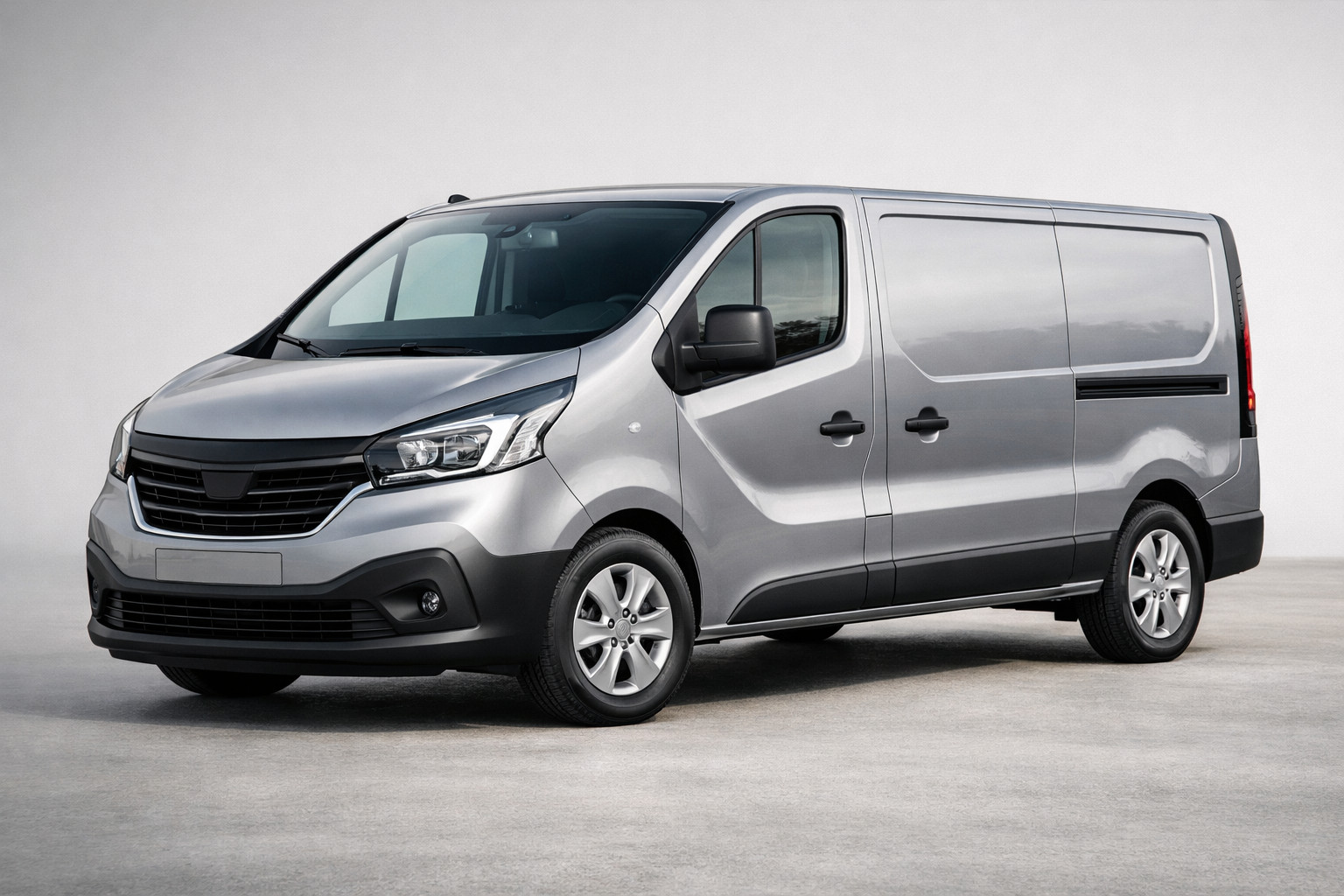
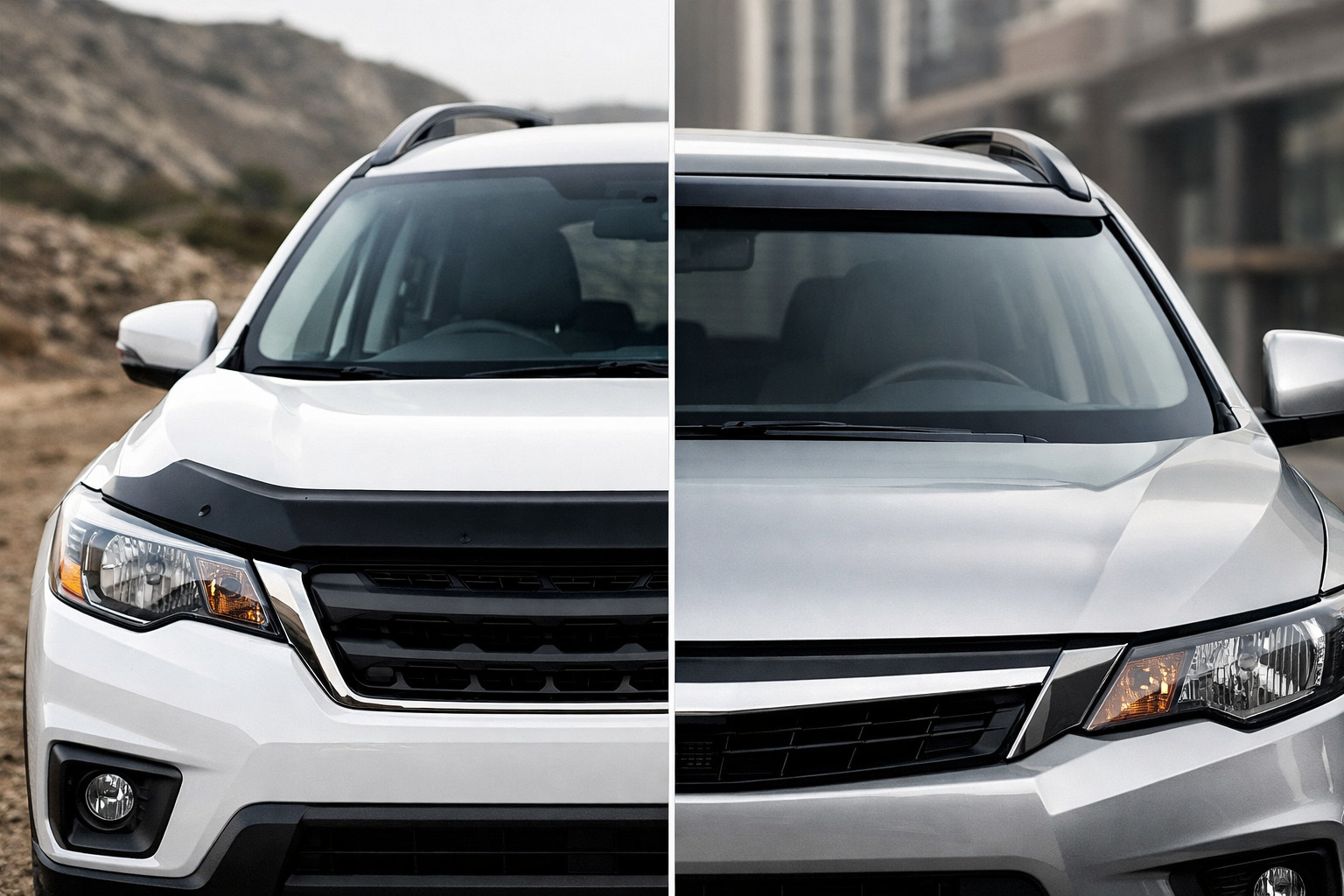
Here the choice isn’t between a “better” and a “worse” accessory, but between two different tasks. If you want fewer insects, small stones, and dirt on the front edge during highway driving, a hood deflector often makes more sense. If what bothers you is low sun glare, and the vehicle works as a van or commercial transport, it’s more logical to look at an external windshield deflector.
For city driving, both solutions are often overrated. The benefit there is frequently small, while fit quality, noise, ease of care, and the mounting method matter far more than simply having a deflector.
What the choice is really about
A hood deflector and a windshield deflector work in different areas of the vehicle. The first is installed on the leading edge of the hood to partially change the airflow in front of the car. The second is mounted above the windshield as an external visor, and its purpose isn’t to protect the hood but to improve viewing comfort and provide a partial barrier against sun, rain, or snow.
So the main question is simple: what exactly gets in your way every day—debris on the front end or glare in your eyes. If the answer is unclear, it’s better not to rush the purchase: in many city scenarios, neither option delivers an effect that justifies the cost and upkeep.
What criteria to compare by
- Installation. A hood deflector is often faster to install, but not every kit truly avoids drilling. A windshield deflector is usually more complex to fit, and on some vehicles sealing and mounting accuracy are critical.
- Noise. Tall hood models and poorly fitted visors above the glass more often create whistling, vibration, or background noise at speed.
- Durability. Material, rigidity, and the stability of the mounts matter. Cheap plastic or weak installation leads to play, scuffs, and cracks sooner.
- Practicality. A hood deflector is useful on the highway and rough roads, but dirt can collect underneath. A windshield deflector is relevant where the sun is truly a problem; otherwise it remains an unnecessary element.
- Price. A more expensive product by itself doesn’t guarantee a better effect. In this category, precise fit and well-designed mounting are more important than a “taller” or “bulkier” format.
Quick comparison of options (table)
| Option | Strengths | Weaknesses | Who it’s for |
|---|---|---|---|
| Hood deflector | Works better on the highway against insects, dust, and small debris; often easier to install; there are no-drill models | Doesn’t save you from large chips; can be noisy; water, dirt, and salt accumulate under the edge | Those who often drive between cities, on rural roads, or on gravel |
| Windshield deflector | Helps with low sun; useful on vans and trucks; partially blocks rain and snow in the upper area of the glass | Often more complex to install; risk of noise and vibrations; compatibility depends heavily on the body | Commercial vehicle drivers who struggle specifically with glare and visibility |
DD Tuning expert comment: the most common mistake is this—people buy a “bigger one because it should deflect better,” and then end up with noise or inconvenient maintenance. With hood deflectors, precise geometry and the gap are critical; with windshield ones, mounting rigidity and no misalignment. Before buying, it’s worth уточнить not only compatibility but also the installation method: adhesive, factory mounting points, or drilling.
A detailed breakdown of each option
Hood deflector
Its real strength is on the highway. At speed it can reduce the number of insects and small debris hitting the front of the vehicle, but you shouldn’t expect full protection from stones or serious paint chips. In practice, low-profile, vehicle-specific solutions are often more practical: they strike a better balance between benefit, appearance, and noise.
Installation depends on the kit: simple options go on in minutes, vehicle-specific ones take longer. The weak point isn’t only the mounting, but also maintenance: if water, dust, and salt build up under the deflector, the contact area needs periodic cleaning—otherwise the benefit is negated.
Windshield deflector
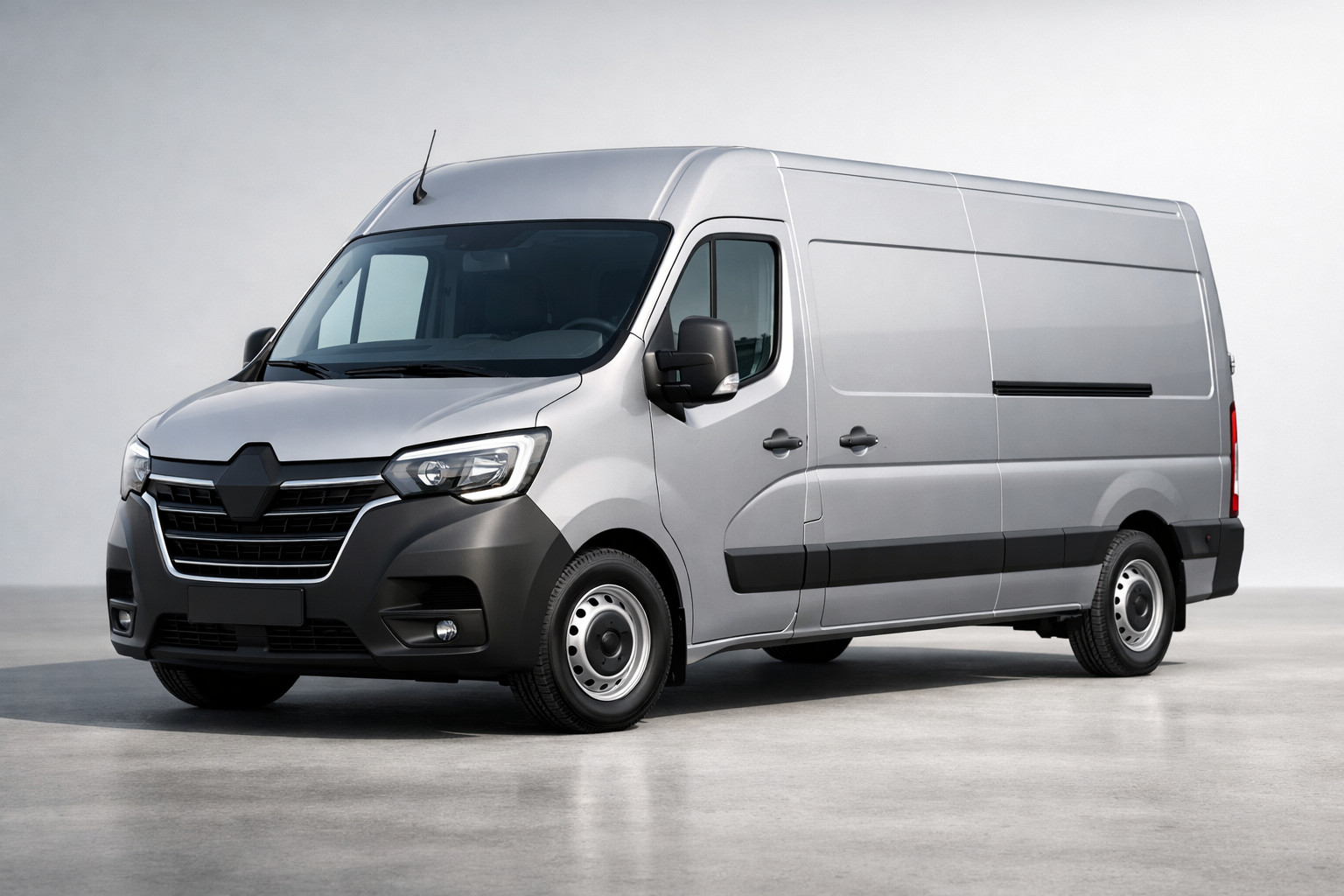
This is a more narrowly specialized solution. It’s appropriate where the driver genuinely suffers from low sun, especially on vans, panel vans, and trucks with a large windshield area. Additionally, such a visor can partially block rain, snow, and small debris in the upper part of the glass, but its main purpose isn’t body protection—it’s viewing comfort.
Here the dependence on vehicle design is more pronounced. The same type can behave very differently on different cabs: quiet on one vehicle and vibrating on another. If the kit requires drilling, the question is no longer only about price, but also the quality of sealing and whether you’re ready for that kind of intervention.
Which option is better for different scenarios
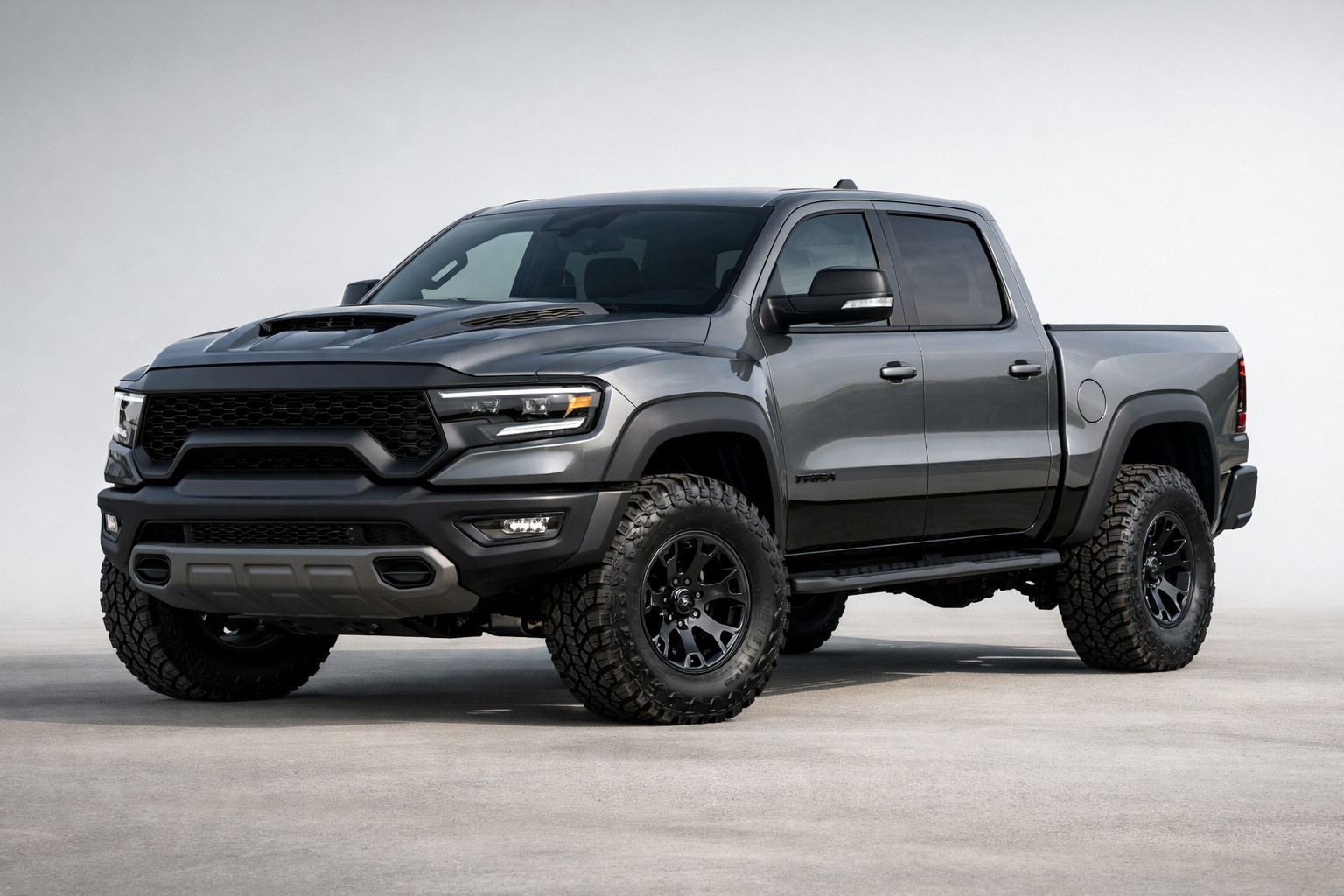
For a passenger car that spends most of its time in the city, a hood deflector makes sense only if there are regular highway trips. If such trips are rare, the accessory often delivers less than people expect.
For commercial transport, the logic is different. If the vehicle meets sunrise and sunset on the move, and the driver deals with glare in the upper part of the windshield every day, a windshield deflector can provide noticeably more benefit than any hood solution.
If the main complaint is large stone chips, it’s worth admitting soberly: neither of these options solves the problem completely. They only partially change the airflow and reduce minor impact.
Usage scenario and what to choose (table)
| Scenario | What to choose | Why |
|---|---|---|
| Frequent intercity trips in a passenger car | Hood deflector | Provides the most noticeable benefit at speed, where there are many insects and small debris |
| Rural roads, dust, gravel | Hood deflector | Better matches the task of protecting the leading edge from small road dirt |
| Van or truck, morning and evening routes | Windshield deflector | The problem here is visibility and glare, not the front edge of the hood |
| Purely city use | Often install nothing | The benefit is often smaller than the cost, noise risks, and the need for maintenance |
| Need less rain and snow in the upper windshield area on a commercial vehicle | Windshield deflector | Gives a secondary practical effect if the product is precisely matched to the cab |
Common mistakes when choosing
- Buying by the principle “the taller, the more effective.” In practice, an over-tall profile more often adds noise than benefit.
- Expecting full protection from stones. Both solutions work partially, not like armor.
- Ignoring the installation method. If the kit requires drilling or is temperature-sensitive during installation, you need to know that before purchase.
- Not considering maintenance. Under a hood deflector, you need to periodically clean the contact area—otherwise dirt appears and there’s a risk of rubbing.
- Confusing what “windshield deflector” means. Some sellers use this name for products that differ in shape and purpose, so compatibility must be checked very carefully.
When a more expensive solution makes sense
Paying more is justified not when the accessory simply looks “more solid,” but when the vehicle actually operates in conditions where installation mistakes or weak material will show up quickly. For the hood, that’s regular highway driving, high mileage, winter, frequent dirt, and the need for a stable, rattle-free fit. For the windshield, it’s daily work with a van or truck, where noise, misalignment, or weak mounting will be tiring every day.
In pricier solutions, it makes sense to look not for height, but for vehicle-specific design, quality material, proper mounting points, and predictable geometry. If you’re comparing options, start with hood deflectors, separately review windshield deflectors and, for commercial vehicles, it’s useful to validate the selection logic via the van-focused breakdown.
From a customer’s experience: a van driver initially wanted something “for everything” and looked toward a hood deflector because it’s a simpler solution. After clarifying the route, it turned out the main problem was morning sun on intercity runs, so the choice shifted to a windshield deflector for a specific cab. In the end, satisfaction came not from the accessory being more expensive, but from it addressing his real task.
Conclusion
In short: for highway driving, insects, dust, and small debris, a hood deflector is more often the better choice; for glare, rain, and working comfort on a van or truck, a windshield deflector. In the city, both options often don’t pay off, so before buying it’s worth honestly defining which problem you actually face repeatedly.
This conclusion is based not on abstract promises, but on real selection experience, practice, and real usage scenarios: the best result comes not from a “bigger” deflector, but from one correctly matched to the task, the body, and the installation method.
How it works
- Identify what bothers you most First, determine what your main issue is: insects, dust and fine debris on the front end, or glare from the low sun. This will determine which deflector makes sense to consider.
- Choose a hood deflector for highway driving If you often drive between cities, on rural roads, or on gravel, it makes more sense to look at a hood deflector. It works better at speed and partially reduces the amount of insects, dust, and fine dirt on the front edge.
- Choose a windshield deflector for commercial vehicles If the problem is low sun, and the vehicle is used as a van or truck, a windshield deflector is a better fit. Its main benefit is better visibility comfort, not hood protection.
- Check installation and compatibility Before buying, clarify the mounting method: adhesive, factory mounting points, or drilling. For a windshield deflector, fit accuracy, sealing, and compatibility with the specific body are especially important.
- Assess noise, maintenance, and durability Do not choose an oversized or bulky option just because of its appearance: it can add whistling, vibration, and make maintenance inconvenient. For a hood deflector, it is important to clean the area under it regularly so dirt, water, and salt do not build up.
- In the city, sometimes it is better not to install anything If the vehicle is driven mostly in the city, the benefit of both solutions is often small. In such a scenario, it is better not to rush into buying than to install an accessory that creates noise or adds extra maintenance.
Pros and cons
The hood deflector is better suited for highway driving: it partially reduces insects, dust, and small debris on the front edge of the car. This is useful for intercity trips and driving on gravel or country roads.
For hood-mounted models, installation is often simpler, and some kits are fitted without drilling. This reduces installation complexity compared with a windshield deflector.
A windshield deflector really helps when the problem is low sun and glare. This is especially noticeable on minibuses, vans, and trucks, where the large glass area makes this solution practical.
A windshield deflector can partially block rain and snow in the upper part of the windshield. For commercial vehicles, this adds a bit of comfort in everyday work.
Both options make sense only with proper fitment and mounting, so you can choose a solution for a specific task instead of buying something universal. This helps avoid unnecessary expenses where the accessory is not needed.
In urban conditions, the benefit of both deflectors is often small. At the same time, noise, maintenance, and installation issues remain, which can outweigh the practical effect.
The hood deflector does not fully protect against large chips and stones. In addition, water, dirt, and salt can accumulate under it, which requires regular cleaning.
A windshield deflector is more difficult to install and depends more on the body design. On some cars, sealing and mounting accuracy become critical, and with improper installation, noise and vibrations are possible.
A more expensive or bulkier option does not guarantee a better result. If the shape, gap, or mounting is chosen poorly, you can get more noise and inconvenience without any noticeable benefit.