10.07.2026
512
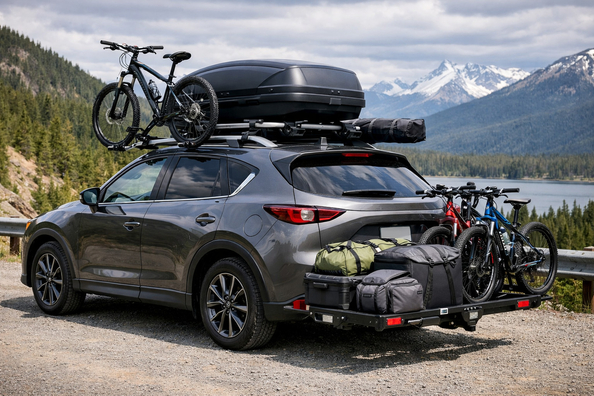
This upgrade plan is for a Mazda CX-5 2017+ owner who travels on vacation, does winter trips, or simply drives with a full family in the cabin and wants to move some of the stuff to the roof—without extra noise or failed purchases. The goal here isn’t to hang as many accessories as possible, but to gain extra volume for a real route.
The CX-5’s own trunk is already fairly spacious, so a roof solution makes sense only when interior space is no longer enough. For this model, it’s important to remember the main rule: the roof limit is 75 kg including the rails, crossbars, and cargo, and if the roof is bare, you shouldn’t start with a box—you should start with the base for it.
For travel on a Mazda CX-5 2017+, a roof setup should cover a simple task: carry light but bulky items so the cabin stays for people, not bags. This is a typical story for suitcases, kids’ items, helmets, sleeping bags, and ski gear.
It’s important not to mix scenarios. A closed roof box is for items that need protection from rain, dust, and prying eyes. A roof basket makes sense for dirty or irregular cargo. If you regularly transport bicycles, it’s more practical to look at a hitch-mounted bike rack rather than lifting bikes onto a crossover’s roof.
First priority is to understand whether the car has a proper base for roof cargo. If the roof is bare, rails and crossbars go on first. The rails themselves don’t carry the load; they’re only part of the mounting system. If the base is already there, then the first real purchase should be a closed roof box that fits your trips.
The second step is to choose not the biggest box, but a compatible one. On a CX-5, a long housing must be checked against real clearance so the tailgate opens without hitting it. Also look at the box’s own weight: it consumes part of the 75 kg limit before you load anything. If the crossbars will be used often, it’s better to choose a quieter aero profile right away instead of the cheapest universal option.
| Upgrade | Why it’s needed | Who it really benefits |
|---|---|---|
| Rails + crossbars | Create the base for any roof accessory | Those with a roof without a ready system or those planning a roof box long-term |
| Closed roof cargo box | Adds dry, enclosed extra volume | Families, travelers, those who drive in rain, snow, and on long distances |
| Ski or snowboard carrier | Transports long sports gear without the extra volume of a box | Those who in winter mostly carry only skis or boards |
| Roof basket | Works for wet, dirty, or irregular cargo | Those who carry camping gear, tools, jerry cans—not suitcases |
| Trunk liner, cargo net, rear bumper protector | Make loading easier and protect the trunk area | Those who often pack a stroller, suitcases, shoes, wet items |
| Hitch bike rack | Makes bike transport easier and doesn’t load the roof | Those who transport bikes regularly, not occasionally |
For this scenario the logic is simple: roof base first, then a box, and only after that—narrow carriers for a specific sport or small items for the cabin trunk.
DD Tuning expert comment: The most common mistake with the CX-5 is buying a large box before checking the roof base and the clearance for opening the tailgate. The second typical story is loading heavy bags on top, even though in this scenario the roof should be used for light, bulky cargo. If the car has a sunroof, it’s better to verify crossbar compatibility and positioning before purchase, not after installation.
Once the base and the box have solved the main space problem, the second stage is to add items that make the trip itself easier. First of all: a trunk liner, a cargo net or small-item organization, and protection for the upper edge of the rear bumper. In practice, they save you from dirt and scratches better than any decor.
A second stage can also be a dedicated carrier for a specific sport. For skis and snowboards, it makes sense when the rest of your things fit in the cabin and you don’t want to carry a large box. If you need crossbars only twice a season, there’s no point keeping them on the roof all the time: you’ll get extra noise and constant attention to vehicle height.
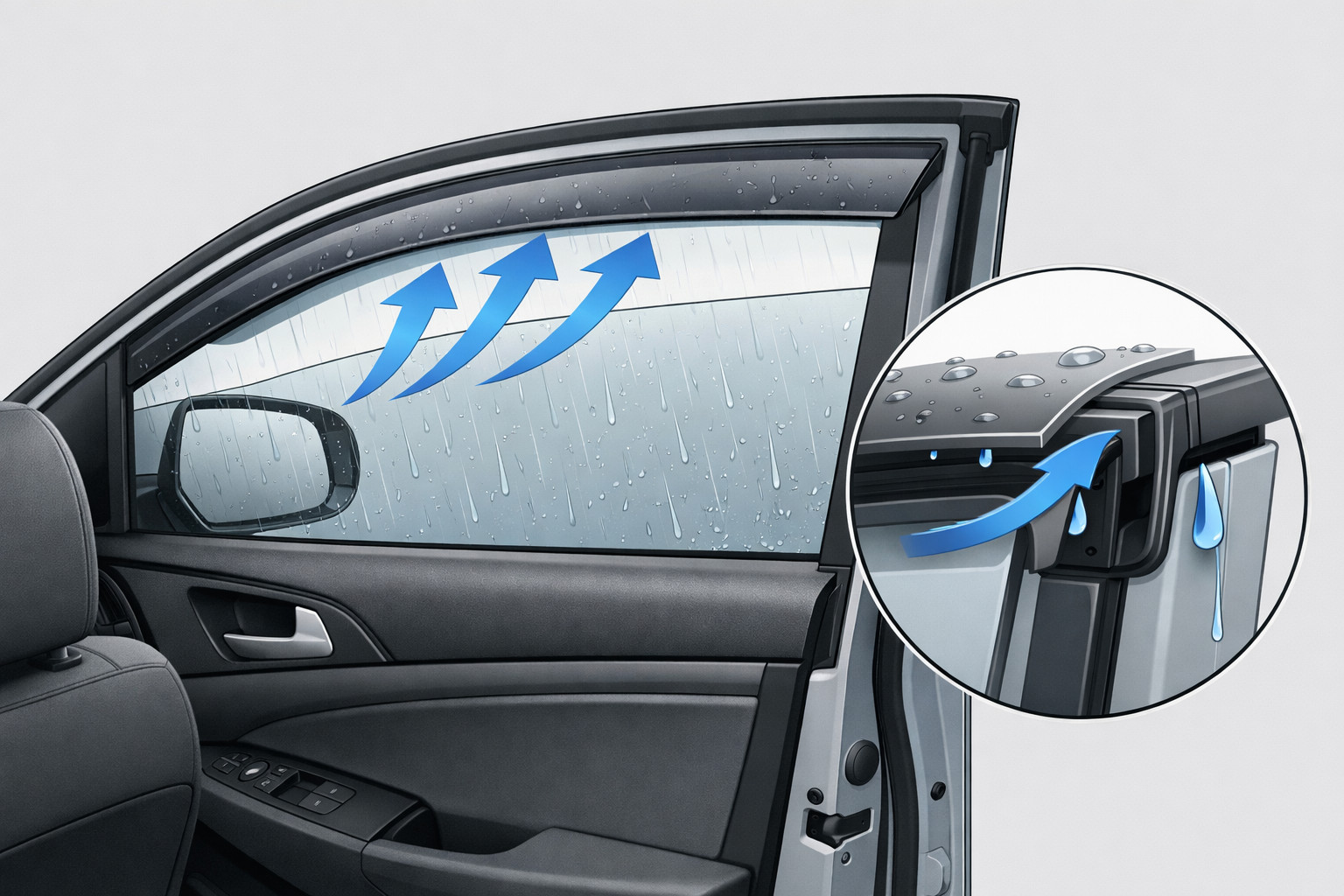
In this group I’d put wind deflectors, decorative trims, side steps, chrome, and everything that doesn’t solve the luggage task. It can look good visually or slightly simplify daily use, but for a travel scenario it’s not the first expense. The habit of leaving crossbars on the car all the time just for looks also often ends up here—little benefit, while noise and parking-height limitations remain every day.
Most often, people buy a basket instead of a box in vain when they drive regular family routes. It’s cheaper at the start and looks tougher, but it loses in rain, snow, cleanliness of your belongings, and convenience. For suitcases, clothing, and kids’ items, a basket is the weaker choice.
Two more typical mistakes are cheap universal crossbars that whistle at speed, and a giant “just in case” box. On the CX-5, you should choose not the maximum size, but one compatible with the tailgate and your real cargo. Very often people overpay specifically for looks or reserve capacity they never use.
| Area | What to install first | What can be postponed | What isn’t mandatory |
|---|---|---|---|
| If the roof is bare | Rails and crossbars | A quieter premium profile if you drive rarely | Decorative roof elements |
| For family trips | A closed box of the right size | Trunk liner and cargo net | A basket instead of a box |
| For winter | Either a box or a dedicated ski carrier for your scenario | A second set of mounts for another season | A large box if you carry only skis on short trips |
| For frequent bikes | A hitch-mounted carrier | A roof solution as a backup | Lifting bikes onto the roof just because you already have crossbars |
| For protecting the body and interior | Rear bumper protection if you load often | Trunk organization | Chrome and decor “for the travel theme” |
A more expensive setup is justified when you truly use the roof, not when you install it for two trips a year. If you plan lots of highway driving, cabin quietness and normal access to the trunk matter—so it’s worth looking not only at a roof rack for CX-5 2017+, but also at compatible roof rails and a more thought-out crossbar geometry.
A separate roof basket makes sense to buy in a more expensive version only when it truly matches your cargo: camping gear, wet items, dirty equipment. For regular family trips, overpaying for a basket just for looks most often doesn’t pay off.
From a customer’s experience: a CX-5 owner initially wanted an open basket because it seemed cheaper and more practical. After selection, it turned out the car goes on vacations with kids, often in the rain, so they installed a crossbar base and a closed box, and added a trunk liner inside. As a result, the items traveled dry, the cabin became freer, and the basket was postponed as a separate solution for dirty gear.
For the Mazda CX-5 2017+, the right order of travel-focused upgrades is simple: first the roof base, then a closed roof box, then narrow solutions for a specific sport or trunk everyday use. A basket, decor, and everything bought only for the picture is best left at the end of the list.
If you stick to this order, you won’t overpay for marketing junk and you won’t end up with a noisy or inconvenient setup. This material is based on real selection experience, practice, and real usage scenarios—where the key is not the number of accessories, but whether they truly work for your type of trips.
| ✔ | It is first suggested to cover the basic need: if the roof is bare, start with roof rails and crossbars, and only then install a box. This gives a clear sequence without unnecessary purchases. |
| ✔ | A closed box is suitable for family trips because it carries light but bulky items dry and out of sight. For suitcases, children’s things, and clothes, it is more practical than open solutions. |
| ✔ | The article clearly states the 75 kg roof limit together with the base and cargo, so you can control the weight already at the selection stage. This reduces the risk of overloading and making a mistake with a box that is too heavy. |
| ✔ | There is practical advice not to choose the largest box, but to check compatibility with the trunk lid and your own weight. This helps avoid situations where the trunk does not open or part of the limit is taken up by the box itself. |
| ✔ | For specific scenarios, narrow solutions are suggested: a ski holder for winter trips, a tow hitch bike carrier, a basket only for dirty or irregular cargo. This approach better adapts the car to real tasks rather than a universal set of accessories. |
| ✘ | If cheap universal crossbars are installed, they may whistle at speed. For frequent trips, this adds cabin noise and reduces comfort. |
| ✘ | An oversized box “for reserve” is directly called a mistake in the article, because people often overpay for a size they never end up using. In addition, an overly bulky option may not fit the clearance to the trunk lid. |
| ✘ | A roof basket for regular family routes is considered a weaker option than a box. It protects items worse from rain, snow, and dirt, so it is not the best choice for suitcases and children’s belongings. |
| ✘ | If crossbars are kept on the car all the time just “for looks,” there is little benefit, but noise and parking restrictions remain. For occasional use, this is not rational. |
Shipping to EU
Wholesale and retail
Own warehouse
Опис продукту
Подарунки не надаються при оформленні покупки у кредит під 0,01% або при покупці частинами.