18.04.2026
590
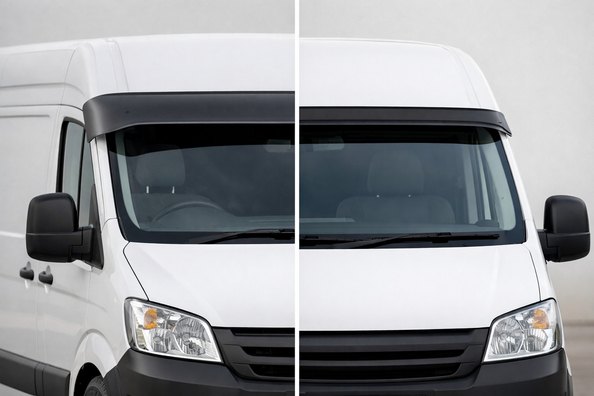

If the main goal for a van is fewer flies, small debris, and chips on the highway, a hood deflector is usually the more practical choice. If it’s more important to block direct sun from the large windshield and get shade over the upper viewing area, then it makes more sense to look at a windshield visor.
The confusion comes from the naming: in catalogs, “visor,” “windshield deflector,” and even hood items are often mixed into one group. That’s why you should choose not by the label on the product card, but by where the part is installed, how it’s mounted, whether it adds noise, and what it actually delivers in everyday driving.
In practice, these are two different accessories. A windshield visor mounts above the glass and works like an upper screen: it provides shade, partly blocks direct sunlight, and changes the front-end look. A hood deflector mounts on the hood edge and redirects airflow in front of the van to lift some insects, dust, and small dirt higher.
For a van, this matters even more because of its size. A large, upright windshield catches a lot of sun—but it also collects insects and road grime just as actively. So “what’s better” depends on the use case: city deliveries, intercity runs, a camper, a work van, or a passenger van.
| Option | Strengths | Weaknesses | Who it’s for |
|---|---|---|---|
| Windshield visor | Provides shade, reduces direct sunlight, very noticeable on a van’s large windshield | More complex installation, risk of noise at speed, you need to monitor the mounting and sealing | Those who drive a lot during the day, want sun protection, and are ready for a more involved installation |
| Hood deflector | More practical on the highway, helps against insects, dirt, and small chips along the front edge | Effect isn’t absolute; some models may be noisy; universal versions often fit worse | Those who often travel between cities, want simpler installation, and more real benefit for the front end |
DD Tuning expert comment: the most common mistake is buying a “windshield deflector” without checking the mounting diagram—and only after delivery realizing it’s either an upper visor or a hood-mounted trim piece. The second typical issue is saving on vehicle-specific fit: a universal part on a van often leads to misalignment, noise, and weak real-world effect. If in doubt, verify the mounting location first, and only then compare price.
This solution is for those who mainly need sun protection. On a van with a high seating position and a large windshield, the difference is felt most on bright days, when the upper part of the windshield constantly catches direct light. But it’s important to understand: this is not hood chip protection and not the primary tool against flies.
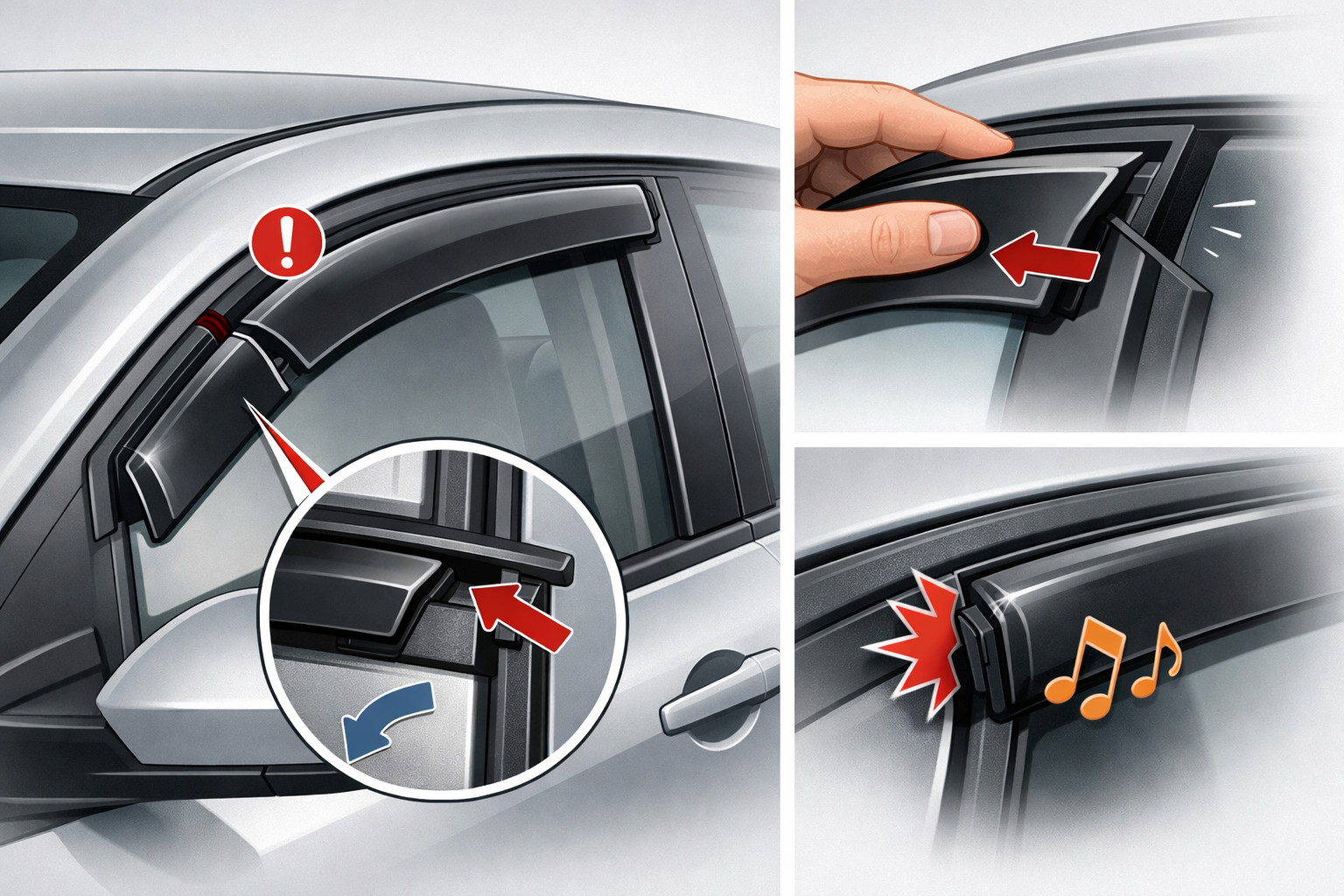
In vehicle-specific kits for vans, visors often come with a rigid plastic panel, a metal frame, and mechanical mounting. That means higher installation requirements: correct positioning on the pillars, sealing the mounting points, and checking the fasteners once per season or year. If installed carelessly, you can end up with noise, vibration, and moisture issues instead of benefits.
This option is more useful where the van actually runs at speed. The point isn’t to make the windshield perfectly clean, but to redirect airflow over the front end and reduce the impact of dirt, insects, and small stones on the hood and partly on the glass. On the highway, it’s more noticeable than in the city.
The strong side of a hood deflector is simpler installation in many vehicle-specific versions. If the part is made for a particular body, it’s easier to fit accurately without drilling. But there are still limits to expectations: it helps against chips better than it prevents all bugs from sticking, and universal models on a short or unusual van nose often work worse.
For a city van that spends more time in traffic and often drives in sunny hours, the purpose of a visor is clear: it solves a specific discomfort from glare. In this scenario, a hood deflector doesn’t provide such a noticeable everyday effect.
For intercity routes, regional deliveries, and regular highway driving, priorities shift. There, a hood deflector is usually more useful because it addresses what actually hits the front end at speed. If the van is used as a camper or family van with many daytime drives and stops, a visor can be justified despite the more complex installation.
A separate scenario is when the owner doesn’t want to drill the body. Here, the advantage more often goes to the hood deflector, because vehicle-specific low-profile solutions are easier to install without rigid intervention into the metal.
| Scenario | What to choose | Why |
|---|---|---|
| Daily highway driving, lots of insects and debris | Hood deflector | Delivers more practical benefit for the front end and hood edge than an upper visor |
| City driving in sunny hours | Windshield visor | Better solves the issue of direct sun through a van’s large windshield |
| Don’t want to drill the body | Hood deflector | Vehicle-specific versions are more often available with simpler installation without rigid mounting |
| Need maximum benefit with minimal intervention | Hood deflector | Easier installation and a clearer practical effect in highway use |
| Priority is shade and a visual visor above the glass | Windshield visor | That’s its main job, not a side effect |
Paying extra is justified when the van spends a lot of time on the highway, you don’t want to drill the body unnecessarily, and you need not just looks but accurate fit and a predictable result. If you want to first understand the logic of choosing, it’s worth starting with the article about the windshield deflector.
Then it makes sense to look at vehicle-specific solutions, where it’s easier to verify compatibility and mounting type: for example, separately for a hood deflector for Sprinter W907 or for a windshield visor for Sprinter W907. In more expensive kits, you’re usually paying not for the name, but for vehicle-specific fit, better geometry, easier installation, and material that handles sun and daily use more calmly.
From a customer’s experience: an owner of a van for intercity trips initially looked for an upper visor because the catalog names looked similar. After checking the mounting, it turned out his real goal was less debris and fewer chips on the front end, so the choice shifted to a vehicle-specific hood deflector. In the end, he got easier installation and a more noticeable practical effect specifically in highway driving.
For most vans, the answer is simple: if you need practical benefit on the highway, the hood deflector wins more often; if you need protection from direct sun, then a windshield visor. The worst-case scenario is mixing up these two products because of a catalog name and expecting one to do the other’s job.
This material is based on real selection experience, installation practice, and real usage scenarios, so the main advice is: define the task first, then check the design and mounting, and only after that compare the price.
| ✔ | The hood deflector works better on the highway: it reduces impacts from insects, small debris, and partly stones on the front of the van. For intercity trips, this delivers a more noticeable practical effect than an upper visor. |
| ✔ | The windshield visor really helps with direct sun on the van’s large windshield. In daytime driving, it reduces discomfort from bright light in the upper field of view. |
| ✔ | On model-specific versions, a hood deflector is often easier to install than a visor. It is often mounted with adhesive tape or in factory mounting points without drilling. |
| ✔ | A hood deflector usually interferes less with the body if you do not want a rigid installation. This is convenient for owners who want to avoid drilling. |
| ✔ | The visor gives a clearly understood result in its own scenario: it creates shade and partially blocks direct sunlight. For city driving in sunny weather, this is a practical advantage. |
| ✘ | The windshield visor is more complex to install: it often requires rigid mounting, precise positioning, and sealing. If installed carelessly, there is a risk of noise, vibration, and leaks. |
| ✘ | A hood deflector does not provide full protection of the glass from dirt and insects. Its effect is noticeable, but it does not completely solve the problem. |
| ✘ | On some hood deflectors, noise may appear at speed, and universal models often fit worse than model-specific ones. This is especially critical for the specific front-end geometry of a van. |
| ✘ | The visor does not solve the task of protecting the hood edge from chips. If the goal is specifically to counter road debris, this is a weaker solution than a hood deflector. |
Shipping to EU
Wholesale and retail
Own warehouse
Опис продукту
Подарунки не надаються при оформленні покупки у кредит під 0,01% або при покупці частинами.