19.08.2026
737
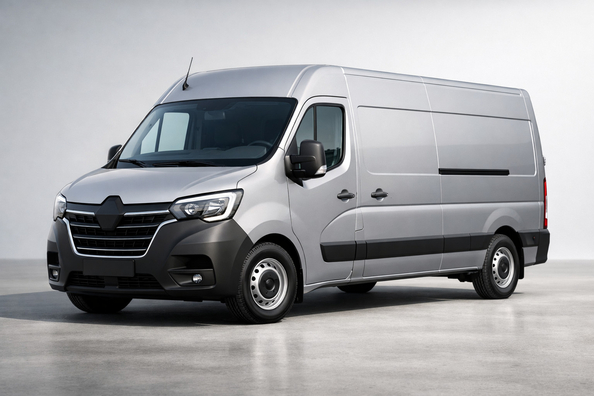
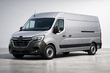
Renault Master after the 2019 facelift is a big work van where the key thing isn’t trim but configuration: wheelbase, roof height, drivetrain, engine, and permissible payload. It fits well in delivery, service crews, installation work, intercity transport, and conversions into special-purpose vehicles. Not the best choice for those who need the agility of a compact city van or passenger-car levels of quietness and softness without a load.
In this review of the updated Renault Master van, it’s worth looking not at the model name in general, but at the specific version. In the Master, the difference between a short front-wheel-drive van and a long rear-wheel-drive vehicle built for heavy work is felt every day.
Renault Master sits in the large commercial van segment alongside the Ford Transit, Mercedes-Benz Sprinter, Fiat Ducato, and related models. Its strong point is an exceptionally wide range of bodies and working configurations: panel van, chassis cab, dropside versions, passenger variants, and special-purpose builds.
After the 2019 update, the model remained utilitarian by character, but became more modern in ergonomics and electronics. If the vehicle works under load, the Master is interesting precisely as a tool: a large usable area, a high roof in higher versions, and the ability to choose the drivetrain for the task.
The 2019 facelift applies to the third generation Renault Master. This is the one most often considered on the used market as a current large business van.
| Generation | Years | What matters |
|---|---|---|
| Master I | 1980-1997 | The first generation of Renault’s large van—simple and purely utilitarian. |
| Master II | 1997-2010 | A serious step forward in ergonomics; the appearance of a broad body family. |
| Master III | 2010-2024 | A new generation with a big choice of wheelbases, roofs, and front- and rear-wheel drive. |
| Master III after the facelift | from 2019 | Updated front end, redesigned interior, refreshed electronics and diesel versions. |
For the buyer, this means one simple thing: if you want a “fresh” Master, it’s worth separating pre-facelift vehicles from the post-2019 versions right away. Visually they’re similar in architecture, but there is a difference in equipment, engine calibrations, and the day-to-day feel from the cab.
The main engine line for the facelifted Master is the 2.3-liter dCi diesels. Depending on the market, the output range differed, but the most common versions are 135, 150, and 180 hp. These are the ones to treat as the baseline when searching. The gearbox in most vehicles is a 6-speed manual; other options should be checked for the specific market and model year.
| Engine | Power | Transmission | Practical scenario |
|---|---|---|---|
| 2.3 dCi | 135 hp | mostly 6-speed manual | City and regional deliveries without constant overloading. |
| 2.3 dCi | 150 hp | mostly 6-speed manual | The most universal balance for a van with payload and highway use. |
| 2.3 dCi | 180 hp | mostly 6-speed manual | Long wheelbases, heavier bodies/conversions, regular high-speed and loaded work. |
In short, weaker versions make more sense where economy matters more than pace; stronger ones are for when the van truly runs loaded. For later diesels, service history of the fuel system and exhaust aftertreatment is important: on a commercial vehicle, this directly affects downtime.
One of the main reasons to choose the Master is the huge body variability. The key here is not to look for an “average” vehicle, but to select length and height right away for your route, depot, and cargo type.
| Parameter | Reference for Master III after 2019 |
|---|---|
| Body length | about 5.05-6.85 m depending on version |
| Wheelbase | around 3.18-4.33 m |
| Body width | around 2.07 m without mirrors |
| Height | about 2.31-2.80 m depending on roof |
| Ground clearance | roughly 170-180 mm, depends on version and load |
| Cargo compartment volume | in the factory van about 8-17 m³; different figures for conversions and special versions |
| Drivetrain | front or rear depending on configuration |
Front-wheel-drive Masters are more practical where a lower loading floor and frequent city stops matter. Rear-wheel-drive versions are more logical for heavier cargo, longer bodies, and more stable work under constant load. The suspension is tuned like a commercial vehicle: the empty van is harsher, but with a load it works much more naturally.
After the facelift, the cab became more convenient in the details: more useful shelves, a proper driving position, clear climate controls, and space for documents, tools, and a phone. For a work vehicle, this matters more than decorative trim. Some versions have a two-seat front passenger bench, which is useful for crews.
Comfort depends on wheelbase and load. Short vans feel easier in the city; long and high ones are more sensitive to crosswinds. For safety, the basics are stability control and hill-start assist, while better trims may include a camera, parking sensors, lane control, and other assistants. For L3-L4, a rear camera or at least parking sensors is almost a must.
In daily work, the Master is strong when the route and body are chosen correctly. For courier work in a dense city center, too long a wheelbase quickly becomes annoying. For installers, service work, furniture, building materials, or regional runs, volume, height, and cargo doors matter more than compactness.
From an owner’s perspective, the main questions are simple: does the vehicle fit by height, is loading convenient, is there enough pull with your actual cargo, and are you overpaying for unnecessary length. An empty Master doesn’t deliver passenger-car comfort, and later diesels like proper servicing and quality fuel. If the van sits more than it drives, or is used in short bursts, that’s not the best operating mode for a modern commercial diesel.
There’s no point looking for “do-it-all” versatility in the Master. It’s a vehicle that’s very good in its role—if the role is defined precisely.
| Pros | Cons |
|---|---|
| Huge choice of lengths, heights, drivetrains, and bodies | Easy to choose the wrong configuration and end up with an overly bulky version |
| Genuinely useful cargo volume | An empty van rides harsher than people expect after a passenger car |
| 2.3-liter diesels are well known on the market | Later emissions systems are sensitive to fuel quality and servicing |
| Front- and rear-wheel drive for different tasks | Long versions are worse in tight yards, parking garages, and narrow ramps |
| A convenient base for conversions and fleet use | A high body reacts more strongly to crosswinds |
For the Renault Master, tuning makes sense when it solves a work task. In practice, the first things to do are items that reduce downtime, simplify hauling, or make the cab more suitable for daily use—not decorative parts.
Before choosing accessories, be sure to verify the wheelbase, roof height, and the type of rear and side doors. In the Master, the differences between versions are too large to rely on universal solutions.
The Renault Master after the 2019 facelift is a strong large van for those who clearly understand their task: what they carry, where they drive, and how much they actually load. It’s worth choosing for space, configuration variety, and work-oriented logic—but not for the promise of passenger-car comfort. This material is based on real selection experience, equipment practice, and real usage scenarios, so the main advice is simple: first define the right body and drivetrain version, and only then think about options and accessories.
| ✔ | A wide range of configurations: different lengths, roof heights, drivetrains, and body types are available. This makes it possible to choose a vehicle for a specific job instead of settling for a compromise version. |
| ✔ | The useful cargo volume and practical layout make the Master convenient for deliveries, service crews, and conversions. For work under load, this matters more than decorative comfort. |
| ✔ | The 2.3-liter diesel engines are well known on the market, and the most common 135, 150, and 180 hp versions cover different scenarios — from city deliveries to heavier bodies and highway use. |
| ✔ | There is a choice between front-wheel drive and rear-wheel drive, so the vehicle can be adapted to operating conditions. Front-wheel drive is more convenient for frequent city stops, while rear-wheel drive is better suited for heavy loads and long bodies. |
| ✔ | After the facelift, the cabin became more practical: more storage spaces, straightforward climate controls, and better ergonomics. For a work van, this makes daily use easier. |
| ✘ | It is easy to make a mistake with the configuration and end up with a version that is too large or inconvenient for your route. In a dense city, the long wheelbase quickly starts to get in the way. |
| ✘ | The empty Master rides stiffly, so it does not offer car-like softness or quietness. This is especially noticeable if the vehicle is often used without cargo. |
| ✘ | Late diesel versions are sensitive to fuel quality and the servicing of exhaust aftertreatment systems. For a commercial vehicle, this can mean downtime if maintenance is not done regularly. |
| ✘ | The high body and long versions react more strongly to crosswinds and feel less at home in tight yards, parking lots, and on narrow ramps. This limits convenience in challenging urban conditions. |
Shipping to EU
Wholesale and retail
Own warehouse
Опис продукту
Подарунки не надаються при оформленні покупки у кредит під 0,01% або при покупці частинами.