 Author: Radomskyi Maksym Vasyliovych
Interior door sills dull quickly not because the plastic is “bad”, but because this is one of the highest-wear zones in the cabin. Sand, moisture, shoe friction, and the wrong chemicals all hit this area at the same time. The key is to tell ordinary film and sole marks from real texture wear: in the first case the look often comes back, in the second—only partially.
Start not with harsh products, but with a proper check. If you first remove dust and sand, then gently clean the surface, you can see whether the issue is superficial or the plastic has already been physically worn down. That determines whether cleaning will help, whether you need a plastic restorer, protection with an accessory, or a full replacement of the trim piece.
Why this problem happens
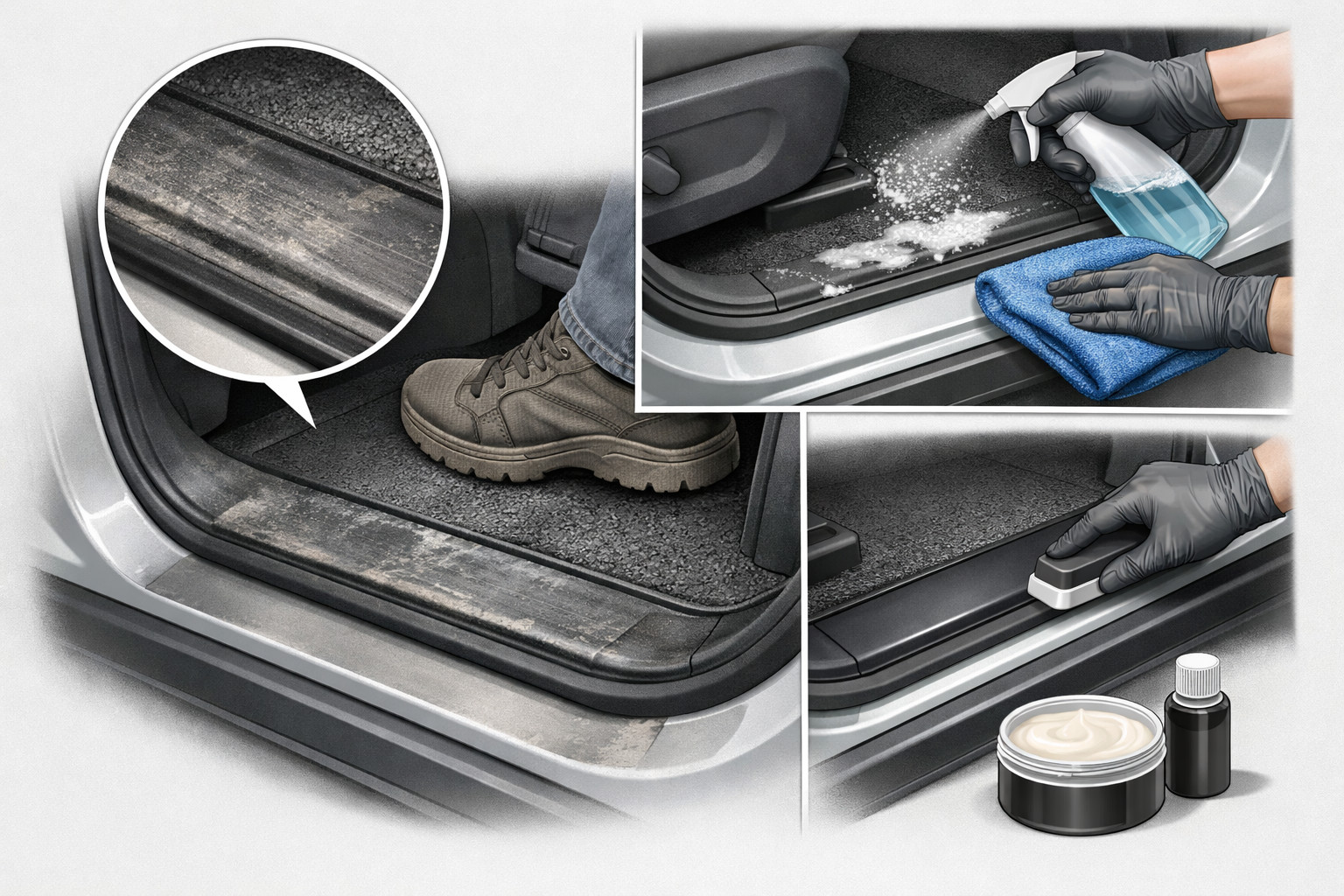
The inner sill constantly takes contact from shoe soles, pant legs, sand, and small stones. When getting in or out, your foot often slides exactly across this area, and the dirt between the shoe and plastic acts like a fine abrasive.
The issue gets worse in winter and during the shoulder seasons: moisture, road chemicals, sand, and stiff boots leave marks faster than in dry weather. In summer, heat and sun add to it—plastic loses an even tone and looks dry even after washing.
Main causes
- Sand and dust aren’t removed before wet cleaning, so you’re effectively rubbing the surface with an abrasive.
- Constant shoe friction polishes the matte texture, and a smooth dull strip appears on the sill.
- Aggressive chemicals or a stiff brush remove the top layer and cause whitish or uneven matte spots.
- Sun and heat dry the plastic out, making it look faded and “washed-out” in color.
- Existing mechanical wear—scratches, chips, worn texture—that won’t be removed by cleaning.
How to understand what the cause is in your case
First vacuum the sill or sweep off sand with a soft brush. Then wipe the area with a damp microfiber cloth. If the dullness noticeably decreases, the cause is mostly film, dirt, or sole marks.
Look at the surface under side lighting. If you see an even smooth strip where the plastic should be textured or matte, that’s mechanical wear. If a scratch catches your fingernail, no gentle cleaner will remove it.
Another clue is how it looks after drying. If the wet sill looks darker and neater for a few minutes and then turns gray again, it’s often a depleted surface that needs a restorer or protection—not repeated washing. Any stronger product should be tested first in an inconspicuous spot.
DD Tuning expert comment: the most common mistake is immediately rubbing the sill with a wet wipe without removing sand first. That fine dirt then becomes the cause of new dullness. The second typical mistake is looking for “stronger chemicals” when the problem is no longer dirt, but worn plastic texture.
Symptoms, causes, and what to do (table)
| Symptom | Likely cause | What to do |
|---|---|---|
| Gray film that partly comes off after wiping | Dust, sand, shoe marks | Remove dry dirt first, then microfiber and a mild soapy solution |
| Smooth lighter strip on a matte sill | Constant sole friction, worn texture | Cleaning will only improve the appearance; then use a plastic restorer or a protective cover |
| Whitish spots after cleaning | Too aggressive a product or excessive rubbing | Rinse residue with a neutral solution, don’t repeat harsh cleaning, assess whether the top layer is damaged |
| Deep scratches, chips, “nicks” | Stones in the tread, heel, mechanical impact | Masking is limited; a sensible option is a cover or replacing the part |
| The issue returns quickly after winter or rain | Constant shoe-borne abrasion and moisture | Clean the entry area more often, add sill protection or a mat in this area |
What really helps
- Dry cleaning before washing. This is the basic step—without it, even a good cloth starts sanding the plastic.
- Gentle cleaning. Water, microfiber, and a mild soapy solution are the lowest-risk option. For textured surfaces, use a soft brush without heavy pressure.
- Plastic restorer. If the surface is clean but looks dry and unevenly dull, a restorer often brings back color and makes the area look more uniform.
- Protection after restoration. If shoes keep hitting the sill, the result won’t last long without physical protection.
In some cases, a melamine sponge can work spot-wise, but it’s not a basic method. It behaves like a very fine abrasive, so on textured or delicate plastic it’s easy to make things worse. Consider it only for a small mark and only after testing in an inconspicuous spot.
What almost doesn’t work or helps only briefly
Quick shine from silicone- or wax-based products often only masks the problem for a short time. After a few washes—or even a few days of active use—the sill looks uneven again, and dust sticks faster.
Alcohol, solvents, strong degreasers, and stiff brushes are a bad idea. They can remove not only dirt but also the top layer of plastic or change its texture. And trying to “scrub it back to new” where the texture is already worn off won’t work: there’s nothing to clean because the material is already worn.
When accessories or replacing parts makes sense
If the sill keeps dulling again and again in the same spot, the issue isn’t only care—it’s repeated contact. In that situation, it makes sense to install plastic door sill covers: they take the daily friction and cover the area that has already lost its neat look.
When you need to cover the edge more firmly or hide noticeable scuffing, door sill covers are appropriate. And if the main enemy is sand and moisture that keeps landing right in the entry zone, a practical add-on is EVA mats for door sills, because they catch the abrasive before it contacts the plastic.
Replacing the factory trim makes sense when the texture is almost completely worn off, there’s deep damage, or previous failed cleaning has left irreversible stains. If the issue is superficial, replacement is simply an unnecessary expense.
Solutions: when it works and when it’s not worth spending money (table)
| Solution | When it works | When it’s not worth spending money |
|---|---|---|
| Microfiber, water, mild soapy solution | There’s film, dirt, sole marks without deep wear | The texture is already worn, there are deep scratches or chips |
| Soft brush for texture | Dirt is embedded in the relief of hard plastic | The surface is delicate, already damaged, or starts whitening from rubbing |
| Plastic restorer | The plastic is clean but dry, unevenly dull, without serious damage | There are deep scratches, chips, destroyed relief |
| Melamine sponge spot use | You need to remove a single stubborn mark on durable plastic after testing | You need to rub a large area; the plastic is matte, textured, or scratches easily |
| Cover, film, or part replacement | You need long-term protection or there is already irreversible wear | The problem is just dirt that you haven’t tried to clean correctly yet |
From a customer’s experience: after winter, the owner of a crossover wanted to “polish out” a light strip on the driver’s sill. After gentle cleaning, only the film came off, and underneath remained a smooth area from constant contact with a boot. In the end, he didn’t spend money on harsh chemicals, but covered the zone with a sill cover—because it restored a neat look and stopped repeat wear.
Conclusion
Fast sill dulling almost always comes down to three scenarios: surface dirt, shoe marks, or real plastic wear. If the appearance noticeably improves after proper gentle cleaning, you can solve it with care and prevention. If the texture is already worn or there is deep damage, fully restoring the factory look usually won’t be possible—then masking, accessory protection, or replacing the element is what works.
This material is based on real selection experience, hands-on practice, and real usage scenarios—not myths about “magic” chemicals. That’s why the best result comes not from the strongest product, but from correctly understanding the cause and making a rational choice of solution.
How it works
- Remove dry dirt First, vacuum the sill or sweep away the sand with a soft brush. This is important because if you immediately wipe it with a wet cleaner, the fine abrasive will only dull the plastic even more.
- Assess the surface condition Wipe the area with a damp microfiber cloth and look at the sill in side light. If the dullness is significantly reduced afterward, the cause is mostly buildup; if you can see a smooth lighter strip or feel scratches, that is already wear of the texture.
- Clean gently For basic cleaning, use a microfiber cloth, water, or a mild soapy solution. For textured plastic, you can use a soft brush without strong pressure, but do not scrub hard.
- Check whether restoration is needed If the surface is clean but looks dry and unevenly dull, try a plastic restorer. The product makes sense only when the top layer is not destroyed and there are no deep chips or worn texture.
- Secure protection against repeated wear If shoes regularly scuff the sill, cleaning alone is not enough. In that case, plastic sill protectors, sill trims, or EVA sill mats will help, taking on the main friction and moisture.
- Do not use aggressive products unless necessary Alcohol, solvents, strong degreasers, and stiff brushes can damage the top layer and make stains even more noticeable. If the sill still looks worn after proper cleaning, it is better to consider masking or replacing the part rather than trying to scrub it "back to new".
Pros and cons
Explains how to tell surface buildup from actual wear on the threshold. This helps avoid wasting time and money on unnecessary products when the plastic is already worn through.
Gives a clear and safe sequence of steps: first dry cleaning, then gentle cleaning. This approach reduces the risk of scratching or dulling the plastic further.
Shows when a plastic restorer makes sense and when physical protection is needed instead. This is practical for choosing between care, a cover, or replacing the part.
Separately warns about harmful products and tools, including alcohol, solvents, stiff brushes, and harsh chemicals. This helps avoid damaging the top layer of the plastic during cleaning.
Offers several workable scenarios depending on the symptoms: buildup, a light stripe, whitish spots, deep scratches. This makes it easier to choose the right action for a specific issue instead of guessing.
If the texture is already worn away or there are deep scratches and chips, cleaning will not restore the factory look. In such cases, the article openly acknowledges the limits of care.
A melamine sponge can only be used locally and after testing in an inconspicuous area. For a large surface or delicate plastic, it is risky and can make things worse.
Plastic restorer works only on a clean, dry surface without serious damage. If the wear is already deep, its effect will be limited.
To make the result last longer, additional trims, mats, or other physical protection are often needed. Without this, the threshold quickly becomes dull again in places of constant contact with shoes.