13.08.2026
144
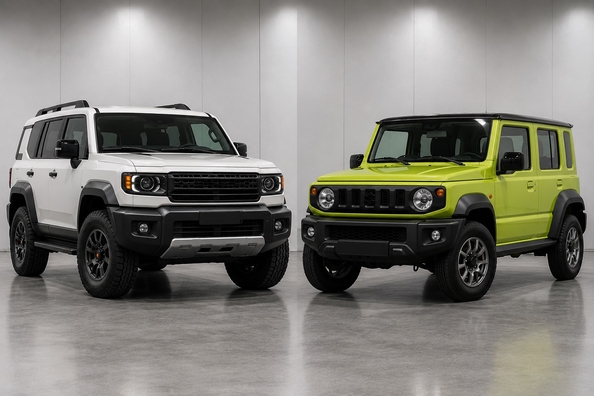

The short answer is: if you need a truly compact body-on-frame SUV for the city, narrow roads, snow, easier parking, and a lower budget, the Suzuki Jimny 5-Door is the more rational choice. If the car will spend time on the highway, carry a family and luggage, and regularly cover long distances, then the stronger argument is the Toyota Land Cruiser FJ.
Both models are body-on-frame with part-time 4WD, but they solve different tasks. The FJ is significantly larger, more powerful, quieter, and more practical, but it’s also much more expensive to buy and to fuel. The Jimny is simpler, cheaper, and very convenient where every centimeter of body size matters, but on the highway and on long trips it tires you out faster.
The main fork here isn’t which one is the more “real” off-roader. Both have a ladder frame, a low-range transfer case, and honest off-road architecture. The point of the choice is different: Jimny is a bet on compact size, simplicity, and lower running costs; FJ is a bet on versatility, torque reserve, better highway suitability, and family practicality.
The Land Cruiser FJ is 685 mm longer, 210 mm wider, and 235 mm taller. You feel that immediately in the cabin, the cargo area, and the way it behaves on the highway. But those same dimensions make it less convenient in a tight city, and the difference in starting price and fuel consumption goes beyond a “small extra payment.”
The right comparison for cars like these starts not with the badge on the grille, but with five practical criteria.
| Option | Strengths | Weaknesses | Who it suits |
|---|---|---|---|
| Toyota Land Cruiser FJ | Better torque reserve, quieter and calmer highway driving, 5 seats, large cargo area, more modern driver assists | Higher price, higher fuel consumption, larger city footprint, more expensive accessories and upkeep | Those who want one vehicle for everyday use, family trips, and getting off the pavement |
| Suzuki Jimny 5-Door | Compact size, lower budget, good off-road geometry, simple body-on-frame layout, more economical engine | Tighter cabin, weaker torque reserve, more noise and fatigue on the highway, limited cargo practicality | Those who prioritize the city, narrow roads, short outings, snow, dirt roads, and lower monthly costs |
The FJ is strong not because it’s simply “bigger.” Its advantage is that this size converts into everyday usefulness: proper second-row seating, 5 seats, a large cargo area, calmer behavior at speed, less noise, and a better torque reserve when loaded. For a family or for those who often drive on the highway, you feel it every day.
The 2.7-liter gasoline engine with 163 hp and 246 N·m fits the weight, luggage, and long routes better than the 1.46-liter unit in the Jimny. This doesn’t mean sporty dynamics, but it does mean less strain when overtaking, climbing, and driving with gear. This is also where the service-life question shows up: when a vehicle isn’t constantly driving “on the edge,” it’s less irritating in daily use.
The FJ’s weak point is simple: you pay twice for comfort and practicality—at the checkout and at the fuel pump. The official consumption is already high, and in real life it can be even higher. Also, Toyota hasn’t published exact ground clearance and approach/departure numbers specifically for the FJ, so if raw geometry is critical for you, the Jimny looks more transparent on specs.
The Jimny 5-Door wins in a different way. It’s for those who want maximum off-road honesty in the smallest possible body. It’s much shorter and narrower than the FJ, so it’s easier to park, simpler on narrow forest or mountain roads, and less nerve-wracking in the city. At the same time, 210 mm of ground clearance and known off-road angles show it’s not a decorative crossover.
Its weakness is just as obvious: 101 hp and 130 N·m are enough for a calm pace, but they don’t provide the reserve you want on the highway or with a full load. The five-door body made the Jimny more convenient than the three-door, but it didn’t turn it into a family wagon. The rear row and cargo area remain a compromise, and the noise and reactions at speed remind you that this is a small ladder-frame SUV, not a typical urban SUV.
Another important point is tuning installation. There are many accessories for the Jimny, but for the Nomade you need to check compatibility of specific solutions separately. The mistake of “I’ll take it from the Sierra because it’s almost the same” can easily end in extra costs for modifications or reinstallation.
For the city and dense daily traffic the Jimny is the more logical choice. Not because of the stated turning radius, but because of body width and length: in a narrow courtyard or a tight parking lot, that matters more.
For highway driving, family use, and regular trips the FJ is better. Here, quietness, torque reserve, a proper second row, and a large cargo area matter—not just the fact it has a ladder frame.
For off-road trips in a “get in and go” format the Jimny is very strong, as long as the route doesn’t require many people and lots of gear. For a universal “workdays plus long weekends” scenario the FJ looks more advantageous, because it involves fewer compromises on asphalt.
| Scenario | What to choose | Why |
|---|---|---|
| City, narrow streets, daily parking | Suzuki Jimny 5-Door | Smaller body, easier to maneuver, and less stress in tight spaces |
| Long highway trips | Toyota Land Cruiser FJ | Holds pace better, quieter, more comfortable for long drives |
| One car for the family | Toyota Land Cruiser FJ | 5 seats, larger cargo area, more comfortable second row |
| Short nature outings, snow, dirt roads | Suzuki Jimny 5-Door | Compact size and honest off-road layout deliver a lot of value for less money |
| Regular transport of equipment | Toyota Land Cruiser FJ | 795 L cargo area and better load-carrying practicality |
| Lower budget for purchase and fuel | Suzuki Jimny 5-Door | Noticeably cheaper entry price and a more economical engine |
Paying extra for the Land Cruiser FJ is justified when the car won’t be a weekend toy, but the main vehicle for all roles at once: city, highway, family, luggage, long trips. In that scenario, quietness, torque reserve, and real practicality quickly become not a luxury, but everyday convenience.
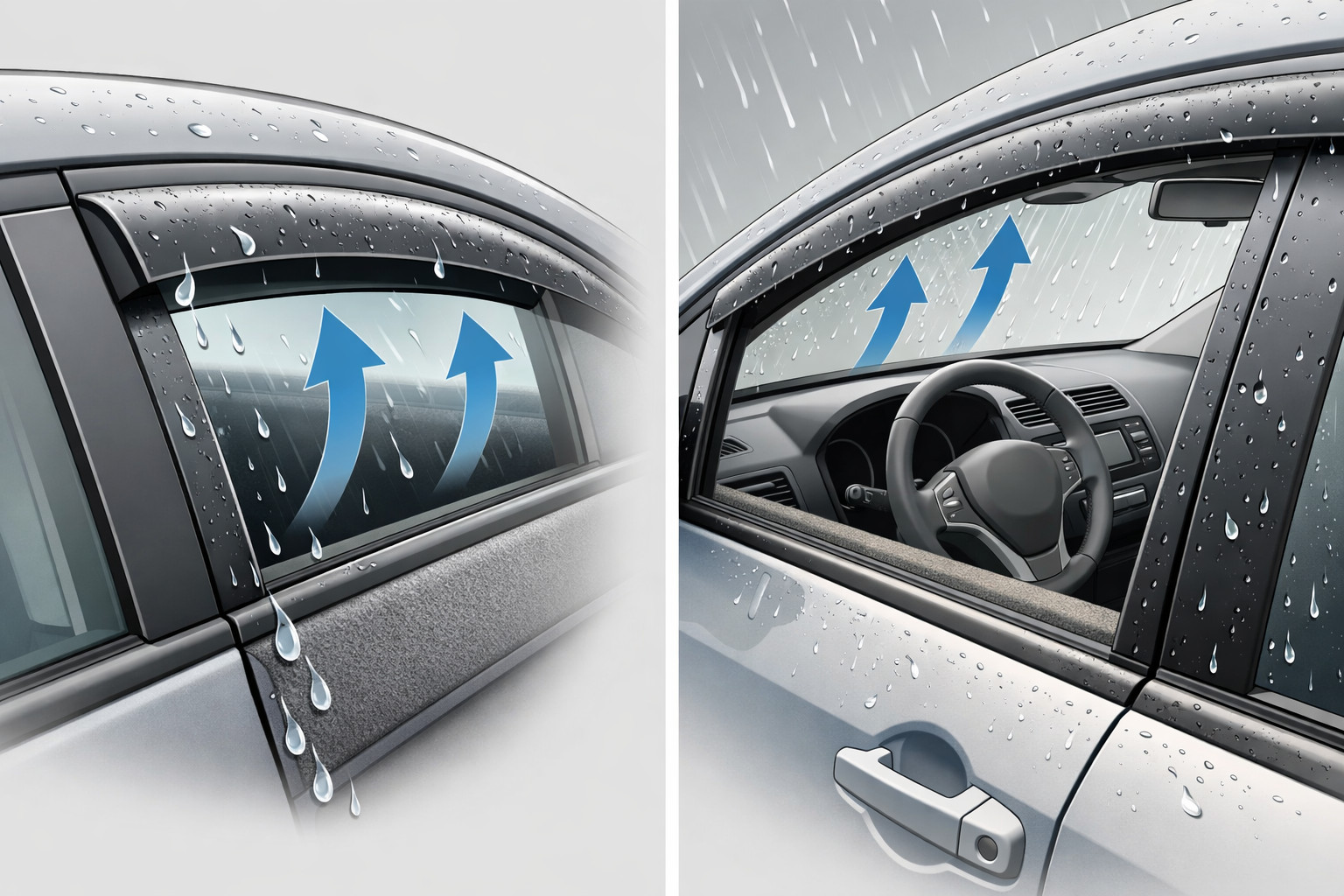
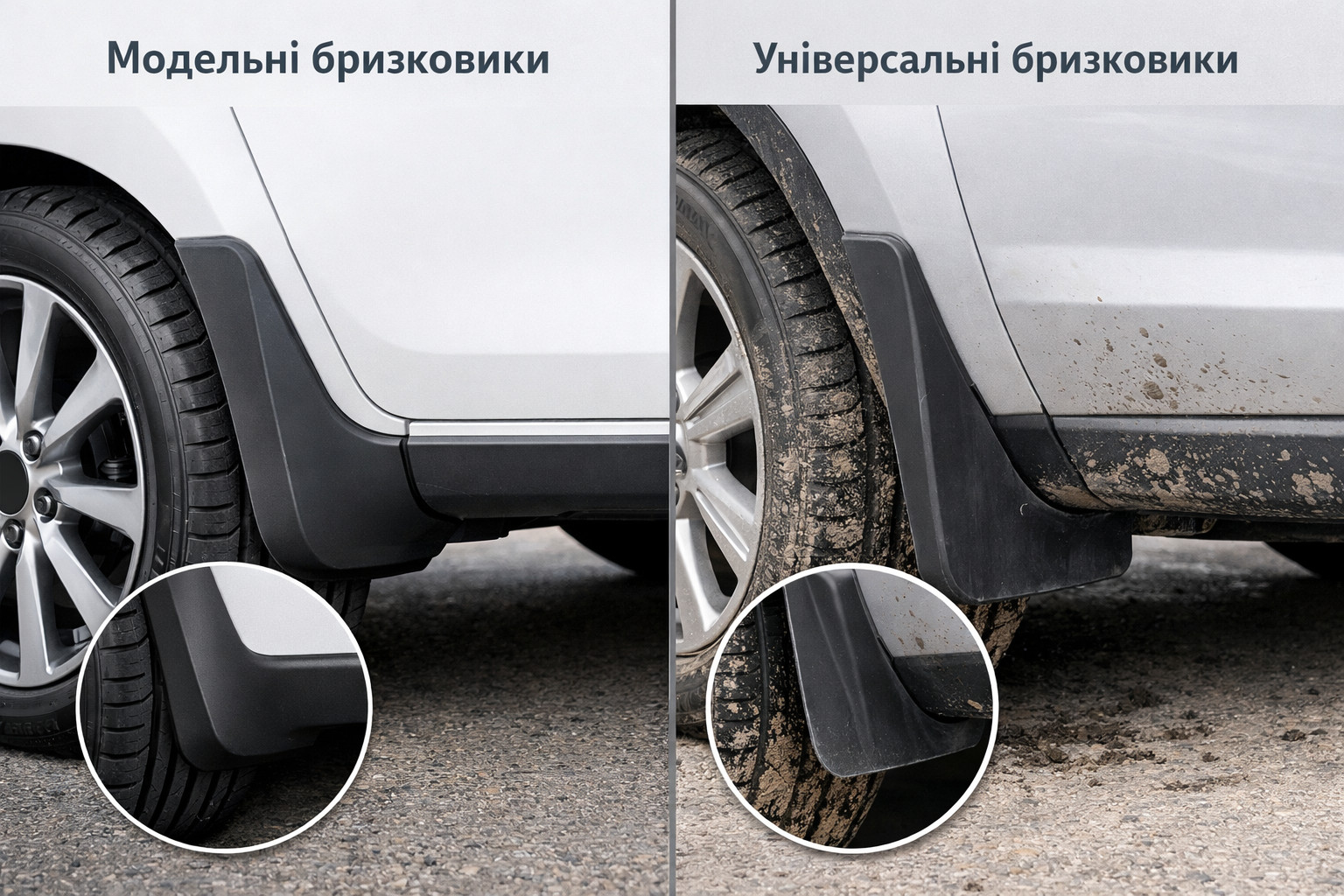
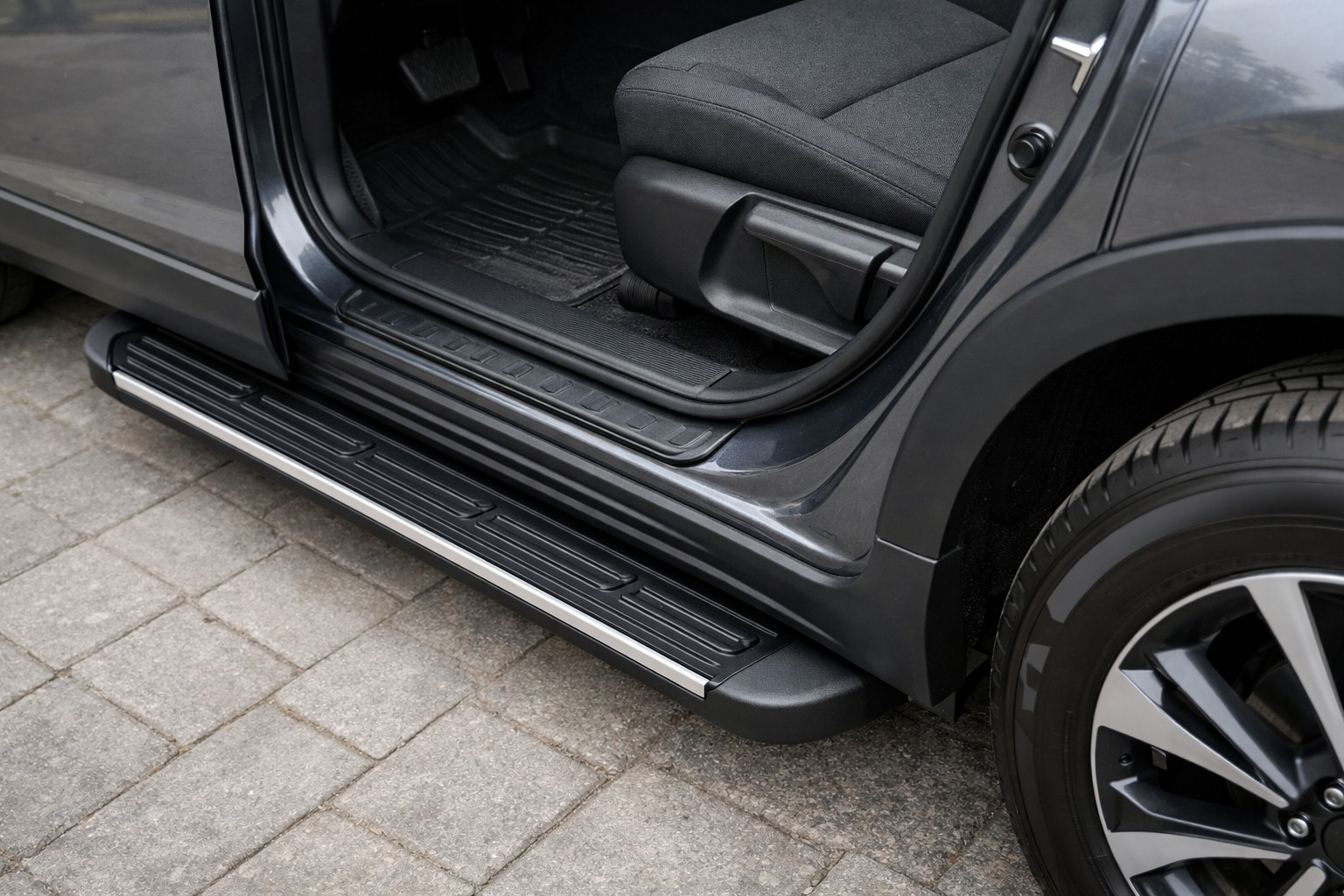
If you’re already looking in that direction, it makes sense to plan a useful—not decorative—set right away: a roof rack for an off-road vehicle for trips, rubber floor mats for mud and snow, and mud flaps if the vehicle regularly drives on bad roads. This is exactly the case where a more expensive base makes sense only when you truly use its capabilities.
If you need a compact, simple, and relatively affordable body-on-frame vehicle for the city, snow, narrow roads, and shorter outings, it’s better to go with the Suzuki Jimny 5-Door. If you need one vehicle for everyday use, family, highway driving, and luggage, then the Toyota Land Cruiser FJ is objectively stronger—though noticeably more expensive. Remember one simple thing: people choose the Jimny for compactness and honest simplicity; they choose the FJ for versatility without constant compromises on asphalt.
| ✔ | Jimny 5-Door is more cramped for adults and cargo, and its five-door body does not turn it into a full-fledged family wagon. If you often drive with four people and luggage, the compromises become apparent quickly. |
| ✔ | On the highway, the Jimny is noisier, more affected by crosswinds, and more tiring on long trips. Its 101 hp and 130 Nm engine also does not offer much reserve under load. |
| ✔ | The Toyota Land Cruiser FJ is more expensive to buy, uses more fuel, and generally costs more to own. On top of that, there are higher costs for tires, accessories, and sometimes installation. |
| ✔ | The FJ is less convenient in dense city conditions because of its larger dimensions. In tight yards and parking lots, this can be more inconvenient than in the Jimny. |
| ✔ | The article does not provide exact figures for the FJ's ground clearance and approach/departure angles. If the raw geometry numbers are critical for you, it looks less transparent in the comparison. |
| ✘ | The compact dimensions of the Jimny 5-Door make it more convenient in the city, on narrow streets, and in tight yards. It is easier to park and simpler to maneuver where every centimeter matters. |
| ✘ | The Toyota Land Cruiser FJ is better suited for highway trips and regular travel. It has quieter behavior, better torque reserve, and a more comfortable second row. |
| ✘ | The FJ is more practical for family use and carrying cargo: it has 5 seats and a 795 l trunk. This makes it more convenient as a main daily car and for weekend getaways. |
| ✘ | The Jimny 5-Door looks like a strong option for short trips outdoors, snow, and dirt roads. The article emphasizes that it has a proper body-on-frame design and good geometry, while also being cheaper and more economical. |
| ✘ | There is a large market of tuning and accessories for the Jimny, giving room for upgrades to suit your needs. This is useful if you plan to adapt the vehicle to specific routes or a particular style of use. |
Shipping to EU
Wholesale and retail
Own warehouse
Опис продукту
Подарунки не надаються при оформленні покупки у кредит під 0,01% або при покупці частинами.