
































































 Author: Radomskyi Maksym Vasyliovych
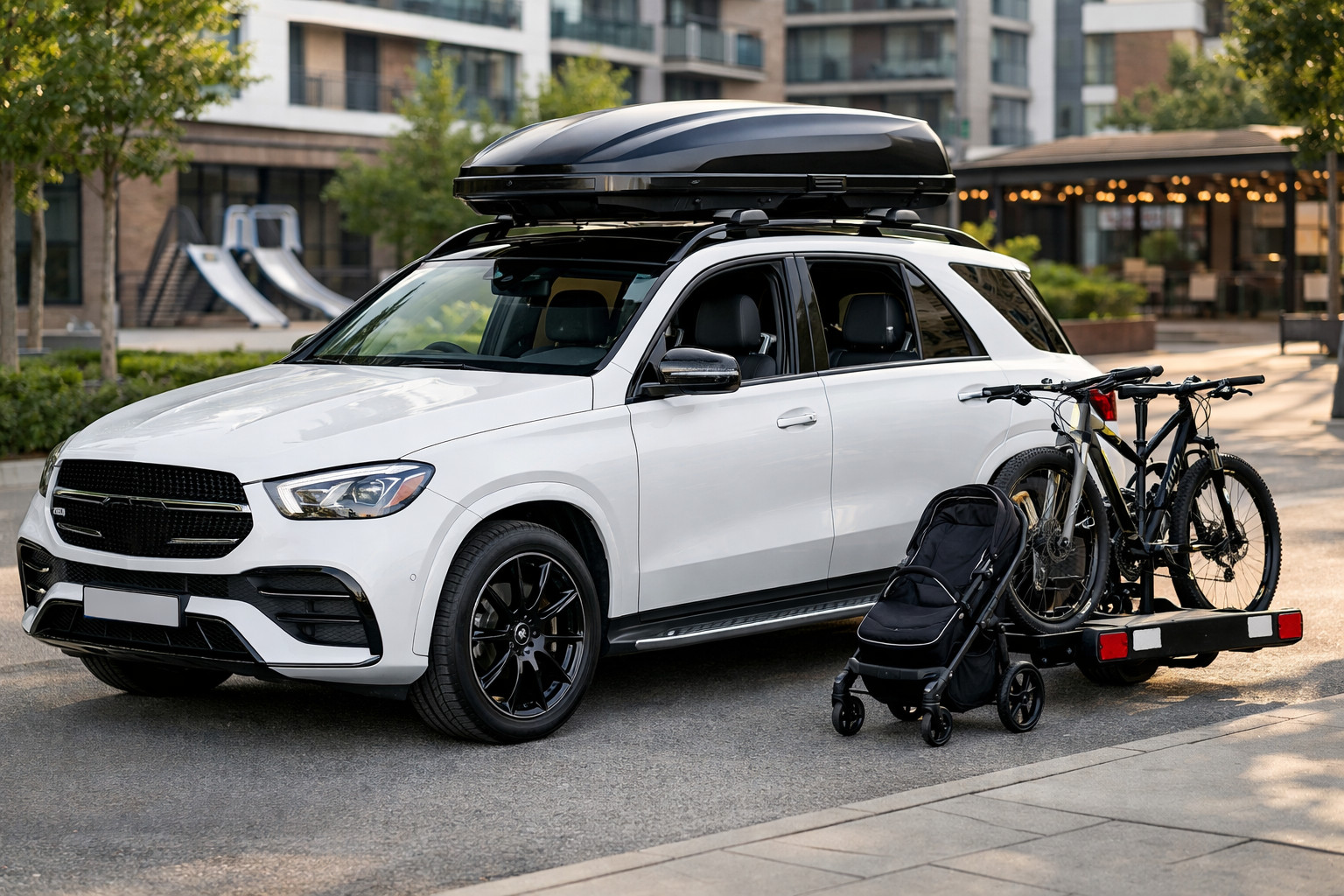
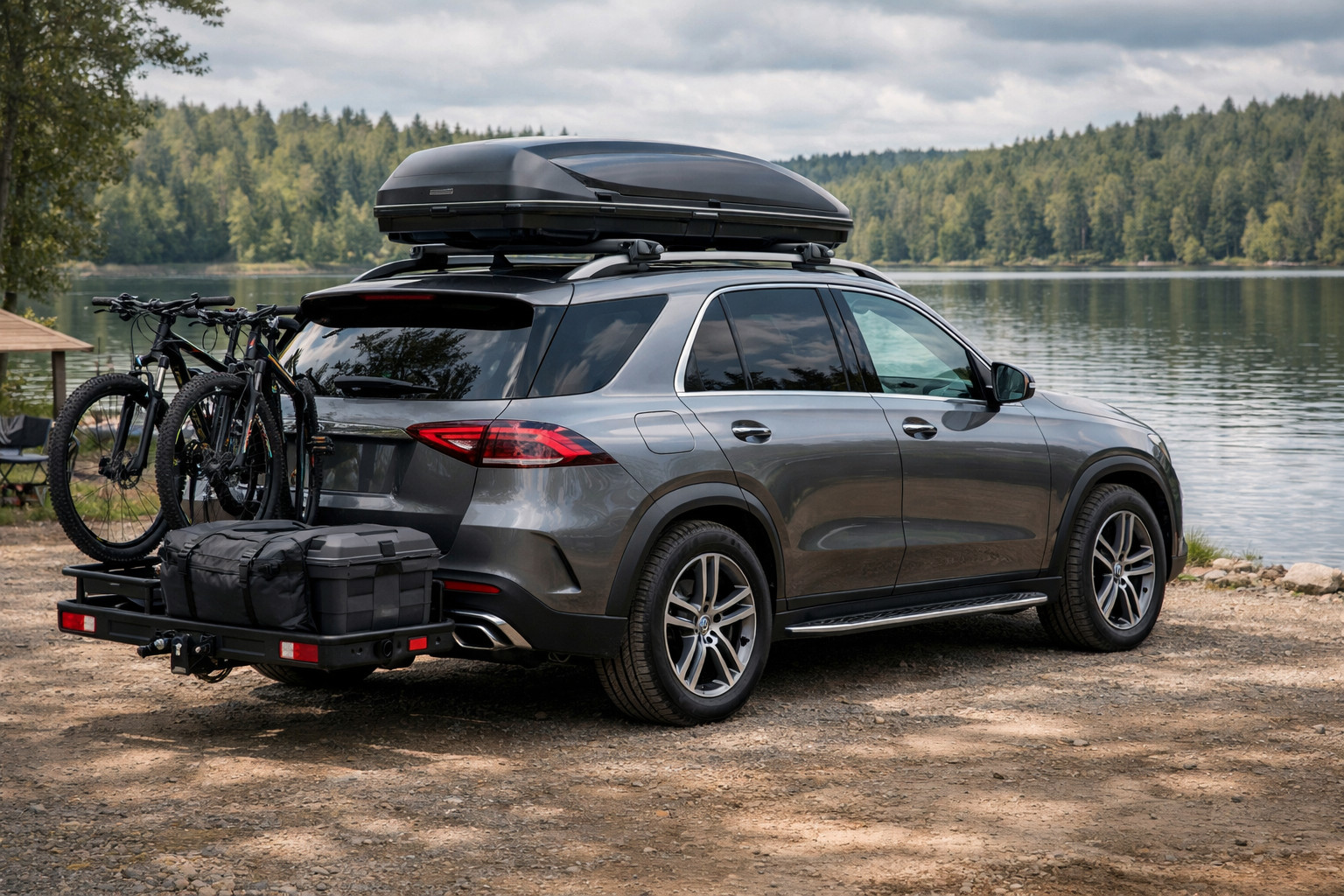
This upgrade plan is for a Mercedes GLE W167 owner who drives with the family, carries suitcases and kids’ stuff, sometimes a stroller, and wants to move bulky luggage onto the roof without cramming the cabin. If that’s exactly the goal, the key is not to “decorate” the car, but to free up space inside without compromising safety—and without buying a setup that’s noisy, interferes with the tailgate, or fails the load rating.
The GLE W167 has a large trunk as it is, but with 4–5 passengers it runs out faster than you’d think. So the right order is simple: first the roof base, then the volume on the roof, then protection and securing items in the trunk—and everything secondary only after a few trips. Importantly, this is specifically about the W167 with roof rails; for a different body, model year, or trim, clearances and compatibility must be checked separately.
What this upgrade needs to accomplish
For family trips, the upgrade should solve three things. First, move bulky but not very heavy items out of the cabin and main trunk so you’re not stacking them up to the windows. Second, keep normal access to everyday essentials in the lower trunk: first-aid kit, snacks, kids’ clothes, small bags should stay within reach. Third, stay within the allowable roof load and avoid conflicts with the tailgate or panoramic roof.
In practice, that means: light, bulky items go up top; heavier items and anything you’ll need on the road stay down below. If everything ends up on the roof, including heavy suitcases, the upgrade is working against you. For the GLE W167 it’s also important to accept upfront that crossbars and a roof box can add highway noise—so the goal here isn’t absolute silence, but a sensible balance between capacity, fit on the rails, and everyday usability.
What’s worth doing first
Step one is vehicle-specific crossbars for the factory roof rails. Without them, there’s no point talking about a roof box or any proper roof setup. For the GLE W167, it should be a kit that fits without modification and doesn’t leave you guessing whether there’s enough clearance to the tailgate.
Step two is a roof box around 400–450 liters. This format usually covers the family use case better than a small box that technically exists but doesn’t actually take the main volume. Don’t look only at liters: you must account for the box’s own weight, the crossbars’ weight, and the real cargo weight. You should follow the lowest limit in the entire setup, not the prettiest number in the description.
Third priority isn’t another roof accessory—it’s order in the lower trunk. Once you have a box on top, it makes sense to protect the trunk floor and plan how you’ll secure items. It doesn’t add liters, but it prevents dirt, scratches, and bags sliding around under braking.
Upgrade: why it’s needed, who it benefits
| Upgrade | Why it’s needed | Who it actually benefits |
|---|---|---|
| Vehicle-specific crossbars for factory roof rails | Create the base for safe installation of a roof box and other mounts | Anyone who truly plans to carry things on the roof—not just once “for a photo” |
| Roof box 400–450 L | Moves light bulky luggage up top and frees the cabin and lower trunk | Families of 4–5 people, long trips, vacations, winter and summer travel |
| Cargo tray or reversible trunk mat | Protects trim from water, sand, dirt, stroller wheels, wet gear | Those who often load kids’ items, shoes, scooters, bags after rain |
| Trunk sill protector | Prevents scratching the edge when loading heavy or awkward items | Those who often load suitcases, boxes, a folded stroller |
| Strap or cargo net for securing | Stops items from shifting in the trunk during braking and turns | Those whose trunk is filled up to the cover or higher |
| Rear entertainment kit for kids | Makes long drives easier when kids genuinely get tired on the road | Only for those who frequently travel far and don’t want to solve it with tablets and planned stops |
DD Tuning expert comment: The most common mistake on the GLE W167 is buying the box first and only then trying to подобрать crossbars for it, when the logic should be the opposite. The second typical issue is people count only usable volume but forget the box’s own weight, the roof load rating, and tailgate clearance. For this scenario, the kit should be built as a system, not as a set of separate good-looking items.
What makes sense to add as a second stage
Stage two is everything that doesn’t increase capacity but makes trips calmer. First of all, that’s a tray (or other practical floor protection), a sill protector, and cargo securing. After the first two or three trips it becomes obvious that the problem often isn’t only volume, but also the fact that wet items, bags, and kids’ packs keep sliding around the trunk.
This is the point where it makes sense to decide whether you need a net or straps. If you load only up to the cargo cover, basic securing is enough. If some items sit higher, or the trunk often carries bags of different shapes, securing moves from “nice to have” to “must-have.” In a family scenario, this is often more important than any decorative accessory.
What’s more about comfort or looks
This group includes things that are nice, but don’t solve the core luggage-transport task. For some it’s a rear entertainment kit; for others it’s seat covers, wind deflectors, or exterior trim pieces. They can make sense if you have a separate reason to install them, but they don’t replace crossbars, a roof box, or proper trunk organization.
To put it bluntly: for a family GLE W167, exterior “dress-up” almost never delivers the effect of one properly selected roof setup. Overpaying for looks hurts the most when you still have to buy the basics afterward: crossbars, a roof box, and trunk protection.
What people often buy for nothing
Most often, money is wasted on universal or questionably compatible “almost fits” solutions. On the GLE W167 that’s a bad scenario: the risk of extra noise, imperfect fit, and constant compromises is too high. The second mistake is choosing a box that’s too small just because it’s cheaper or looks more compact. For a family and vacation use, a small box often turns into an in-between purchase you quickly want to replace.
Another common mistake is driving with crossbars all the time without need. If the roof is used a few times per season, there’s no point carrying the set year-round and living with the noise. A separate story is putting heavy suitcases into the box just because there’s space. On the roof, light volume works best—not a heavy center of mass above the vehicle.
What to install first, what to postpone, what isn’t mandatory
| Install first | Can be postponed | Not mandatory | Why |
|---|---|---|---|
| Crossbars for factory roof rails | Trunk tray | Decorative trim pieces | Without crossbars, the roof can’t function as a transport zone; a tray is useful but not critical for the first trip |
| 400–450 L roof box | Trunk sill protector | Rear entertainment kit | The box is what delivers real capacity; the sill protector is worth adding if you load often and heavy |
| Straps or net if the trunk is packed tight | Organizers and small accessories | Keeping crossbars on year-round | Securing is needed for safety, while organizers are best bought after a few trips based on your real scenario |
A ready upgrade plan for this scenario
- Make sure you have a GLE W167 with the correct type of roof rails, and check the roof load limits for your version.
- Install vehicle-specific crossbars, not a universal compromise.
- Choose a 400–450 liter-class roof box for them if you truly travel as a family and carry bulky luggage.
- After installation, check tailgate opening, roof clearance, and the car’s overall height for parking garages.
- Add a tray, sill protection, and cargo securing in the lower trunk if wet or dirty items are often carried.
- Only after a few trips decide whether you really need secondary items like second-row multimedia or decorative accessories.
When it makes sense to choose more expensive solutions
More expensive solutions are justified when the roof setup will be used often: long highway runs, seasonal vacations, trips with kids several times a month. In that case, it makes sense to pay for better fitment, reasonable aerodynamics, proper locks, and predictable compatibility—not just a loud name. If you want to start with a specific option, take a look at the vehicle-specific crossbars; if you’re comparing different versions, the roof racks for rails section is helpful; and for protecting the lower trunk for everyday items, it’s worth separately checking trunk mats.
If trips are rare and short, overpaying for the most expensive setup isn’t always sensible. It’s better to invest in the right base than in the priciest accessory with extra features you won’t use.
From a customer’s experience: A GLE W167 owner was looking for a way to go on vacation as a family of four without suitcases in the cabin and without items stacked up to the side windows. In the end, he built a simple setup: crossbars, a mid-to-large volume roof box, and lower trunk protection. The biggest advantage wasn’t the liters themselves, but the fact that the cabin stayed spacious and the items needed on the road remained quickly accessible.
Conclusion
For a Mercedes GLE W167 in a family-trip scenario, the most sensible order is: first vehicle-specific crossbars, then a 400–450 liter roof box, then protection and securing in the lower trunk—and only after that any secondary items. This approach delivers the most practicality for the money and filters out purchases that look good but don’t solve the main task.
The material is based on real selection experience, hands-on practice, and real-world use cases. That’s why the main advice here is simple: don’t start with decor and don’t measure the kit only in liters or price. For the GLE W167, a system approach works—where compatibility, load ratings, clearances, and your real scenario matter more than any marketing noise.
How it works
- Check compatibility and roof limits Make sure you have a Mercedes GLE W167 with the correct type of roof rails. First, check the permissible roof load and the clearance to the tailgate so you do not buy a kit that will not fit.
- Install model-specific crossbars Start with the roof base — model-specific crossbars for the factory roof rails. Without them, there is no point in choosing a box or other mounts, and it is better not to take universal solutions.
- Choose a 400-450 L roof box For family trips and bulky luggage, a medium-large box is the best choice. Consider not only the volume, but also the box’s own weight, the cargo weight, and the overall load limit.
- Check tailgate opening after installation After installing the box, be sure to make sure the tailgate opens without interference. Also check the vehicle’s overall height if you plan to use parking garages or low clearances.
- Organize the lower cargo area Add a tray or reversible mat, a sill guard, and cargo securing with a net or strap if you often carry wet, dirty, or awkward items. This will protect the trim and keep bags from moving around while driving.
- Leave secondary accessories for test drives Decorative trims, multimedia for the second row, and other non-essential items are better bought after a few trips. First, check whether the basic setup with crossbars, a box, and cargo protection is enough for you.
Pros and cons
Model-specific crossbars on factory roof rails provide a proper base for safe box installation and don’t force you to adapt the set to the car. For the GLE W167, this is also important because of the clearance to the trunk lid and compatibility with a specific version.
A 400-450 liter roof box really frees up the cabin and lower trunk on family trips. This capacity is better suited for suitcases, children’s items, and bulky lightweight luggage than a small box, which quickly becomes insufficient.
A cargo tray or reversible trunk mat helps protect the trim from water, sand, dirt, and wet items. It’s practical for trips with a stroller, children’s bags, or gear after rain.
A trunk sill protector reduces the risk of scratches when loading heavy or awkward items. For a scenario with suitcases and a folded stroller, this is a useful small detail that really helps preserve the trunk edge.
A cargo strap or net increases safety on the road, because bags don’t shift under braking or in corners. This is especially relevant when the trunk is packed up to the cover or higher.
A roof rack adds noise on the highway, so it won’t be completely silent. If the car often drives without cargo on the roof, the crossbars may just create this noise unnecessarily for a long time.
Universal or poorly compatible solutions for the GLE W167 can result in poor fit, extra noise, and constant compromises. As a result, you have to spend time and money on choosing instead of getting proper installation right away.
A small box looks more compact and may cost less, but for a family it often doesn’t solve the main task. In the end, it becomes an intermediate purchase that you’ll later want to replace with a larger one.
There is no point in carrying crossbars all year round if the roof is used only a few times a season. That means extra noise and extra installation without any real everyday benefit.