

































































 Author: Radomskyi Maksym Vasyliovych
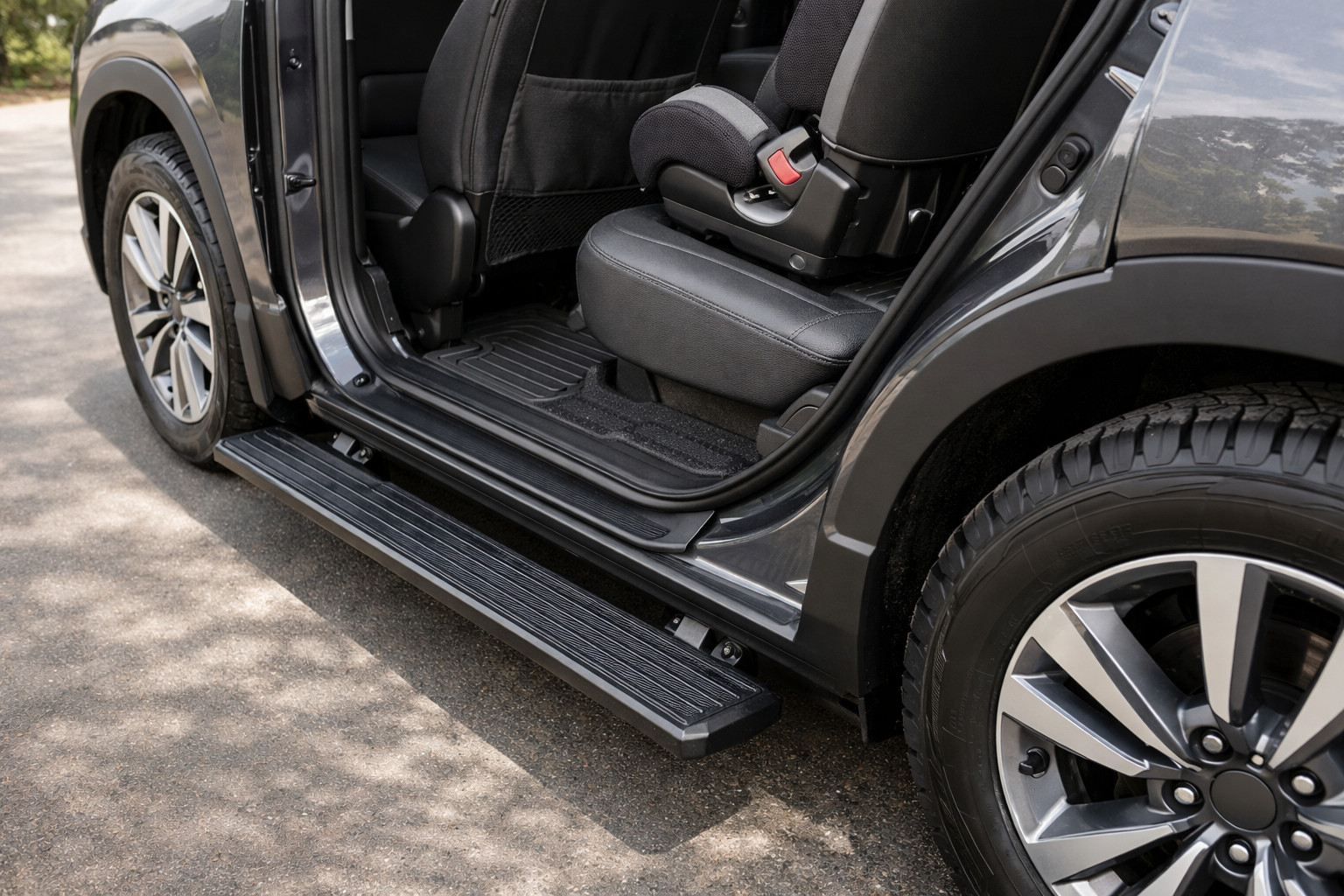
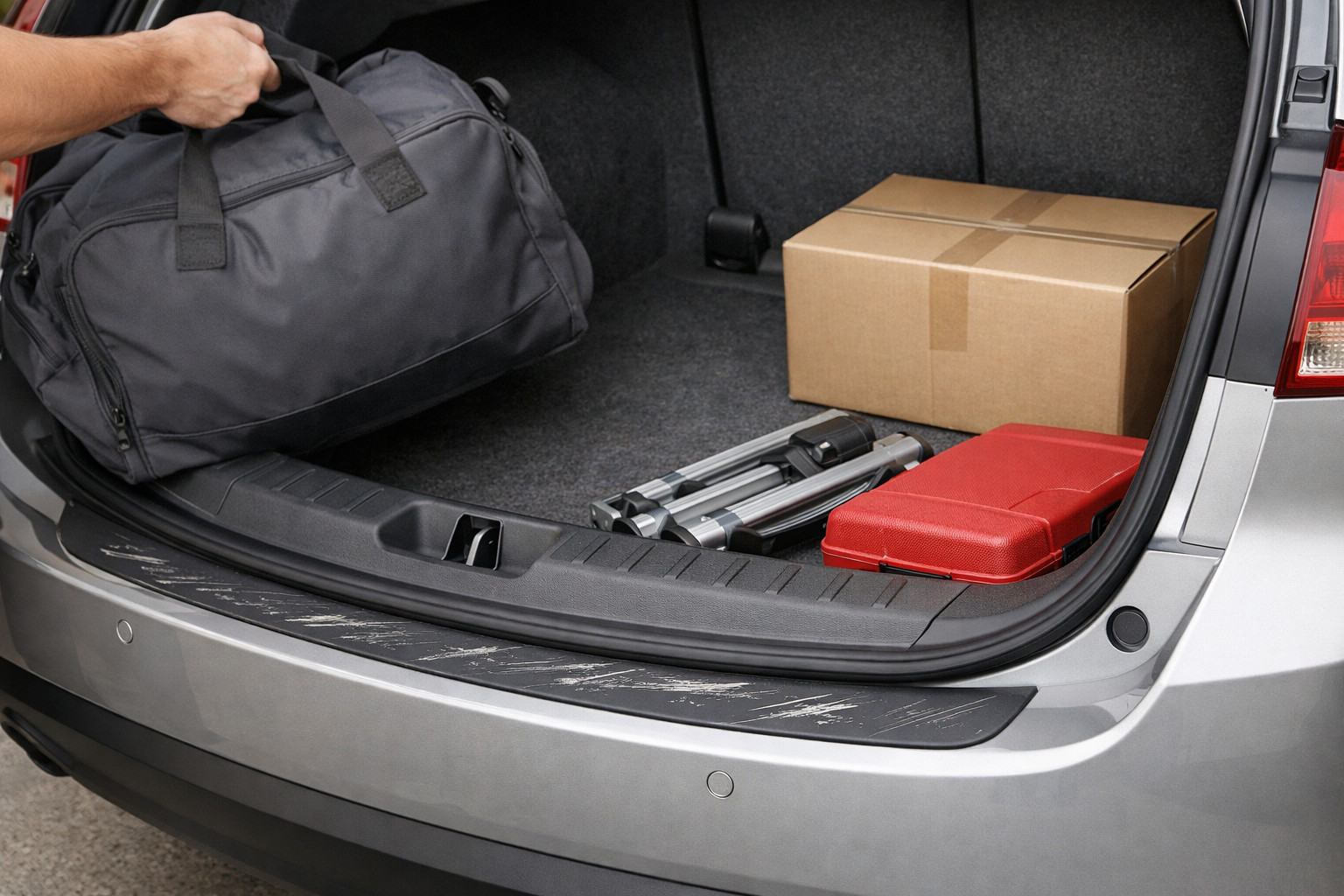
If scratches appear very quickly when loading the trunk, the problem is usually not the tailgate itself, but the upper edge of the loading opening or the trunk sill. This is exactly where boxes, bags, strollers, tools, dirty plastic containers, and pets’ paws constantly rub against the edge.
The key is to correctly identify the wear area first: a painted surface, a smooth clear-coated insert, or textured plastic. This determines whether film will help, whether a rigid protector is needed, or whether there’s no point wasting money on polishing anymore.
Why this problem occurs
When loading, cargo is rarely lowered strictly vertically. It’s pulled toward you, turned, slid with its edge across the sill, and only then placed inside. Because of this, even light items eventually leave dull scuffs, while heavy boxes or strollers quickly wear through the clear coat into deeper marks.
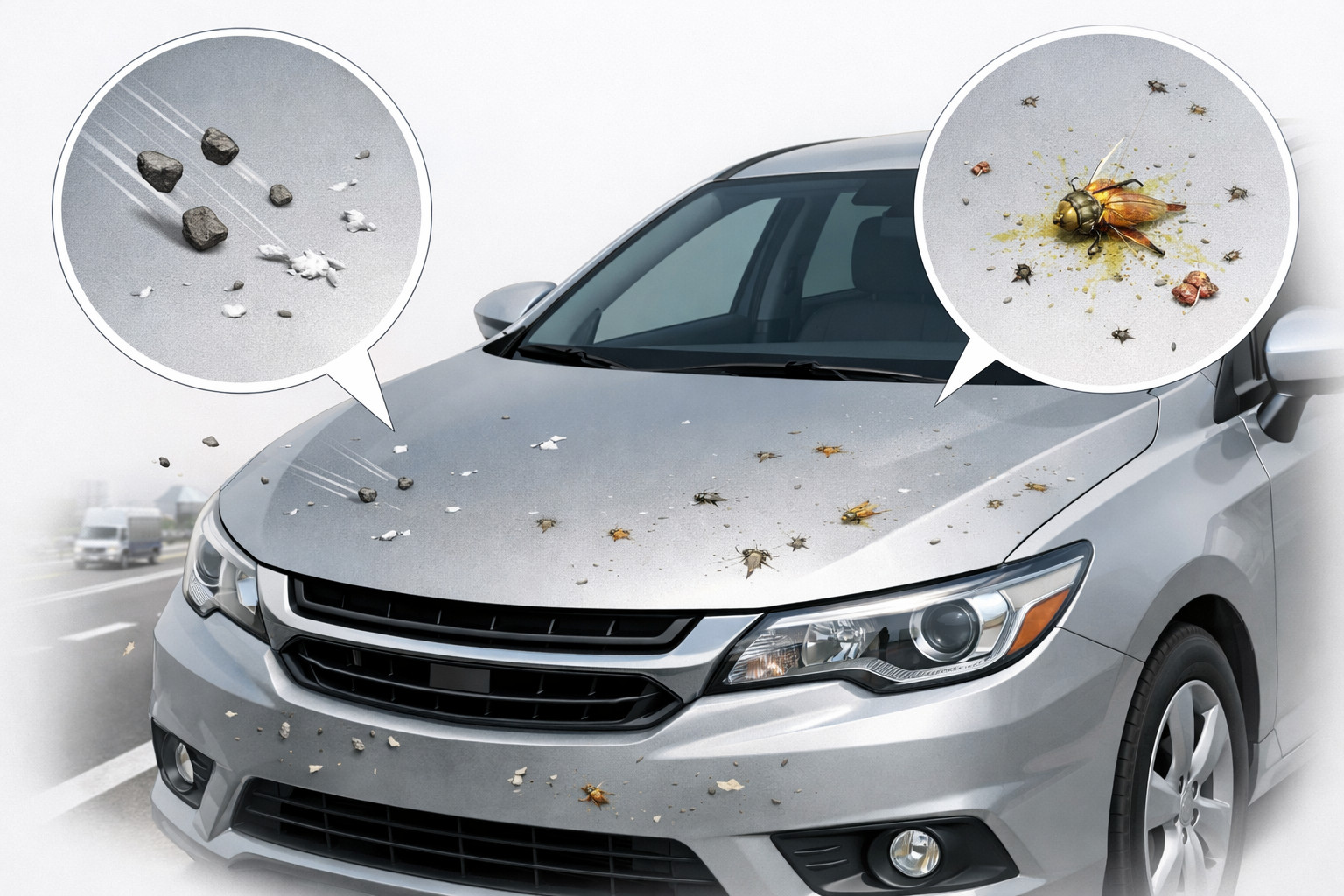
The situation is made worse by abrasives: sand, road salt, dust, wet grime on bags or on the sill itself. In winter and after rain, the same action scratches more because what’s working between the cargo and the body isn’t smooth fabric but a mix of moisture and fine hard particles.
Another common mistake is assuming a trunk mat will solve the problem. It protects the floor inside, but not the working edge that takes the first hit.
Main causes
- Cargo sliding along the edge — the most common cause of long longitudinal or transverse scuffs.
- Abrasive dirt and salt — fine particles act like sandpaper, especially on a wet surface.
- Dog paws, shoe soles, rigid corners of boxes — cause localized scratches and impact points.
- A high sill on a crossover or wagon — cargo catches the edge more often because it has to be lifted at an angle.
- Poor or missing protection — universal protectors that sit crooked can sometimes start trapping dirt and rubbing the edge themselves.
How to understand what the cause is in your case
Look at the damage pattern after washing and completely drying. If marks are concentrated in the center of the upper edge, regular cargo sliding is to blame. If the scuffs are chaotic, fine, and rough to the touch, the issue is often sand and dirt. If there are separate hooks, short lines, or marks along the sides, it’s more like claws, footwear, or hard corners of items.
A useful check is to slowly load the item you carry most often: a baby stroller, suitcase, tool box, pet carrier. At that moment you can immediately see the contact point and understand whether protection is needed on the top edge itself or on the outer sill.
Also assess the material. On a smooth painted area, fine marks can sometimes still be toned down, but on textured plastic polishing usually won’t restore the factory texture. If an old protector has already lifted at the edge or is peeling, that can also be the reason for new wear.
DD Tuning expert comment: most often people buy a trunk mat and are surprised that the edge keeps getting scratched. The second typical mistake is sticking a protector or film in the cold or onto a wet surface, after which the edges quickly lift. Before choosing, you always need to look not only at the car model but also at the real scenario: heavy boxes, a dog, a stroller, or occasional trips.
Symptoms, causes, and what to do (table)
| Symptom | Likely cause | What to do |
|---|---|---|
| Long scuffs in the center of the sill | Items regularly slide over the edge | Apply clear film or a rigid protector specifically to the working area |
| Many fine dull lines after winter | Sand, salt, wet grime | Wash the edge more often and cover it with separate protection |
| Short deeper scratches along the sides | Animal claws, shoe sole, hard corners of boxes | A rigid protector works better than thin film alone |
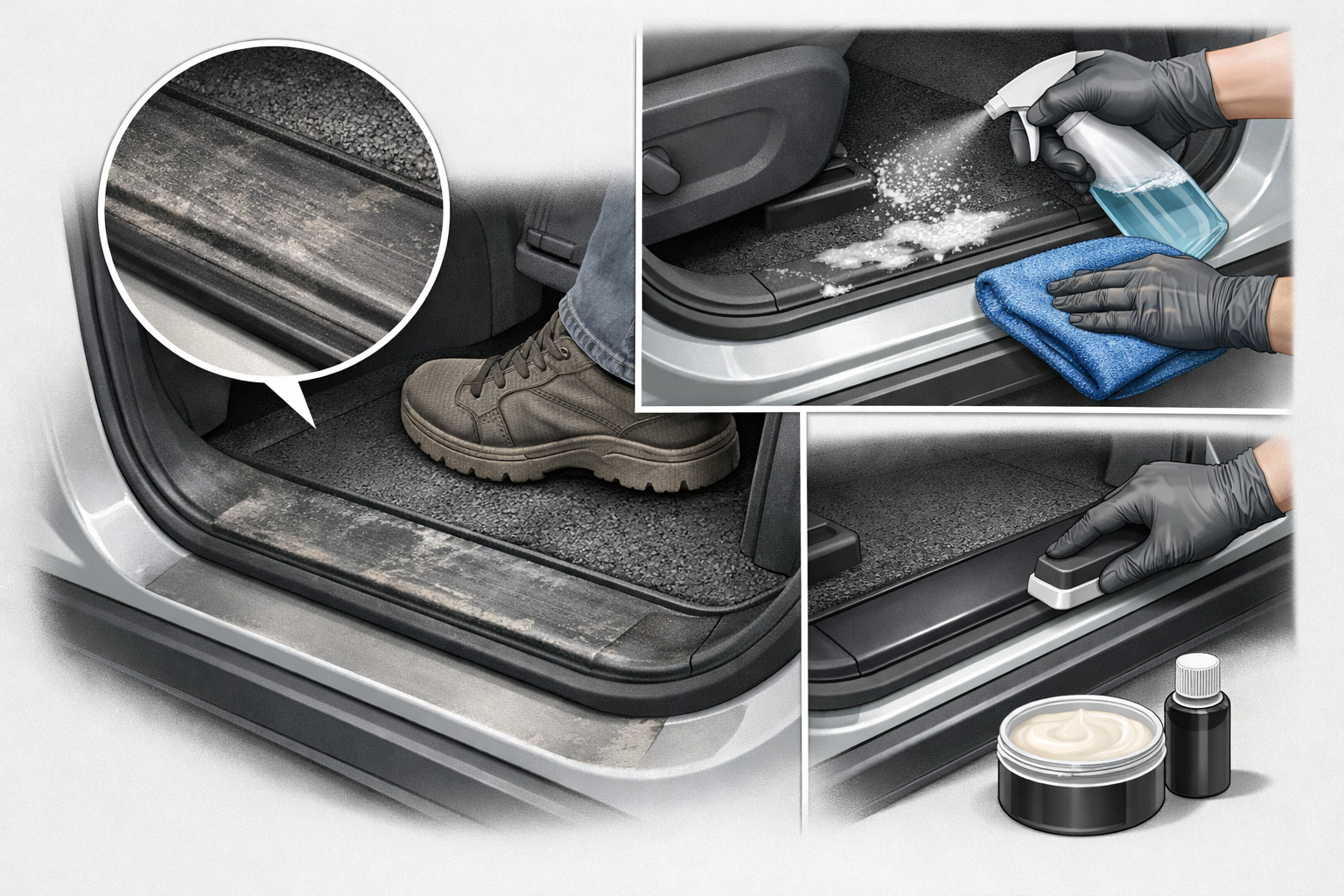
| The area is already rough, plastic has turned white | Worn textured plastic | Don’t count on polishing; consider a protector or replacing the part |
| New marks appear next to an old sticker | Protection is too small or applied off-center | Reapply a model-specific kit or switch to a different protection format |
What really helps
For a smooth painted edge, clear paint-protection film works best. It’s almost invisible, takes the minor scratches, and doesn’t change the car’s look. But it only works with proper installation: a clean, dry, degreased surface, temperature around 16–30 °C, and you should wash the car no earlier than 72 hours after installation.
If the trunk is used daily and boxes, tools, a stroller, or a dog constantly go over the edge, a rigid protector is more practical. It handles mechanical rubbing better than thin temporary protection and is less sensitive to constant contact. For proper adhesion, the surface also needs to be warm—no lower than 16 °C—and full bonding usually develops in about a day.
For a one-time move or seasonal trips, a simple soft pad helps: a blanket or a separate fold-down mat over the edge. It’s not a permanent solution, but it genuinely saves you from a single deep hit from a hard corner.
Among ready-made options, it’s worth looking at plastic protectors, protective film for sills, and rear bumper protectors. The logic is simple: if you need invisibility—film; if you need daily heavy-duty use—a protector; if the area is already heavily worn—assess the condition first, and only then add protection.
What almost doesn’t work or only helps briefly
A regular mat inside the trunk barely protects the outer edge. It’s good for dirt and liquids, but it doesn’t cover the first-contact area during loading.
Polishing textured plastic usually doesn’t restore the factory look. It may slightly reduce a mark on a smooth painted surface, but on rough plastic it often only makes the spot more noticeable.
Cheap universal protectors that don’t fit the shape also perform poorly. If the edge is already lifting, dirt packs in there, and extra tape only delays the problem.
When accessories or replacing parts makes sense
Accessories make sense when the damage is still localized and the part’s geometry is intact. On a smooth painted edge, a light cosmetic touch-up plus film protection is often enough. If the load is regular and harsh, it’s more logical to install a rigid protector right away rather than go through the cycle of reapplying thin solutions.
Replacing or repairing the part is needed when the scratch is already deep, the clear coat is peeling, the plastic is cracked, or the edge is deformed. In that situation, an accessory may hide the mark visually, but it won’t solve the underlying issue.
Solutions: when they work and when it’s not worth spending money (table)
| Solution | When it works | When it’s not worth spending money |
|---|---|---|
| Clear protective film | Smooth painted area, light to medium loads, invisibility is important | If the edge is constantly rubbed by heavy items or the surface is already badly damaged |
| Rigid sill protector | Daily loading of boxes, strollers, tools; active use with a dog | If you need completely invisible protection or the part is already deformed |
| Soft blanket or fold-down mat | One-time transport, moving, seasonal trips | For constant use—uncomfortable and doesn’t solve daily wear |
| Polishing | Only minor marks on a smooth clear-coated surface | On textured plastic or with deep scratches |
| Repair or replacement of the part | There’s a deep cut, crack, stripped clear coat, or damaged plastic | If the issue is only surface scuffs that can be immediately covered with protection |
From a customer’s experience: the most common scenario is this—someone first installs only a trunk mat, but scratches on the edge keep appearing after loading a stroller or boxes. After switching to separate protection for the sill itself, the problem stops because it’s not the trunk floor that’s covered, but the real contact area. If the car carries a dog or work tools daily, satisfaction more often comes from a rigid protector rather than a thin universal option.
Conclusion
When the tailgate supposedly “scratches quickly,” in most cases you need to look at the sill and loading edge rather than searching for a problem where there isn’t one. First identify the type of marks and the surface material, then choose the protection format: film to neatly preserve the look, a rigid protector for regular rough contact, a temporary pad for one-off transport. This material is based on real selection experience, practical work, and real usage scenarios—not theoretical advice.
How it works
- Assess exactly where the marks appear After washing and drying, look at the upper edge of the loading opening and the trunk sill. If the scuffs run through the center, cargo is regularly sliding against the edge; if the marks are small and scattered, the cause is often sand, salt, or dirt.
- Match the scratch pattern to the source of wear Short, deeper scratches are usually left by animal claws, soles, or rigid box corners. Long, lengthwise scuffs indicate constant rubbing of objects against the edge during loading.
- Check the material and the condition of the protection Determine whether it is a smooth painted area, a lacquered insert, or textured plastic. On a smooth surface, film or polishing may still help, while on rough plastic polishing usually does not restore the factory look; if the old protection has peeled off, it can itself be the source of wear.
- Choose protection based on the real usage scenario For a neat preserved look on a smooth edge, clear film is suitable. If the trunk is loaded daily with boxes, a stroller, tools, or a dog is transported, a rigid protector is more practical; for one-off transport, a soft liner or a blanket over the edge is enough.
- Install protection only in proper conditions The surface must be clean, dry, and degreased; for film and a protector, a warm area without moisture is needed, approximately from 16 °C. After installation, the film should not be washed for at least 72 hours, and the protector needs time to set properly.
- Don't spend on solutions that do not cover the problem A regular trunk mat does not protect the outer edge, and polishing is ineffective on textured plastic and with deep damage. If there is a crack, peeling lacquer, deformation, or a deep cut, repair or replacement of the part is already needed.