Author: Radomskyi Maksym Vasyliovych
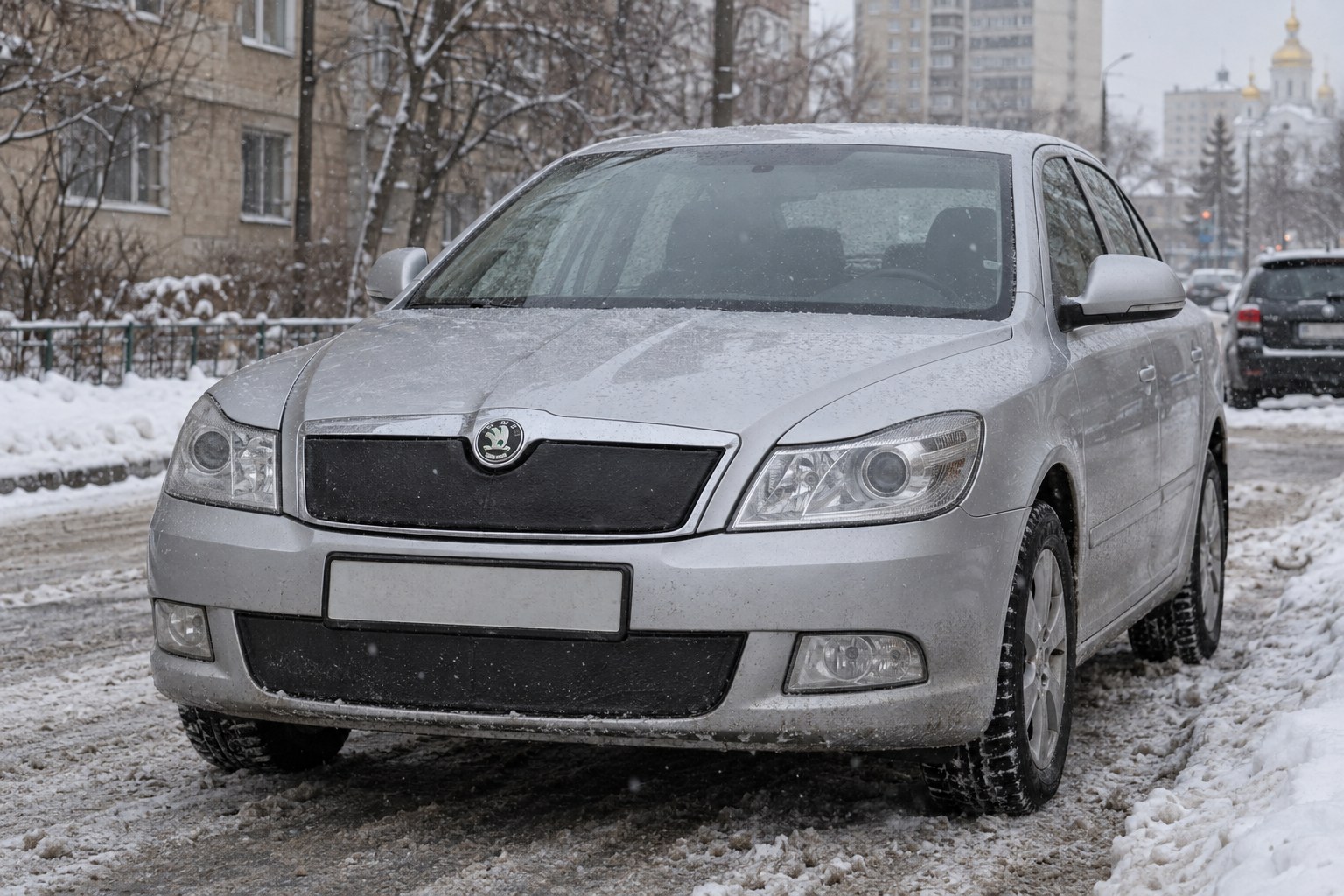
In winter, a tuning radiator grille clogs with snow and ice faster than the stock one: small Diamond cells, vertical GT Panamericana or Maybach slats, and AMG frame surrounds hold wet snow and slush thrown up from the wheels. This does not harm the grille itself as long as you do not knock off the ice with a scraper, but the adaptive cruise control radar, front camera, and parking sensors under a layer of snow or salt work worse or switch off. Below is what to do about it, how to wash a grille with sensors, and what to consider if you want to install a cover on it in winter.
Contents
- Why a tuning grille gets clogged with snow in winter
- How to remove snow and ice from the cells without scratching the grille
- Why the radar, camera, or parking sensors switch off in winter
- How to wash a grille with sensors during de-icer season
- Can you install a winter cover on a grille with a radar
- What to check before winter if you have just installed the grille
Why a tuning grille gets clogged with snow in winter
The grille sits right in the airstream, and everything that flies up from the wheels of the car in front settles on it first. A stock grille often has large openings or smooth bars from which wet snow slides off on its own. Tuning designs have different geometry:
- Diamond — hundreds of small “stars” or diamonds, each of which packs with snow slush;
- GT Panamericana and Maybach — closely spaced vertical slats, between which snow forms a solid “fur coat”;
- AMG and framed grilles — horizontal bars and protrusions on which ice forms.
On the highway in heavy snowfall, such a grille can become almost completely covered within an hour. In freezing temperatures this is not dangerous for the engine, but it is for sensors that look through the grille. Also keep salt in mind: on glossy black or chrome finishes, salt streaks are more noticeable than on gray stock plastic.
How to remove snow and ice from the cells without scratching the grille
Most tuning grilles are made of ABS plastic, and some have a chrome or glossy finish. In the cold, plastic becomes more brittle and the finish scratches easily, so “mechanical” methods are a bad idea here.
- Do not chip ice off with a scraper, a stiff-bristle brush, or a shovel. Thin slats can break, and scratches on chrome and gloss will remain forever.
- Sweep snow away with a soft brush from top to bottom, without pushing it deeper into the cells.
- Let the ice melt on its own: after a drive, the grille will thaw faster in the warm airflow from the radiator than while parked. Even easier is to go into a heated parking garage or a car wash.
- Do not pour boiling water. A sharp temperature change harms both the plastic and the finish, and the water will freeze again immediately.
- Glass de-icer can be used locally on the area in front of the sensor, but then rinse it off with water: the composition of such liquids is designed for glass, not for coated plastic.
We wrote more about tools and the order of regular cleaning in the article how to properly clean a car’s radiator grille.
Why the radar, camera, or parking sensors switch off in winter
The adaptive cruise control radar (in Mercedes — Distronic), the front camera of the 360° surround view system, and parking sensors “see” the road through a narrow section of the grille, the emblem, or the bumper. Car manufacturers state directly in manuals: dirt, ice, and snow on sensors can cause false warnings, worsen system operation, or switch it off completely, so these areas should be kept clean and washed regularly with water and car shampoo. On the dashboard, this usually appears as a message that the sensor is dirty or the system is temporarily unavailable.
Most often, this is not a malfunction: after cleaning, the system turns back on. What to do:
- find where exactly the radar is located on your car: in the center of the grille, behind the emblem, or in the lower part of the bumper — this is specified in the owner’s manual;
- clean precisely that area with a soft cloth and warm water, without abrasives;
- if the warning remains on a clean car, that is already a reason for diagnostics, not for washing.
A separate case is when a replica emblem is installed on the grille instead of the stock one. On many cars, the emblem in front of the radar is not just decoration but a radar-“transparent” window. A regular decorative emblem or replica badge can block it, and then the system will not work at all, regardless of snow. Owner’s manuals advise installing only an original part in front of the radar, not painting it, and not covering it with film.
How to wash a grille with sensors during de-icer season
Salt on the grille does more than spoil the appearance: dried streaks in the area in front of a sensor also interfere with it. So wash the front end regularly, and more often after highways treated with de-icing chemicals.
- Keep the high-pressure washer jet at a distance. Manuals often state not to bring the nozzle closer than about 30 cm to the surface; a close jet can tear off a sticker plug, lift the edges of a chrome finish, or force water under the emblem.
- Do not direct the jet right up against the camera and parking sensors. Wipe the camera with a soft cloth so as not to scratch its lens.
- Avoid stiff brushes and aggressive chemicals on chrome and gloss — regular car shampoo is better.
- After washing in freezing temperatures, wipe the area in front of the radar and camera dry; otherwise the water will freeze into a film as soon as you drive out of the car wash.
Can you install a winter cover on a grille with a radar
We covered what to use to block the grille in winter — a cover, insulation, or cardboard — and which part to block in detail in the article what to cover a car radiator grille with. Here — only about sensors.
An opaque plastic cover, if it blocks the radar area, will disable adaptive cruise control the same way a layer of snow does. Therefore, on cars with a radar in the grille or behind the emblem:
- check the cover photos to see whether it blocks the place where your radar or camera is located;
- on many models, the radar is in the lower part of the bumper — then an upper cover does not interfere with it, while a lower one may interfere;
- do not cut holes in the cover “by guesswork” — it is better to clarify with the manager right away which cover fits your configuration.
Model-specific grille covers are collected in the winter covers section. Many of them mount over the stock grille with hooks or clamps, without removing it. On a tuning grille with a different cell shape, a cover for the stock one may not fit — check compatibility before ordering.
What to check before winter if you have just installed the grille
Most questions customers ask about tuning grilles are specifically about electronics: whether Distronic will be retained, where to put the camera, and whether the stock emblem will fit. Before the first winter with a new grille, it is worth checking a few things.
| What to check | Why it matters in winter |
|---|---|
| Whether the radar is in its place and the system turns on on a clean car | If Distronic does not work even without snow, the cause is in the installation, not the weather |
| The camera is in the factory cutout, and if there is no camera — the plug is in place | An open cutout collects snow and water inside the grille |
| The emblem is the one suitable for the radar, not a decorative replica | A replica in front of the radar may completely disable the system |
| The grille sits in the factory mounts without play | A loose grille cracks in the cold and may lose clips |
| The shipping protective film has been removed from the grille and inserts | Forgotten film in front of a sensor interferes with it just like dirt does |
Tuning grilles in our catalog are mostly model-specific and fit into factory locations, and the place for a camera or sensor differs for each model. For example, for Mercedes S-class W221 there are grilles in the style of AMG, Maybach, and GT Panamericana, for W222 — Maybach, for Vito and V-class W447 — Diamond and GT Panamericana in several variants by year. On some grilles, the stock sensor or its insert is transferred from the old grille — this should be clarified for the specific product before ordering. The rest of the models are in the radiator grilles section.
We deliver with Nova Poshta throughout Ukraine.
How to Clear Snow and Ice from a Tuning Grille and Sensors
- Brush off the snow with a soft brush Move from top to bottom without pushing the snow deeper into the mesh, and do not use a scraper or a hard brush.
- Let the ice melt After driving or in a warm parking garage, the ice in the mesh will melt on its own; do not pour boiling water on it.
- Clean the area in front of the radar and camera Wipe the area where the radar, camera, or parking sensors are located with a soft cloth and warm water, without abrasives.
- Wash the front end to remove salt Use car shampoo and water; keep the pressure washer nozzle at a distance and do not aim it directly at the sensors.
- Dry it off In freezing weather after washing, wipe the area in front of the radar and camera so the water does not freeze into a film.
- Check the system If the warning about a dirty sensor remains on a clean car, the cause is not snow — diagnostics are needed, or the grille and emblem installation should be checked.