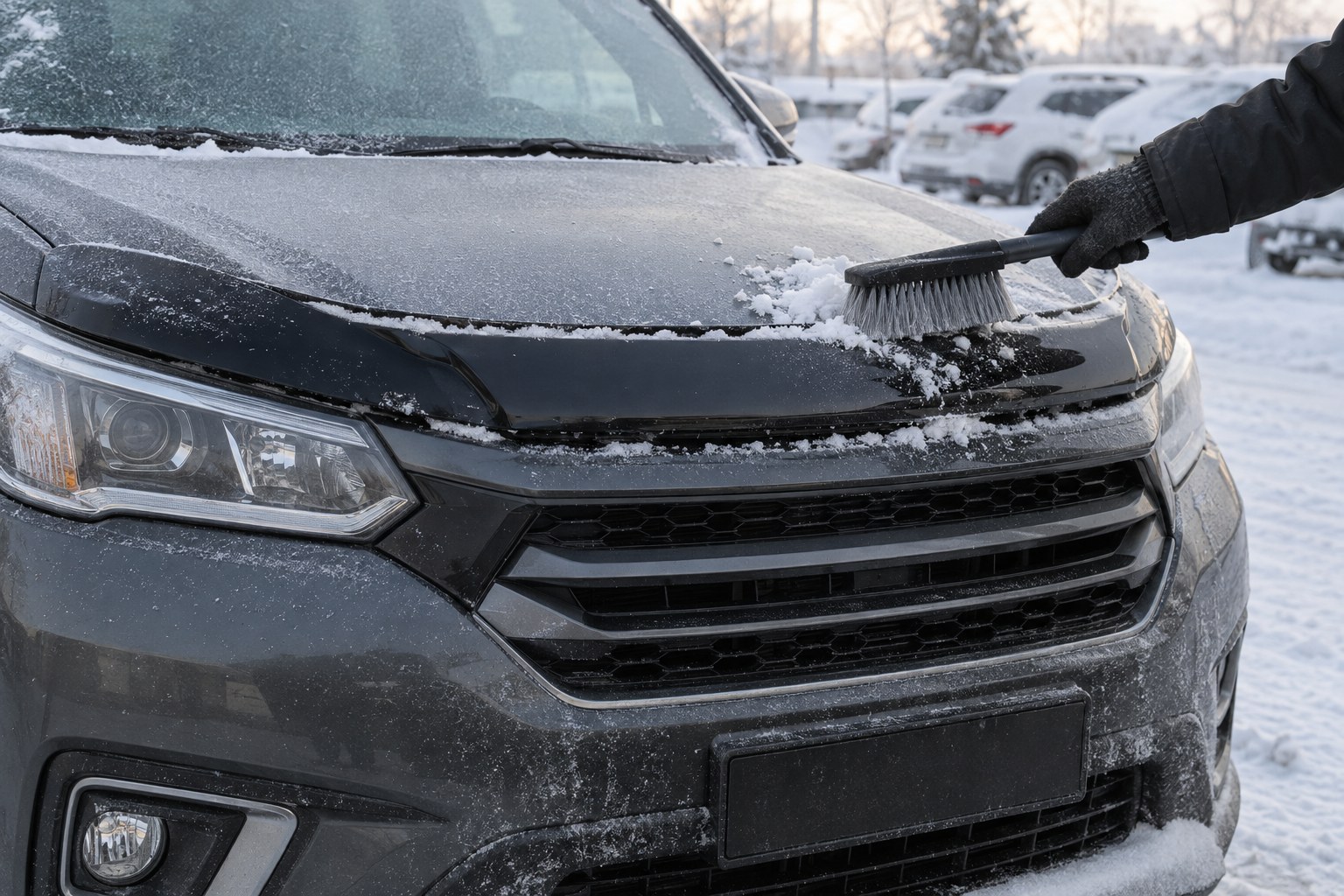

































































What to check on both aftermarket and stock hoods before freezing temps: what manufacturers recommend for lubricating the latch and release cable, where the snow goes from intakes and “gills,” when condensation under the hood and in headlights is normal (and when it isn’t), and how to protect carbon fiber and fiberglass from road salt and de-icers.

 Author: Radomskyi Maksym Vasyliovych
How to Check Your Hood Before Frost: 8 Steps
- Inspect the latch and safety catch Open the hood and inspect the latch: old grease mixed with sand, rust on the spring, and dirt around the latch pivot are signs that it will seize up in winter. Move the safety catch lever five times: it should snap back immediately on its own.
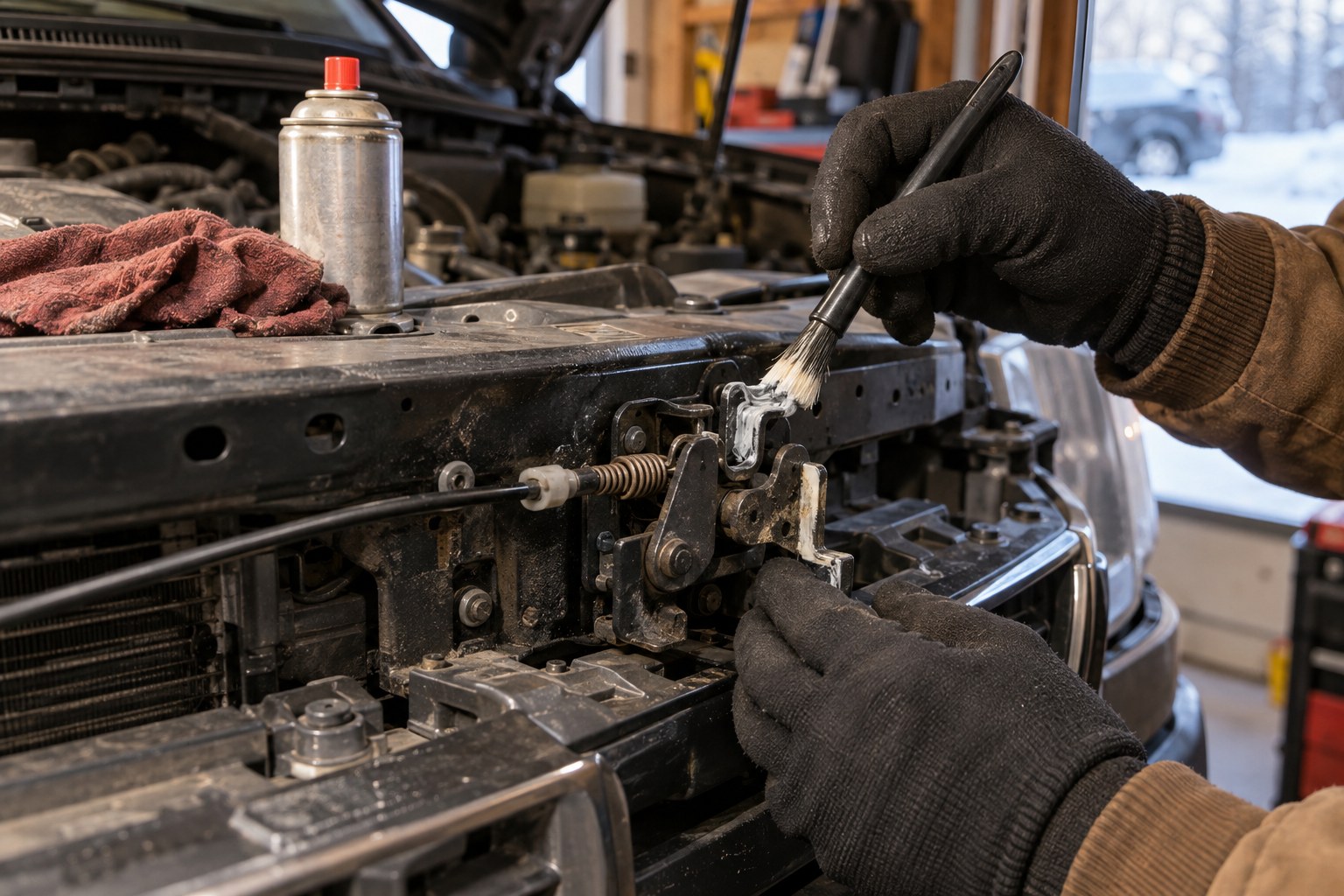
- Wash off the old grease and dirt Use a penetrating cleaner to flush the latch pivot, the catch, and the space between the lever and the latch housing, placing a rag underneath. Let it drain and then blow it out or wipe it dry — new grease should be applied only to clean metal.
- Apply a thick freeze-resistant grease With a brush, apply white lithium grease or another freeze-resistant lubricant to the pivot, latch, and catch, and operate the mechanism several times. Do not use aerosol lock lubricants — they wash out after just a few washes.
- Work the release cable through Apply a penetrating agent into the cable sheath from the latch side and pull the handle inside the cabin 5–10 times until the movement becomes easy and the handle returns on its own. A cable that sticks in the open position is a sign of moisture inside.
- Check what is under each air intake Look from the inside to see what is under each opening: the filter housing, connectors, fuse box. If there is no drain tray, install a fine mesh and a deflector under the opening or seal it off for winter. Blow out the drain tubes of the tray.
- Clean out the cowl drains Remove the plastic cover under the windshield, clear out leaves and pine needles, run the drain tubes from below in the engine bay, and pour water through them — it should flow out freely under the car. Repeat after each major thaw.
- Inspect the insulation, seals, and lights Press the under-hood sound insulation with your hand: if it is soaked through or crumbling, it needs replacement. Wash the rubber along the hood edge and on the cowl, dry it, and wipe it with silicone grease. In the headlights, note the condition of the lens so you can later distinguish normal fogging from droplets.
- Perform a final closing check Close the hood without slamming it — lower it until it reaches the latch and press down with your palms above the latch. Try to lift it by hand: it should stay firmly in place, and when the handle in the cabin is pressed, it should remain held by the safety hook. On a fiberglass hood, also check for play in the latch area.
This material was prepared using AI tools for topic research, structuring and initial draft creation. Fact-checking, editing, expert review and final approval were performed by Maksym Vasyliovych Radomskyi.