
27.09.2026

The fifth-generation Hyundai Tucson (factory code NX5) was officially unveiled to the world on October 1, 2026, in New York. The crossover grew larger and looks more “square”, gained a next-generation hybrid, a plug-in hybrid, and a new interior with a screen up to 17 inches plus the Gleo AI assistant. Sales in Korea start at the end of 2026, in North America and Europe — in 2027, and the European version will be shown at the Paris Motor Show on October 12.
Contents
The premiere took place on October 1, 2026, at the Sound River studio in Long Island City with a view of Manhattan. Before that, Hyundai had already revealed the design (August 19) and the Korean version at a media day in Paju (September 18) — we wrote about these details, collected even before the global premiere, in the article “The new Hyundai Tucson NX5: what is known about the fifth generation”. New York added the key things: specs for North America, the plug-in hybrid, and the off-road XRT PRO version.
For Hyundai, this is a key model. According to the company, from 2004 through August 2026, 11 170 151 Tucsons were sold, making it the brand’s best-selling crossover worldwide. Hyundai Motor Company President Jose Munoz called the new generation “the best Tucson we have built”, and the model itself kicks off a product offensive: by 2030, the company promises more than 100 new and updated models.
Hyundai describes the exterior through the Art of Steel style, which has already appeared on the new Elantra. Instead of sharp edges and headlights hidden in the grille as on the NX4 — flat surfaces, a vertical front end, rectangular arch extensions, and vertical rear lamps. Up front there are vertical H-Edge daytime running lights, and thin light strips run across the entire front and rear. According to Cars.com, Micro Pixel Lighting headlights with 25 600 LED “pixels” are offered as an option.
The body was lengthened, widened, and slightly raised, and the wheelbase was increased by 30 mm. The rear doors now open to 83° instead of 73°, making it easier to get into the second row and install child seats. Aerodynamic drag was reduced: the Cd is 0.30 instead of 0.33.
| Parameter | Tucson NX5 (long wheelbase: Korea, USA) | Difference vs NX4 |
|---|---|---|
| Length | 4 700 mm | +60 mm |
| Width | 1 905 mm | +40 mm |
| Height | 1 685 mm | +20 mm |
| Wheelbase | 2 785 mm | +30 mm |
| Second-row headroom | 1 031 mm | +29 mm |
| Rear door opening angle | 83° | was 73° |
| Aerodynamic drag coefficient | 0.30 | was 0.33 |
Europe, as it does now, will get the version with a shorter wheelbase. Hyundai has not yet announced its exact dimensions.
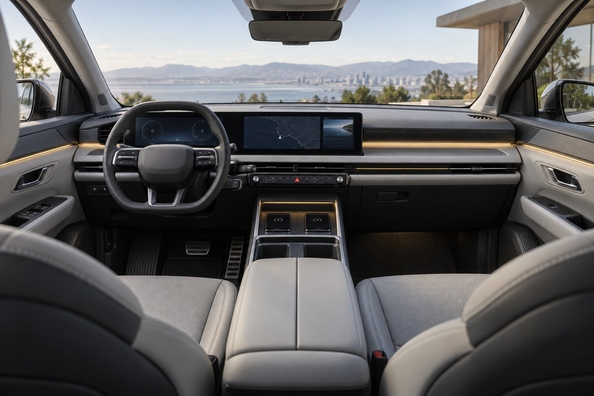
The dashboard became “floating”, split into upper and lower tiers. In front of the driver is a slim 9.9-inch digital cluster; in the center is a 12.9-inch touchscreen or, as an option, a 17-inch 16:9 display. The gear selector moved to the steering column, freeing up the center tunnel: it is now two-tier, with wireless charging for driver and passenger and cupholders. The steering wheel has two flat sections, top and bottom.
Some cluster functions moved to the central screen, but Hyundai kept a row of physical buttons beneath it for the most frequent actions — something many modern crossovers lack. Among the practical details are a 100 W USB port, a card holder near the left air vent, the Luggage AddGear cargo-mount system in the trunk, front seats with a relaxation mode, and a Bang & Olufsen audio system.
The new Tucson is Hyundai’s first crossover with Pleos Connect multimedia based on Android Automotive. It has an app store and the Gleo AI assistant, which understands normal conversational language: you can ask it to plan a trip or change settings without digging through menus. In the USA, this is the brand’s first model with such a system.
The core of the lineup is the 1.6 turbo engine, in gasoline and hybrid versions. In some markets, the naturally aspirated 2.0 will remain as well. The final set depends on the country.
| Version | Power | Transmission | What else is known |
|---|---|---|---|
| 1.6 T-GDi, gasoline (Korea) | 193 hp | 8-speed automatic | +13 hp over its predecessor |
| 1.6 turbo hybrid (Korea) | 245 hp combined | 6-speed automatic | 380 N·m, 17.4 km/l on the Korean cycle (≈5.7 l/100 km) |
| 1.6 turbo hybrid (USA) | 233 hp | 6-speed automatic | 1.49 kWh battery, Hyundai’s target is up to 42 mpg (≈5.6 l/100 km) |
| 1.6 turbo plug-in hybrid | 288 hp | 6-speed automatic, AWD only | 17.1 kWh battery, up to 81 km on electric power |
Hyundai calls the hybrid a next-generation system: it is more powerful than before and at the same time more efficient. The Korean version has Stay Mode (accessories can run while parked without starting the engine) and E-Traction for better grip on slippery surfaces. The plug-in hybrid will be sold only in select markets: according to Consumer Reports and U.S. News, it will not be available in the USA for the 2027 model year. Hyundai is not planning a fully electric Tucson — that niche is filled by the Ioniq 5.
For fans of dirt roads, Hyundai showed the XRT PRO — the most off-road-focused version in the model’s history. It comes with AWD only, All-Terrain tires, front tow hooks, improved approach and departure angles, and 210 mm of ground clearance versus 180 mm on the regular Tucson. The main new feature is the Smart Terrain Assist system, a first for Hyundai: it assesses the surface in real time, adjusts traction, and shows the driver in green, orange, or red how likely it is to get stuck.
The XRT PRO will be sold only in North America. In Korea there is a simpler XRT version with a different grille, protective cladding, and black fender flares, and for Europe off-road versions have not yet been announced.
Korea will be the first to get the new model: prices there will be announced in October, and sales will begin by the end of 2026. The USA, Europe, and other markets — in stages starting in 2027. The Tucson will be produced at three plants: Ulsan (Korea) — for the domestic market and export, Alabama (USA) — for North America, including hybrids, and the Czech Republic — for Europe.
Hyundai will show the European version, tuned for the local market, at the Paris Motor Show on October 12, 2026. A sporty modification will debut there as well — most likely N Line, although the company has not yet confirmed the name. European engines, dimensions, and trims will become known after Paris, so the new Tucson will reach Ukrainian dealers no earlier than 2027.
No. The NX5 has a different wheelbase, a wider body, different doors, roof, and bumpers, so side steps, window deflectors, roof-rack crossbars, and model-specific floor mats from the NX4 will not fit the new model. There are no model-specific products for the fifth generation in the catalog yet: they appear when cars go on sale and manufacturers take measurements from real vehicles.
For the current Tucson NX4, which for years will remain one of the most common crossovers on our roads, the selection is large. Aluminum side steps for the Tucson NX4 make getting in easier and take the hit from stones kicked up by the wheels, crossbars for integrated roof rails turn the roof into a rack for a cargo box or bikes, and EVA mats and 3D mats hold water and snow. In autumn and winter, window deflectors are handy: with them you can ventilate the cabin in the rain, and the glass fogs up less. We covered the car’s strengths and weaknesses in the Hyundai Tucson NX4 review, and everything for the model is collected in the Hyundai Tucson NX4 tuning section.
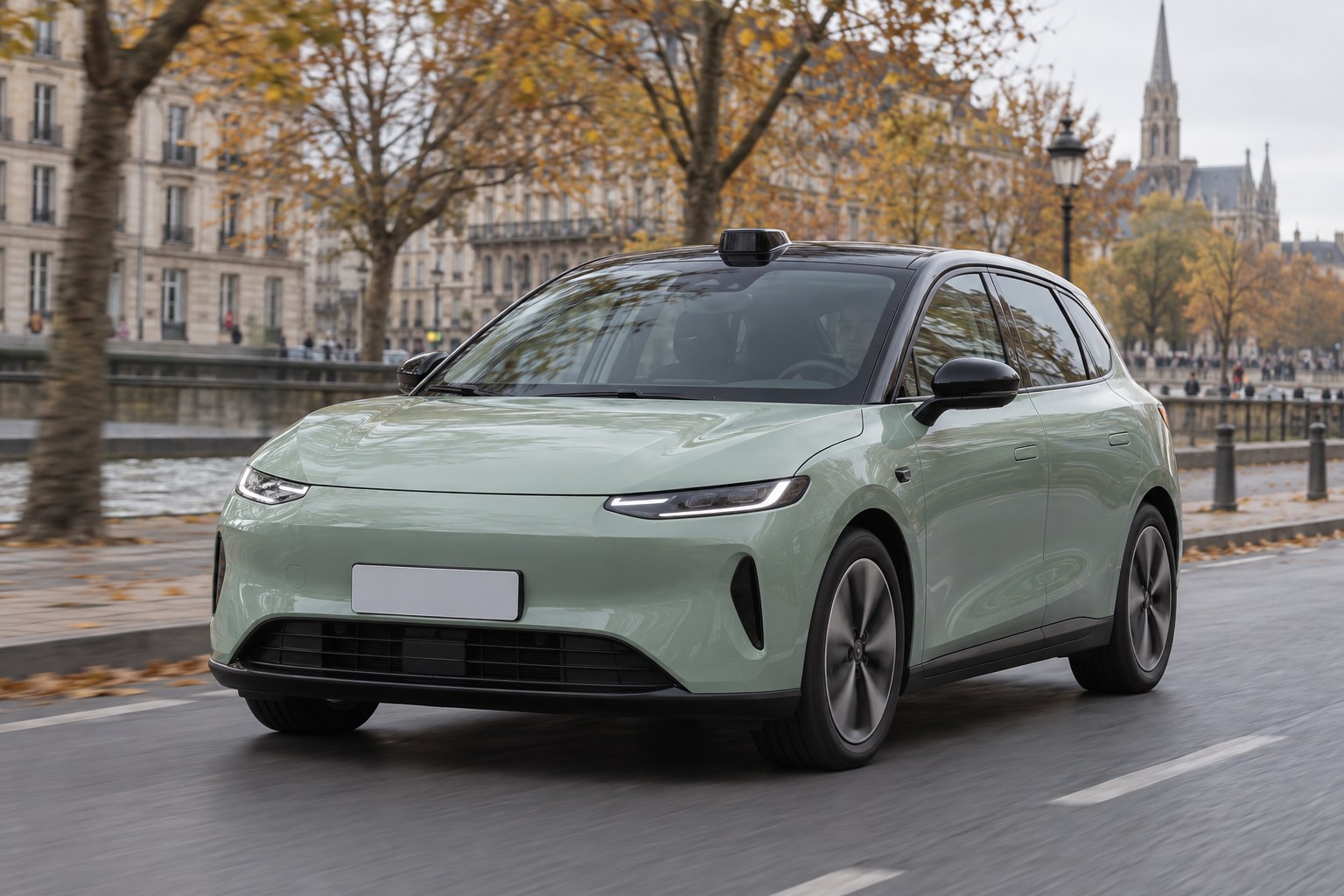
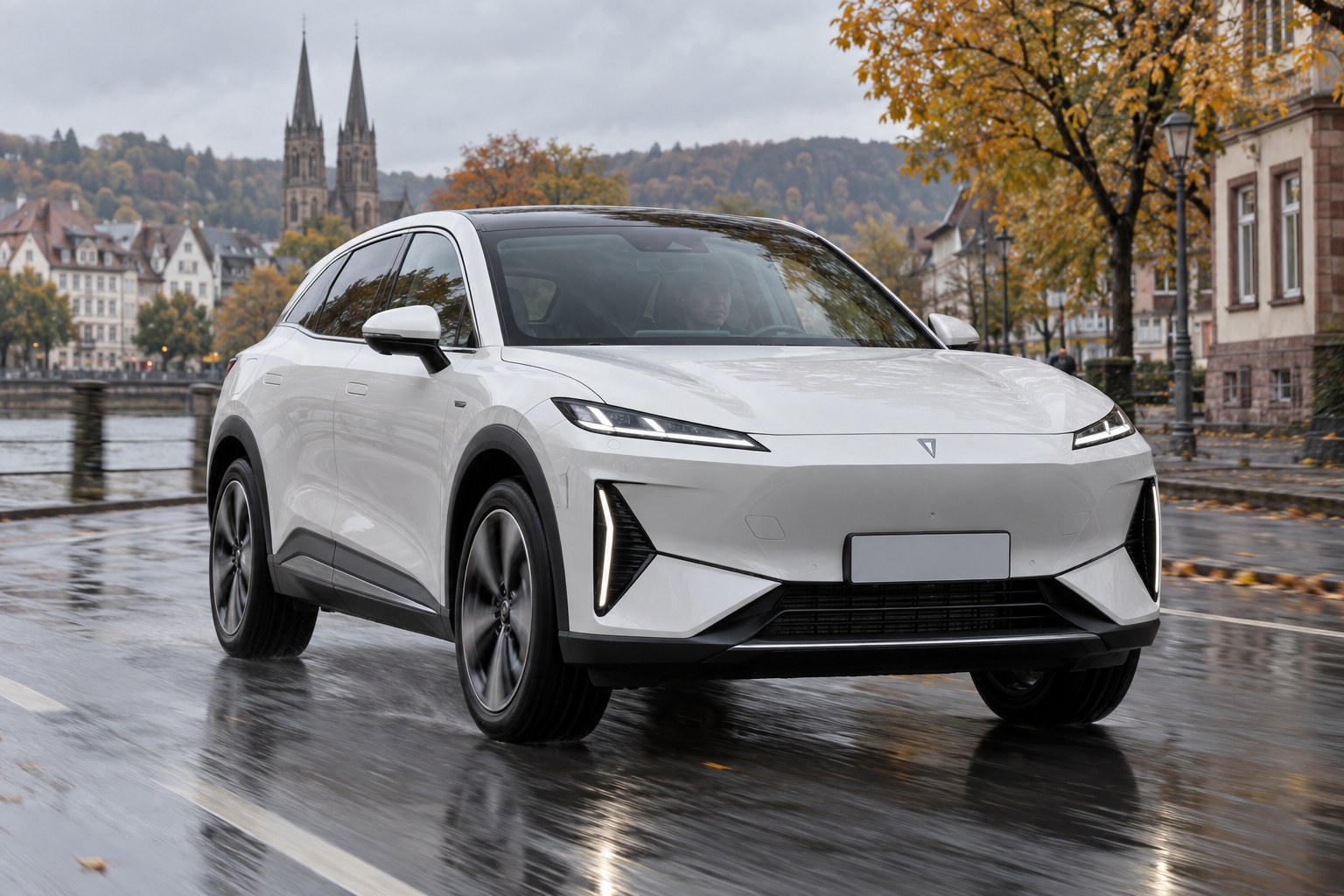
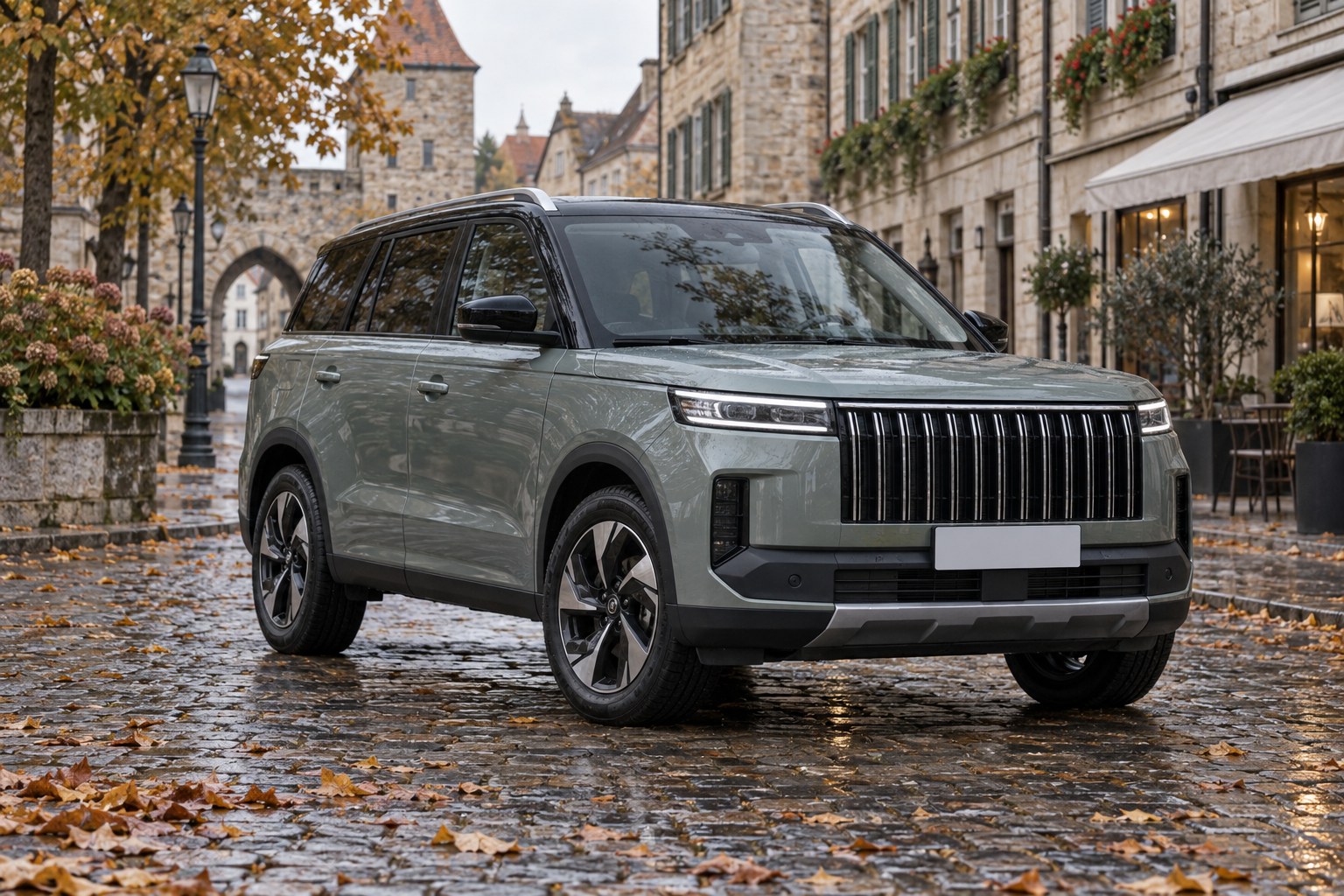
The images in the article are illustrations created based on Hyundai’s official description, not factory photos.
We ship via Nova Poshta across Ukraine.
| ✔ | Larger body: wheelbase +30 mm, second-row headroom +29 mm, rear doors open to 83° |
| ✔ | New-generation hybrid: up to 245 hp in the Korean version with a lower claimed consumption |
| ✔ | Plug-in hybrid with 288 hp and an electric range of up to 81 km |
| ✔ | Physical buttons for frequently used functions remain under the screen |
| ✔ | Lower aerodynamic drag: Cd 0.30 instead of 0.33 |
| ✘ | The XRT PRO off-road version is for North America only |
| ✘ | The plug-in hybrid will not be available in all markets |
| ✘ | European engines, dimensions, and prices have not been announced yet |
| ✘ | NX4 accessories do not fit, and model-specific items for the NX5 will not be available right away |
Shipping to EU
Wholesale and retail
Own warehouse
Опис продукту
Подарунки не надаються при оформленні покупки у кредит під 0,01% або при покупці частинами.