 Author: Radomskyi Maksym Vasyliovych
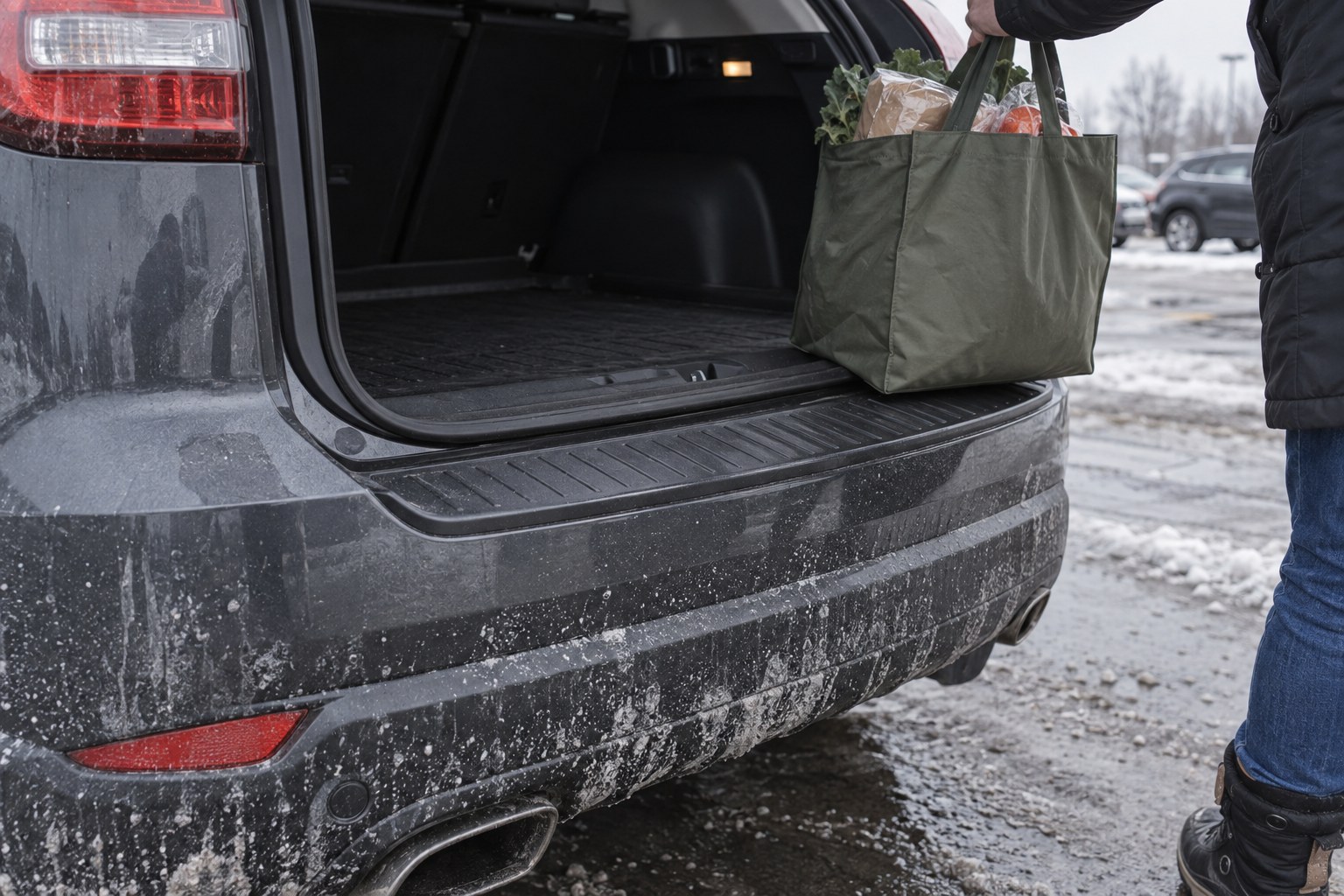
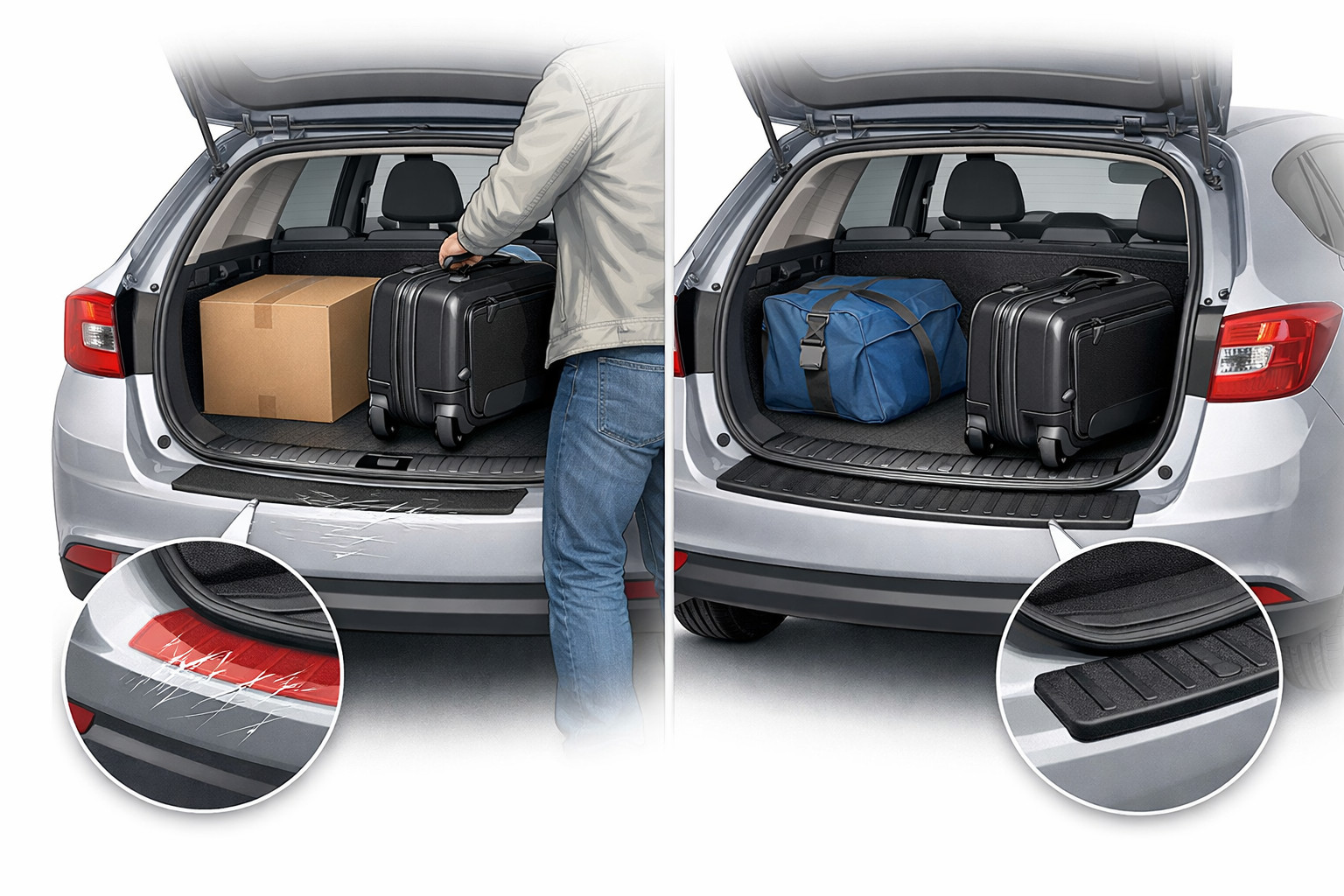
Scratches on the upper edge of the rear bumper almost never appear because of one unlucky move, but because of a repeated scenario: a bag, suitcase, box, or stroller isn’t lifted all the way, but is partly dragged across the painted surface. Add sand, moisture, and haste, and the clear coat wears through very quickly.
The right solution here isn’t a “just in case” towel, but protection that matches your exact usage. First, you need to understand whether it’s superficial scuffs or already deep scratches, and then choose: clear film, a rigid bumper protector, or a fold-down guard that covers the bumper precisely during loading.
Why this problem happens
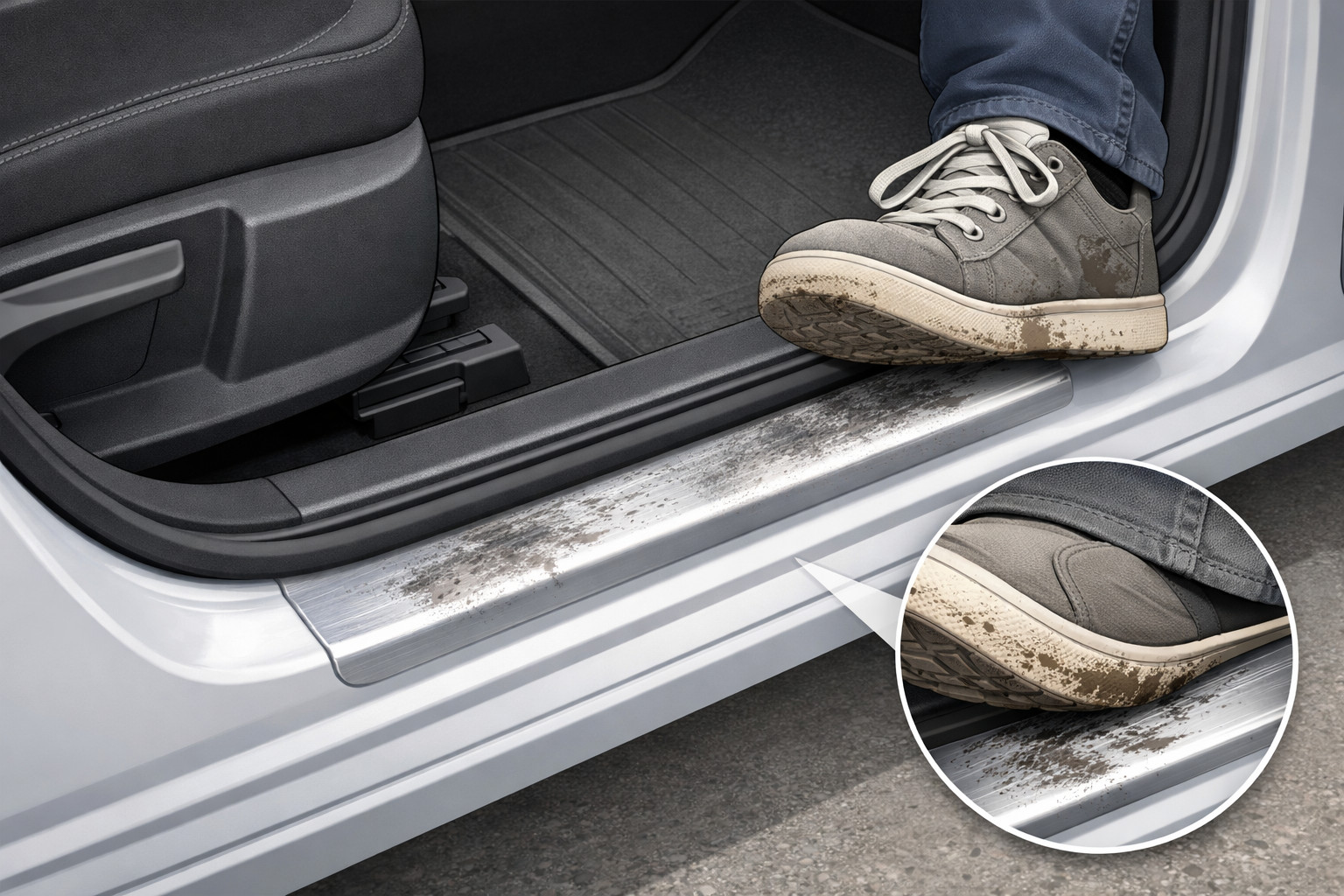
The rear bumper on many wagons, crossovers, and hatchbacks has a wide upper ledge at the trunk opening. It’s a convenient access area, but it’s also the part that takes the contact from cargo. When an item slides across the clear coat, friction works like sandpaper—especially if there’s dust or fine sand on the surface.
The issue gets worse in winter and during the shoulder seasons: dirt stays on the edge longer, and adhesive protectors applied to a cold or damp surface can lift at the edges. As a result, abrasive debris accumulates between the protector and the bumper, and the part that was meant to protect the paint starts doing damage.
Main causes
- Dragging heavy or hard items — suitcases, boxes, tools, strollers, sports gear.
- Dirt and sand on the bumper edge or on the bottom of the cargo, which act as an abrasive even with light contact.
- Marks from animal paws — short scratches often appear when a dog jumps in and out of the trunk.
- Incorrect installation of film or an adhesive protector — in the cold, without proper degreasing, or without enough time to bond.
- A poorly fitted universal protector — gaps collect debris and the edges start to peel.
How to understand the cause in your specific case
Start by wiping the edge with a microfiber cloth. If the mark partially or completely disappears, it’s often not a deep scratch but transferred material or a light scuff. Next, do a simple fingernail test: if your nail doesn’t catch, the damage is usually superficial; if it catches and the line is lighter than the paint, the clear coat has been cut deeper.
Look at the direction of the marks. Long parallel scratches are usually left by cargo dragged across the edge. Short, random lines are more often caused by sand, bag hardware, or animal paws. If a protector is already installed, be sure to check its edges: a lifted edge or a gap almost always means there’s already dirt underneath.
Another practical test is to remember when new marks appear. If they show up after trips with a stroller or suitcases, the issue is sliding hard items. If they appear after rain, snow, or transporting dirty gear, abrasive contamination on the surface is the main factor.
DD Tuning expert comment: The most common mistake is buying the first universal protector you see and sticking it on in a cold garage. From the outside everything looks fine, but after a few days the edges lift, sand gets underneath, and you end up with new scuffs already under the trim. If you use the trunk every day, it’s not only the material that matters, but also a precise fit and the real usage scenario.
Symptoms, causes, and what to do (table)
| Symptom | Likely cause | What to do |
|---|---|---|
| Gray or dark scuffs that partially rub off | Superficial transfer from another material or light rubbing | Clean the surface, reassess depth after washing, then install basic protection |
| Long scratches along the edge | Regularly dragging boxes, suitcases, crates across the edge | Install a rigid protector or a fold-down loading guard |
| Many small random lines | Sand on the bumper, dirt under the trim, animal paws | Wash the edge more often, remove debris from under the protector, and if needed switch to a different accessory type |
| Film or trim edges lifting | Installed on a cold, wet, or poorly degreased surface | Reinstall in warmth: for film preferably 16–30 °C, for adhesive trims 16–43 °C |
| A single deep mark down to the lower layers | Impact from a sharp or heavy object | Restore the coating locally first, then install protection |
| New marks appear even with a protector installed | The protector doesn’t sit tightly and traps abrasive debris | Remove it, clean the area, and replace it with a molded option |
What actually helps
- Rigid bumper edge protector — works best where cargo really slides over the edge every day. It handles contact with suitcases, boxes, and tools better than thin temporary solutions.
- Fold-down mat or protective apron — a practical option when you need to cover the bumper specifically during loading. Especially convenient for strollers, groceries, gear, and pets.
- Clear polyurethane film — a good choice if appearance matters and the main threat is light daily scuffing rather than sharp heavy cargo. After application, it shouldn’t be washed for at least 72 hours.
- Regular cleaning of the edge — doesn’t replace protection, but greatly reduces abrasive damage. If the trunk is used actively, wiping the edge before loading is more useful than polishing it once every six months.
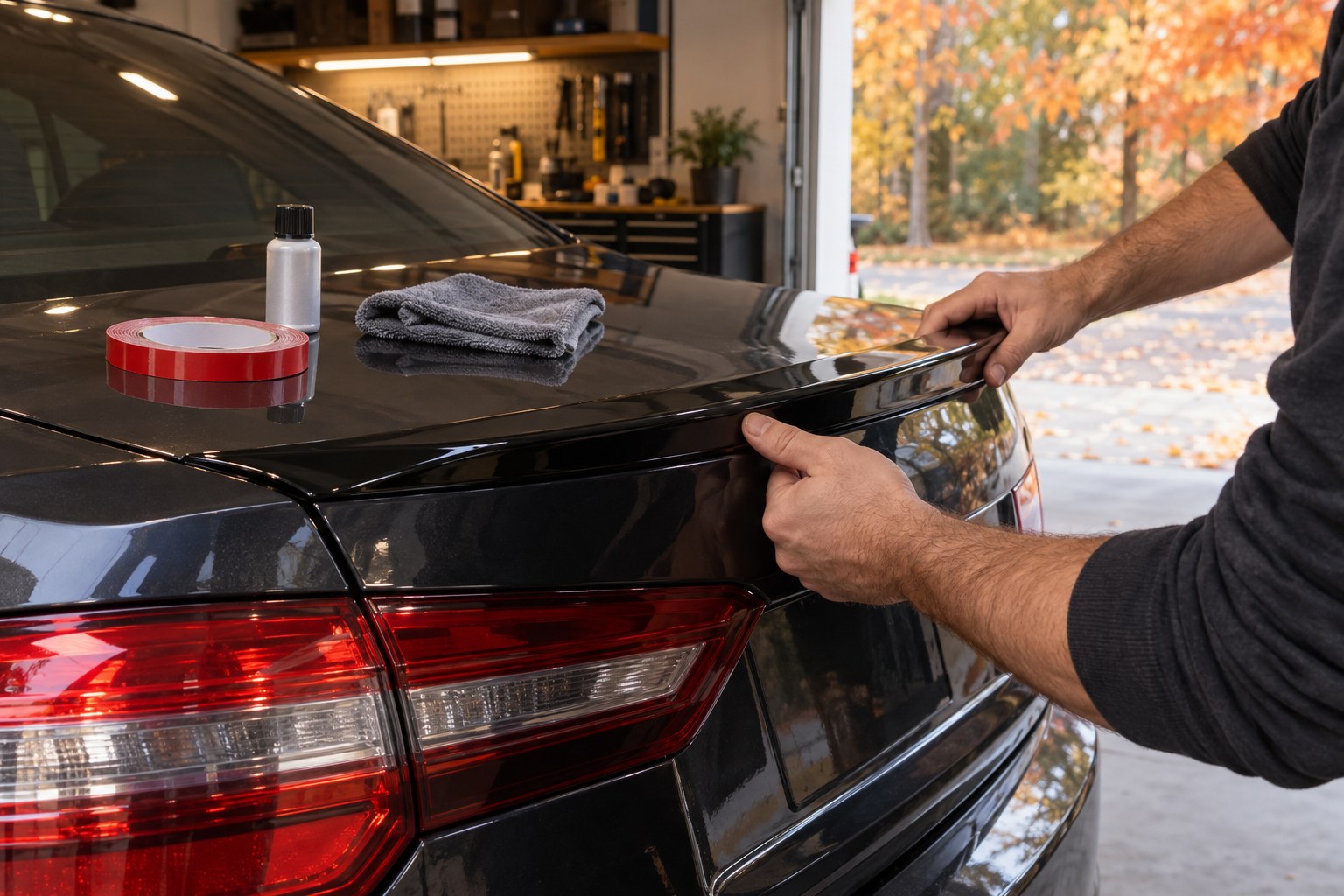
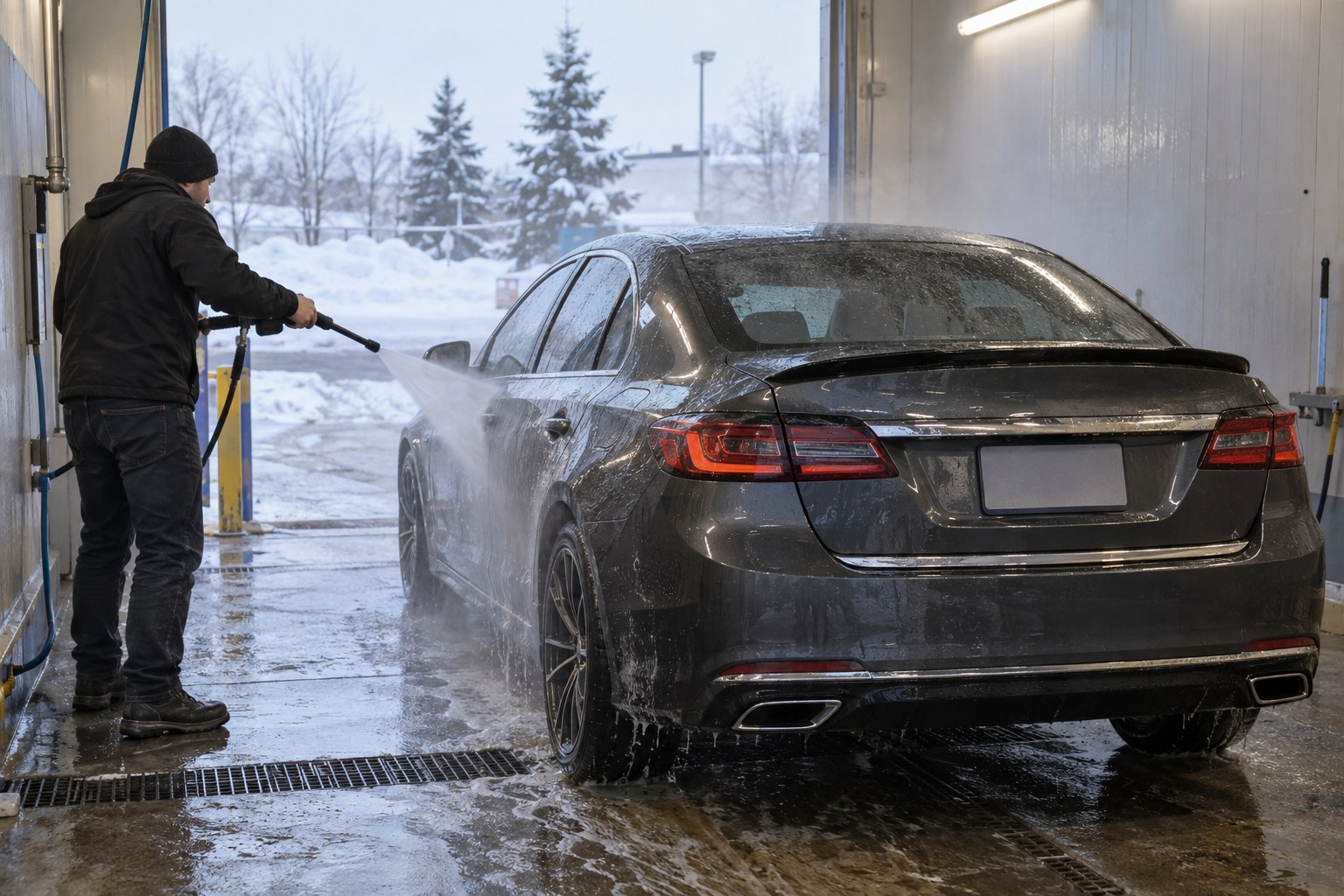
If you choose film, installation is critical. It lays easiest in a warm temperature range, and aggressive care can harm it: you don’t need very hot water or excessive washer pressure aimed right at the edges.
What hardly works or only helps briefly
A towel, blanket, or piece of foam mat is a one-time compromise, not an everyday solution. You have to take it out, spread it, dry it each time—and most often people simply forget it right when the cargo is heavy.
Thin universal trims without a precise shape also often disappoint. If there’s a gap, dirt gets under it; if the edges don’t hold well, the protector starts bending and quickly becomes pointless. And you shouldn’t expect wax or light polishing alone to protect the bumper from regular contact with cargo.
When accessories or replacing elements makes sense
If the clear coat is still intact or the damage is shallow, the most logical step is to install a rear bumper protector right away. It’s justified when you often carry items that touch the edge during loading.
If the problem is more about dirt, wet gear, and sand, it helps to add a rubber trunk mat. It won’t cover the bumper itself, but it will reduce the amount of debris you drag into the loading area each time.
If you want almost invisible protection and are ready for careful installation and maintenance, consider protective PPF. But when scratches are already deep, there are chips, or the plastic is damaged, an accessory won’t fix the problem: first you need local paint restoration or part repair.
Solutions: when they work and when it’s not worth spending money (table)
| Solution | When it works | When it’s not worth spending money |
|---|---|---|
| Clear polyurethane film | Light daily scuffs, an unobtrusive look is important | If you constantly drag metal, sharp, or very heavy items |
| Rigid protector | Frequent rubbing of suitcases, boxes, tools along the edge | If the issue isn’t contact but already damaged paint that needs repair |
| Fold-down mat or apron | Daily loading of groceries, strollers, gear, transporting pets | If it’s inconvenient for you to unfold it each time and you definitely won’t use it |
| Regular cleaning without accessories | When there are no scratches yet and the load is light | If cargo regularly rubs against the bumper |
| Temporary towel or blanket | As an emergency option for one or two times | For a daily scenario where you need a consistent result |
| Polishing without further protection | To remove some superficial marks | If after polishing you keep loading the trunk the same way |
From a customer’s experience: a common scenario is a family car—shopping bags go into the trunk daily, a stroller, and occasionally a suitcase. At first the person tries to lay down a towel, but keeps forgetting it, and new marks still appear. After switching to a rigid edge protector and getting into the habit of wiping the bumper before loading, the problem virtually disappears and maintenance becomes predictable.
Conclusion
To protect the rear bumper from everyday scratches, you first need to distinguish superficial marks from deep damage, and then choose protection for your scenario. For light contact and a clean look, clear film works; for regular rubbing by heavy cargo, a rigid protector works better; and for constant loading, fold-down mats and aprons are the most convenient.
It’s not worth spending money on temporary solutions that are inconvenient to use every day, or on installation in the wrong conditions. This material is based on real selection experience, hands-on practice, and real-world use cases, so the main advice is simple: the protection shouldn’t just be on the car—it should actually work for your loading routine.
How it works
- Assess the type of damage First, wipe the bumper edge with a microfiber cloth and check whether the mark disappears partially or completely. If a fingernail does not catch, it is usually a surface scuff; if it catches, the damage is deeper and protection is not a substitute for repair.
- Determine what is scratching the bumper Look at the shape of the marks: long parallel scratches are usually caused by suitcases, boxes, or strollers, while small random scuffs come from sand, dirt, or animal paws. This will help you avoid buying the wrong accessory.
- Choose protection for your use case For everyday abrasion from cargo, a rigid bumper edge protector works best. If you need protection only during loading, a folding mat or flap is more convenient, and for light daily scuffs, a clear polyurethane film is suitable.
- Keep the edge clean Before loading, wipe the bumper edge to remove sand and dirt that act like abrasive material. If protection is already installed, check its edges periodically: lifted sections collect debris and can start causing damage themselves.
- Install protection under the right conditions Film and adhesive protectors should be applied only to a clean, degreased surface, preferably in a warm room. After applying film, do not wash the car for at least 72 hours, and it is better to avoid aggressive water pressure at the edges.
- Do not rely on temporary solutions A towel, blanket, or piece of foam mat can help once or twice, but for everyday use they are inconvenient and often forgotten. If the trunk is loaded regularly, you need stable protection that does not have to be taken out and laid down every time.