 Author: Radomskyi Maksym Vasyliovych
The second-generation Hyundai Bayon was officially unveiled on 12 October 2026 at the Paris Motor Show. The compact Europe-focused crossover has grown to 4,245 mm in length, gained a more “squared-off” Art of Steel design, two 12.3-inch curved displays and, for the first time, a full 1.6 hybrid producing 138 hp. Petrol 1.0 T-GDI versions will go on sale first, with the hybrid added in 2027.
Contents
- Where and when the new Bayon was shown
- How much bigger the Bayon has become
- How the new design differs from the first Bayon
- What engines the Bayon gets and whether there is 48 V
- What has changed in the cabin
- Will accessories from the first-generation Bayon fit
Where and when the new Bayon was shown
The world premiere took place on 12 October 2026 at the Hyundai Motor Europe stand at Paris Expo Porte de Versailles — on the first day of Mondial de l'Auto, which runs until 18 October. Before Paris, Hyundai had shown only teasers and sketches, while the press published spy photos of prototypes; what was known at that time, we compiled in the article “New second-generation Hyundai Bayon: what is known ahead of the premiere”. Some rumours were confirmed (the boxier silhouette, H-shaped light signature, the hybrid), while others were not: the press release does not mention a 48-volt mild hybrid at all.
European Bayon models will, as before, be assembled at the Hyundai Motor Türkiye plant in Izmit. Back in summer, the head of the Turkish division, Murat Berkel, named December 2026 as the start of series production. Hyundai's other Paris premieres — the European version of the new Tucson and the sport versions — are in our Paris Motor Show 2026 overview.
How much bigger the Bayon has become
The new Bayon has grown noticeably: length is up by 65 mm, width by 35 mm, and wheelbase by 20 mm. Height with roof rails is now up to 1,570 mm, and ground clearance, according to Il Sole 24 Ore, is around 180 mm — Hyundai only says it has been increased, without an exact figure. The company calls rear legroom best-in-class: 935 mm, with 980 mm of rear headroom.
| Parameter | Bayon 2 (2026) | Bayon 1 (2021–2026) |
|---|---|---|
| Length | 4 245 mm | 4 180 mm |
| Width | 1 810 mm | 1 775 mm |
| Height (with roof rails) | 1 555–1 570 mm | 1 490–1 500 mm |
| Wheelbase | 2 600 mm | 2 580 mm |
| Boot | 440 l (petrol) / 397 l (hybrid) | 411 l |
| Tyres | 205/60 R16, 205/55 R17, 225/45 R18 | — |
| Drag coefficient Cx | 0,31–0,34 | — |
The boot of the petrol version has grown to 440 l; in the hybrid, it is smaller because of the battery — 397 l. There is an extra compartment under the floor, and the parcel shelf can be stowed away. Kerb weight is from 1,228 to 1,378 kg, braked trailer weight is 910–1,110 kg; figures for the hybrid have not yet been announced, and Hyundai labels all numbers as preliminary pending homologation.
How the new design differs from the first Bayon
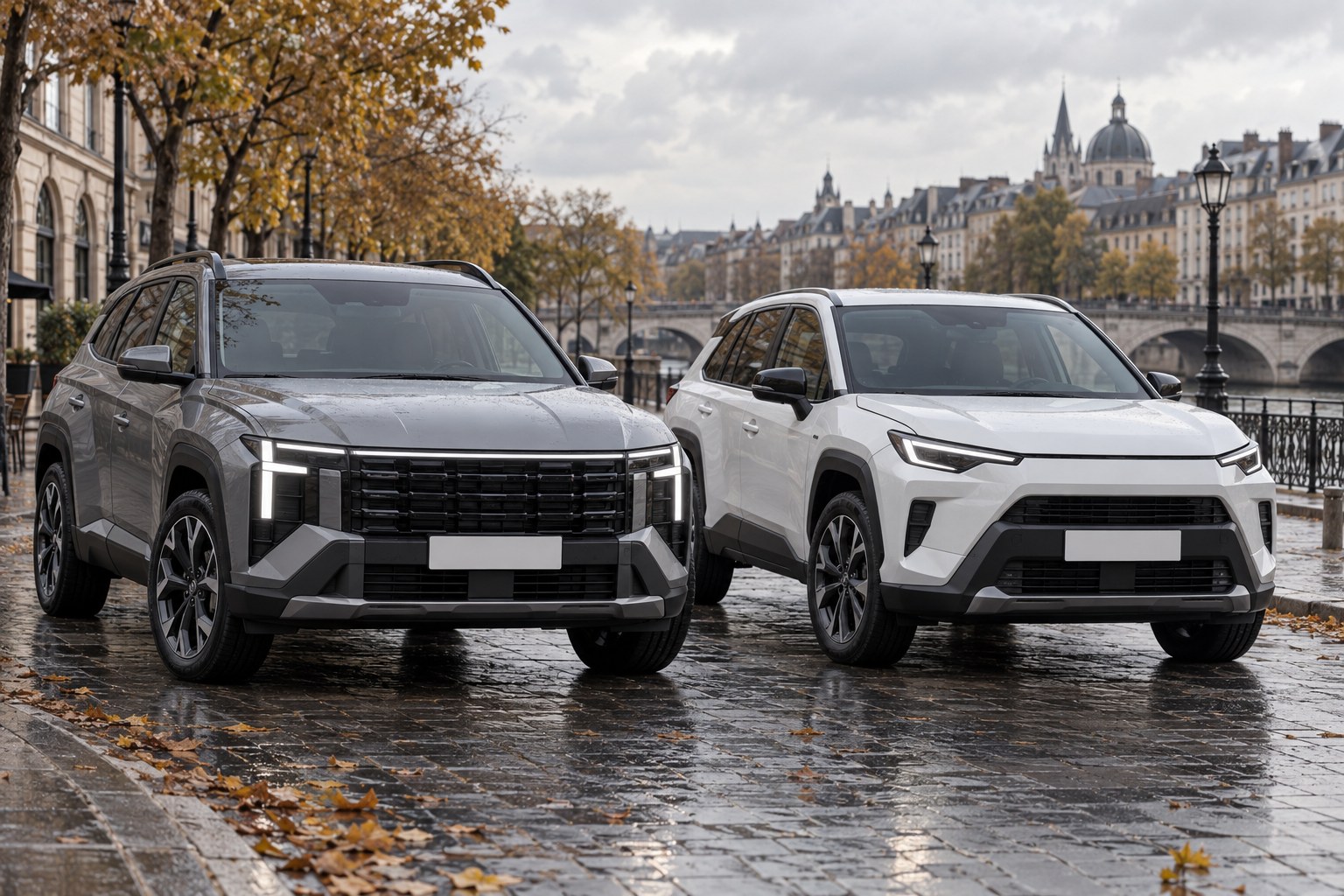
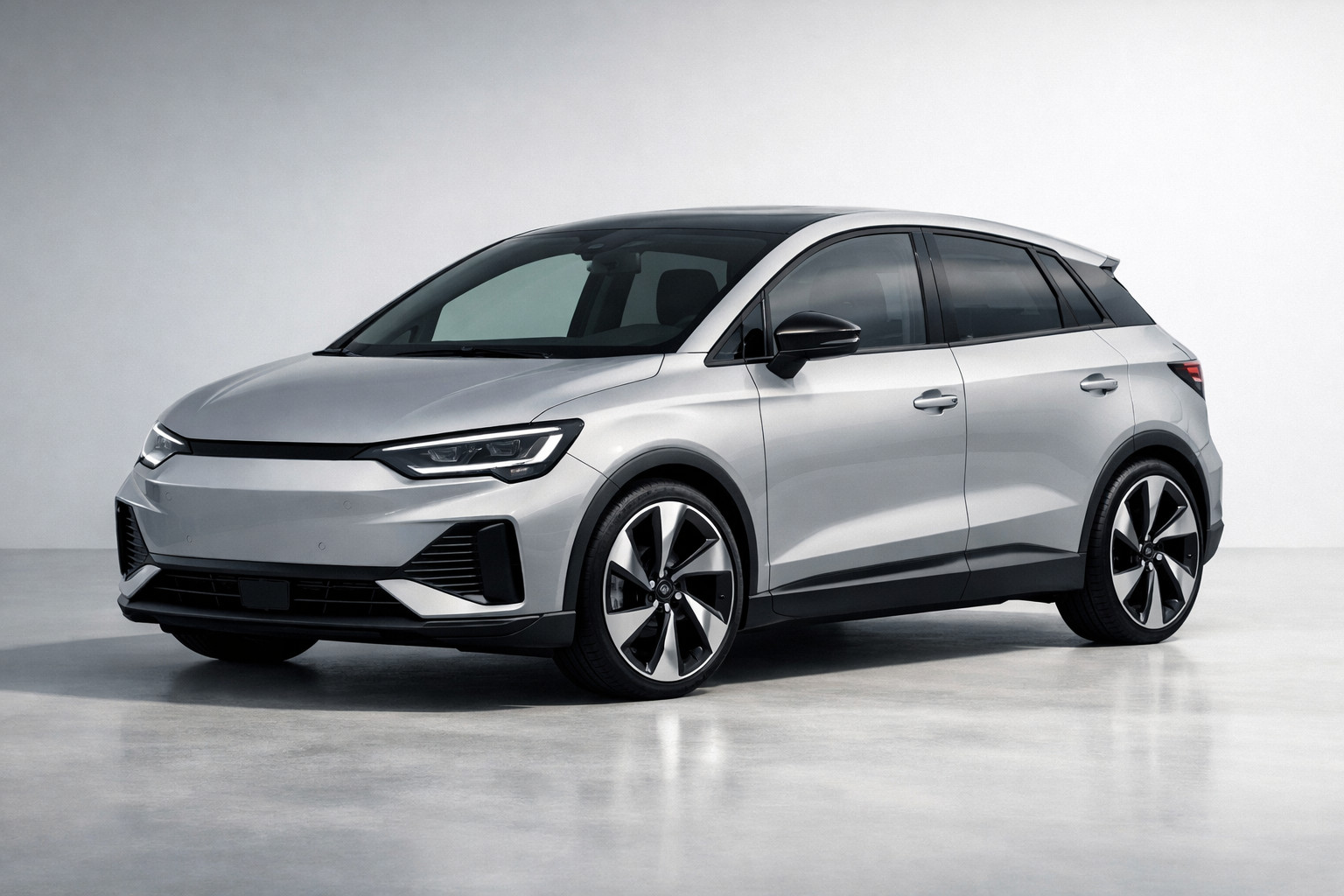
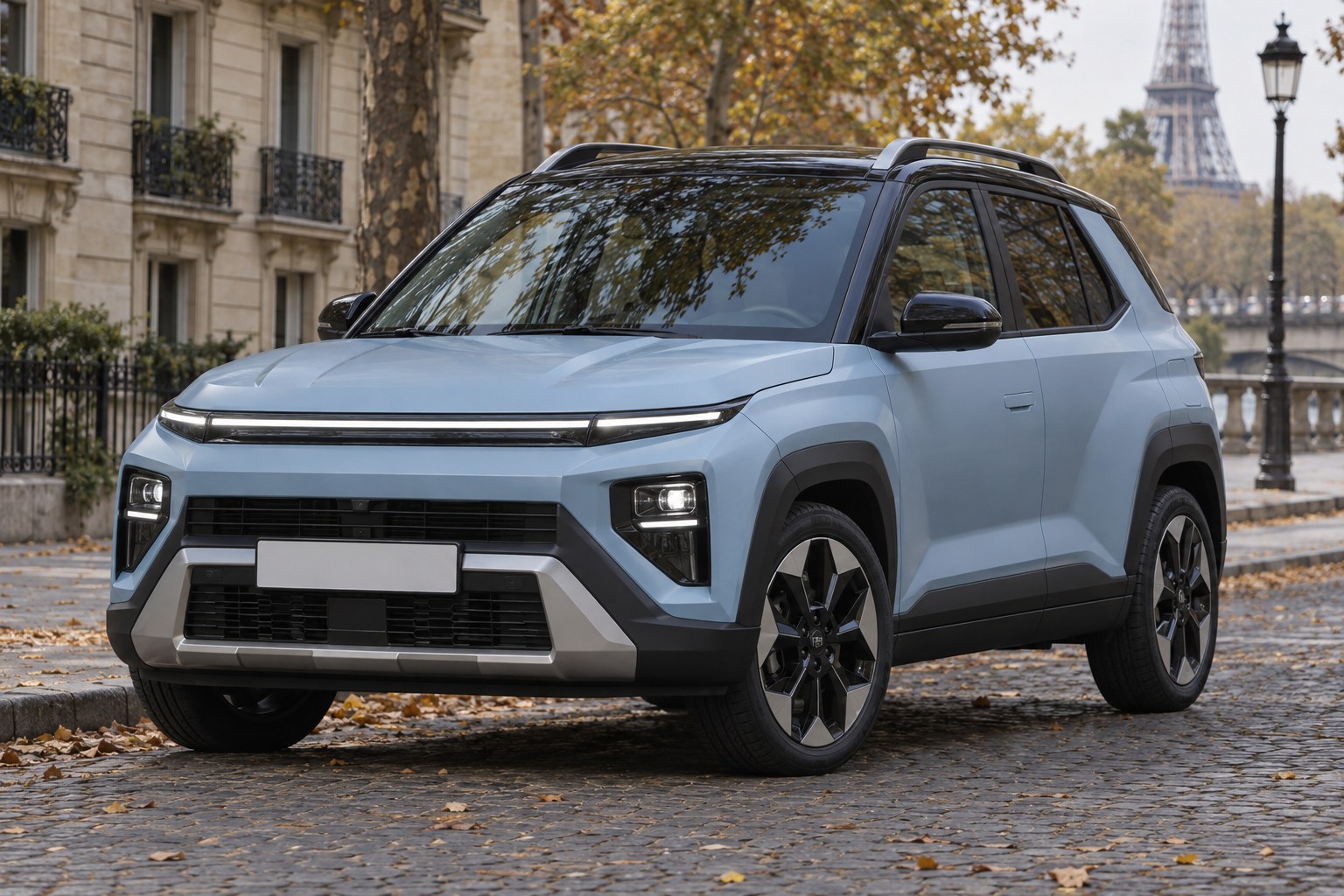
The first Bayon was more of a “raised” hatchback with sharp creases and slim headlights above the bumper. The second looks like a proper small SUV: clean Art of Steel surfaces, a sculpted bonnet, pronounced wheel arches with contrasting cladding, and protective lower trim front and rear. Up front there are projection LED headlights with static cornering lights and a full-width light bar; at the rear, the lamp graphics echo the front. The A- and D-pillars are black, roof rails are fitted, a black roof is optional, and wheels go up to 18 inches.
Hyundai says the Bayon is the only model in the segment with matte colours: Vibrant Blue, Ice Blue and Fierce Red are offered in both gloss and matte. An N Line version appears for the first time: mesh inserts, “wings” in the lower bumper area, 18-inch wheels, gloss-black cladding and a rear diffuser with two integrated exhaust finishers.
What engines the Bayon gets and whether there is 48 V
For now, the officially confirmed engines are as follows, all with front-wheel drive:
- 1.0 T-GDI, 90 hp — 6-speed manual or 7-speed DCT “robot”, CO₂ 139–149 g/km;
- 1.0 T-GDI, 115 hp — the same gearboxes, CO₂ 134–144 g/km, top speed up to 180 km/h;
- 1.6 HEV, 138 hp — full hybrid: petrol 1.6 GDI, electric motor and 6-speed DCT, CO₂ 102–113 g/km. It will arrive later, in 2027.
Torque across the range is from 172 to 264.8 N·m, and 0–100 km/h for the petrol versions is 10.8–14.1 s. The hybrid gets adaptive regeneration, with the driver adjusting its strength using the steering-wheel paddles. There is no mention in the Paris press release of the 48-volt mild hybrid that was reported based on spy photos: Hyundai is betting on a full hybrid instead of a “mild” one, which on some markets for the first Bayon has already been discontinued. An electric version has not been announced either.
What has changed in the cabin
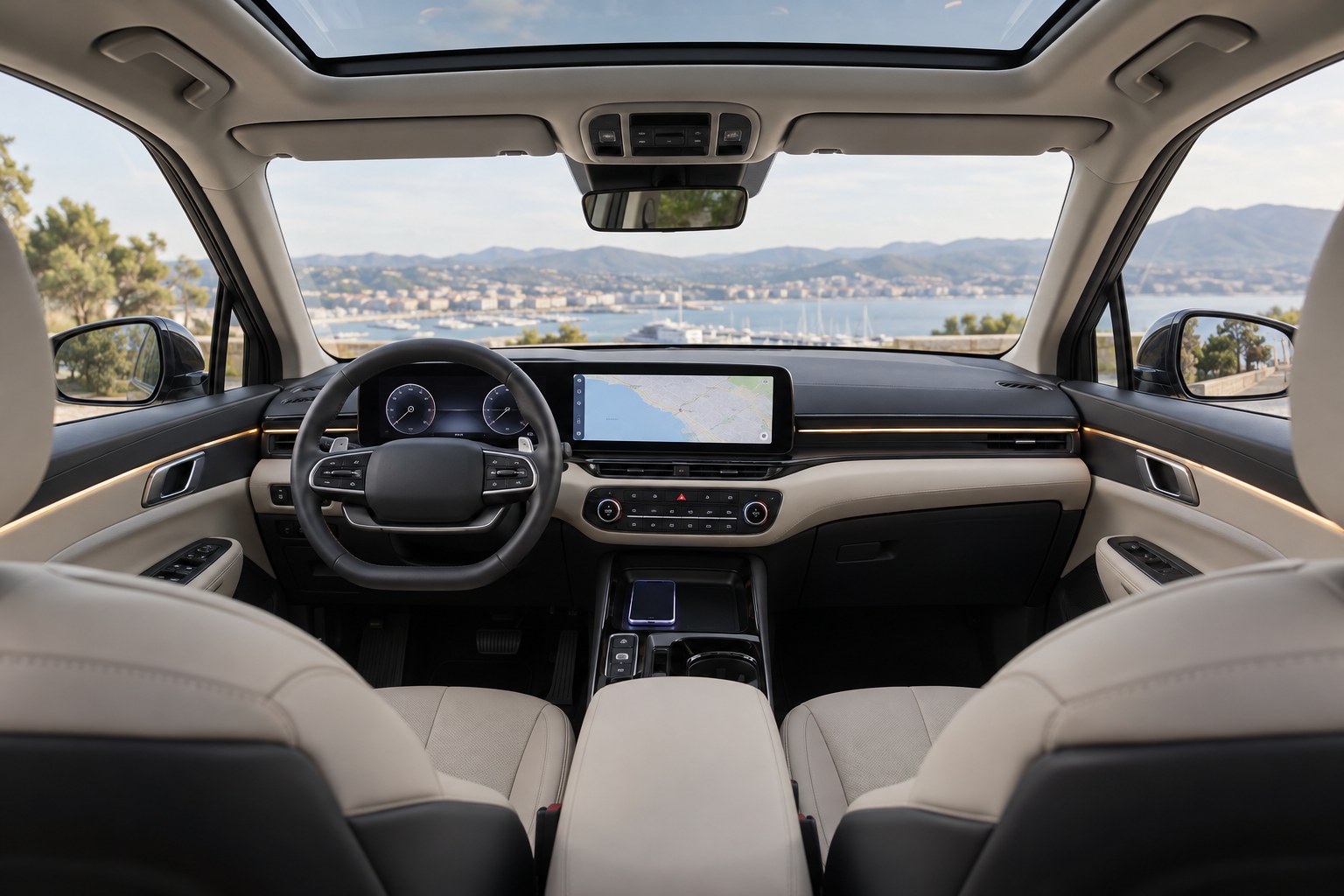
The key update is two 12.3-inch curved displays: the instrument cluster and infotainment (depending on trim). There is wireless Apple CarPlay and Android Auto, Hyundai Digital Key 2 (the car can be unlocked and started with a smartphone or watch), streaming services with YouTube, a Bose eight-speaker audio system, wireless charging, two front USB-C ports and one rear port.
For the B-SUV class, the comfort list is long: heated and ventilated front seats, driver lumbar support adjustment, dual-zone climate control, an opening panoramic roof, and two-tone ambient lighting. Rear passengers get adjustable backrest recline, an armrest with cupholders, heating and separate air vents. Among Hyundai SmartSense driver assists are Highway Driving Assist 2, surround-view and blind-spot cameras, and automatic braking when reversing in a car park.
Will accessories from the first-generation Bayon fit
No. The second Bayon has a different, wider body, a longer wheelbase, new doors, bumpers and roof, so side steps, roof-rail cross bars and model-specific mats from the first generation will not fit the new car. Model-specific products for Bayon 2 will appear once cars go on sale and manufacturers can take measurements from real vehicles.
For the current 2021–2026 Bayon, which will keep driving on our roads for a long time, there is a selection: aluminium side steps make entry easier and protect the body, cross bars for integrated roof rails turn the roof into a rack for a roof box or bicycles, and EVA mats for the cabin and boot hold water and snow. Everything for the model is in the Hyundai Bayon tuning section.
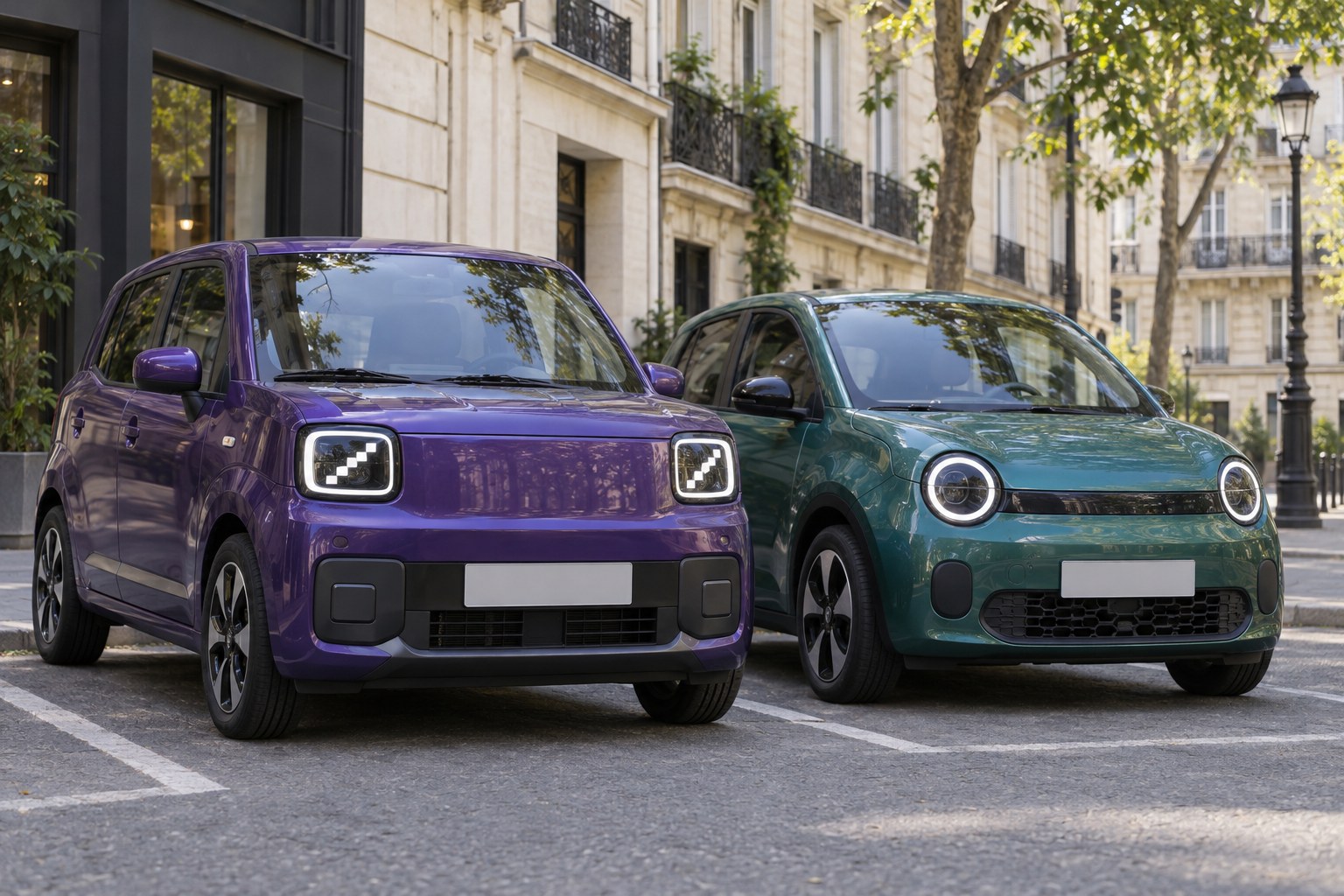
Images in the article are illustrations created based on Hyundai's official description, not factory photos.
We deliver via Nova Poshta across Ukraine.
Pros and cons
Larger body: +65 mm in length, +20 mm in wheelbase, best-in-class rear legroom (935 mm)
Full hybrid 1.6 with 138 hp and CO₂ emissions from 102 g/km
Two 12.3-inch displays, digital key, front seat ventilation, panoramic roof
The petrol version’s trunk has grown to 440 l
The first N Line version and matte colors from the factory
The hybrid will only appear in 2027; at launch — only 1.0 T-GDI
The hybrid’s trunk is smaller — 397 l
No all-wheel drive or electric version
Accessories from the first Bayon do not fit
Hybrid data (acceleration, weight, top speed) have not been announced yet