 Author: Radomskyi Maksym Vasyliovych
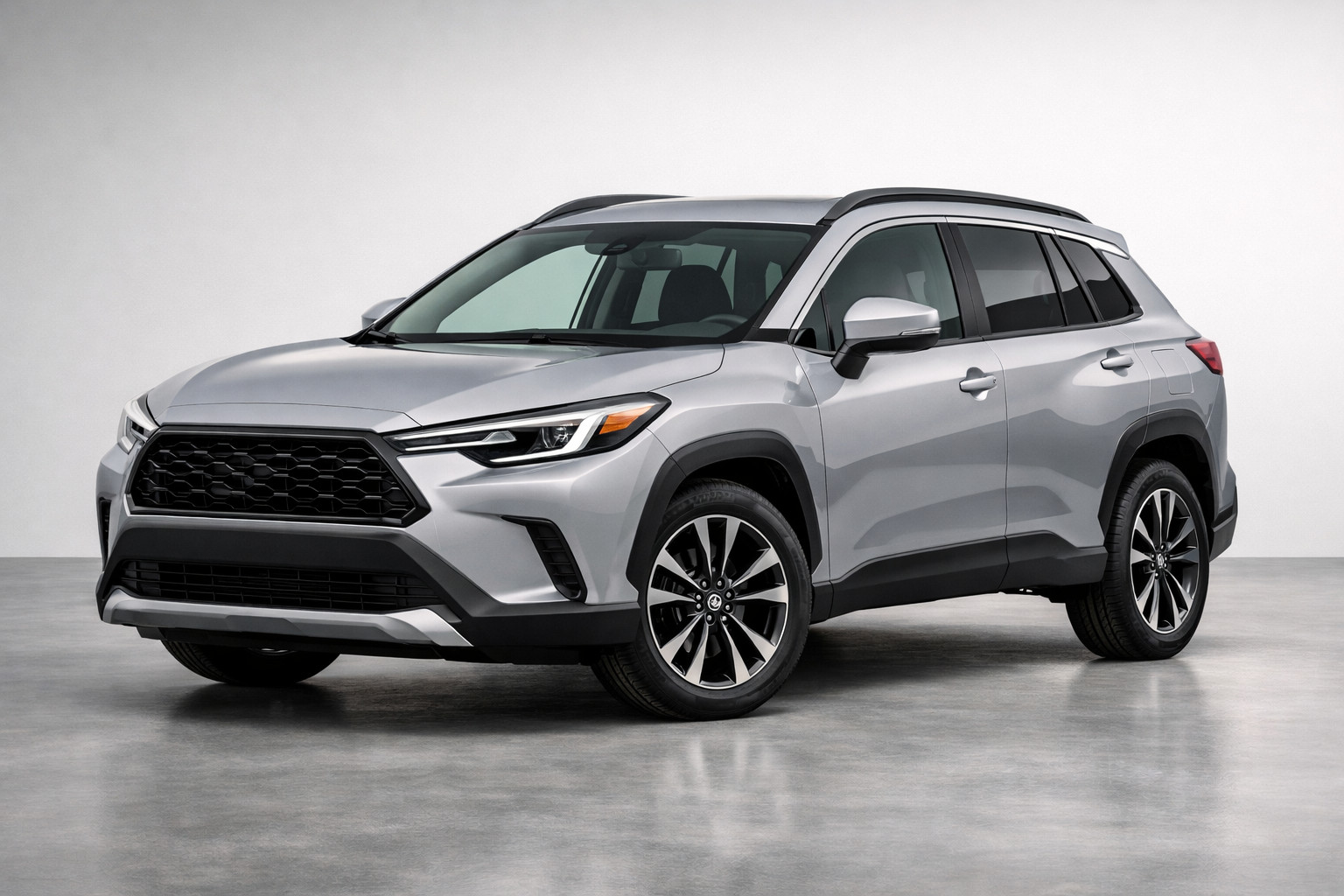
Toyota Corolla Cross 2026 is not a new generation, but a tidy refresh of the already familiar compact crossover. The main changes are in the exterior and the cabin: a different front end, a redesigned center console, and a larger available screen. Mechanically, everything is straightforward and without surprises: a 2.0-liter gasoline engine for those who want a cheaper entry point, and a hybrid for those who care about stronger pull, all-wheel drive, and lower consumption.
The strongest version in this lineup is the hybrid. It has 196 hp, standard all-wheel drive, and a combined consumption of about 5.6 L/100 km on the U.S. cycle. The gasoline Corolla Cross is cheaper, but slower and louder under load. So the model works well for the city, family trips, and everyday routine, but not for those who want a roomy second row or lively handling.
The model and its place in the market
Corolla Cross sits between the regular passenger-car Corolla and the brand’s larger crossovers. In size and concept, it’s a compact family crossover that competes with the Honda HR-V, Subaru Crosstrek, and Hyundai Kona. Its main argument isn’t emotion, but the combination of price, efficiency, safety, and simple everyday usability.
For the U.S. market, the starting price of 2026 gasoline versions is announced from $24,635, hybrids from $28,995, with a destination charge added separately. That makes the gasoline version more affordable at the entry point, but if you factor in fuel costs and the benefit of standard all-wheel drive, the hybrid looks like the smarter buy.
Generation and model history
Corolla Cross has been produced since 2020 and still remains within the first generation. In different countries, markets launched the model at different times, so the sales calendar may differ, but the architecture hasn’t changed: it’s the same compact crossover on the brand’s passenger-car platform.
The 2026 update doesn’t change the essence of the vehicle. It’s a facelift with cosmetic body tweaks, a new front-end design, a revised console, and more modern infotainment. In short, Toyota didn’t redo the model from scratch—it simply improved what owners see and touch every day.
Engines and transmissions
For 2026, the lineup is simple. The gasoline version uses a naturally aspirated 2.0-liter engine, and the hybrid is also built around a 2.0-liter engine, but works together with three electric motors. That’s why the hybrid is not only more economical, but also noticeably punchier off the line and in city driving.
| Version | Powertrain | Output | Drive | Transmission | Fuel consumption |
|---|---|---|---|---|---|
| Gasoline | 2.0 L, 4-cylinder | 169 hp, 205 N·m | Front or all-wheel | Continuously variable transmission | 7.4 L/100 km combined for front-wheel drive |
| Gasoline AWD | 2.0 L, 4-cylinder | 169 hp, 205 N·m | All-wheel | Continuously variable transmission | 7.8 L/100 km combined |
| Hybrid | 2.0 L gasoline engine + 3 electric motors | 196 hp | All-wheel standard | Hybrid continuously variable transmission | 5.6 L/100 km combined |
If you choose with your head, the picture is this: the gasoline version suits those who want a calm city car and a lower starting price. The hybrid is better for those who drive a lot, often sit in traffic, want quieter operation at low speeds, and don’t want to regret the performance. Roughly, the hybrid reaches 97 km/h in about 8 seconds, while the gasoline version is noticeably more relaxed.
Body, dimensions, and chassis
By format, it’s a typical city crossover: compact enough for parking, but with ground clearance and a seating position that give more freedom in winter, on dirt roads, and near curbs. All-wheel drive here isn’t about serious off-roading, but about everyday confidence on wet or slippery roads.
| Parameter | Value |
|---|---|
| Length | 4 473 mm |
| Width | 1 826 mm |
| Height | 1 648 mm |
| Wheelbase | 2 639 mm |
| Ground clearance | 206 mm |
| Turning circle | 10.79 m |
| Seats | 5 |
| Gasoline cargo area | 680 L behind the second row, up to 2 503 L with the row folded |
| Hybrid cargo area | about 609 L behind the second row |
| Towing | up to 680 kg |
Practically, what matters is this: the gasoline version has a larger cargo area, while the hybrid gives up a bit of volume. But the 206 mm ground clearance and compact turning circle make the Corolla Cross convenient where larger crossovers start to annoy with their size.
Interior, comfort, and safety
The 2026 update is felt most inside. The center console has become more logical, the standard infotainment screen is 8 inches, and higher trims can get a 10.5-inch display. Top versions offer a 12.3-inch digital instrument cluster. The interface is more modern, but without unnecessary complexity.
The weak point of the interior isn’t so much ergonomics as the sense of space in the rear. Second-row legroom isn’t class-leading, so tall passengers may feel cramped. Safety is solid: even the base version includes Toyota Safety Sense 3.0, and mid and upper trims add blind-spot monitoring, rear cross-traffic alert, and upgraded parking assists with automatic braking.
Everyday use
In the city, the Corolla Cross is strong thanks to visibility, a small turning circle, and easy ingress. The hybrid is especially appropriate in dense traffic: it uses less fuel, responds more smoothly to small accelerations, and doesn’t require any special habits from the driver. The gasoline version is also simple, but under hard acceleration it’s noisier.
On the highway, compromises show up: sound insulation isn’t exemplary, and the rear seat isn’t designed for three adults on a long trip. For a family with one or two children, it’s usually enough, but if you often travel with five, it’s worth sitting in the second row before buying. For hybrid cars, it’s also sensible to check the vehicle by VIN, because some 2026 versions had service campaigns.
Strengths and weaknesses
This is a model without loud promises: it either fits your use case exactly, or it quickly shows its limits. The key points from an owner’s perspective are below.
| Pros | What it means in real life | Cons | What you may not like |
|---|---|---|---|
| Efficient hybrid | Lower costs in the city and on daily routes | Tight second row | Tall rear passengers won’t be very comfortable |
| Standard all-wheel drive on the hybrid | More confidence in winter, on wet asphalt, and on light dirt roads | Road noise on the highway | At speed, the cabin isn’t as quiet as in more expensive models |
| Good starting price for the gasoline version | Lower entry threshold into a new crossover | Mediocre performance for the gasoline version | There isn’t much reserve pull for passing and under load |
| Practical cargo area and 206 mm ground clearance | More convenient for daily life, country trips, and traveling with gear | Interior materials without sophistication | Everything is functional, but without the feel of a higher class |
Who the Corolla Cross 2026 suits: those who want a simple family crossover without a complicated character, with solid safety and predictable costs. Who it won’t suit as well: those looking for maximum cabin space, better sound insulation, or driver-focused feel.
Tuning and accessories
With the Corolla Cross, the point isn’t deep power tuning, but upgrades for real-world use. This model is better matched with things that protect the interior and body, simplify carrying cargo, and reduce everyday upkeep. This is especially relevant for a family vehicle where dirt, strollers, bags, and seasonal trips are the norm, not the exception.
What to consider for this model
- Rubber floor mats — a must-have for the city, winter, and kids: easier to keep clean and protect the carpet.
- Cargo liner — useful if you often carry a stroller, tools, bags, or sports gear and don’t want to keep cleaning the trim.
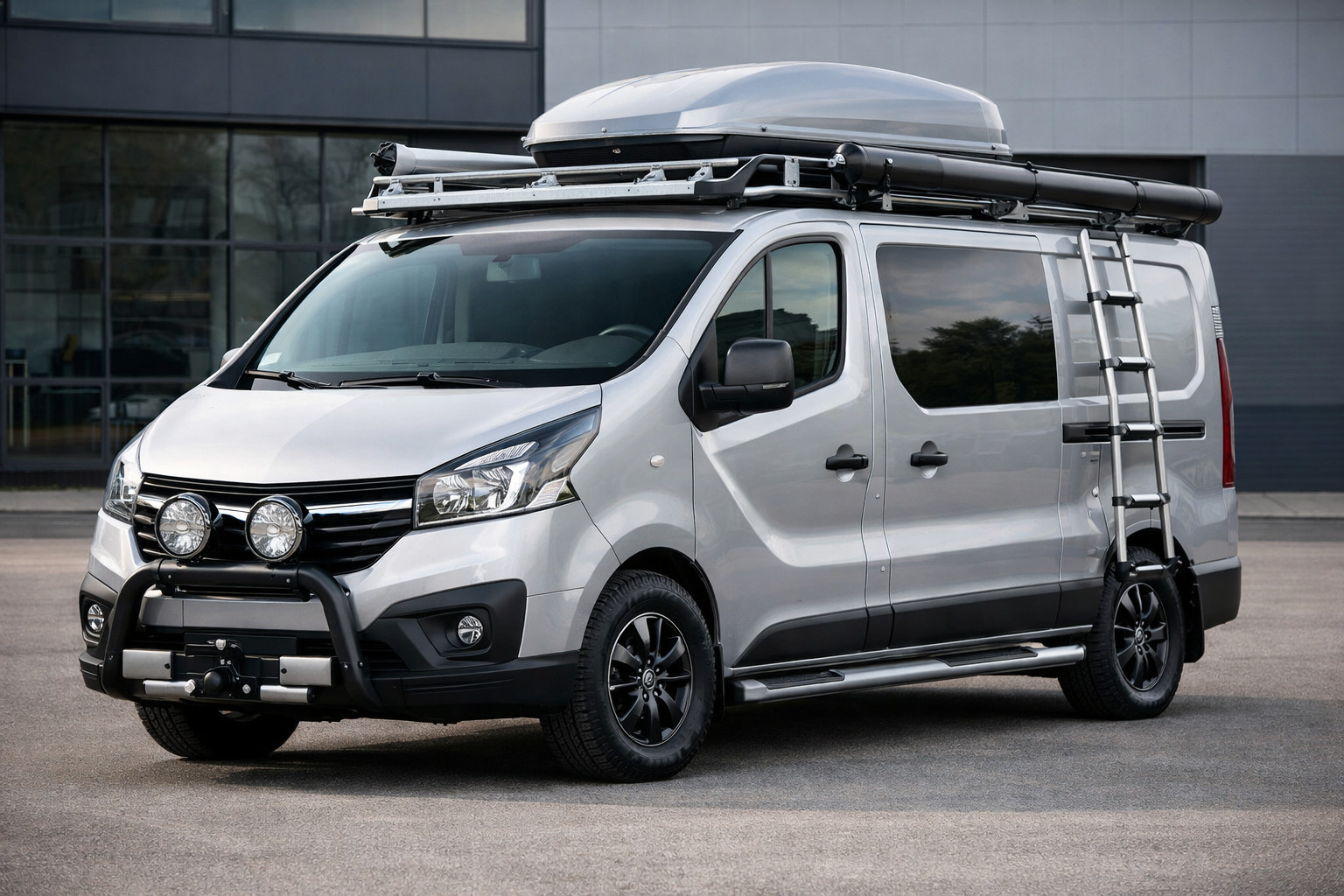
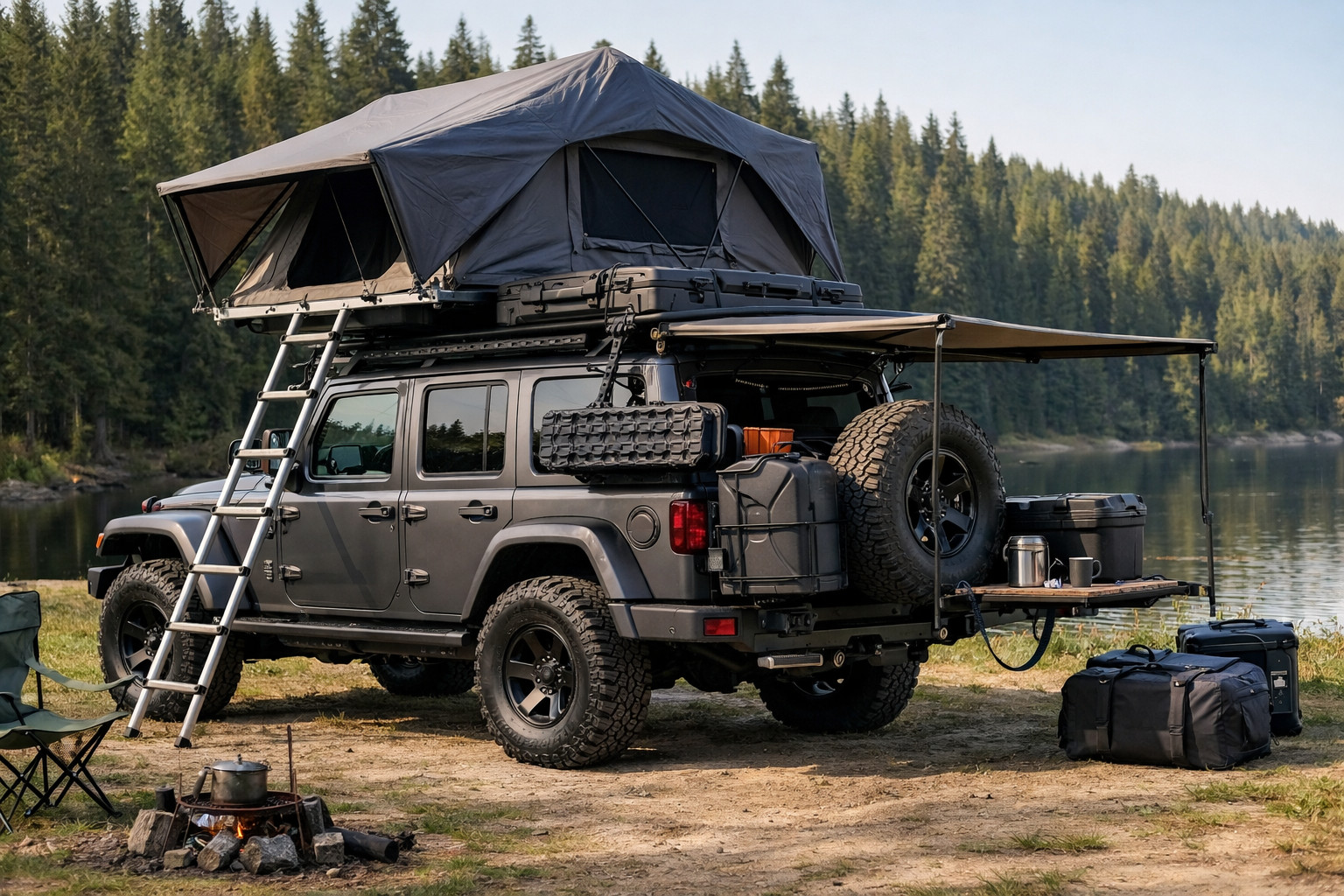
- Roof rack and crossbars — great for long trips, bikes, or seasonal equipment when the interior volume isn’t enough.
In short, for the Corolla Cross, practical accessories work best, not decorative ones. They don’t change the car’s character, but they make it more convenient in exactly the scenarios this crossover is bought for.
Conclusion
Toyota Corolla Cross 2026 is a successful refresh for those who need a useful, not flashy, compact crossover. The most interesting option in the lineup is the hybrid: it’s more efficient, pulls harder, and already comes with all-wheel drive. The gasoline version only makes sense when the main priority is a lower entry price and there are no high demands for performance.
Before buying, it’s worth answering two questions honestly: do you have enough space in the second row, and are you ready to live with average sound insulation. If yes, the Corolla Cross covers most daily tasks without unnecessary complexity. This material is based on real accessory selection experience, practical use, and typical usage scenarios—not abstract marketing promises.
Pros and cons
The hybrid version is genuinely economical: in the combined cycle it’s rated at around 5.6 l/100 km, and in the city it should be more cost-effective than the petrol version. That’s practical for everyday trips and traffic.
The hybrid comes with all-wheel drive as standard. This adds confidence in winter, on wet roads, and on light dirt roads without paying extra for AWD.
The cabin update is noticeable in use: the redesigned center console, the 8-inch display as standard, and larger screens in higher trims make the interface more modern and convenient.
The petrol version has a moderate entry price: a starting price of $24,635 makes the Corolla Cross one of the more affordable compact crossovers in the lineup.
The practical body works well for everyday life: 206 mm of ground clearance, a compact turning radius, and the roomy luggage space of the petrol version make daily use easier.
The second row isn’t very spacious, and taller passengers may feel cramped in the back. For regular trips with five people, this is an important limitation.
The sound insulation is not exemplary, especially on the highway. At speed, the cabin can be noticeably louder than you’d like.
The petrol version doesn’t impress with its dynamics: under load and during overtaking, the reserve of power is limited, and the engine runs louder.
The cabin materials don’t give a premium feel. The car is functional, but it doesn’t create the impression of an expensive crossover.