27.08.2026
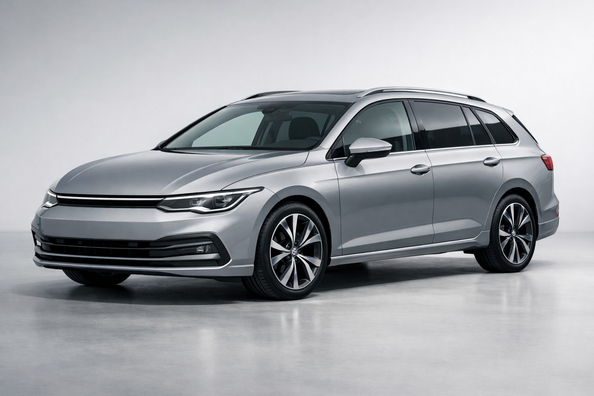
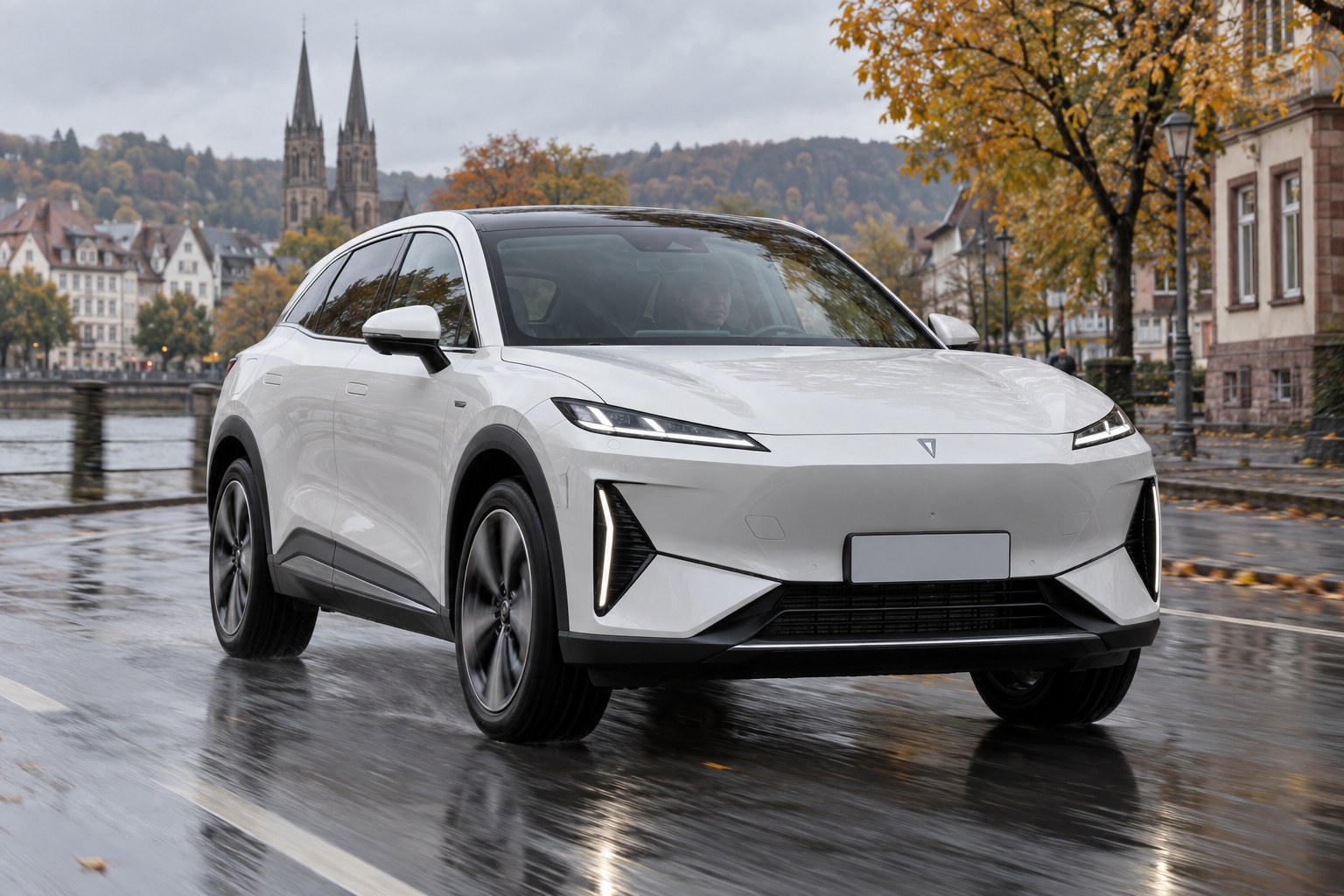
Volkswagen Golf Variant VIII in 2024 is an estate for those who need one car for everything: work, city driving, highways, family trips, and a proper trunk without switching to a crossover. Its idea is simple: near-car-like handling, a large usable volume in the rear, and an engine lineup where you can choose either economy or a more lively character.
Golf Variant suits best those who drive every day and value rationality. It’s not the best fit if you have bad roads, constant curbs, and a desire to sit higher. This is an asphalt-focused estate, not an SUV replacement.
Golf Variant is the practical version of the regular Golf, but without feeling like a “long wagon.” In the market it sits between the Golf hatchback and the larger Passat Variant: more compact in the city, cheaper in everyday use, yet much more useful than a hatchback in daily life.
Its main trump card is balance. The estate doesn’t feel bulky, but it gives you a trunk that’s already enough for a stroller, suitcases, shopping, tools, or a vacation trip. That’s why the model is often considered instead of compact crossovers: not everyone likes the lower seating position, but consumption, stability, and handling are usually better.
The eighth-generation Golf debuted in 2019, and Golf Variant VIII reached the market from 2020, depending on the country—marketed as a 2021 model year. In 2024, this generation on the MQB Evo platform remains current, and in some markets there are already updated versions with improved multimedia and refreshed equipment.
From a practical evolution standpoint, Golf VII was a very successful compromise between simplicity and modernity, while Golf VIII became more digital and technology-focused. In this generation, the Variant kept the strong side of the entire Golf lineup: passenger-car driving manners without giving up practicality.
In 2024 it’s important to distinguish between markets and specific versions. Within the eighth generation you can realistically find the petrol 1.0 eTSI and 1.5 TSI/eTSI, as well as the diesel 2.0 TDI. In some markets there are still pre-facelift 1.0 eTSI 110 and 1.5 with 130/150 hp, while in others the focus has already shifted to 1.5 eTSI 115/150 and 2.0 TDI 115/150.
| Engine | Power | Transmission | Who it suits |
|---|---|---|---|
| 1.0 eTSI, 999 cm³ | 110 hp | 7-speed DSG | Calm city driving and moderate mileage; with a full load, the torque reserve is modest. |
| 1.5 TSI, 1498 cm³ | 130 or 150 hp | 6-speed manual or 7-speed DSG depending on version | The most versatile petrol option for everyday driving. |
| 1.5 eTSI, 1498 cm³ | 115, 130 or 150 hp depending on market | 7-speed DSG | A better choice for the city and traffic jams, smoother pull-away. |
| 2.0 TDI, 1968 cm³ | 115 or 150 hp | 6-speed manual or 7-speed DSG | For high mileage and highway use; torquey and efficient on long trips. |
For everyday use, the most sensible choice most often looks like the 1.5 TSI or 1.5 eTSI. The 2.0 TDI diesel makes sense if the car will genuinely cover a lot of miles and long distances. All-wheel drive in a family Variant isn’t a baseline story—this is more a matter of specific higher-output versions.
Golf Variant VIII is noticeably longer than the hatchback, but not so much that it becomes inconvenient in the city. This is an important advantage of the model: the estate remains easy to place when parking and doesn’t turn into a big family ship.
| Parameter | Value | Practical meaning |
|---|---|---|
| Length | 4633 mm | A larger trunk without the feeling of an overly big car. |
| Width | 1789 mm | Comfortable in the city and in tight parking spaces. |
| Height | about 1480 mm | Lower silhouette and better stability at speed. |
| Wheelbase | 2686 mm | A decent amount of space in the second row. |
| Ground clearance | about 140 mm, depending on version | Good for asphalt, but not a fan of deep ruts and curbs. |
| Trunk | 611 l | One of the main arguments in favor of the Variant. |
| Trunk with second row folded | up to 1642 l | For big boxes, bikes, and family cargo. |
The suspension is tuned like a passenger car. It rolls less than a crossover, and on the highway it feels very composed. The flip side is low ground clearance and sensitivity to broken surfaces, especially on larger wheels.
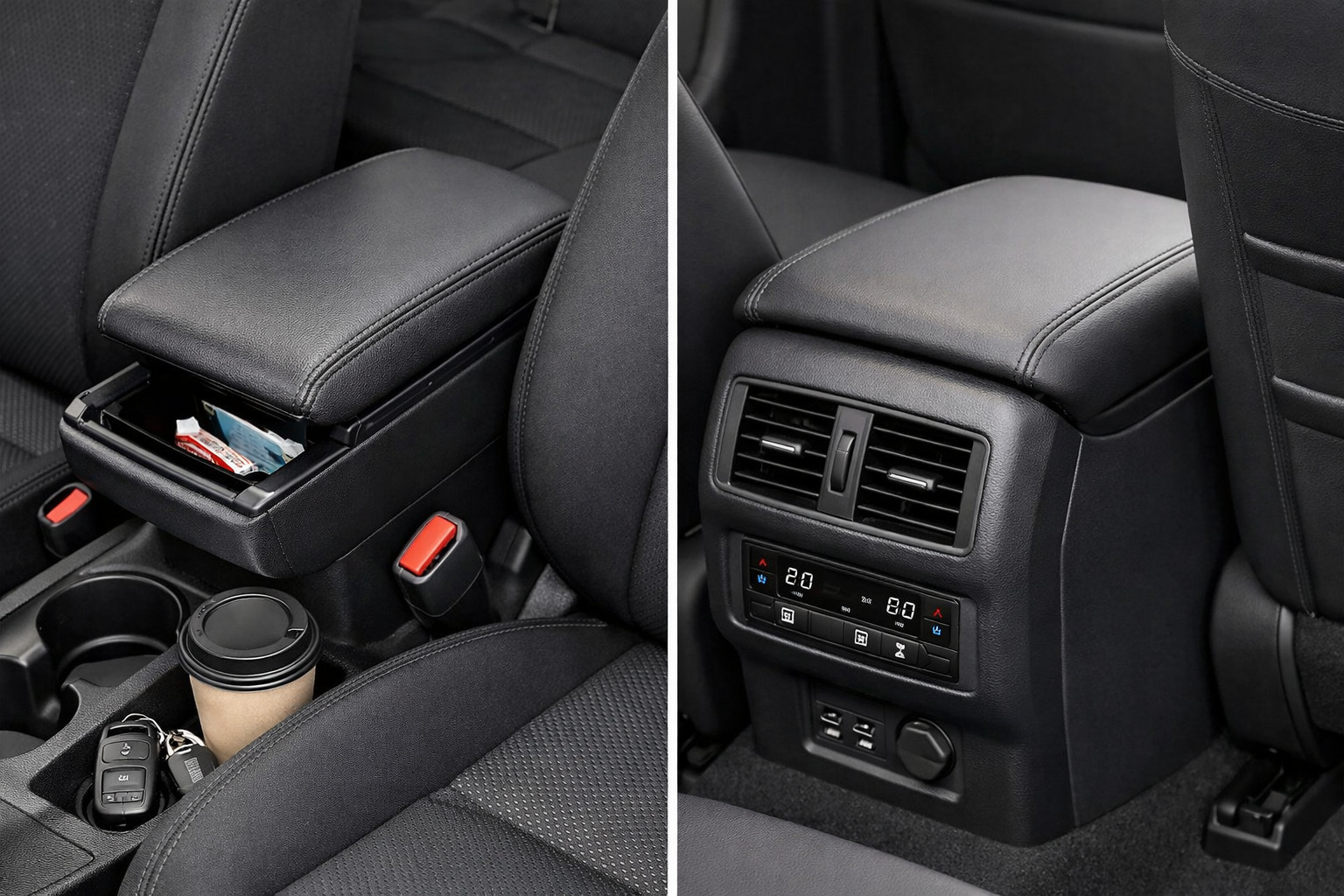
The Golf VIII interior is built around digital displays and touch controls. It looks fresh, but not everyone likes it in everyday use: you need time to get used to the climate controls, multimedia, and menu logic. Front seating is comfortable, and the second row is perfectly suitable for two adults and child seats without feeling cramped.
Equipment depends heavily on trim level. Some cars will have a basic set, others—adaptive cruise control, lane keeping, heating, cameras, matrix headlights, and other driver-assistance systems. That’s why you should judge a specific Golf Variant not by the model name, but by the actual equipment list.
In real life, Golf Variant is strong in the details: a wide trunk opening, a low loading lip, comfortable seating, predictable behavior in the city. It’s a car where it’s easy to throw in things after the store, and on weekends just as calmly drive far without feeling like you’re piloting something big and heavy.
From an owner’s perspective, there are a few honest nuances. On bad roads you need to pay closer attention to the wheels and the front overhang. DSG and the large amount of electronics require proper service. But on good asphalt the model pays you back with quieter, more composed behavior than most similarly sized crossovers.
| Strengths | Weaknesses |
|---|---|
| Large 611 l trunk without moving to a heavy crossover | Ground clearance isn’t for broken roads and high curbs |
| Passenger-car handling and highway stability | Touch controls can be annoying in daily use |
| A successful choice of engines for city and highway | Equipment varies greatly between versions and markets |
| A good balance of size, practicality, and efficiency | On larger wheels, comfort is noticeably harsher |
The main practical plus for the owner is versatility without extra mass and height. The main minus is that this car doesn’t forgive a careless attitude to roads and to choosing the right trim. You should buy it not “by the name,” but for your scenario: city, highway, family, mileage, road conditions.
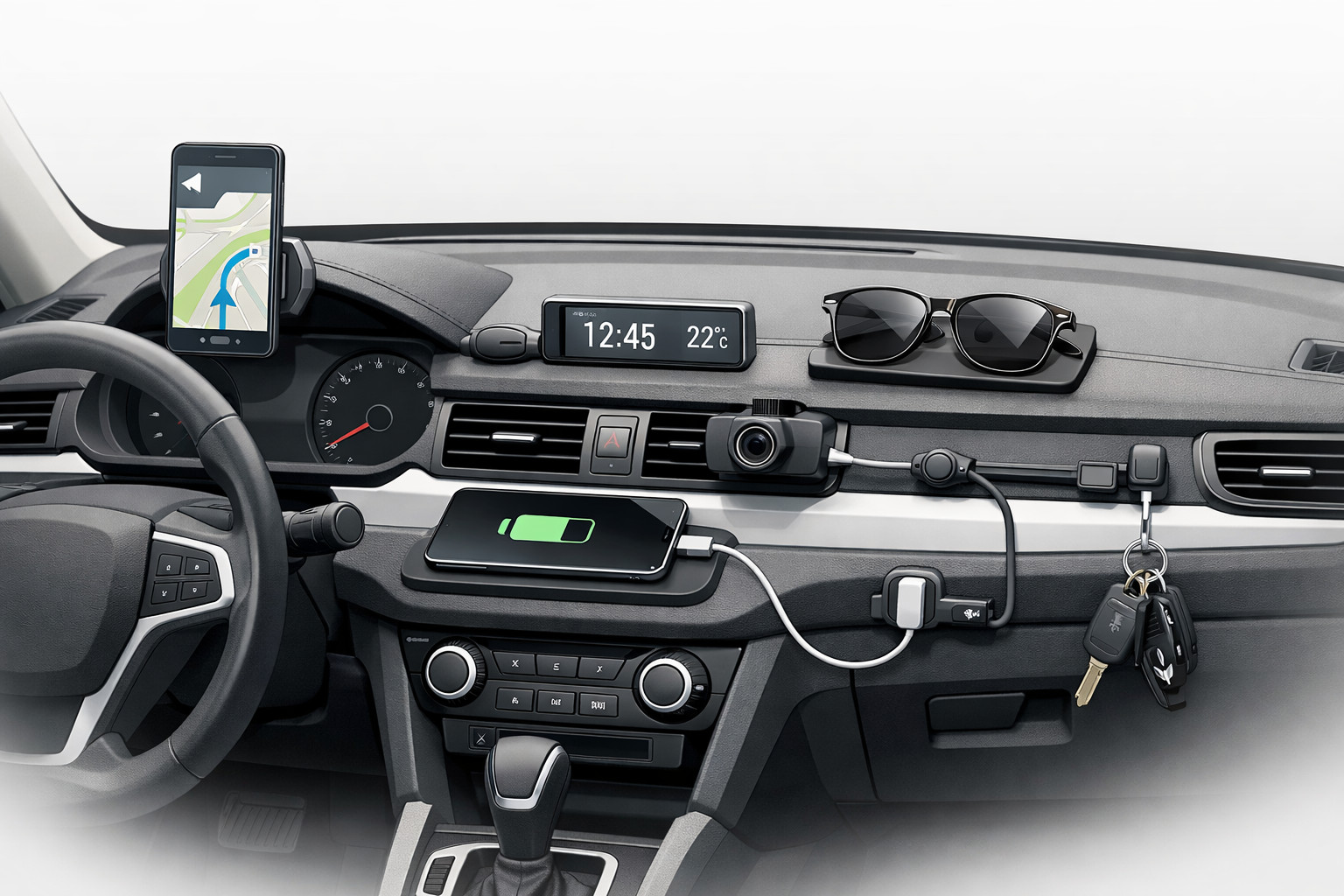
For Golf Variant VIII, utilitarian tuning makes the most sense. This model is often bought not for looks, but for daily workload, so the first things you typically need are items that protect the cargo area and bodywork and add useful volume. If you’re keeping this material as a checklist, the page /oglyad-volkswagen-golf-variant-vosmogo-pokolinnya-2024-roku.html is convenient as a quick starting point before choosing accessories.
Only one thing matters: for the Variant, some solutions are selected from the Golf 8 lineup in general, but compatibility for the trunk, bumper, and roof must be checked carefully. The most rational purchases here aren’t decorative trims, but things that truly work every day.
Volkswagen Golf Variant VIII 2024 is a strong option for those who want a daily estate without the extra volume, weight, and costs of a crossover. It’s well suited for city and highway driving, especially if you need a genuinely usable trunk, not just a high seating position.
Not the best choice for very bad roads or for those who fundamentally don’t want a touch interface. But for calm, practical, regular use the model looks very convincing, and accessories here have a truly utilitarian purpose. The material is based on real selection experience, practice, and real-world usage scenarios.
| ✔ | A large 611 l trunk and up to 1,642 l with the second row folded down make it convenient for a stroller, suitcases, groceries, or large items without moving up to a crossover. |
| ✔ | The car retains passenger-car-like handling and feels good on the highway, so it is easier to drive every day than most compact crossovers. |
| ✔ | There is a practical range of engines for different scenarios: 1.5 TSI/eTSI for everyday driving and 2.0 TDI for high mileage and long trips. |
| ✔ | The dimensions remain moderate: the wagon does not look bulky in the city and parks normally, yet it offers more usefulness than a hatchback. |
| ✔ | A wide trunk opening, a low loading sill, and a comfortable seating position make the car especially convenient in everyday use. |
| ✘ | Around 140 mm of ground clearance and a low silhouette are not suitable for rough roads, deep ruts, or high curbs. |
| ✘ | Touch controls for the climate and multimedia can be annoying in everyday use because they take some getting used to. |
| ✘ | Equipment depends heavily on the trim and market, so two Golf Variant models can differ noticeably in comfort and driver-assistance systems. |
| ✘ | On large wheels, ride comfort becomes firmer, and the suspension reacts more sharply to poor road surfaces. |
Shipping to EU
Wholesale and retail
Own warehouse
Опис продукту
Подарунки не надаються при оформленні покупки у кредит під 0,01% або при покупці частинами.