05.09.2026
153
Side sills are one of the first places where the body starts to rust. They sit low, salty slush flies at them from under the wheels, and inside the sill there is a closed cavity where moisture with salt can sit for weeks. We explain why sills rot faster than the rest of the body, how to wash them in winter, and what really helps—and what does not.
Contents
The word “sills” refers to two different things, and you protect them differently:
| Exterior (body) sill | Door sill | |
|---|---|---|
| Where | under the doors on the outside, between the wheel arches | in the door opening, where you step |
| What causes damage | spray from under the wheels, salt inside the cavity, chips from sand and gravel | sand, salt and de-icers from shoes, abrasion from soles |
| What helps | washing, open drains, cavity preservative, anti-gravel coating, mud flaps | scuff plates, step mats, clean door seal |
Anti-icing mixes are chlorides: regular technical salt, as well as calcium and magnesium chlorides. The latter absorb moisture from the air, so residue from them stays wet for a long time and keeps eating away at the metal even on a dry road. The wheels throw this slurry straight onto the sills, the lower edge of the doors, and the arches.
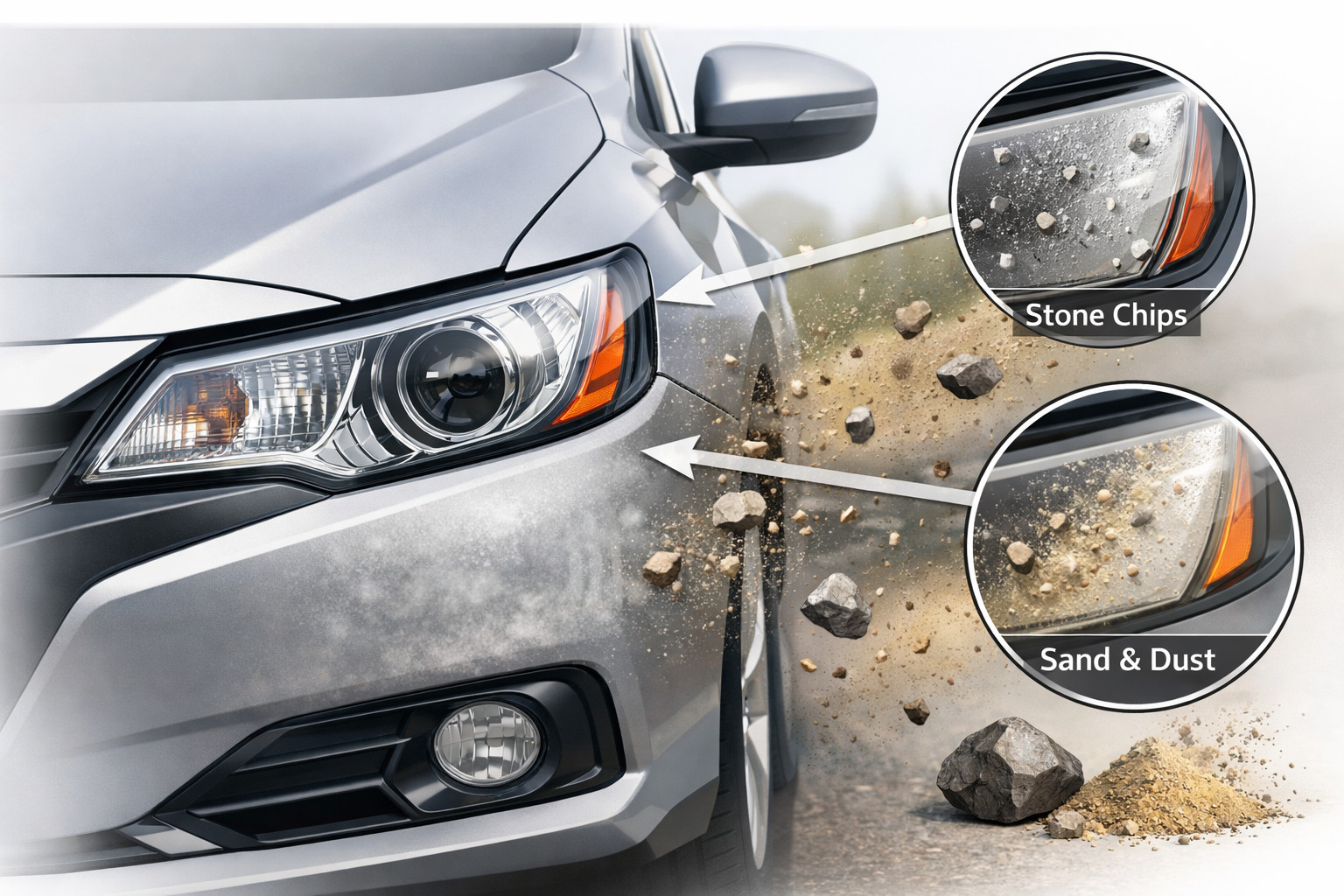
A sill is a closed box section. Moisture with salt gets inside through technological openings and seams, and it should leave through drain holes at the bottom. If they are clogged with dirt, a salty solution can stand inside the sill for years, and rust goes from the inside out: when a blister appears on the paint, the metal under it is already thin. The second reason is chips: sand and gravel from under the wheels knock paint off the lower part of the sill, and salt gets straight onto bare metal.
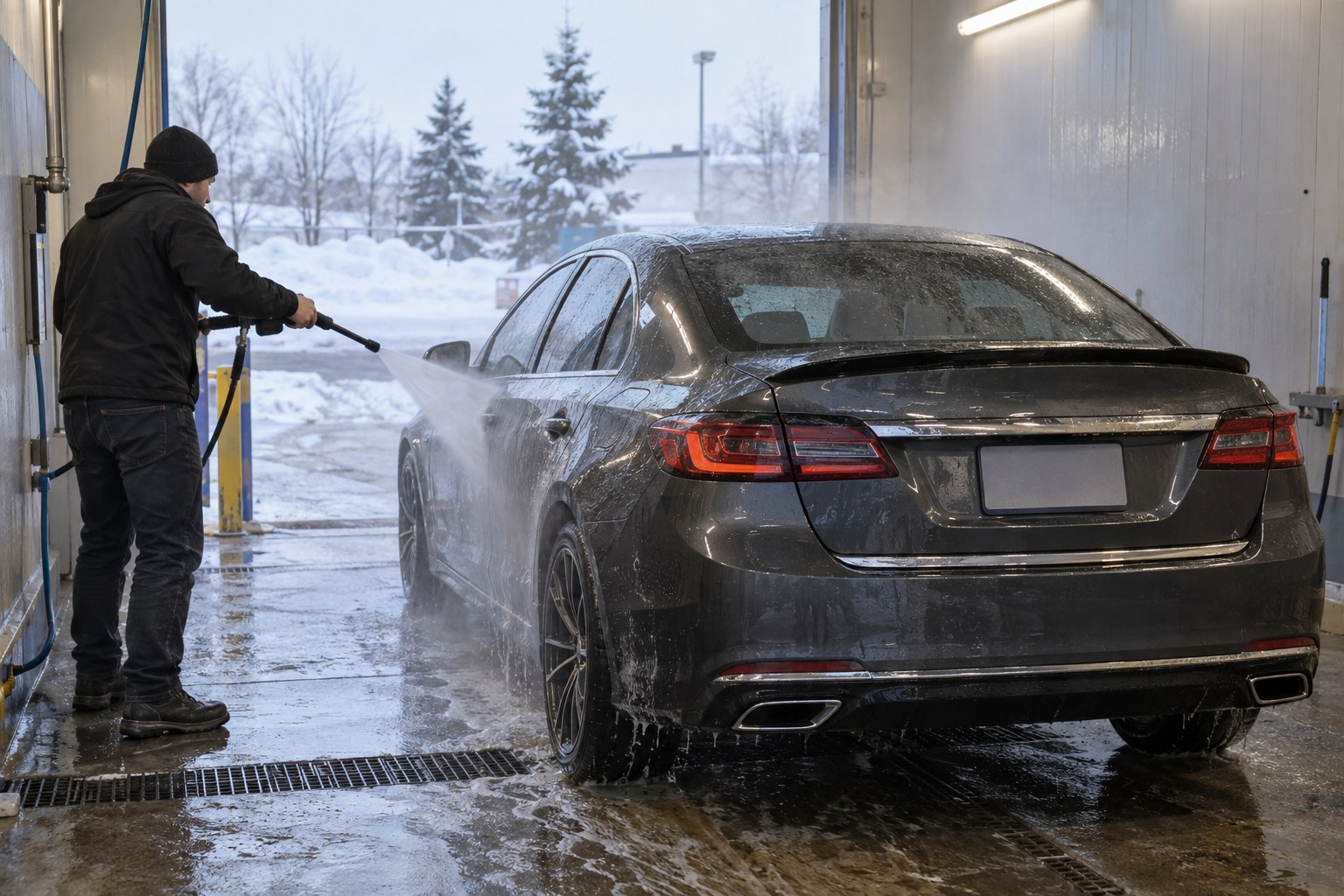
You can and should wash your car in winter—the main thing is to do it correctly (more details in the article can you wash a car in winter). For sills, here is what matters:
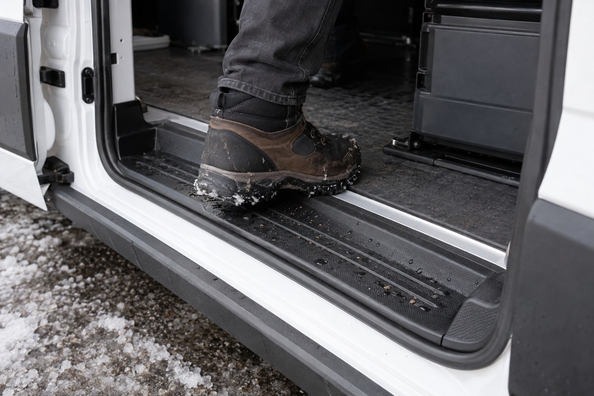
The door sill is rubbed by soles every day, and in winter sand and de-icers from shoes remain on it. This wears the clear coat on the sill down to the primer, and then salt reaches the metal. The simplest protection is scuff plates: they stick to the sill and take the abrasion. For commercial vehicles there are EuroCap ABS scuff plates for specific models (Mercedes Vito, Fiat Ducato, Volkswagen Caddy and others), which are attached with double-sided tape.
In vans with a high step into the cabin, EVA step mats for sills work well: snow, sand, and water stay in the cells of the mat rather than on the metal, and the mat is easy to shake out. Before sticking on a scuff plate, the sill must be washed, degreased, and dried in warmth—tape will not adhere to cold, damp metal.
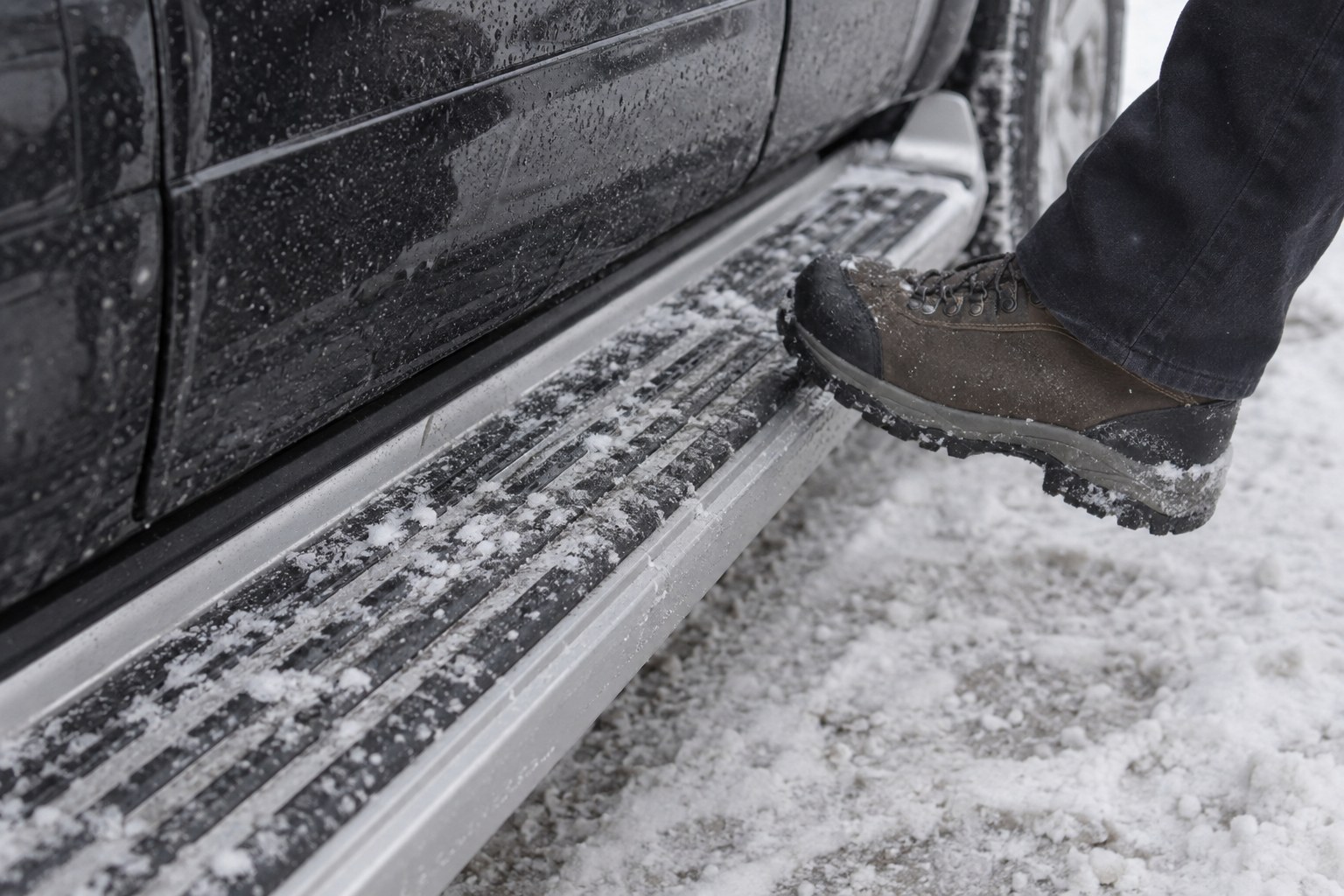
For exterior sills, besides washing and treatment, there are side steps: they partially shield the body sill from spray and stones, although they do not protect the cavity itself from moisture.
More generally about protecting the body from de-icers—in a separate article about salt and de-icers.
We deliver with Nova Poshta across Ukraine; orders from 15,000 ₴—free with our own transport.
Shipping to EU
Wholesale and retail
Own warehouse
Опис продукту
Подарунки не надаються при оформленні покупки у кредит під 0,01% або при покупці частинами.