15.09.2026
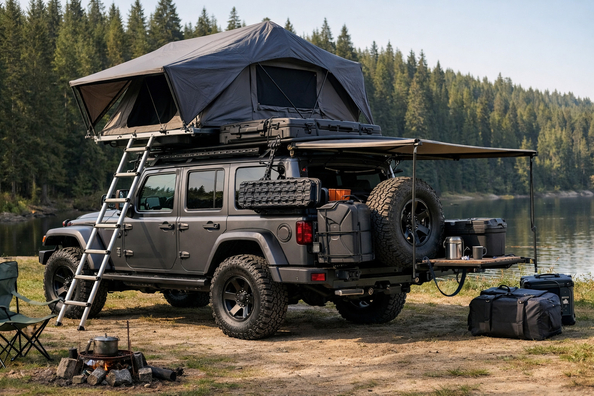
This upgrade plan for the Jeep Wrangler JL 2018+ is for anyone who drives daily and on weekends hauls gear out into nature—tools, backpacks, a grill, a dog, or kids’ stuff. The main goal here isn’t to build a “show project,” but to get a cleaner interior, clear cargo organization, and less fatigue in everyday use.
With the Wrangler, it’s crucial not to separate upgrades from the vehicle’s configuration. On a 2-door body, cargo solutions matter more because space is noticeably tighter; on a 4-door, it’s easier to live without exterior cargo. A hardtop makes headliner insulation and a roof rack make sense, while with a soft top some of those scenarios simply don’t apply.
In this scenario, the Wrangler should cover three practical tasks: not be afraid of dirt and water in the cabin, not turn the cargo area into a pile of loose items flying around, and remain tolerable for daily city and highway driving. If the vehicle often sees forest roads, sand, wet footwear, and gear, the first things to suffer are the floor, the cargo area, and small ergonomic details.
It’s also worth thinking about volume. On a 2-door Wrangler, the cargo limit comes very quickly, so nets, securing items, and keeping order matter more than on a 4-door. If you occasionally carry something on the roof, it should be a light, bulky load—and only if the roof is a hardtop.
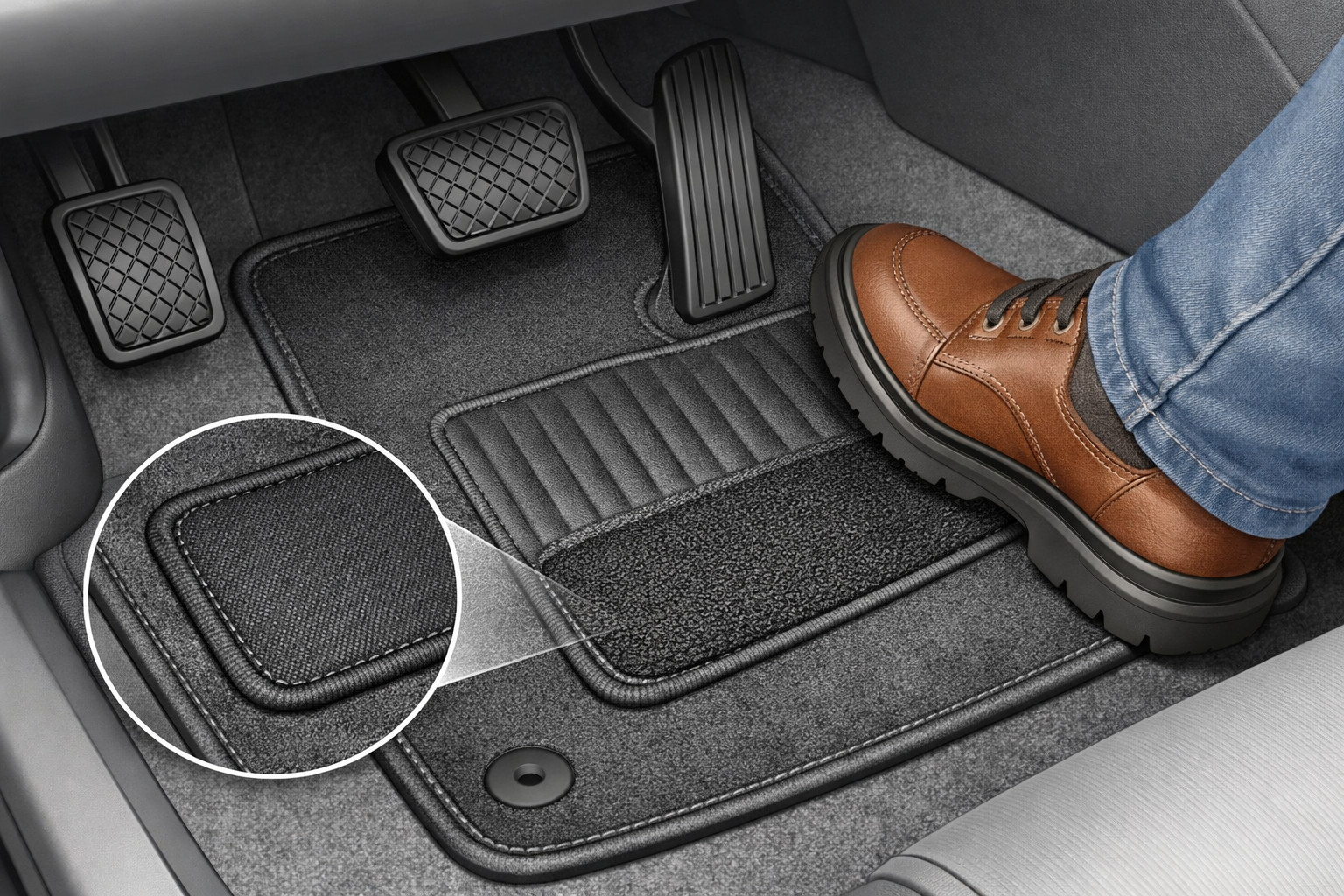
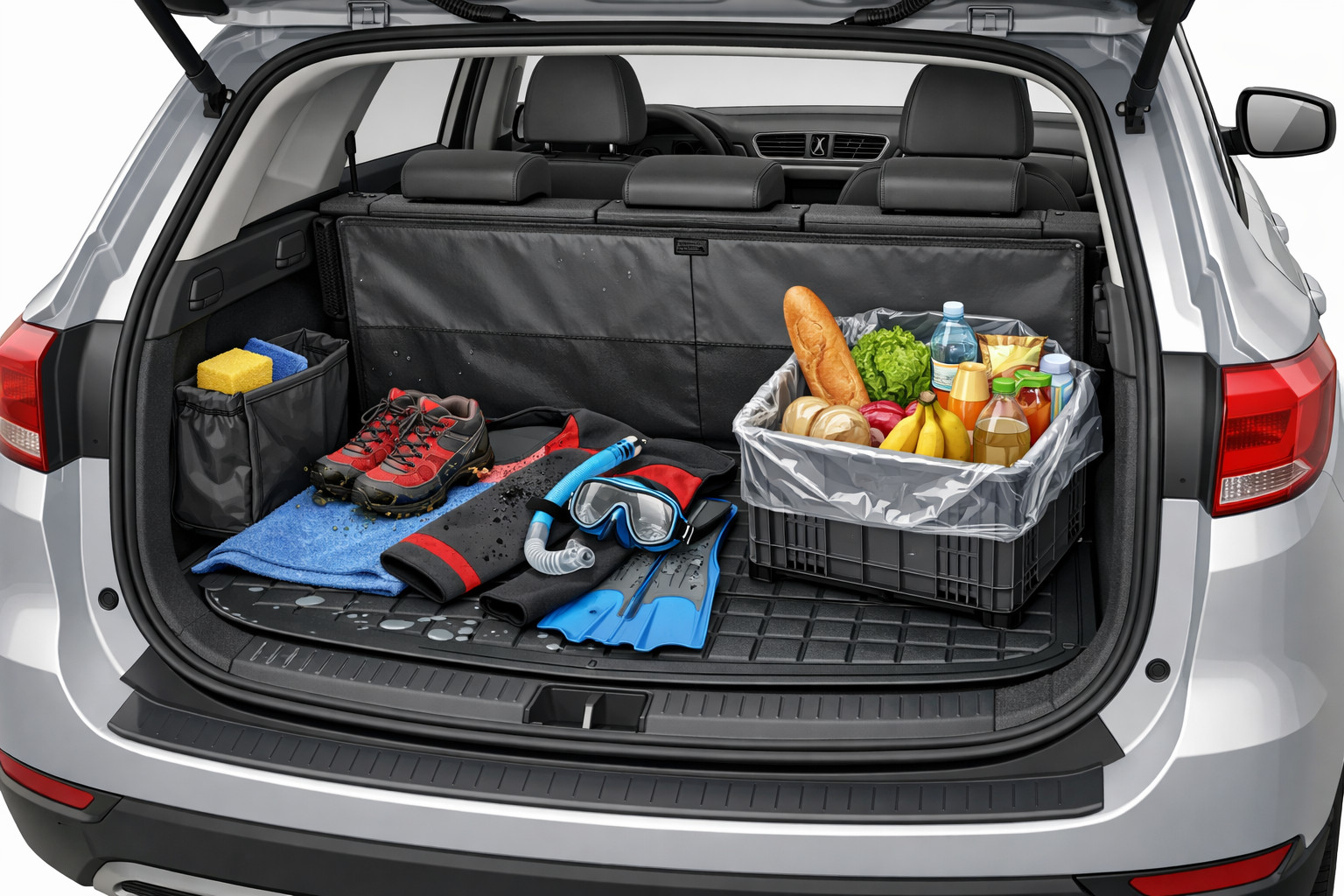
Top priority is protecting the interior and cargo area from what you actually bring into the vehicle every day: water, mud, grass, sand, wet clothes, fuel canisters, kids’ items. So the starter set is simple: all-weather floor mats, a cargo liner or tray, basic organization for small items in the center area, and a reliable phone mount.
The second basic step is removing everyday annoyances. If you have a hardtop, roof lining insulation brings a real improvement in noise and temperature comfort. If you often drive with gear, what matters more than another decorative trim piece is tie-down points, a net, or another solution that keeps cargo from sliding around the cabin.
Tires, a lift, and heavy-duty armor don’t need to be first just because it’s a Wrangler. If the factory or current wheels are still fine and your route is gravel, forest roads, fishing, camping, and daily driving, practical small upgrades deliver more benefit for less money.
| Upgrade | Why it’s needed | Who it really benefits |
|---|---|---|
| All-weather cabin floor mats | Keep dirt, water, and sand within the raised edges, making cleanup easier | Anyone who drives beyond dry city streets |
| Cargo tray or cargo liner | Protects the cargo area from wet items, tools, fuel cans, and gear | Those who carry cargo weekly; especially useful for the 2-door body |
| Net, rail, or cargo tie-down solution | Prevents items from shifting, reduces mess and road noise | Those who carry small gear, boxes, bags, a camping kit |
| Phone mount | Provides stable navigation without DIY setups on the windshield or dash | Those who often drive new routes or use offline maps |
| Hardtop headliner | Reduces the “empty drum” feeling overhead, adds comfort in heat and cold | Wrangler owners with a hardtop who drive a lot every day |
| Quieter all-terrain tires | Improve the balance between highway and dirt roads without excess noise | Those who are due for a tire replacement and don’t want mud-terrain for daily use |
DD Tuning expert comment: The most common mistake with the Wrangler JL is starting with a lift, heavy bumpers, or aggressive tires when the vehicle still doesn’t have proper interior protection and cargo organization. With the 2-door body, people often underestimate how quickly space runs out, and with a soft-top vehicle they mistakenly plan roof cargo as the main solution. Cover dirt, order, and daily ergonomics first—then move on to expensive metal upgrades.
Once basic protection is in place, the second stage is logically about upgrades matched to how often you get out. If you actually make coffee, grab a snack, or work with small gear next to the vehicle, then a tailgate table makes sense. But it’s not a universal must-have: it’s useful for those who stop in nature often, and you need to keep load limits in mind rather than piling everything on it.
Next are cargo retention systems. For a 2-door JL this is often more important than for a 4-door, because the smaller volume punishes disorder more. If you carry light bulky loads on top, a roof rack only makes sense with a hardtop and within the allowable load rating.
Another smart second stage is tires—but only when you truly understand your routes or you’re already due to replace your set. For daily driving and light off-road, quieter all-terrain tires are almost always more logical than mud-terrain.
This group includes upgrades that don’t make the vehicle more capable, but are less irritating day to day. First of all, that’s hardtop headliner insulation if you have a hard top. It doesn’t add “photo effect,” but it noticeably delivers a calmer cabin in everyday use.
This also includes seat covers, door-sill protectors, wind deflectors, and other items that either preserve the interior or make use slightly more convenient. They make sense after you’ve already solved cabin dirt, cargo protection, and securing small items. If the choice is between a decorative detail and a proper cargo liner, for this scenario the second option is better.
The first typical mistake is buying for the picture, not for the scenario. Big mud-terrain tires, a tall lift, heavy bumpers, and 35+ tires look convincing, but for daily use they add noise, weight, costs, and often take away comfort. If your route is the cottage, a forest road, a picnic, fishing, and the city, that kind of build often doesn’t pay back the investment.
The second mistake is overpaying for looks where you only need function. For example, a complex cargo setup without real need, an expensive roof kit for rare trips, or decorative exterior elements that don’t help with cargo, cleanliness, or comfort.
The third mistake is ignoring body and roof limitations. A soft top has one usage logic and a hard top another; 2-door and 4-door have different practical reserves. If you don’t account for this, some purchases will simply be off-target.
| What to install first | What can be postponed | What is not mandatory |
|---|---|---|
| Cabin mats, cargo tray, phone mount | Net, rails, tailgate table | Chrome, decorative trim pieces, accessories “just for looks” |
| Headliner insulation if you have a hardtop and the vehicle is driven daily | Roof rack for rare trips | Complex roof system without ongoing need |
| Switch to calmer all-terrain tires when the old set is due for replacement | Onboard air and other auxiliary equipment for trips | Big lift, heavy bumpers, aggressive mud-terrain tires for a light-use scenario |
More expensive items make sense where they remove daily hassle, not where they simply look “more serious.” If the cabin regularly catches water, sand, and dirt, it makes sense to buy precise, model-specific EVA mats for Wrangler JL. If you constantly carry backpacks, tools, a dog, or wet gear, a dedicated cargo mat is justified, because it takes the dirtiest part of daily use.
It’s worth spending on a roof rack only when the 4-door interior volume is no longer enough or when the 2-door body truly has a regular scenario with light bulky roof loads. For rare trips it’s often extra money, noise, and yet another system you have to constantly account for.
From a customer’s experience: what worked best for this kind of Wrangler wasn’t big tuning, but a simple package of cabin mats, cargo protection, a phone holder, and hardtop headliner insulation. The person initially looked toward aggressive tires and armor, but in reality it mattered more to quickly clean the interior after a trip and drive more quietly on the highway. Later, when trips into nature became regular, they added cargo retention and a work surface by the tailgate.
For the Jeep Wrangler 2018+ in the “nature, cargo, and daily comfort” scenario, the most sensible path is: protect the cabin and cargo area first, then organize items and add comfort, and only after that move to tires or more complex solutions for a specific route. The most value here comes not from the loudest upgrades, but from the ones that save time, nerves, and cleanup every day. This material is based on real selection experience, hands-on practice, and real use cases—not a list of trendy accessories for the sake of looks.
| ✔ | Priority upgrades address real everyday issues: dirt, water, sand, and wet gear are easier to contain with all-weather mats and a cargo liner. This really makes cleanup easier after trips outdoors or in bad weather. |
| ✔ | A cargo net, rails, or other load securing solutions reduce clutter in the cabin when items move around while driving. This is especially useful for the 2-door Wrangler, where space is limited and mess quickly becomes a problem. |
| ✔ | For vehicles with a hard top, headliner adds a noticeable boost in everyday comfort: less noise and better temperature control. This is not a cosmetic change, but a practical solution for those who often drive in the city and on highways. |
| ✔ | Choosing upgrades for a specific body and roof helps avoid wasting money. The article clearly separates scenarios for the 2-door and 4-door body styles, as well as for hard top and soft top. |
| ✔ | Quieter all-terrain tires seem like a sensible compromise for daily driving and light off-road use. They make sense when the old set is already due for replacement and you want to avoid extra noise from mud-terrain tires. |
| ✘ | Some useful solutions make sense only for certain Wrangler versions. For example, a headliner is needed only for a hard top, while a roof rack is only useful if it’s part of the configuration and the load is truly light and bulky. |
| ✘ | The 2-door Wrangler quickly runs into a lack of space, so even basic luggage and small gear require discipline. Without organizing and securing items, the cabin and cargo area can easily turn into a mess. |
| ✘ | Big lifts, heavy bumpers, and aggressive mud-terrain tires often bring more downsides than benefits in this setup: noise, weight, cost, and worse comfort. For a daily driver, this can simply be unnecessary strain. |
| ✘ | Some additions, such as a tailgate table or roof systems, are not universal and are only needed with regular use. If you rarely go outdoors, it’s easy to overpay for them without getting any real benefit. |
Shipping to EU
Wholesale and retail
Own warehouse
Опис продукту
Подарунки не надаються при оформленні покупки у кредит під 0,01% або при покупці частинами.