

































































 Author: Radomskyi Maksym Vasyliovych
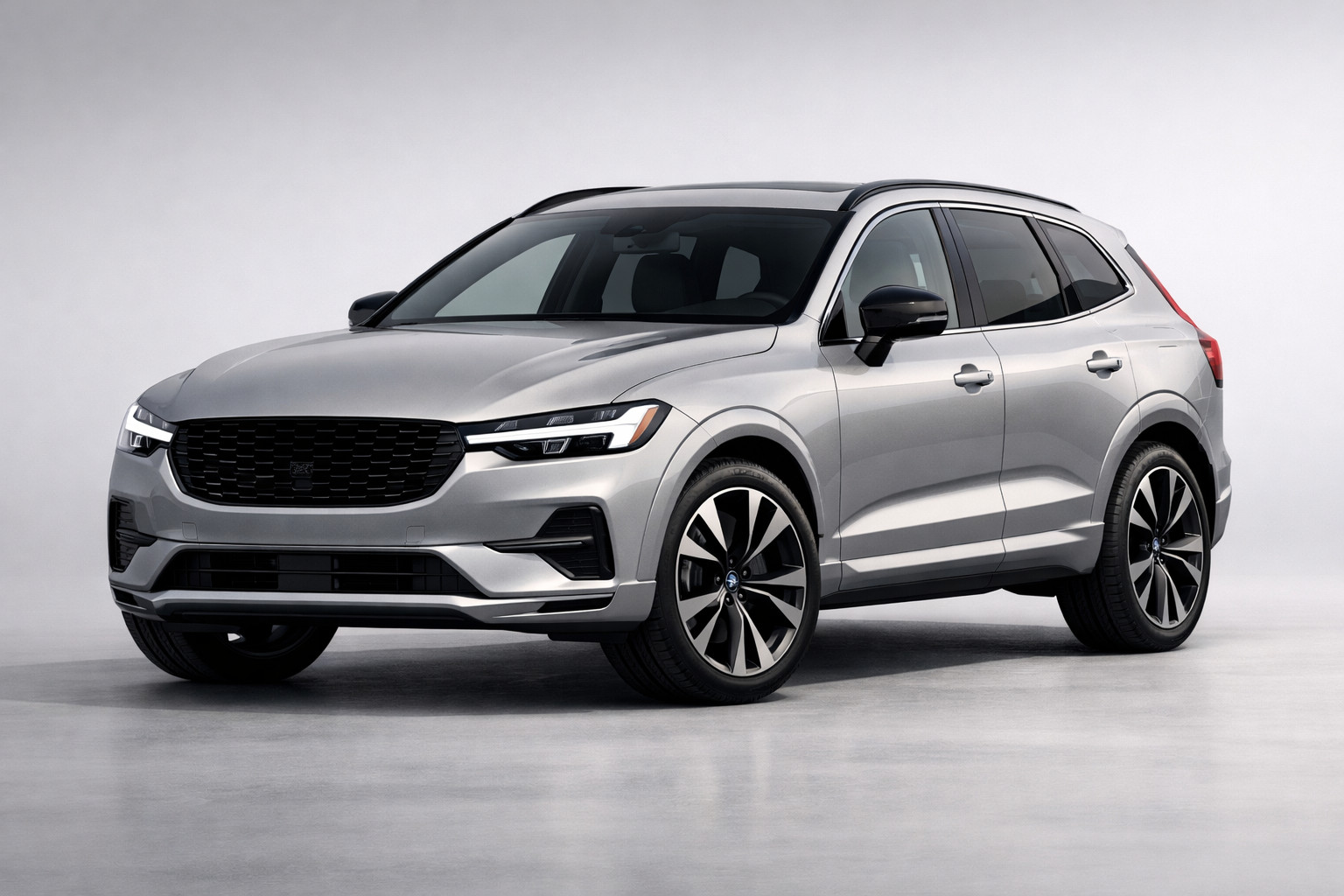
Volvo XC60 2026 isn’t a ground-up new generation, but a heavily updated version of the current XC60. The model’s core hasn’t changed: it’s a midsize premium crossover for people who value quietness, a comfortable chassis, a high-quality interior, and sensible family practicality—not hard-edged sportiness.
For the 2026 model year, the XC60 gets fresher styling, a new 11.2-inch center display, and a faster interface. In the U.S. market, the main powertrain choices are: the B5 with a 2.0-liter turbo and mild hybrid, and the T8 plug-in hybrid—both with an 8-speed automatic and all-wheel drive.
The model and its place in the market
The XC60 sits right in the heart of the premium crossover segment: by size, price, and mission it competes with the BMW X3, Mercedes GLC, Audi Q5, and partly the Lexus RX. But Volvo’s character is different: less excitement, more calm, softness, and the feel of a well-insulated everyday car.
This model suits a family, a driver who regularly does highway miles, and anyone who wants a higher seating position without stepping up to a big, heavy SUV. It’s not the best choice for those looking for razor-sharp steering, the most fuel-efficient gasoline crossover in the class, or those who want zero exposure to possible multimedia quirks.
Generations and model history
The XC60 effectively has two generations. The first is usually considered the 2009–2017 run, while the second launched in 2017 and is the one that carries through to the 2026 model year. That means today’s XC60 is long proven from an engineering standpoint, but Volvo continues to update it in targeted ways rather than changing the entire architecture.
The 2026 version is exactly a deep facelift of the second generation. The main changes focus not on the mechanicals, but on the front-end design, lighting details, infotainment, and the cabin’s more modern feel.
Engines and transmissions
The lineup is straightforward. The B5 is a 2.0-liter 4-cylinder turbo with a mild hybrid system, 247 hp and about 361 N·m. The T8 is also a 2.0-liter 4-cylinder setup, but as a plug-in hybrid: the ICE delivers 310 hp and 400 N·m, the electric motor 145 hp and 309 N·m. In independent testing, the combined output of the T8 is often quoted as 455 hp and about 709 N·m, so the figures for this version can vary slightly depending on methodology.
| Parameter | B5 | T8 |
|---|---|---|
| Powertrain layout | 2.0 L turbo, mild hybrid | 2.0 L turbo, plug-in hybrid |
| Power | 247 hp | 310 hp ICE + 145 hp electric motor; combined in tests 455 hp |
| Torque | 266 lb-ft, i.e., about 361 N·m | 400 N·m ICE + 309 N·m electric motor; in tests combined about 709 N·m |
| Transmission and drive | 8-speed automatic, all-wheel drive | 8-speed automatic, all-wheel drive |
| 0–60 mph | 6.5 s | 4.5 s |
| Consumption | Officially 9.0 L/100 km combined | Reference point 8.4 L/100 km in gasoline combined cycle, or 63 MPGe |
| Battery and electric range | No traction battery for EV driving | 18.8 kWh nominal, 14.7 kWh usable; up to 56.3 km on electric power |
| Fuel tank | 71.2 L | 71.2 L |
The B5 makes sense for those who don’t want to depend on charging and simply want a comfortable crossover with solid pull. The T8 is worth it if you can charge at home or at work: for daily city driving its electric range is often enough, and on the highway it remains a very quick gas-electric crossover.
Body, dimensions, and chassis
In terms of size, the XC60 sits in the sweet spot: length 4708 mm, wheelbase 2865 mm, width 2117 mm. Height varies slightly by version: about 1655 mm for the B5 and 1658 mm for the T8. Ground clearance also depends on trim and load: 209 mm is quoted for the B5, and roughly 211–216 mm for the T8.
In practice, that means the XC60 doesn’t feel bulky in the city, yet provides a comfortable seating position, good visibility, and handles courtyards, curbs, and winter roads with ease. The 11.4 m turning circle is appropriate for the class. The suspension is tuned primarily for comfort, so it feels pleasant over rough pavement, though subjectively less tied down than the firmest German rivals.
For cargo volume, you need to look at the version and the measurement method. For the B5, the figures given are 484 L behind the second row, 612 L to the roof, and up to 1792 L with the seats folded. For the T8, official materials show different numbers depending on the market and measuring method, but the takeaway is this: in everyday use it’s a proper family cargo area, although the hybrid version may differ slightly in usable volume.
Interior, comfort, and safety
The XC60’s strong suit is the cabin. The 2026 update brings a larger 11.2-inch center display and a faster interface, while the overall layout remains restrained and user-friendly. There’s no unnecessary flash, but you do get quality materials, great seats, a quiet driving position, and an intuitive day-to-day logic.
Standard and higher-spec equipment depends heavily on the market, but in the U.S. even the entry version includes a panoramic roof, built-in Google services, and blind-spot monitoring. Plus adds a 360° camera and Pilot Assist, while Ultra brings a Harman Kardon audio system, a head-up display, and more upscale trim. At the same time, some owners report infotainment glitches, a black screen, or system reboots, and on some expensive versions the rear laminated windows can create a slight hazy effect.
| Trim | Price reference | What it adds |
|---|---|---|
| Core | B5 from $51,095, T8 from $62,545 | Panoramic roof, Google services, blind-spot monitoring |
| Plus | B5 from $55,695, T8 from $66,995 | 360° camera, Pilot Assist, a better everyday package |
| Ultra | B5 from $61,045, T8 from $72,345 | Harman Kardon, head-up display, more upscale trim |
| Black Edition | B5 from $62,195, T8 from $73,445 | Mainly a styling package with darkened accents |
| Polestar Engineered | T8 from $81,195 | The most expensive and most emotional factory T8 version |
Everyday ownership
In day-to-day use, the B5 is simple: fill up, get in, and go. The official combined figure is about 9.0 L/100 km, and independent mixed testing often lands around 9.5 L/100 km. For the U.S. specification, fuel of at least 91 AKI is required, and 93 AKI is recommended for best performance.
The T8 is more interesting in a daily routine if you’re disciplined about charging. A full charge on AC 16A takes about 5 hours, but in the city you can often drive with little to no ICE start-ups. Total range with a full tank and a charged battery is large, but it’s important to remember this is a heavier, more complex version. If you’re looking at an import or a used example, it’s worth checking the VIN separately for safety campaigns: for certain 2025–2026 batches, seat mounts, seat belts, and braking nuances in B mode on downhill grades for hybrids have been mentioned.
Strengths and weaknesses
| What’s good | What’s not so great | What it means for the owner |
|---|---|---|
| Comfortable ride, quietness, high-quality interior | Handling isn’t sporty | On the highway and in the city, the XC60 helps you relax, but it doesn’t encourage aggressive driving |
| T8 has strong pull and can cover daily driving on electric power | Charging isn’t fast | The T8’s benefit is biggest where you have your own outlet and a consistent charging routine |
| Family practicality: 5 seats, flat cargo floor, decent ground clearance | Cargo and some dimension figures vary by version and market | Before buying, it’s best to check the exact specs for your specific configuration |
| Strong feature set already from mid-level trims | Infotainment and electronics can occasionally glitch | If you like perfectly stable software, this is one of the key things to check |
From an owner’s perspective, the 2026 XC60 wins not with paper specs, but with overall balance. People choose it for its calm character, seating position, interior quality, and versatility. The main compromises are just as clear: not the sharpest chassis, not outstanding efficiency in the B5, and software that isn’t always flawless.
Tuning and accessories
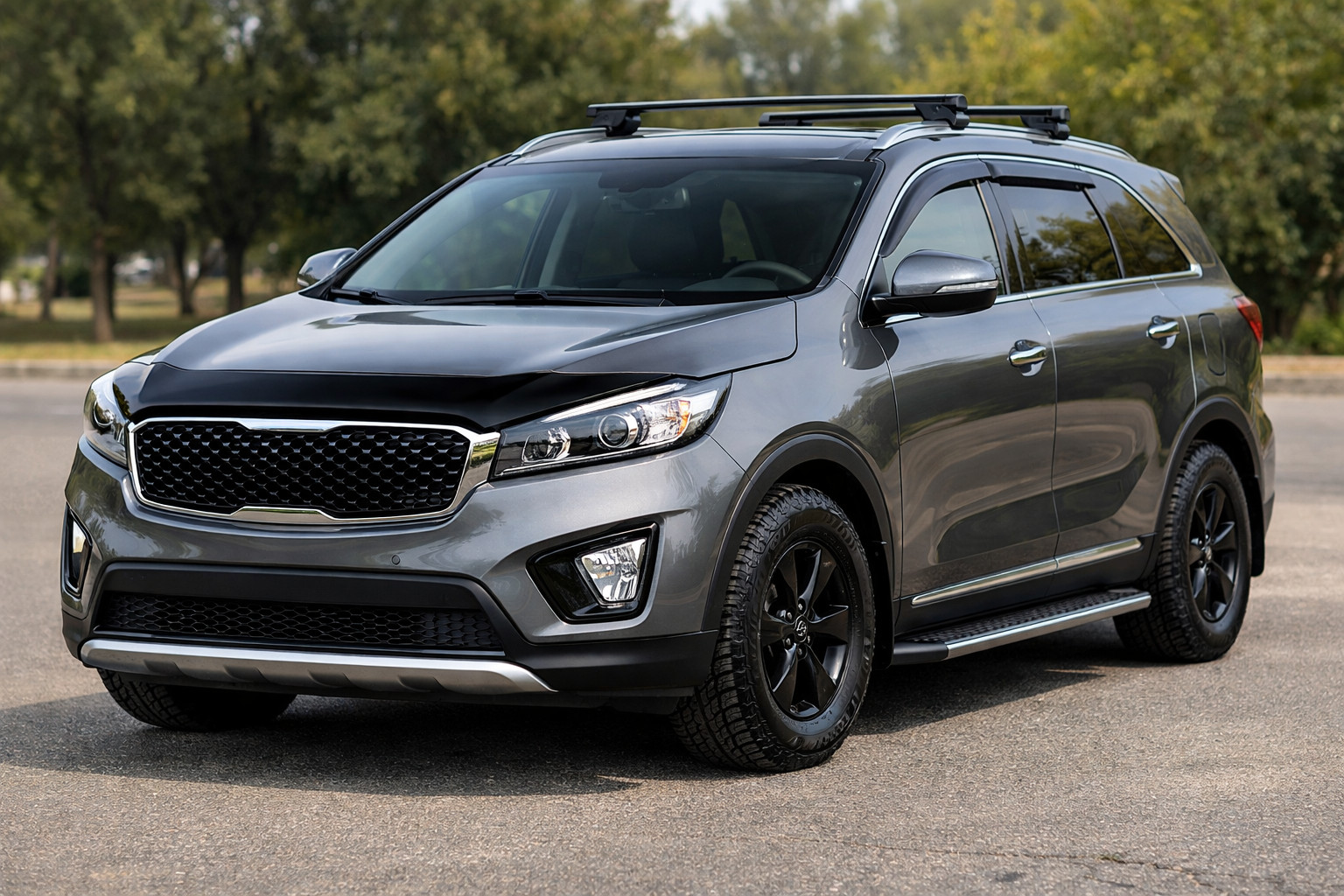
For the XC60, the point isn’t pseudo-sport tuning—it’s practical accessories. This model responds well to items that reduce everyday wear, make entry easier, or add convenience in daily use.
What to consider for this model
- Catalog for XC60 — a quick way to see which protection options, exterior add-ons, and everyday accessories are actually available for the model.
- Wind deflectors — useful for those who often drive on the highway and want less turbulence with the windows slightly open.
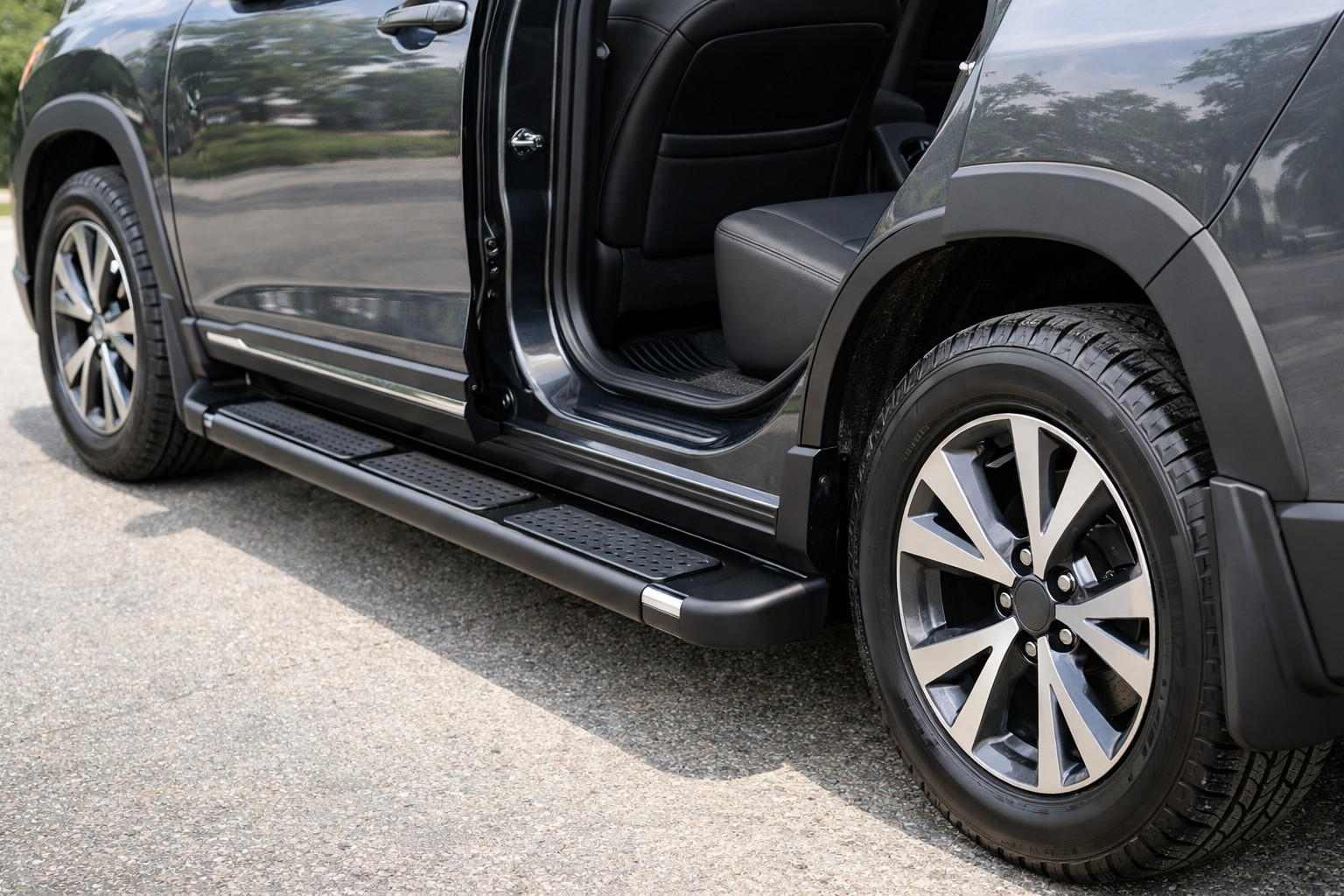
- Side steps — make sense if children or elderly passengers ride often, and if you want less dirt on the lower body panels.
Conclusion
The Volvo XC60 2026 is a strong choice for anyone who wants a premium crossover without extra nervousness: comfortable, quiet, family-practical, and with two clear powertrain scenarios—the simpler B5 or the more tech-heavy T8. It’s not the best car for a fan of razor-sharp steering or for someone unwilling to live with possible electronic niggles. This material is based on real selection experience, hands-on practice, and real-world use cases, so the key conclusion is simple: the XC60 is strong where daily comfort and balance matter more than showy sportiness.
Pros and cons
Comfortable ride and good sound insulation make the XC60 convenient for daily commuting and highway trips. The car doesn’t tire you out in the city or over longer distances.
The cabin looks and feels high-quality: the materials, seats, and overall ergonomics are geared toward calm everyday use. The updated 11.2-inch display and faster interface add a modern touch.
Even the base U.S. trims come with a decent set of equipment: a panoramic roof, Google services, and blind-spot monitoring. Higher trims add a 360° camera, Pilot Assist, Harman Kardon, and a head-up display.
The dimensions and ground clearance are well chosen for a family crossover: the XC60 doesn’t feel bulky in the city, yet remains practical for curbs, courtyards, and winter roads. The 11.4 m turning radius also helps in everyday use.
The T8 version delivers very strong dynamics and can cover a significant share of city trips on electric power. If you have home or workplace charging, that makes it especially convenient for regular use.
The XC60 is not about sporty handling: the chassis is tuned softly, so in spirited driving it doesn’t offer the composure you’d expect from sharper competitors. For a driver who enjoys excitement, this will be a noticeable compromise.
The B5 gasoline version doesn’t look fuel-efficient compared with the class: officially it’s around 9.0 l/100 km, and independent tests may show even more. For those who keep an eye on running costs, this is not the best figure.
The multimedia system and electronics can sometimes glitch: the article mentions a black screen, system reboots, and general software issues. This matters if you need maximum electronic stability without surprises.
The T8 version is more complicated in everyday use: it is heavier, needs charging, and doesn’t charge quickly — a full cycle from AC 16A takes about 5 hours. Without regular recharging, some of its advantages are simply lost.