08.09.2026
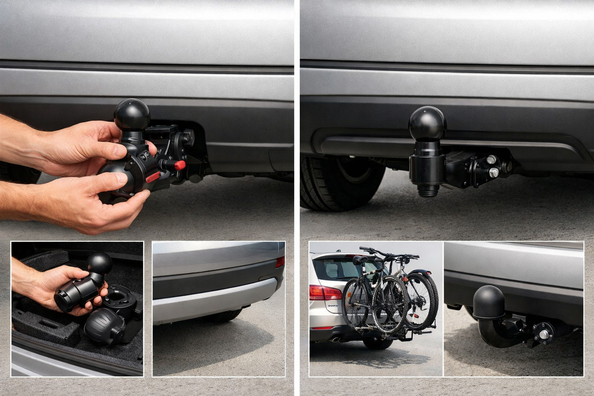
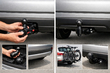
If you need a trailer or a platform every week, a fixed towbar is usually more convenient: it’s cheaper, simpler, and always ready to work. But if your car spends most of its time in the city and you only need a towbar a few times a season, a detachable one more often wins in real life because of parking, a cleaner rear-end look, and fewer unnecessary conflicts with sensors.
The key difference here isn’t strength: a high-quality detachable towbar is no weaker than a fixed one. The choice comes down to other things: how often you tow, whether you’re willing to clean and lubricate the mechanism, how much a permanently visible tow ball annoys you, and whether you want to spend a few seconds installing it before each trip.
The idea is simple: fixed means constant readiness with no extra steps; detachable means a neater, calmer day-to-day setup when there’s no trailer. That’s why the logic is one thing for a city car and occasional trips, and completely different for a work vehicle or frequent towing.
For most drivers the question isn’t “which is stronger,” but “which will annoy me less in six months.” In the city, it’s usually about parking, parking sensors, and looks. In a work routine, it’s about not having to pull anything out of the trunk, not monitoring the lock, and not wondering whether the mechanism is clean after winter.
You shouldn’t compare only the price. There are several criteria that really affect convenience:
| Criterion | Detachable | Fixed |
|---|---|---|
| Installation | Depends on the kit, but in everyday use you also need to remove and refit the unit | After installation it requires no extra actions before driving off |
| Noise and play | May be more sensitive to dirt, wear, and incorrect locking | Fewer moving parts; usually more predictable behavior over time |
| Service life and maintenance | Needs cleanliness, lubrication, and lock inspection | Maintenance is simpler: ball, corrosion, basic condition check |
| Price | Usually more expensive | Usually the cheapest |
| Option | Strengths | Weaknesses | Who it’s for |
|---|---|---|---|
| Detachable | Better for the city, a cleaner vehicle look, infrequent use, more convenient for cars with parking sensors, can be removed for winter | More expensive, requires cleanliness and mechanism care; if neglected it can become hard to remove, develop play, or start clicking | For those who tow occasionally, carry a bike platform in season, or don’t want to constantly see the ball under the bumper |
| Fixed | Cheapest, always ready to work, simpler in daily use, logical for frequent towing | Always visible from the outside, more often interferes with sensors, collects dirt and salt more, easier to bump your leg near the trunk | For those who pull a trailer weekly, use the car for work, or don’t want the hassle of removal and a lock |
DD Tuning expert comment: the most common mistake is buying a detachable towbar just for the neat look, then leaving it on for months and never cleaning the mounting area. As a result, you overpay but don’t get the main benefit, and you may face a stiff lock or play. With a fixed towbar, the opposite extreme happens: people install it on a purely city car that hardly ever tows, and then complain about parking sensors and the constantly visible ball.
A detachable towbar wins where the car spends most of its time without a trailer. After removal, the rear looks cleaner, there’s less chance of clipping something with the ball in tight parking, and on many cars the rear sensors behave more calmly when the unit is off. For seasonal use it’s also convenient because you don’t have to keep the mechanism permanently exposed to salt, water, and dirt. If it matters to you to keep the car looking tidy and not carry extra metal every day, a detachable option often turns out to be the most comfortable.
Its weak spot isn’t load rating—it’s the owner’s discipline. The mating surfaces must be clean, the lock must work properly, and you need to check the locking as the design requires. If the mechanism is dirty or hasn’t been serviced for a long time, it can stick, click over bumps, or develop noticeable play. In other words, detachable is convenient—but only when used correctly. That’s why before buying it’s worth taking a separate look at towbars and understanding whether you’re ready for that maintenance routine.
A fixed towbar is the simplest day-to-day scenario: nothing to install before you leave, nothing to store separately, fewer moving parts, and less chance of locking something incorrectly. That’s why it works great on work vehicles, vans, cars with frequent trips, and regular trailer use. If towing is part of your normal rhythm, its simplicity becomes a real advantage.
The downsides are equally down to earth. The ball always sticks out, can get in the way during reversing maneuvers, sometimes affects parking sensors, and constantly lives in an aggressive environment. Also, simplicity doesn’t mean zero maintenance: you still need to monitor the ball’s condition, and check compatibility with platforms and accessories separately. The standard is the same—50 mm ball—but the shape of the assembly and the specific accessory also matter.
| Parameter | Detachable | Fixed |
|---|---|---|
| Everyday convenience | Needs to be fitted and removed | Always ready |
| Vehicle appearance | Neater after removal | Ball always in view |
| Sensor compatibility | Often less conflicting when removed | More often falls into the parking sensor zone |
| Maintenance | More demanding regarding cleanliness and the lock | Simpler to maintain |
For city use and rare trailer trips, detachable is more practical. You don’t carry extra metal every day, you park more calmly, and you don’t keep the unit constantly exposed to rain and road chemicals. This is especially noticeable on family estates, crossovers, and cars where a towbar is needed only for a vacation, a move, or seasonal tasks. If you want to verify your choice for a specific situation, towbar for a trailer or for a bike carrier: what to consider before buying will help.
For weekly towing, work routes, and commercial use, fixed looks more logical. It’s cheaper upfront, doesn’t require extra steps before setting off, and usually handles the “get in and go” routine better when the car is constantly working. In that scenario, simplicity is often more important than a neat look.
A special case is a bike platform. Here, it’s not only the towbar type that matters, but also compatibility of the specific platform, socket placement, trunk access, and whether the ball will interfere with parking sensors on days when the platform isn’t installed. That’s why for “sometimes a trailer, sometimes bikes,” detachable often looks like a sensible extra spend. If you already suspect play or rattling, it’s worth checking what to check when there’s play or knocking.
| Scenario | What to choose | Why |
|---|---|---|
| City car, trailer 2–5 times a year | Detachable | Doesn’t get in the way daily, lower chance of sensor conflicts, can be removed for the whole downtime period |
| Weekly trailer for household tasks or work | Fixed | Always ready, no separate steps before leaving, cheaper to buy |
| Van or work vehicle on bad roads | Fixed | Simpler design, less attention to the mechanism, logical for intensive use |
| Car with active city parking and rear sensors | Detachable | When the ball isn’t needed, you can remove it and reduce false triggers |
| Seasonal trips with a bike platform or vacation with a trailer | Detachable | Most of the year the unit isn’t hanging on the car, and in season it works as needed |
| One car serves as both family and work vehicle | Depends on frequency | If towing is regular—fixed; if occasional—detachable will be more comfortable in everyday city use |
The more expensive solution—i.e., a detachable towbar—makes sense not when you want a “better” option, but when you truly need a different usage format. You’re paying not for higher strength, but for a cleaner rear bumper, fewer irritations in the city, an easier life with parking sensors, and the ability not to keep the unit in salt all winter.
If you’re still narrowing it down, it’s worth looking at the actual towbars, separately matching your scenario for a trailer or bike carrier, and understanding in advance what to check when there’s play or knocking. Then the extra spend for a detachable system will be deliberate rather than emotional.
From a customer’s experience: an owner of a city estate initially wanted a fixed towbar because of the lower price, but used a trailer only for vacations and a few times a year to transport bicycles. In the end, he chose a detachable option because in daily use the rear sensors stopped reacting to the ball, and the mechanism spends winter in a dry place. For a car that drives most of the time without load, that extra spend proved justified.
In short: a fixed towbar is better for frequent towing, work vehicles, and those who value simplicity above all. A detachable one is more convenient for the city, seasonal tasks, cars with parking sensors, and owners who don’t want to see the ball under the bumper every day.
Between quality solutions there’s no huge gap in strength—the difference is made by practicality, maintenance, noise on a worn unit, readiness to work, and price. If you tow often—go fixed; if you use it occasionally—look toward detachable.
| ✔ | A fixed tow bar is always ready to use: there’s no need to install anything before each trip. For frequent towing, that’s more convenient and avoids extra steps. |
| ✔ | A fixed option is usually cheaper. If a tow bar is needed regularly, it offers a simpler and more practical solution without paying extra for a removable mechanism. |
| ✔ | A detachable tow bar is better suited for city driving when a trailer is needed only occasionally. It can be removed so it doesn’t get in the way when parking and doesn’t keep the ball constantly visible. |
| ✔ | A detachable option more often interferes less with the rear sensors when removed. This is useful for cars with frequent urban parking. |
| ✔ | A fixed tow bar is simpler to maintain because it has fewer moving parts. For daily use, this reduces the risk of issues with locking and servicing. |
| ✘ | A detachable tow bar is more expensive, and this price difference only makes sense if you really use the ability to remove the unit. If it isn’t removed, the extra cost brings almost no benefit. |
| ✘ | A detachable mechanism is more demanding in terms of cleanliness, lubrication, and lock condition. If the fit isn’t maintained, stiff removal, play, or rattling may appear. |
| ✘ | A fixed tow bar always sticks out at the rear and can interfere during maneuvering or parking. It also more often falls within the range of parking sensors. |
| ✘ | A fixed option collects dirt and salt more heavily because it is always exposed outside. As a result, the ball and the unit are more exposed to harsh conditions. |
Shipping to EU
Wholesale and retail
Own warehouse
Опис продукту
Подарунки не надаються при оформленні покупки у кредит під 0,01% або при покупці частинами.