 Author: Radomskyi Maksym Vasyliovych
This upgrade plan is for anyone who, after rain, slush, or dirt roads, is most annoyed by grime on the lower part of the doors, the sills, and around the door seal. If the upper body still looks fine but there’s always a strip of wet sand stuck down low, the problem almost always starts with side spray from the wheels.
There isn’t one “magic” part here—what matters is the right sequence: first cut off the source of dirt, then cover the areas that still get hit by abrasive spray, and only then think about more expensive add-ons. This is especially relevant for cars on wider tires, with a lifted suspension, aggressive wheel offset, or frequent winter use.
What this upgrade needs to accomplish
The main goal isn’t to keep the side of the car perfectly clean in any weather. The real objective is different: reduce the stream of dirt that flies into the sill area, the lower edge of the doors, and the seal, reduce abrasive wear of the paint, and cut down on the number of washes needed specifically for these spots.
You can tell where to start by the dirt patterns. If the front part of the sill and the bottom of the front doors get the dirtiest, the main culprit is the front axle. If the rear doors and rear quarter panel suffer too, front-only solutions may not be enough, and it makes sense to consider a full set for all four wheels.
What to do first
Step one is to install front vehicle-specific mud flaps or splash guards, preferably using factory mounting points. They work against the root cause: they divert the dirt stream away from the door opening and sill before it starts smearing along the side. For most cars, this is more useful than immediately going for sill trims, polishing, or an expensive body protection package.
Here, geometry and fitment matter more than a loud name. The mud flap should cover at least the outer shoulder of the tread; if it’s noticeably narrower than the tire, dirt will simply go around its edge. On cars with wide tires, spacers, non-stock wheels, or a lift, a small standard flap often delivers only a partial effect. Before installation, wash the mounting area thoroughly, and if drilling is required for your specific generation, it’s better to confirm it separately rather than assume.
Upgrade, why it’s needed, who benefits (table)
| Upgrade | Why it’s needed | Who really benefits |
|---|---|---|
| Front vehicle-specific mud flaps | Reduce side spray into the sill area, door seal, and the lower part of the front doors | Almost anyone who drives in the city, on highways, in winter, or on wet dirt roads |
| 4-wheel mud flap set | Adds protection for rear doors, rear arches, and long body sides | Crossovers, wagons, cars with dirty rear doors, and wide tires |
| Protective film on sills and lower door edges | Takes the hit from sand, micro-chips, shoe scuffs, and harsh washing | Anyone who wants to keep the paint in the problem area looking good longer |
| Film on the door edge | Protects the door edge from chips and rubbing | Family cars, city cars, tight parking situations |
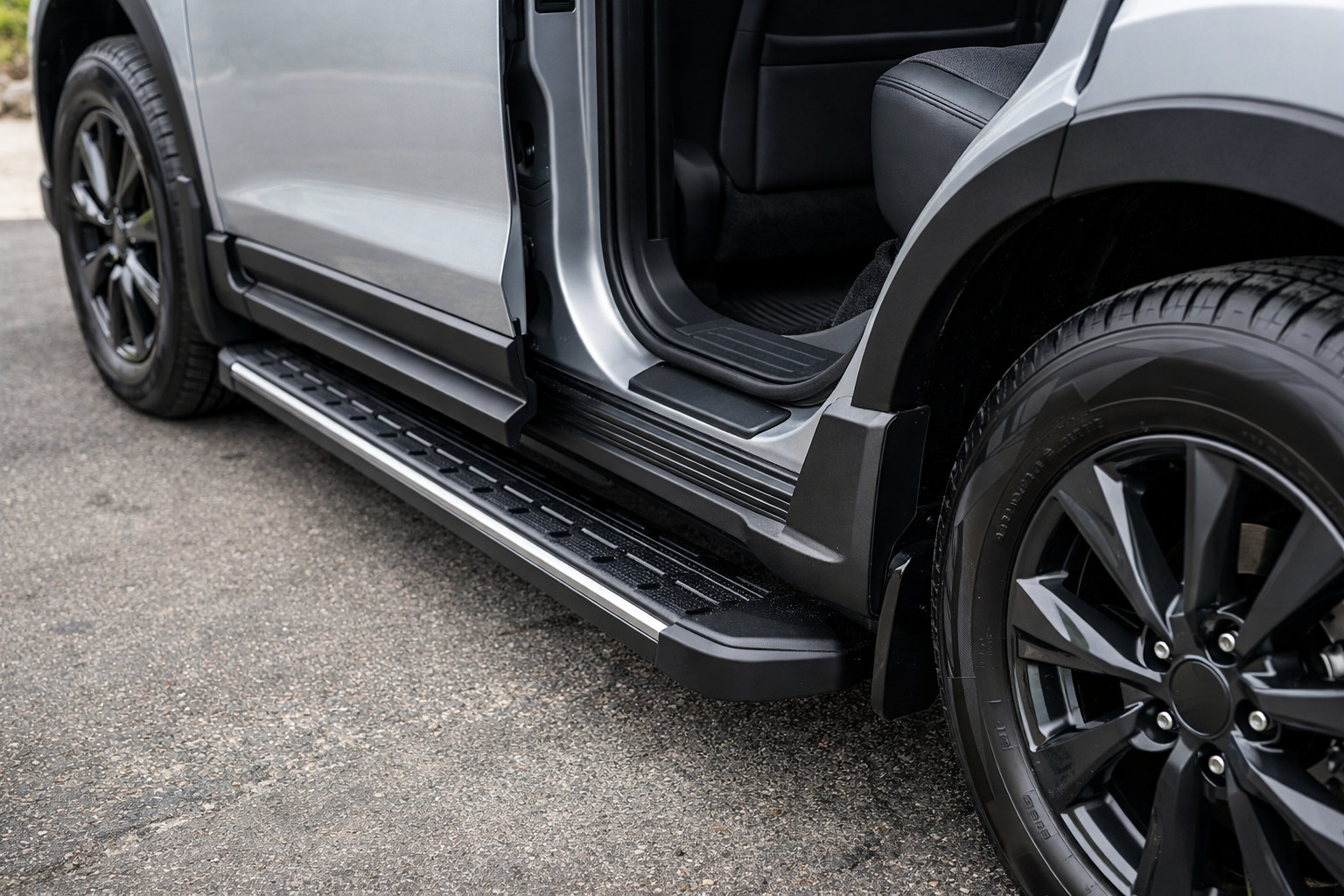
| Side steps or running boards | Partly shield the lower body side and make entry easier | Tall crossovers, body-on-frame SUVs, pickups, vans |
| Protective coating for lower panels | Helps on already vulnerable or touch-up painted areas | Anyone whose lower body already shows signs of sandblasting |
DD Tuning expert comment: The most common mistake is buying universal mud flaps or installing only the rear ones, even though the dirt is thrown by the front wheel. The second typical mistake is looking at the shape but not the tire width: a narrow flap next to a wide tread works weakly. If the mud flap sits close to the paint, it’s better to protect the contact area right away with a thin film so you don’t end up with rubbing underneath it.
What makes sense to add as a second stage
The second stage is logically a film protection for the sills and the lower edges of the doors. This won’t remove dirt by itself, but it works well where even a properly chosen mud flap can’t cover everything 100%. The film takes the hit from sand, fine abrasive, shoe marks, and handles frequent winter washes with less pain.
It’s best to apply it after you’ve reduced the dirt flow itself. Otherwise, you’ll have to spend money protecting an area that gets unnecessary daily load. If there are already chips on the lower part of the doors, it’s worth restoring the surface first and only then covering it with protection. Separately, it makes sense to wrap the door edge if the car is often parked in tight spaces or used by multiple people.
What’s more about comfort or looks
Side steps, running boards, and decorative sill trims are not the first line of defense against dirt. On a tall crossover or SUV, they can provide an additional physical barrier for the lower body and also make entry easier. But their usefulness depends on vehicle height: the lower the car, the less practical sense this solution makes.
You also need to understand the trade-offs. Fixed steps reduce side clearance, can collect dirt, and off-road can sometimes become an unnecessary part. Sill trims take shoe scratches well, but they don’t save you from road spray by themselves. In other words, they’re an add-on, not a replacement for basic protection.
What people often buy for nothing
Most often, money goes to the wrong place when a part is bought for the picture, not for the scenario. If what annoys you is dirt on the front part of the sill, rear mud flaps as the only solution usually don’t solve the problem. Cheap universal flaps that need trimming and fitting also work poorly—and are still hard to mount correctly.
- Decorative sill trims instead of proper front mud flaps.
- Overly stiff or overly thin universal flaps that either crack or flap at speed.
- A full expensive body protection package before the dirt source is blocked.
- Mud flaps narrower than the real tire width.
- Steps on a low car where they add more weight and maintenance than benefit.
What to install first, what to postpone, what’s optional (table)
| Scenario | What to install first | What you can postpone | What is not mandatory |
|---|---|---|---|
| City and highway, stock tires | Front vehicle-specific mud flaps | Film on the sills | Side steps |
| Winter, road salt, wet slush | Front mud flaps and regular washing of their back side | Film on the lower part of the doors | Decorative trims |
| Wide tires, spacers, or a lift | Front mud flaps with proper tire coverage, sometimes a full 4-piece set right away | Film on sills and door edges | Purely cosmetic exterior decor |
| Tall crossover or SUV | Front mud flaps | Side steps, if easier entry is needed | Sill trims as a standalone solution |
| Low sedan or hatchback | Front mud flaps | Film on the sills | Steps and bulky exterior elements |
A ready upgrade plan for this scenario
- Check where the dirt actually settles: only the front doors and sill, or the rear doors too.
- Start with front vehicle-specific mud flaps on factory mounts.
- Make sure they cover the outer part of the tread and aren’t just hanging next to the wheel.
- If the rear side of the car is also constantly dirty, add rear mud flaps and build a 4-wheel set.
- After that, cover the sills, the lower door edges, and, if needed, the door edge with protective film.
- For tall vehicles, only then decide whether you need side steps as an additional shield and for easier entry.
- Once per season, wash the back side of the mud flaps and check the mounting points so sand doesn’t accumulate underneath.
When it makes sense to go for more expensive solutions
More expensive solutions are justified when the car does a lot of highway driving, regularly sees winter, has wider wheels, or you simply don’t want to touch up the lower door area every season. In that case, it’s better to look right away at mud flaps with proper fitment rather than universal compromises.
For tall vehicles where passenger entry also matters, side steps can be appropriate. But you shouldn’t buy them only as a way to fight dirt: they work as an addition to mud flaps, not instead of them.
If what suffers most is the upper surface of the sill from shoes, not just the lower body from the road, then sill trims become a logical add-on. That’s about preserving the surface in daily use, not fighting the source of contamination.
From a customer’s experience: on a crossover, the main complaint wasn’t external dirt, but a constantly wet sill and the edge of the front door after winter. The person initially wanted to install side steps, but we started with front mud flaps and film protection for the sill. As a result, the area near the seal became noticeably cleaner, and the need for expensive exterior add-ons disappeared or moved into the optional category.
Conclusion
In short, the correct order is: first front vehicle-specific mud flaps, then film protection for the sills and lower door edges, and for tall vehicles—side steps only as an additional stage. A full four-wheel set is needed when the dirt doesn’t stop at the front doors but continues down the side.
Most often, results are ruined not by a lack of budget, but by the wrong sequence and buying things “for looks” instead of addressing the source of the problem. This material is based on real selection experience, hands-on practice, and real-world use cases, so the logic is simple: first reduce dirt spray, then protect the paint, and leave everything else for later.
How it works
- Assess where the dirt is coming from Look at which areas get dirty the most: the front doors and sill, or the rear side of the body as well. If dirt builds up near the front doors, the main source is the front wheel.
- Install front model-specific mud flaps Start with the front mud flaps on the factory mounting points. They block side dirt throw before it reaches the sill area, the lower edge of the doors, and the seal.
- Check the mud flap fit for your tire The mud flap should cover at least the outer shoulder of the tread, otherwise dirt will go around its edge. For wide tires, spacers, aftermarket wheels, or a lift, proper width and part geometry are especially important.
- Add a 4-wheel set if needed If not only the front section but also the rear doors or rear fender get dirty, front protection alone may not be enough. In that case, it makes sense to fit mud flaps on the rear wheels as well.
- Cover the sills and lower door edges with film After reducing the dirt flow, protect the most vulnerable areas with film. It takes the brunt of sand, fine abrasive, shoe marks, and frequent winter washes.
- Add side steps only as a supplement On tall crossovers, SUVs, or pickups, side steps can provide another barrier and make getting in easier. But they are not a replacement for mud flaps, only an additional solution.
Pros and cons
Front model-specific mud flaps are the first to block the side spray of dirt from the wheels and really reduce buildup on the sills, lower edge of the doors, and seals. For most cars, this is more effective than immediately installing expensive decorative or protective add-ons.
Protective film on the sills and lower door edges works well as a second stage: it takes on sand, fine abrasive particles, and shoe marks where the mud flap does not reach completely. This helps preserve the paint for longer in an area that suffers constantly during everyday use.
For cars with dirty rear doors or wide tires, a set of mud flaps for all four wheels makes sense. This option covers not only the front part of the side panel, but also the rear arches and the long side panel.
Side sills or side steps can provide an additional physical barrier for the lower part of the body on tall vehicles. At the same time, they make it easier to get into crossovers, SUVs, or pickups.
Film on the door edge is useful in tight parking lots and for cars used by several people. It protects the door edge from chips and rubbing, which often occur in everyday use.
Universal mud flaps often work poorly if they are narrower than the actual tire width or do not fit a specific model well. In that case, dirt simply goes around their edge, and the effect is only partial.
Rear mud flaps alone do not solve the problem if most of the dirt comes from the front wheel. Because of this, you can spend money on a part that will hardly change the situation at the front of the sill.
Side steps and side sills are not the best solution specifically for fighting dirt, especially on low cars. They add weight, require maintenance, and can be unnecessary off-road.
More expensive body protection makes no sense to install before the source of the dirt is blocked. Otherwise, you end up protecting an area that continues to take excessive load from the wheels.