02.07.2026
492
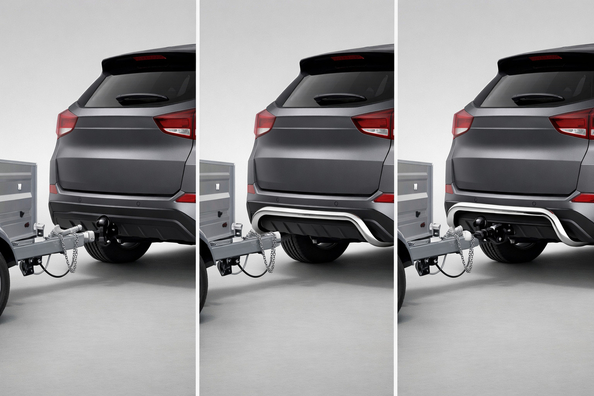
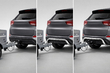
If the job is genuinely to tow a trailer, the starting choice is almost always the same: a proper towbar matched to the vehicle and the trailer’s weight. A rear bar without an integrated towing unit won’t replace it: it works as protection, sometimes as a support or an accessory platform, but it doesn’t solve the towing task.
Both options make sense when the car simultaneously needs a trailer, rear-end protection, better rear geometry, and neat wiring integration. What matters here isn’t the part’s name, but whether it has engineered mounting, an approved noseweight rating, and compatibility specifically with your vehicle.
Here you need to separate three different tasks. A towbar is for towing. A rear bar is for protecting the rear, not for pulling. Both options—or a combined rear bar with a towbar—are justified when one setup needs to cover both protection and trailer use.
The most common confusion comes from the term “rear bar” itself. In some catalogs it’s a simple stainless tube; in others it’s a heavy-duty rear bar with a built-in towbar. So you should look not at how massive it is, but at the mounting method, the stated towing rating, the provision for the trailer socket, and sensor compatibility.
It’s better to compare not by looks, but by practical criteria:
| Option | Strengths | Weaknesses | Who it’s for |
|---|---|---|---|
| Towbar | Least extra weight, simple design, the most direct solution for regular towing | Doesn’t protect the rear on its own, can sometimes reduce departure angle, requires correct wiring | Those who actually tow a trailer and don’t want to overpay for extra metal |
| Rear bar without an integrated towbar | Provides rear protection, can be convenient in daily use, sometimes handles minor contacts better | Doesn’t solve the trailer task, can add weight and noise, towing rating is often absent | Those who prioritize protection over towing, or those who already have a towbar separately |
| Combined rear bar with towbar | Combines towing, protection, a place for the socket, and a reinforced rear end | Most expensive, heaviest, more complex to install and more demanding in terms of compatibility | Those who tow regularly and also drive on poor roads or work under load |
DD Tuning expert comment: Most often, people confuse a decorative or protective rear bar with a full-fledged towing unit. The second common mistake is to look only at the permitted mass figure on the product itself and not verify the vehicle’s rating, the noseweight, and the factory mounting points. If the car has parking sensors or more complex wiring, this must be checked before purchase, not after installation.
This is the baseline solution if a trailer is a real task, not a one-off episode. It has a simpler design, less unnecessary mass at the rear, and usually fewer chances of getting rattles from a large rear bar. For a light or mid-size trailer, it’s the most rational route if you don’t need separate rear-end protection.
Look not only at the ball, but also at the type of hitch: solutions for 31.75 mm and 50.8 mm are common. But the size itself doesn’t increase the vehicle’s capability. If the car is rated for a lower mass, a “stronger” towbar won’t turn it into a tow vehicle. Another nuance: some towbar models can take away a few degrees of departure angle, which is noticeable on ramps, ruts, and steep exits.
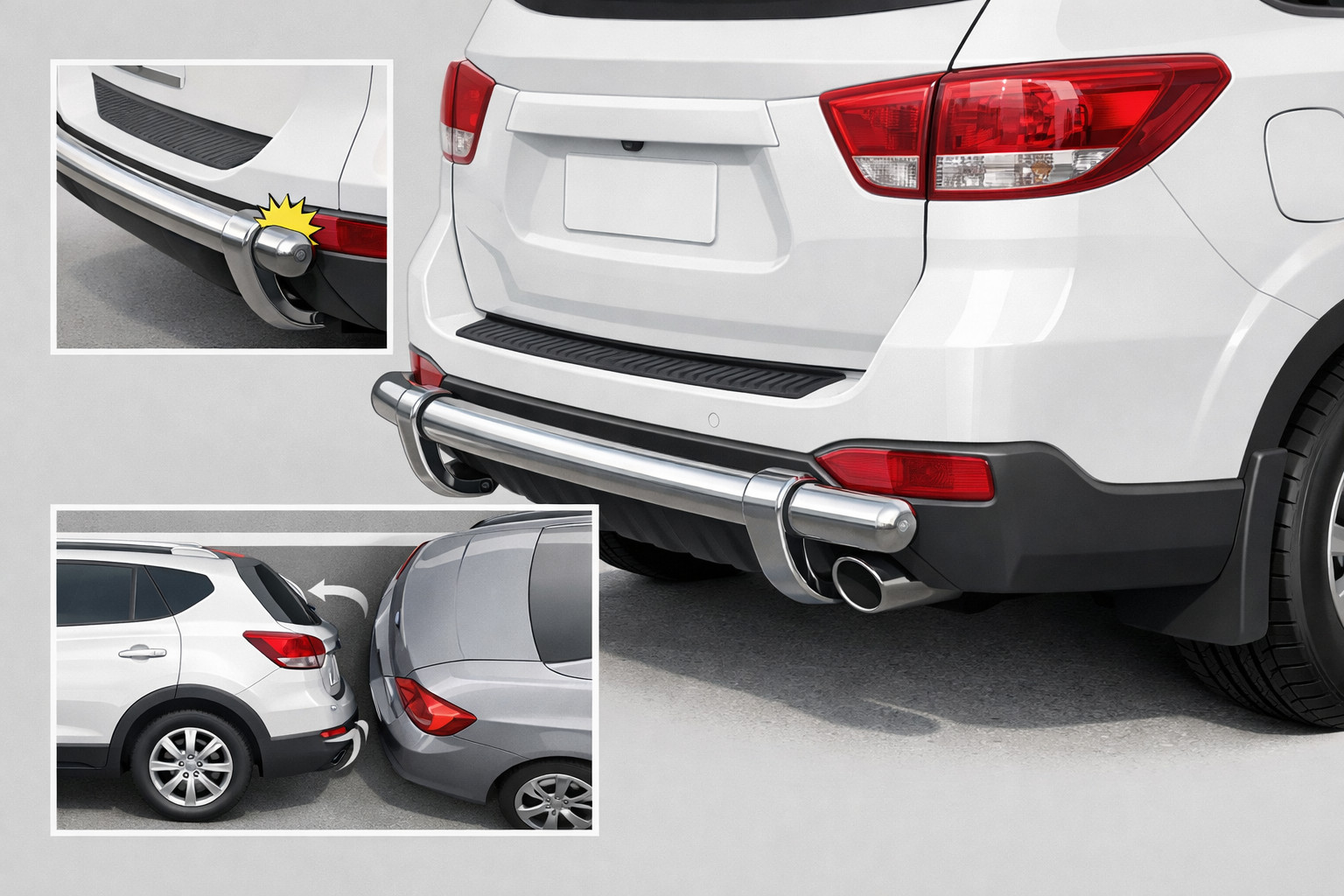
Without an integrated towing unit, this isn’t a trailer solution. Its purpose is to take a minor hit, protect the lower part of the bumper, and sometimes provide a convenient support or platform for additional elements. For a vehicle that almost never tows, such a part can be more useful than a towbar.
The weak point here is functional confusion. A massive tube doesn’t equal towing. What matters are the reinforced mounting points and the presence of a properly rated towing unit. The second issue is noise: if fitment or mounting isn’t perfect, vibrations and rattling appear over bumps.
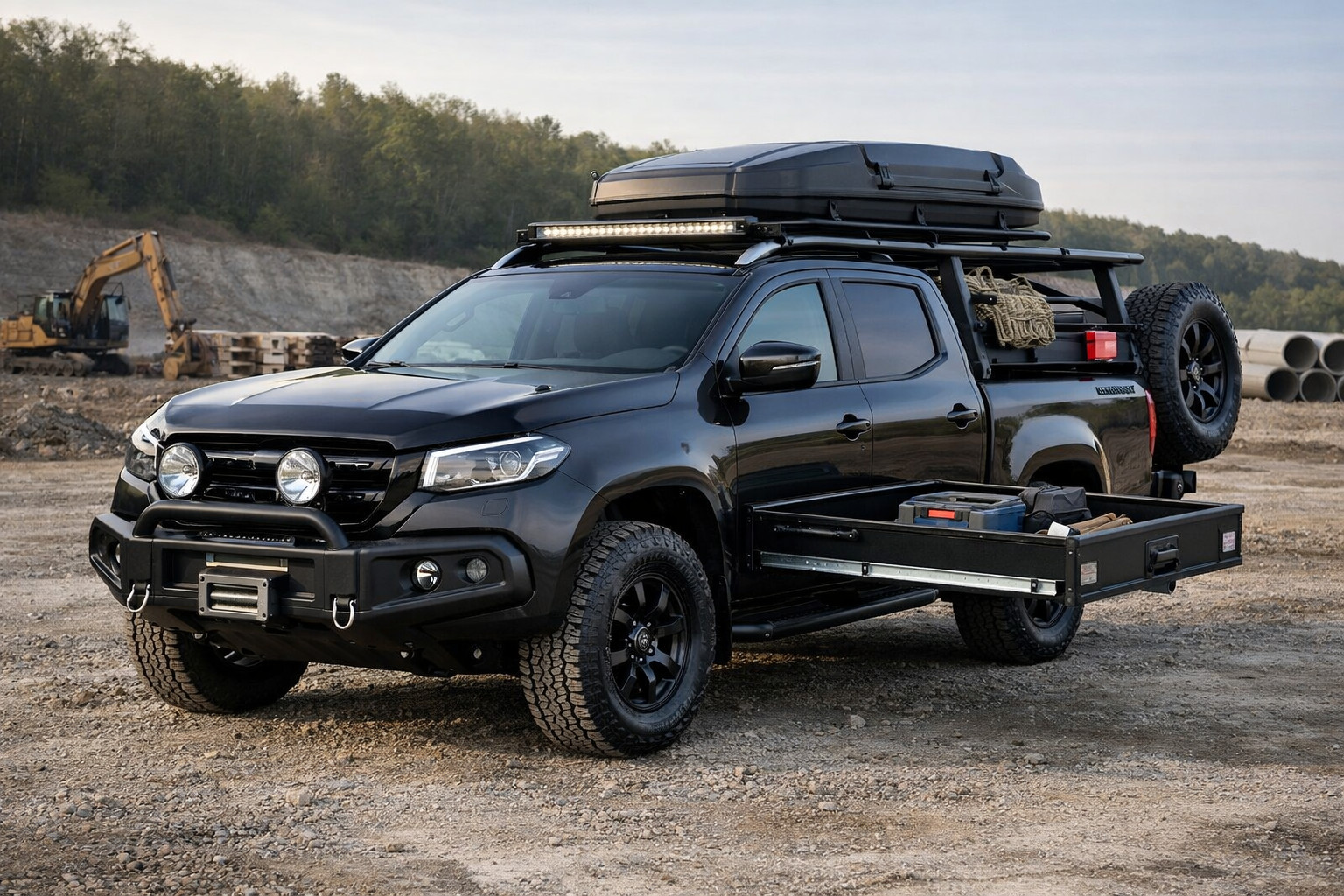
A combined solution makes sense where the vehicle works with a trailer and at the same time lives in harsh conditions: construction sites, dirt roads, boat launches, towing a car trailer or a camping trailer. One reinforced structure can provide protection, towing, and cleaner integration of the socket or reverse sensors.
The downside is obvious: it’s the most expensive and the heaviest route. The more massive the structure, the more carefully you need to watch rear sag, ground clearance, and installation quality. If the trailer is heavy and often runs on highways, you may also need a weight distribution device to keep the vehicle-trailer combo more stable under braking and over road undulations.
For occasional towing of a small trailer, there’s no point in complicating the vehicle. A standard quality towbar addresses the task more precisely and cheaper than a heavy-duty rear kit.
For an SUV, pickup, or work vehicle that both tows and regularly drives on poor roads, a combined rear bar is often justified. Here you’re paying not for looks, but for protection, a reinforced rear end, and proper towing integration.
If the trailer is heavy and mileage is high, the main criterion isn’t the bar itself but system stability. In that scenario, the decisive factors are correct noseweight, rear suspension condition, wiring, trailer brakes, and, if needed, weight distribution.
| Scenario | What to choose | Why |
|---|---|---|
| Light trailer a few times a month | Towbar | Provides the needed function without extra weight, cheaper to install and easier to maintain |
| Frequent highway trips with a boat, car trailer, or utility trailer | Towbar with proper wiring | The key here is correct towing load and stability, not extra protection |
| SUV or pickup with a trailer and bad roads | Combined rear bar with towbar | You need towing and protection, plus a stronger rear end that handles harsh use better |
| No trailer needed, but the rear often gets hit in parking or at work | Rear bar | Provides protection without paying extra for a towing unit that won’t be used |
| Heavy trailer and regular commercial load | Towbar or a combined option with load verification and, if needed, weight distribution | In this scenario, correct noseweight and full system compatibility matter more than the shape of the rear protection |
A more expensive solution is justified not when you just want “something stronger,” but when the cheaper route will have to be redone quickly. If today you install only the towing unit, and tomorrow you’ll still be reinforcing the rear, relocating the socket, and fighting geometry, it’s better to plan a complete setup from the start.
Another reason to pay extra is compatibility with parking sensors, rear sensors, factory wiring, and the trailer socket. A cheap unit often becomes expensive after modifications if the vehicle is used daily and under load.
From a customer’s experience: a person was looking for a rear bar for a work pickup because they often drove around courtyards and occasionally towed a car trailer with equipment. After selection, they отказались of a separate decorative bar and chose a reinforced rear unit with a towbar and a place for the socket, so they wouldn’t redo the mountings twice. In the end, they got both protection and proper trailer connection without play and unnecessary adapters.
In short: for a trailer you need a towbar; a rear bar without a towing unit is protection, not a substitute; both options make sense for regular work, bad roads, and a more complex rear setup. Don’t переносіть numbers from another vehicle—check your specific vehicle’s ratings, noseweight, and installation into factory mounting points.
This material is based on real selection experience, installation practice, and real usage scenarios—from a city utility trailer to heavy work loads. So the smart choice here isn’t the most massive one, but the one that precisely solves your task without extra metal, noise, and rework.
| ✔ | Tow bar is the most direct solution for towing: it has a simple design, less unnecessary weight at the rear, and usually a lower installation cost. |
| ✔ | A rear bar without an integrated tow bar can be useful in everyday use if you need rear-end protection from minor contact, and a trailer is not a priority. |
| ✔ | A combined rear bar with a tow bar allows one unit to cover both towing and protection, and also integrates the socket and parking sensors more neatly. |
| ✔ | For heavy or regular loads, it is important that the combined solution is better suited for tough conditions — bad roads, working with a trailer platform, or a travel trailer. |
| ✘ | A rear bar without an integrated towing unit does not replace a tow bar and does not solve the trailer task. |
| ✘ | The combined version is the most expensive, heaviest, and more difficult to install, and it also depends more on vehicle compatibility. |
| ✘ | Large rear structures can add noise and vibrations if the installation or mounting is not perfect. |
| ✘ | Even a tow bar that looks correct does not increase the vehicle's capabilities without taking into account the car's approvals, load on the ball, and factory mounting points. |
Shipping to EU
Wholesale and retail
Own warehouse
Опис продукту
Подарунки не надаються при оформленні покупки у кредит під 0,01% або при покупці частинами.