
































































 Author: Radomskyi Maksym Vasyliovych
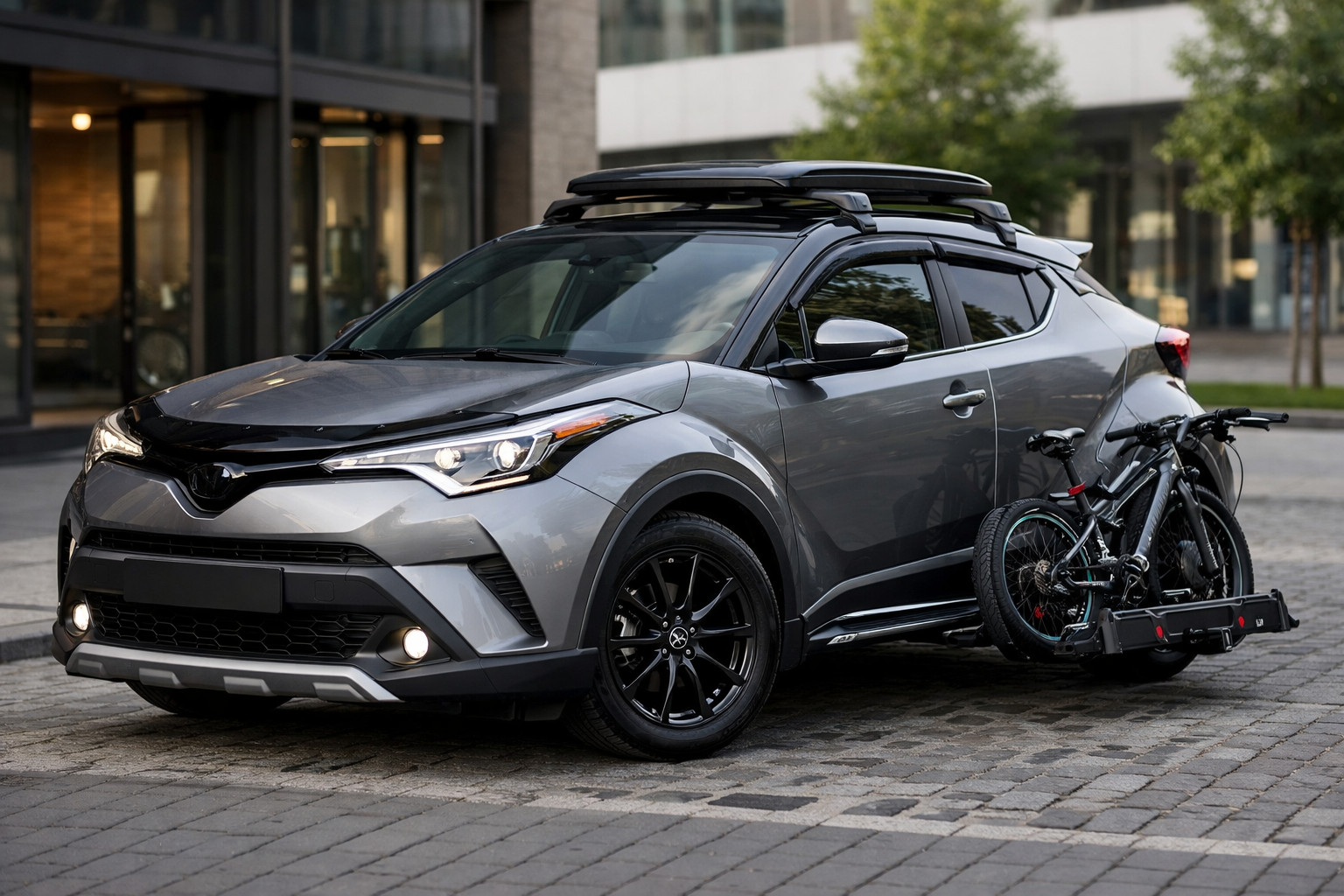
This upgrade plan is for a Toyota C-HR owner who mostly drives in the city, often parks in tight spaces, and wants to make the car more convenient without extra decoration. The scenario is simple: less dirt in the cabin, fewer scratches on the body, a bit more everyday usability, and no solutions that shout louder than the car itself.
The C-HR already has expressive styling, so it’s easiest to get the priorities wrong here: starting with body kits, chrome, or lowering, and leaving the useful everyday items for later. In the city, the logic is different: first protect the cabin and trunk, then protect the body, then event recording and small organization, and cosmetics only if they don’t spoil the factory look.
What this upgrade should accomplish
A city-focused upgrade for the Toyota C-HR should solve not an abstract “make the car better,” but very specific daily tasks. The first is to keep the cabin and trunk clean, because that’s where water, dust, sand, shopping bags, gym bags, and kids’ items enter every day. The second is to protect the body in the areas that suffer during parking and loading.
It’s also worth considering the character of the model itself. The C-HR doesn’t have the largest trunk, rear visibility isn’t best-in-class, and ground clearance around 150 mm doesn’t invite lowering or low lips. So the right upgrade here isn’t about “making it more aggressive,” but about helping the car age more slowly in the city and not annoy you with little things.
Another task is not to break the factory balance. If a modification looks out of place, hangs loose, squeaks, or blocks visibility, it’s no longer an upgrade. For the C-HR, the best choices are the ones that look like they were intended from the start.
What to do first
The first stage for city use is basic protection you’ll feel every day, not once a month. There’s no point in overcomplicating it: four items cover most real-world wear.
- All-weather floor mats — the first purchase. They catch water and dirt where it really matters and look tidier than cheap universal options.
- Trunk liner — almost the same priority as cabin mats if you carry groceries, backpacks, tools, kids’ items, or pets.
- Rear bumper protector — a practical thing for the C-HR, because the top surface of the bumper quickly collects scratches from bags, suitcases, and boxes.
- Mud flaps — not about looks, but about less sandblasting and grime on the lower body, especially in fall and winter.
If the budget is limited, the order is simple: cabin first, then the trunk, then the rear bumper and mud flaps. If you use the trunk daily, it’s worth getting the trunk liner right away together with the cabin mats.
Modification, why it’s needed, who benefits (table)
| Modification | Why it’s needed | Who it truly benefits |
|---|---|---|
| All-weather floor mats | Protect the cabin floor from water, sand, and everyday dirt | Anyone who drives in the city year-round and doesn’t want to constantly clean textile carpeting |
| Trunk liner | Takes on dirt from bags, packages, a stroller, and gear | Those who use the trunk regularly, not just for a spare tire |
| Rear bumper protector | Protects the bumper edge from scratches during loading | Those who often put heavy or rigid items into the trunk |
| Mud flaps | Reduce grime buildup and impacts from small stones on the lower body | Those who drive not only in a clean city center, but also through courtyards, wet streets, and in shoulder seasons |
| Hidden dash cam | Records events without extra wires and without visual clutter | Those who park outside a lot or often drive in dense traffic |
| Door-sill covers or small cabin organizers | Reduce minor everyday wear and clutter | Those who want a tidier cabin routine, but have already covered basic protection |
This table shows the key point well: what’s truly essential for the city isn’t decorative, but protective upgrades. They deliver the most benefit per hryvnia spent.
DD Tuning expert comment: On the C-HR, people most often make two mistakes: they buy visual accessories first and leave the cabin and trunk unprotected, or they order electronics without checking the model year and market of the car. Another typical story is buying a universal solution based on photos and then living with poor fitment, extra gaps, or a look that doesn’t match the model.
What makes sense to add as a second stage
The second stage starts when basic protection is already covered. The smartest upgrade here is a hidden dash cam, installed so it doesn’t block visibility near the mirror. It won’t make the car faster or quieter, but in the city it genuinely adds peace of mind.
Next come small things that don’t change the car radically, but reduce everyday chaos: a center armrest organizer, rubber inserts for storage pockets, a simple net, or better order in the trunk. In the C-HR this is especially relevant because space isn’t unlimited, and any small mess is felt sooner than in a larger crossover.
If you have an early C-HR and the stock multimedia is outdated for your use case, that can also be a second stage, but only after checking the production year, market, and trim level. On later cars, it’s easy to overpay for something that’s already solved from the factory.
What’s more about comfort or appearance
In this group, I’d include neat door-sill covers, understated window deflectors, seat covers for a specific usage pattern, and other upgrades that don’t save you from wear as much as basic protection, but make daily use a bit more pleasant. The principle is simple: if an item doesn’t look organic on the C-HR, it’s better not to install it.
For a “city without tackiness” scenario, stick to calm solutions: matte textures, model-specific fitment, and a minimum of shiny trims. The C-HR doesn’t need lots of visual accents, because the body itself is already very active in shape.
Comfort upgrades make sense only after you’ve solved dirt, trunk use, and minor scratches. Otherwise you get a typical imbalance: the car looks “more expensive,” but is less convenient to live with.
What people often buy for nothing
First place here goes to aggressive body kits, lips, and diffusers for a car that spends most of its time on city streets and parking lots. There’s almost no practical benefit, but the risk of scraping a curb or ramp increases immediately.
The second common mistake is lowering. For the C-HR it’s a questionable upgrade, if only because reducing ground clearance by about 25 mm in city driving more often creates problems than delivers benefits. The third is buying a roof rack or crossbars “just in case,” and then carrying them empty for years.
Another frequent waste is buying things not for your scenario but for the photo: chrome trims without function, pseudo-carbon pieces for the cabin, random universal organizers, a multimedia retrofit without checking the car’s year. All of this easily adds visual noise and almost no real convenience.
What to install first, what to postpone, what’s not essential (table)
| What to install first | What can be postponed | What is not essential |
|---|---|---|
| All-weather floor mats | Center armrest organizer | Chrome trims without function |
| Trunk liner | Door-sill covers | Body kit purely for looks |
| Rear bumper protector | Hidden dash cam, if the car rarely stays outside | Lowering for city use |
| Mud flaps | Window deflectors | Roof rack if you don’t carry anything on top |
| Check multimedia compatibility for your model year | Multimedia retrofit, if the stock functionality is still enough | Expensive multimedia upgrade on later versions without a real need |
If you simplify the table into one rule, it sounds like this: first, what saves you from dirt and scratches every day; then, what adds convenience; and only at the end, what the car can easily live without.
A ready upgrade plan for this scenario
- Start with model-specific all-weather floor mats for your model year and C-HR version.
- Immediately or as the next step, add a trunk liner if you use the trunk daily.
- Install a rear bumper protector so you don’t catch scratches in the most visible spot while loading.
- Add mud flaps if the car regularly sees wet asphalt, courtyards, and dirty shoulder seasons.
- After basic protection, install a hidden dash cam and tidy up with small organizers in the cabin.
- Only then decide whether you truly need comfort or visual upgrades: sills, deflectors, seat covers, multimedia, a roof rack.
This order almost always turns out to be the least wasteful. You don’t overpay for looks before covering real everyday needs.
When it makes sense to choose more expensive solutions
A more expensive solution makes sense when it’s either noticeably better integrated or truly works every day. If you want to see the full set of model-specific options and avoid mixing random products, start with accessories for Toyota C-HR. For the city, paying extra is often justified for model-specific fit and a clean look, not for flashy decor.
It’s also worth looking at electronics for C-HR if you need a hidden dash cam or you have an early version where the multimedia is truly outdated for navigation and daily calls. But it’s important not to buy blindly: for the C-HR, the production year and market strongly affect whether such an upgrade makes sense.
Roof racks and crossbars are justified only when you regularly carry a bike, a roof box, or seasonal gear. If it’s a “once a year” scenario, a more expensive solution won’t pay back the price, the extra noise, or the added height.
From a customer’s experience: a C-HR owner was looking for exterior trims because the car quickly lost its neat look in daily city driving. In the end he отказався from a body kit, installed floor mats, a trunk liner, rear bumper protection, and later a hidden dash cam. The biggest satisfaction wasn’t a new look, but the fact that the cabin became easier to keep clean, and the trunk stopped scratching the bumper with every load.
Conclusion
For a Toyota C-HR in a city scenario without extra decor, what works best isn’t “tuning for the sake of tuning,” but a consistent set of practical upgrades. First — all-weather floor mats, a trunk liner, rear bumper protection, and mud flaps. Then — a hidden dash cam and small organization. And only after that does it make sense to think about comfort or more expensive options.
This approach cuts out marketing junk and helps you avoid overpaying for looks where you need utility. The material is based on real selection experience, practical know-how, and real usage scenarios, so the logic is simple: first, what takes the hit every day, and everything else only if your C-HR truly needs it.
How it works
- Start with cabin protection Install model-specific all-weather floor mats for your year and version of C-HR. They take the brunt of water, sand, and everyday dirt first, so that’s where a city upgrade should begin.
- Add trunk protection If you use the trunk regularly, install a trunk mat right away. It will help keep the floor clean and prevent bags, packages, gear, or children’s items from scratching the surface.
- Protect the rear bumper and lower body Install a rear bumper protector to avoid scratches during loading. Add mud flaps if the car often drives through wet courtyards, during the off-season, or on dirty streets.
- After the basic protection, install a hidden dash cam This makes sense if you often park on the street or drive in heavy traffic. It’s important to place it so it does not block the view near the mirror and does not create visual clutter.
- Tidy things up with small organizers After covering the basic needs, you can add an armrest organizer, rubber inserts for compartments, or a simple trunk net. These items do not radically change the car, but they remove everyday clutter and make the cabin neater.
- Save visual and comfort upgrades for last Door sill trims, deflectors, covers, or multimedia only make sense after protecting the cabin, trunk, and body. Aggressive body kits, lowering, and other decorative solutions for a city C-HR are better left uninstalled unless there is a real need.
Pros and cons
All-weather floor mats and a trunk mat really reduce dirt in the cabin and trunk, which is especially useful in the city with constant getting in and out. This is a practical upgrade you feel every day, not just in certain situations.
A rear bumper protector and mud flaps help protect the body from scratches, sand, and small stones during city parking and wet off-season driving. For C-HR, this is important because the lower and rear areas suffer the most in everyday use.
A hidden dash cam records events without extra wires or visual clutter. In dense city traffic or when the car is often left on the street, it adds peace of mind without spoiling the cabin’s appearance.
Small organizers, rubber inserts, and order in the armrest compartment help keep the compact C-HR cabin neat. This is especially appropriate for a model where any mess is felt quickly.
The approach of prioritizing basic protection allows you not to spend money on decorative items before real needs are covered. This sequence makes the upgrade more rational and less wasteful.
Aggressive body kits, lips, and diffusers for city driving offer almost no practical benefit, but they increase the risk of hitting a curb or ramp. For C-HR, they also look somewhat out of place against the backdrop of an already expressive body.
Lowering in urban conditions is considered by the author to be a poor choice: when ground clearance is reduced by about 25 mm, the car becomes less convenient for daily driving. It adds more problems than benefits, especially in bad yards and over obstacles.
Some purchases easily turn out to be unnecessary if you buy them not for a specific scenario, but “based on the photo” — for example, chrome trims, pseudo-carbon, or random universal organizers. They add visual noise, but almost do not improve everyday convenience.
A roof box or roof bars make no sense if nothing is regularly carried on top. In that case, it is unnecessary expense, extra noise, and one more thing that simply takes up space.