26.05.2026
316
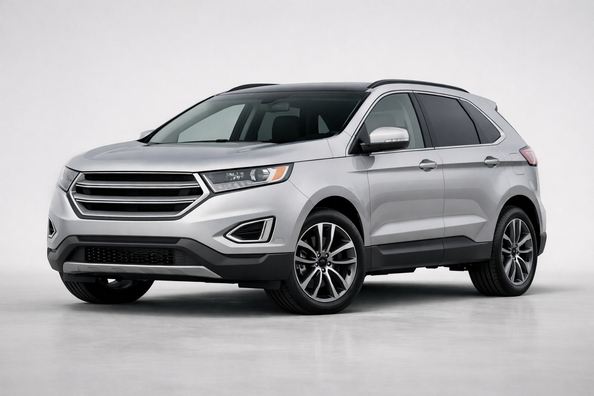

The second-generation Ford Edge is a two-row midsize crossover for those who want a proper amount of space, a comfortable seating position, a large trunk, and calm, predictable behavior for everyday driving. It suits families, drivers who often travel on highways, and anyone who doesn’t want to move up to a bulky seven-seat format. It’s not the best choice for those who need a third row, minimum fuel consumption, or a truly fresh platform.
This review is specifically about the Ford Edge II generation, which made it to the 2024 model year and was then discontinued. An important nuance for buyers: depending on the year and the market, engines, equipment, and even certain geometry parameters may differ, so it’s worth checking the exact vehicle individually.
By format, the Edge sits right in the middle between compact crossovers and larger family models. Its core idea isn’t off-road ambition or a sporty image, but comfortable daily driving, a spacious second row, and a trunk you actually use—not one that only looks good in a brochure.
On the market, it’s a vehicle for people who often drive as a pair or as four, bring kids’ items, suitcases, sports gear, or a dog, but don’t want to put up with a tight cabin. If you need a family crossover specifically without a third row, the Edge looks like a logical pick. If your priorities are fuel savings, maneuverability in tight courtyards, and lower running costs, smaller models will be more practical.
Ford Edge existed in two generations, and the second generation spans 2014-2024. This is the basis for most current offers on the used market, and it’s the one to consider as a mature, long-refined model without early-launch teething issues—but also without expecting a big new factory update.
For the 2024 model year, Ford officially confirmed the end of the Edge story. In late versions on certain markets there were five trims, and the overall equipment set carried over from the previous year without radical changes. For the buyer, this means something simple: the car reached the end of its life cycle, so you should choose it not for trendiness, but for its purely practical qualities.
In late official 2024 specifications, two turbocharged gasoline engines were listed for the Edge. The main option is the 2.0-liter EcoBoost rated at 250 hp and 380 N·m paired with an 8-speed automatic. The ST version gets the 2.7-liter V6 EcoBoost with 335 hp and 515 N·m and a 7-speed SelectShift automatic with paddle shifters. For 2024, official model-line cards showed all-wheel drive for all versions.
For everyday driving, the 2.0 looks like the smarter choice. It has enough pull for relaxed city driving, highway passing, and a loaded family vehicle, and fuel consumption is noticeably more sensible than in the ST. The ST makes sense if you want extra torque reserves, quicker throttle response, and a more driver-focused character—but that’s no longer about rationality.
In terms of the body, the Edge is strong precisely because of its proportions: length 4,796 mm, wheelbase 2,850 mm, width 1,928 mm without mirrors, and height 1,735 mm. In five-seat mode, the trunk is about 1,100 L, and with the second row folded—around 2,100 L. For daily use, this is one of the key reasons to look at the Edge instead of a smaller crossover.
The suspension in regular versions is tuned more for smoothness than for sharp trajectory changes. The vehicle is big and wide, so in a tight city you need to remember that when parking, but on the highway that wheelbase works in favor of stability. Ground clearance in European technical documentation was listed at 152 mm, but this figure depends on the market and configuration, so treat it as a guideline rather than a universal number for all Edge models.
| Parameter | Value | What it means in real life |
|---|---|---|
| Generation | II generation, 2014-2024 | Plenty of cars on the market, platform well known to service shops |
| Body and cabin | 5 seats, 2 rows | A good option for a family, but without a third row |
| Base engine | 2.0 L turbo, 250 hp, 380 N·m | Optimal balance of pull and consumption for daily driving |
| ST engine | 2.7 L V6 turbo, 335 hp, 515 N·m | Noticeably quicker, but more expensive to run |
| Transmissions | 8-speed automatic; on ST — 7-speed automatic | Regular versions are tuned for comfort, ST — for a more responsive feel |
| Drivetrain | All-wheel drive | Better traction in winter and on wet roads |
| Dimensions | 4 796 × 1 928 × 1 735 mm | Spacious cabin, but the body is wide for tight city spaces |
| Wheelbase | 2 850 mm | Good legroom in the second row |
| Trunk | About 1 100/2 100 L | Easily fits large everyday items and travel luggage |
| Fuel tank | 70 L | Convenient for long trips without frequent refueling |
The interior is one of the main reasons to consider the Edge. Up front there are 1,082 mm of legroom, and in the rear—1,031 mm, and you feel it not on paper but in real seating comfort. The second row doesn’t feel like a compromise, while the tall roof and large door opening make it easier to seat both kids and adults. Higher trims offered a 12-inch touchscreen, a B&O audio system, four USB ports, and plenty of small storage compartments.
In terms of safety, the Edge also looks convincing: automatic emergency braking, blind-spot monitoring with cross-traffic alert, lane keeping assist, automatic high beams, rearview camera, hill-start assist, and rear parking sensors. On more expensive versions you can get adaptive cruise control with stop-and-go, lane centering, and expanded electronic driver aids. The weak point isn’t the idea of the equipment itself, but the fact that some owners don’t like the touch-based logic for climate and multimedia controls.
In everyday life, the Edge is strongest where a car simply needs to be convenient. The high seating position, large trunk opening, folding second row, hands-free tailgate option, decent cabin capacity, and calm ride make it a good daily driver. According to official data, for the 2.0-liter version you can ориент yourself to roughly 11.2 L/100 km in the city, 8.4 L/100 km on the highway, and about 10.2 L/100 km combined. In the ST, consumption is noticeably higher: about 12.4/9.4/11.2 L/100 km.
There are also nuances that matter before purchase. The body is wide, so in older courtyards and narrow parking garages it’s not the most convenient format. Some owners complain about wind noise on the highway and the stability of the multimedia system. If you’re considering a 2024 vehicle with the 2.0 engine, it’s worth checking the service history: for some cars there was a technical bulletin regarding the transmission fluid heat exchanger cooling valve. Towing capability also depends on the specific configuration: documentation includes figures from 680 kg for certain 2.0-liter versions up to 1,588 kg for properly equipped vehicles.
From an owner’s perspective, the Edge wins not with flashiness, but with how easy it is to live with every day. It’s one of those crossovers where space, seating, and the trunk are felt daily, not only on a big trip. But the model has already reached the end of its life cycle, so you have to accept not-the-newest electronics and a few ergonomic compromises.
| Aspect | Pros | Cons |
|---|---|---|
| Cabin and trunk | Spacious second row, large trunk, comfortable seating | Only two rows; a large family may run out of seats |
| Ride comfort | Smooth ride, good space, a pleasant highway format | Some vehicles have noticeable wind noise at speed |
| 2.0 engine | Reasonable pull and more sensible fuel consumption | For some 2024 vehicles, service history needs careful checking |
| ST version | Strong performance and a noticeably livelier character | Higher fuel consumption and less sense as a purely family purchase |
| Equipment | Good set of safety systems and driver aids | Touch controls and multimedia aren’t for everyone |
| Market position | A mature, straightforward model with no format surprises | After 2024, the model was discontinued |
Who the Edge fits best: families of 3-4 people, drivers with daily city and highway routes, those who want all-wheel drive and a solid amount of space without moving to a very large crossover. Who it fits worse: those who want a third row, very low fuel costs, the latest multimedia architecture, or compact dimensions for dense city driving.
If you’re reading this Ford Edge II review before buying, for this model it’s better to start not with decorative parts, but with practical items. The Edge is about everyday use, so the best additions are accessories that protect the interior and make trips easier.
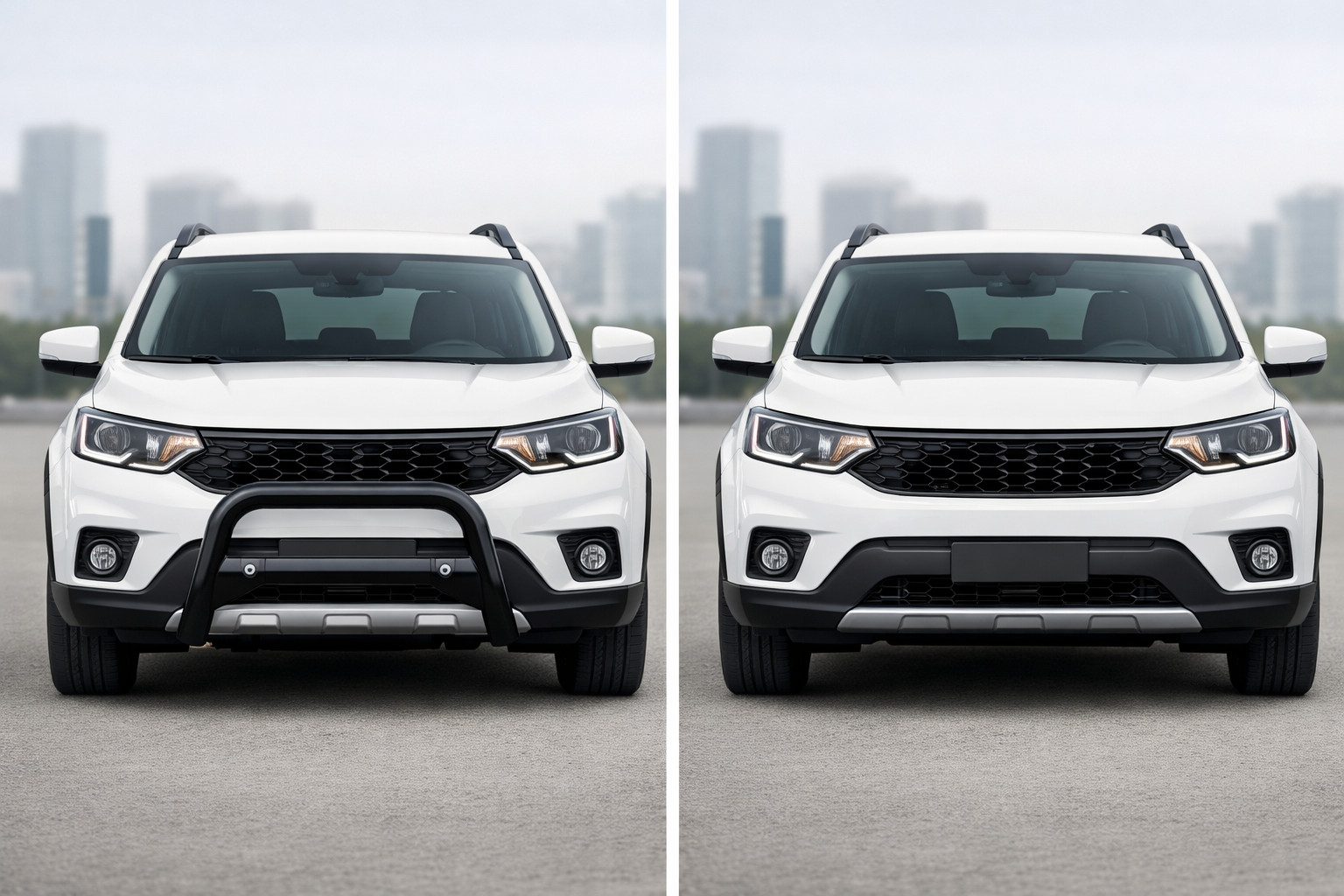
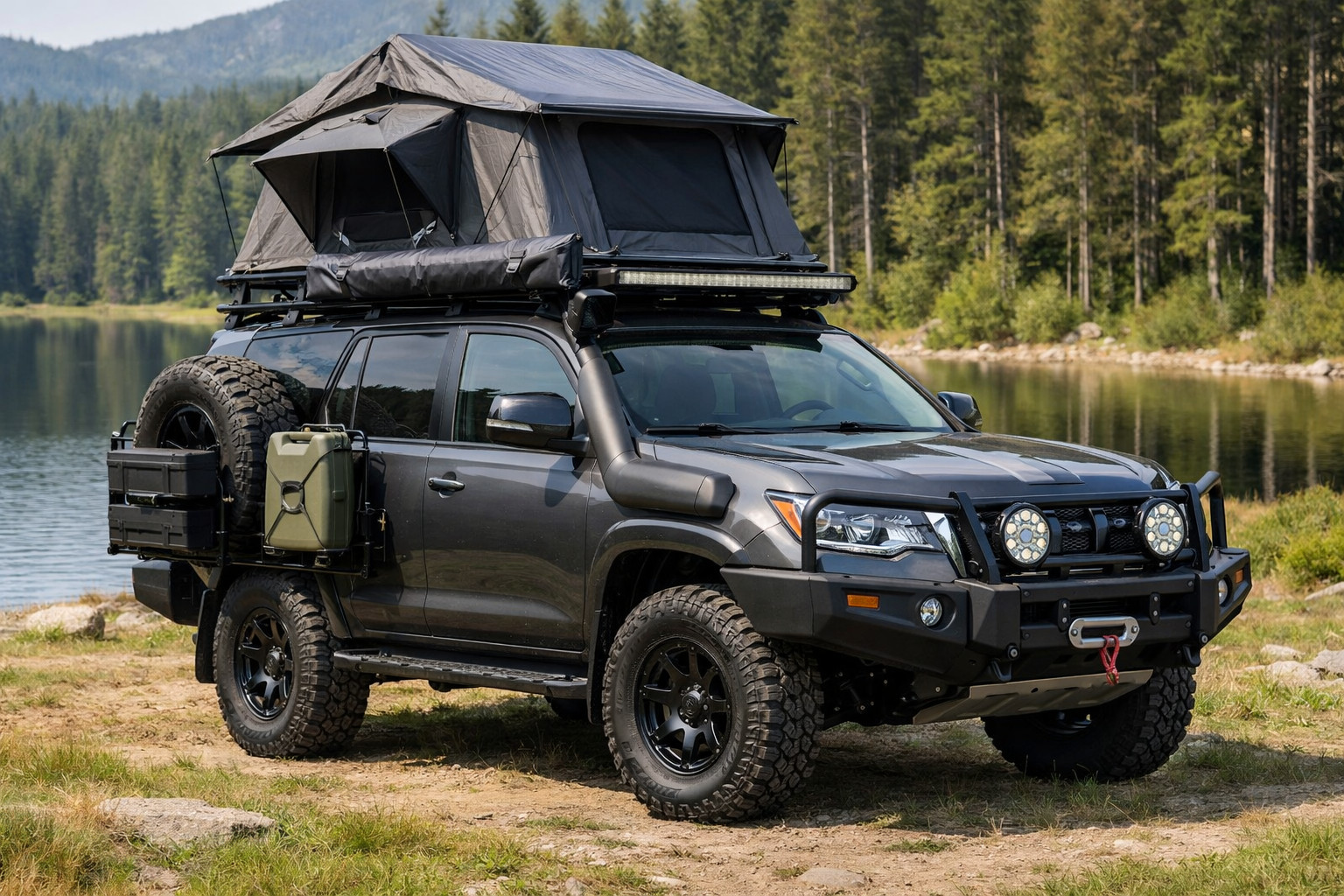
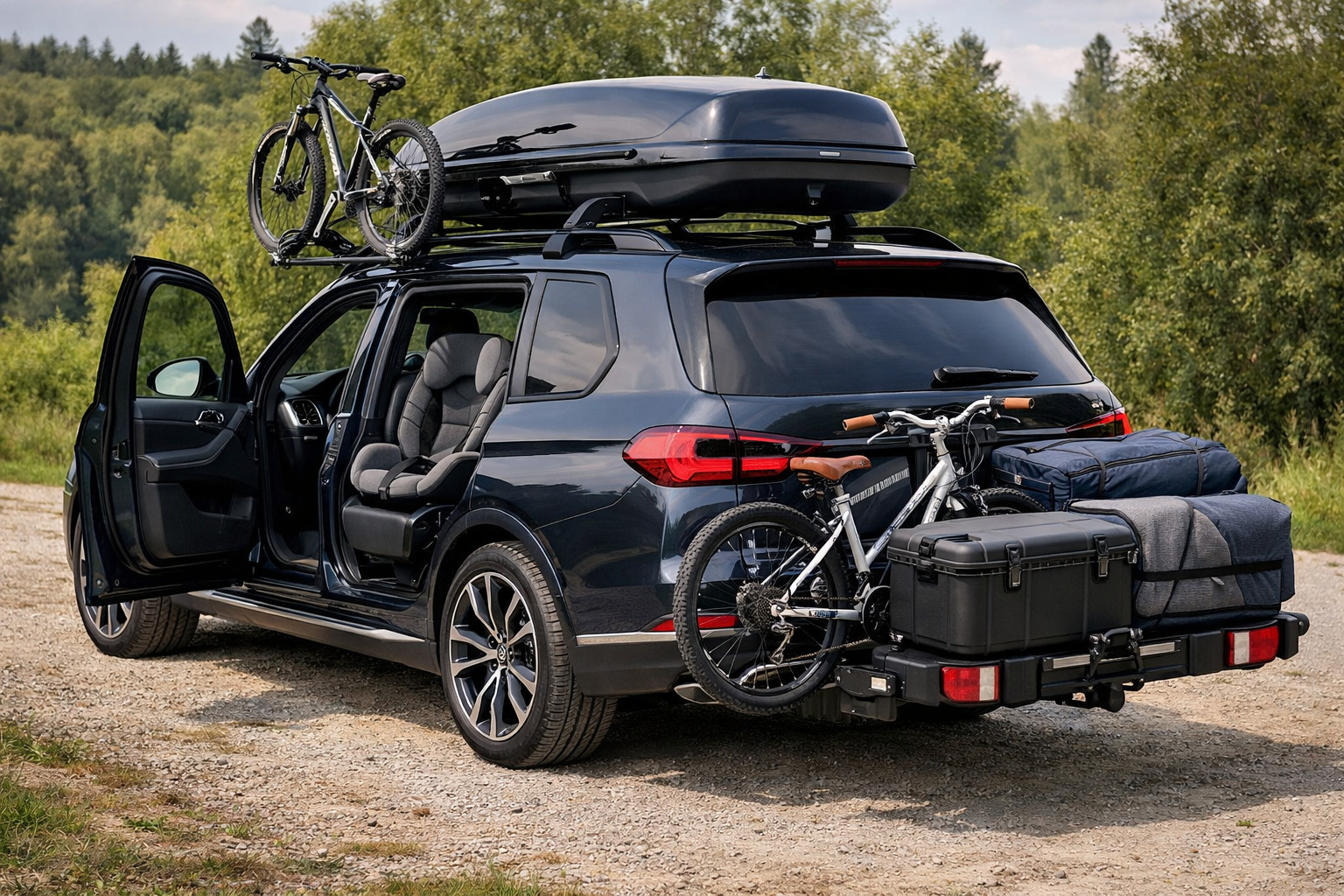
If the car regularly goes on trips, then you can look at roof rails or rooftop cargo solutions. But aggressive exterior tuning for a regular Edge doesn’t make sense in many cases: it won’t change the model’s comfort-oriented character, and it only adds costs.
The Ford Edge II generation is a strong choice for those who need a large, comfortable, and calm crossover for everyday use. Its main trump cards are a spacious second row, a large trunk, a solid set of safety systems, and the sensible 2.0-liter engine for daily driving. The weak points are also clear: not the newest electronics, body width in the city, some complaints about noise, and the fact that the model has already completed its production cycle.
If you need a car not for image, but for a real daily scenario, the Edge is worth considering. This material is based on real selection experience, practical know-how, and real usage scenarios, so the main conclusion is simple: 2.0-liter versions are the rational buy, while the ST is a choice for those who consciously want more pull and are ready to live with higher costs.
| ✔ | The spacious second row and comfortable seating make the Edge a good choice for everyday family trips. The high roof and wide door opening make it easier for children and adults to get in and out. |
| ✔ | The trunk is genuinely practical here: about 1,100 l in five-seat mode, and up to 2,100 l with the second row folded down. This is convenient for suitcases, kids' items, gear, or trips out of town. |
| ✔ | The 2.0-liter EcoBoost looks like the smartest choice for everyday use. It has enough pulling power for city driving and the highway, and fuel consumption is noticeably better than in the ST version. |
| ✔ | The platform and suspension are tuned for smoothness and stability, especially on the highway. For calm everyday driving, this is a more pleasant setup than crossovers with a more nervous character. |
| ✔ | The model has a good set of safety systems and assistants: automatic emergency braking, blind spot monitoring, lane keeping, a rearview camera, and other useful functions. For daily use, this adds convenience and peace of mind. |
| ✘ | The body is wide, so in tight courtyards and narrow parking lots the Edge may be inconvenient. It is not the best choice if you often have to maneuver in dense city traffic. |
| ✘ | The model has only two rows of seats, so it will not suit a large family or anyone who needs a third row. The cabin layout here is deliberately limited to five seats. |
| ✘ | Fuel economy is not a strong point of the Edge, especially in the ST version. For those expecting minimal fuel costs, this will be a noticeable compromise. |
| ✘ | Some owners complain about wind noise at speed and the touchscreen logic for controlling the infotainment and climate systems being not the most convenient. So there is comfort on the move, but the ergonomics do not suit everyone without complaints. |
Shipping to EU
Wholesale and retail
Own warehouse
Опис продукту
Подарунки не надаються при оформленні покупки у кредит під 0,01% або при покупці частинами.