13.06.2026
279
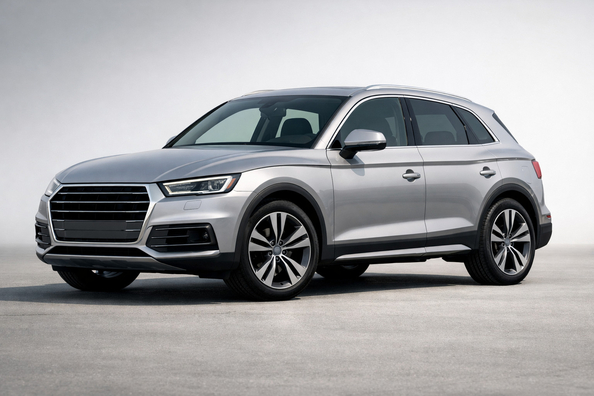
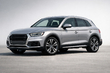
Audi Q5 in the 2017-2025 window is a premium crossover for those who want quietness, composure and normal everyday convenience rather than showy sportiness. It has a strong interior, good ride comfort and a clear format for the city, highway and family trips, but there’s a nuance: under the Q5 name in these years there are different generations and different market specifications.
Put simply, people usually choose the Q5 not for steering excitement, but because it’s easy to live with every day. That’s why, when choosing, what matters isn’t loud options in an ad, but specific things: what year it is, what engine, what transmission, what market, and whether the electronics annoy the owner.
In the class of premium midsize crossovers, the Audi Q5 sits between the BMW X3 and the Mercedes-Benz GLC, but its character is calmer. It’s a car for a driver who wants a quality cabin, a quiet ride, all-wheel drive, and predictable behavior without extra pomposity.
By model years, it’s important not to get confused. In 2017, in some markets, cars of the previous generation were still sold with 2,0 TFSI engines at 220 hp, 3,0 TFSI at 272 hp, and the SQ5 at 354 hp. Starting in 2018, in most market descriptions the model moved to the second generation: 2,0 TFSI at 252 hp, a 7-speed S tronic, and quattro ultra all-wheel drive.
In 2020, the plug-in hybrid Q5 TFSI e appeared with a combined output of 362 hp and an electric range of about 32 km. The European 2024 specification already points to the Q5 40 TFSI with 204 hp, and the new Q5 for 2025 received 268 hp and a fully more modern cabin interface. The naming of generations and model years differs from market to market, so the year in the documents and the actual hardware do not always match one-to-one.
Looking at it pragmatically, the main workhorse version of the Q5 is the 2,0-liter turbo gasoline engine. It provides enough pull for daily driving and a sensible balance between performance and running costs. The 3,0 TFSI and SQ5 are noticeably more interesting in acceleration, but that’s a different ownership budget. On later versions, S tronic behavior becomes an important part of the experience: it’s quick, but the condition of a specific car is critical here.
| Version | Hardware | What it means in practice |
|---|---|---|
| Q5 2017 2,0 TFSI | 2,0 l, 220 hp, 349,8 N·m, quattro all-wheel drive | A base option for calm daily driving without feeling short on pull |
| Q5 2017 3,0 TFSI | 3,0 l, 272 hp, 400 N·m, quattro all-wheel drive | Noticeably livelier character, but more expensive to maintain |
| SQ5 2017 | 3,0 l, 354 hp, 469,1 N·m, quattro all-wheel drive | The most dynamic version with a different emphasis on speed |
| Q5 2018 2,0 TFSI | 2,0 l, 252 hp, 370,1 N·m, 7-speed S tronic, quattro ultra | One of the most interesting mass-market versions of the second generation |
| Q5 TFSI e 2020 | Plug-in hybrid, combined 362 hp, 500,3 N·m, 7-speed S tronic, quattro | Makes sense for short daily routes and regular charging |
| Q5 40 TFSI 2024 (EU) | 204 hp, 340 N·m, fuel consumption 6,8-7,6 l/100 km | Focused on calm efficiency rather than sportiness |
| New Q5 2025 | 268 hp, 400 N·m, 7-speed S tronic, quattro all-wheel drive | Fresher electronics and better official performance figures |
When buying a used Q5, it’s worth looking not only at power, but also at how the gearbox behaves when pulling away, reversing, and shifting in the city. This is where owners more often mention unpleasant jolts or odd electronic symptoms than any dramatic issues with the basic mechanicals.
The Q5 doesn’t look bulky, but inside it’s mature enough. In 2017, its length was 4638 mm, width without mirrors 1897 mm, height 1656 mm, wheelbase 2807 mm. For the European Q5 2024, 4717 mm length, 1900 mm width, 1625-1662 mm height, and a 2823-2828 mm wheelbase are stated.
| Parameter | Q5 2017 | Q5 2024 (EU) |
|---|---|---|
| Length | 4638 mm | 4717 mm |
| Width | 1897 mm | 1900 mm |
| Height | 1656 mm | 1625-1662 mm |
| Wheelbase | 2807 mm | 2823-2828 mm |
| Trunk | 824/1623 l | 520/1473 l |
| Towing capacity | Depends on version | Up to 2400 kg |
| Roof load | Depends on version | 75 kg |
| Ground clearance | Depends on market and suspension | Depends on market and suspension |
In terms of suspension tuning, the Q5 is set up more for firm comfort than excitement. You feel that on the highway and in the city, where the car rides quietly and composed. It’s not a car to buy for off-road: the all-wheel drive here is about stability on slippery surfaces, not serious geometric capability. Trunk volume is measured differently across sources and markets, so it’s better not to compare liters between the USA and the EU directly.
The interior is one of the main reasons people buy the Q5 at all. The car often gets good feedback for quietness, materials, and the overall sense of solidity. The seating position is comfortable, the front seats are good for longer trips, and there’s generally enough space in the second row for family use. The new Q5 adds a 14,5-inch central display, an 11,9-inch digital instrument cluster, a digital key, and wireless smartphone integration.
The weaker point isn’t plastics quality or sound insulation, but small electronic annoyances. It’s the multimedia, connected functions, false warnings from parking systems, and connectivity glitches that more often irritate the owner than the cabin itself. In other words, the Q5 is pleasant to the touch and to the ear, but at times it can wear you down with software behavior.
In daily use, the Q5 is strong where the owner actually spends time: traffic jams, bypass roads, highway cruising at 120-130 km/h, trips with kids, winter mornings. For 2018, a benchmark of about 9,4 l/100 km in the mixed cycle was cited; for the European Q5 2024, 6,8-7,6 l/100 km is stated, but these are different methodologies, so there’s no direct comparison.
Practicality in the Q5 is good, but not record-breaking. The car is convenient for everyday luggage, vacations, and transporting gear, but in the number of well-thought-out small-item compartments and overall trunk return, it doesn’t always lead the class. If you need a versatile premium crossover without a lot of fatigue behind the wheel, the Q5 hits the mark. If maximum emotion or maximum usable space is the priority, it’s worth looking wider.
| Strengths | Weaknesses |
|---|---|
| Quiet ride and a well-assembled interior | MMI and other electronics can glitch |
| Good balance for city and highway | Often falls behind the BMW X3 and Mercedes GLC in driver excitement |
| All-wheel drive and confident winter behavior | Some cars have transmission jolts and complaints about drivetrain operation |
| Comfortable seating position and normal family practicality | Not the best organization for small items |
| Practical accessories and light retrofits make sense | Trunk figures, consumption, and equipment depend heavily on market and year |
The main advantage of the Q5 from an owner’s perspective is simple: the car doesn’t require getting used to and doesn’t overwhelm with character. The main drawback is just as simple: if a specific example has immature software or tired electronics, it can spoil the impression even of a good chassis and interior.
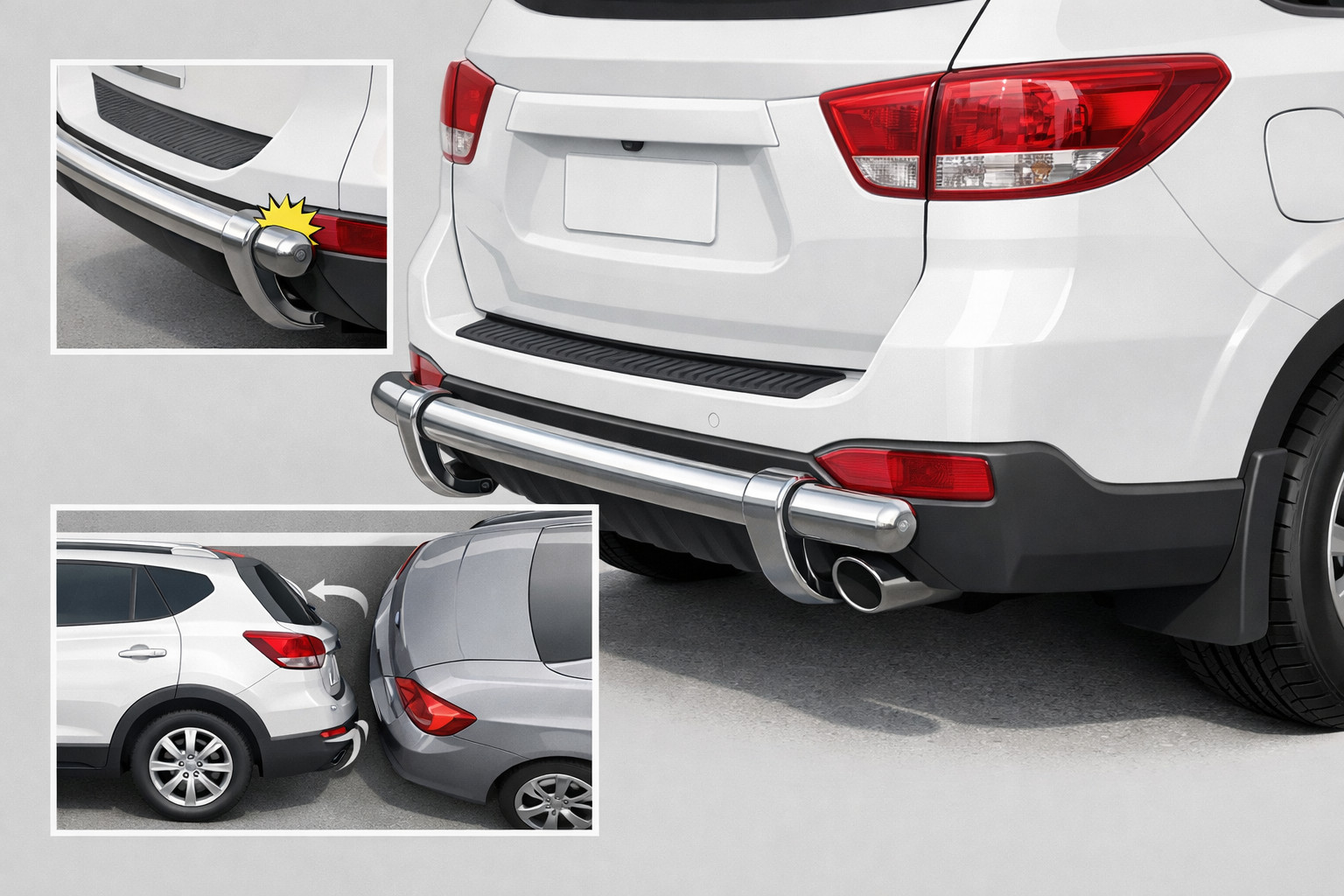
With the Q5, the smartest tuning isn’t decorative, but practical. This model benefits from things that simplify everyday use: keeping the interior protected from dirt, neat cargo organization, roof solutions, and protection for the loading area. If you need a full подборка for the model, the base page /tyuning-audi-q5-2017-gg.html is convenient as a starting point.
The point of accessories for the Q5 isn’t to make the car louder, but to keep it convenient and tidy in everyday life for longer. That’s exactly where this crossover shines best.
Audi Q5 2017-2025 is a solid choice for those who want a premium crossover without extra theater: quiet, well built, with proper all-wheel drive and clear everyday logic. But you need to buy carefully: check the year, market, specific engine, gearbox operation, and the condition of the electronics, because that’s where the main differences between cars are hidden.
If you need sporty sharpness or maximum practicality in the class, the Q5 isn’t always first on the list. But if you need a calm, grown-up crossover for daily life, it remains a strong option. This material is based on real selection experience, practice, and real use scenarios—not a dry catalog description.
| ✔ | Quiet running and a well-built cabin make the Q5 comfortable for daily driving and long trips. The interior features pleasant materials, and the seating is comfortable even on longer stretches. |
| ✔ | The suspension is tuned for firm comfort, so the car feels composed both in the city and on the highway. It is a good choice for those who value predictable behavior without excessive stiffness. |
| ✔ | All-wheel drive helps in winter and on slippery surfaces, which is useful for everyday use. The Q5 does not try to be an SUV, but it adds confidence on ordinary rough roads. |
| ✔ | Its versatility for family use is quite good: the second row is generally spacious enough, and the trunk suits vacation trips and everyday items. The car fits well into city, highway, and family outing use. |
| ✔ | There are several practical powertrain options for different needs: from the basic 2.0 TFSI to the plug-in hybrid. This allows you to choose between a simpler daily setup and a more powerful version for short trips with charging. |
| ✘ | The electronics and multimedia can be troublesome: the article mentions MMI glitches, false parking system warnings, and connectivity issues. Because of this, the impression of the car can be spoiled not by the mechanics, but by software annoyances. |
| ✘ | Some cars suffer from gearbox jerks and complaints about transmission performance, especially in city driving. When buying a used example, this needs to be checked very carefully. |
| ✘ | The Q5 is not the most emotional crossover in the class and often уступає BMW X3 та Mercedes GLC саме за драйверськими враженнями. If you want sharp handling, it may seem too calm. |
| ✘ | Small-item storage organization and cargo practicality do not look record-breaking for the class. For those who value maximum capacity and well-thought-out compartments, the Q5 may not be the best choice. |
| ✘ | Many parameters depend on the year, market, and specific version, so buying without a careful check can easily be misleading. The Q5 name alone does not guarantee the same hardware or equipment. |
Shipping to EU
Wholesale and retail
Own warehouse
Опис продукту
Подарунки не надаються при оформленні покупки у кредит під 0,01% або при покупці частинами.