
































































 Author: Radomskyi Maksym Vasyliovych
This upgrade plan is for those who’ve just bought a car and don’t want to smear the budget across nice-looking but secondary little things. The scenario is simple: get maximum value for every hryvnia, cover basic safety, preserve the interior, and avoid buying unnecessary stuff on эмоtions.
The logic is strict: first, what affects contact with the road and daily risks; then protection for the interior and trunk; next, convenience; and only after that—things for heat, appearance, or “just to have it.” Priorities change depending on climate, body style, street vs. garage parking, and whether you carry kids, pets, or lots of cargo.
What this upgrade should accomplish
A proper post-purchase upgrade shouldn’t just make the car “nicer.” It has to cover three tasks: reduce road risks, protect the interior from fast wear, and remove small day-to-day annoyances that genuinely irritate you in use.
That’s why usefulness isn’t judged by price or by how an item looks in a catalog. You need to look at whether the car becomes safer in your climate, whether there will be less dirt and fewer detailing costs, and whether you won’t have to get distracted by your phone, a wet trunk, or an empty safety kit at the wrong moment.
If winters are snowy, tires and a seasonal emergency kit become the first item. If the car often sits in the sun, a windshield sunshade and tint move higher up. If it’s a crossover, wagon, or family car, trunk protection is usually more useful than any decorative purchase.
What to upgrade first
The first stage isn’t “tuning”—it’s getting the car ready for normal daily use. This is where the biggest return on the money invested most often lies.
- Season-appropriate tires and tire pressure control. If the tires don’t match the climate or no one has checked the pressure in a long time, start here. TPMS sensors don’t replace a manual check, and incorrect pressure hurts both safety and tire life.
- Vehicle-specific all-weather floor mats. They pay for themselves quickly where there’s rain, snow, mud, kids, or daily city driving. It’s important to buy a set made for your specific car and not stack one set on top of another.
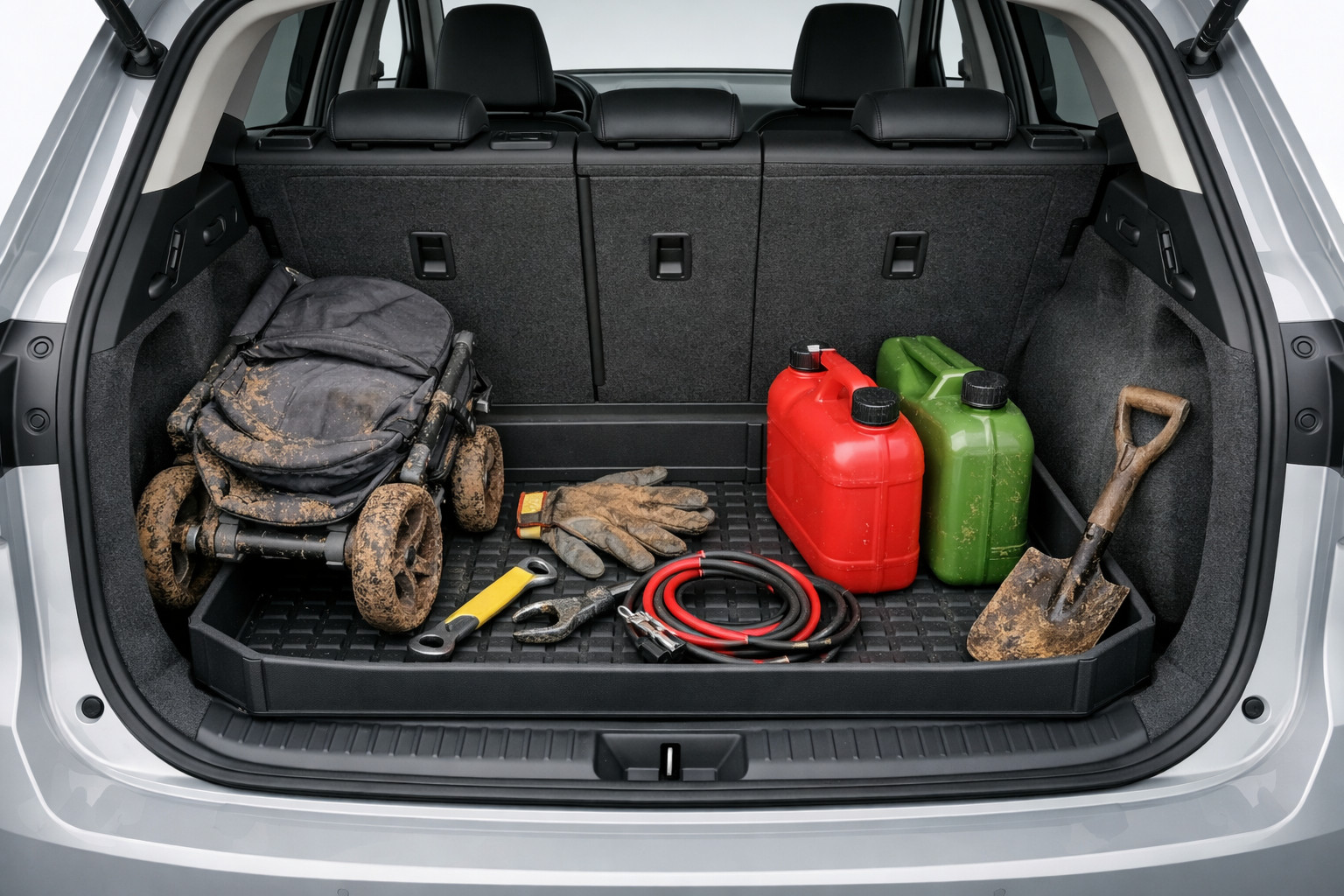
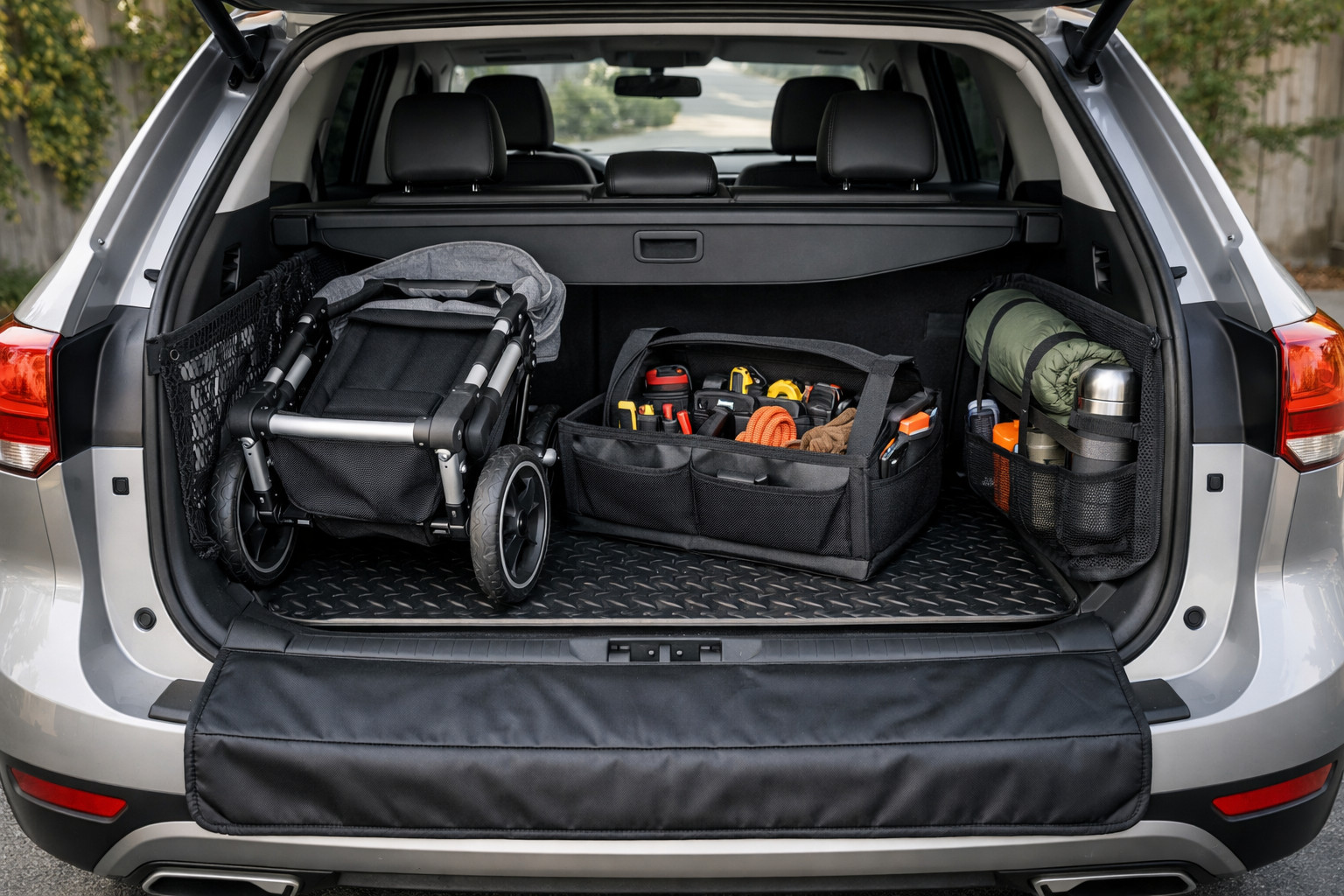
- Trunk liner. For a crossover, wagon, liftback, or any car that carries a stroller, dog, tools, or groceries, this is often more useful than any interior trim pieces.
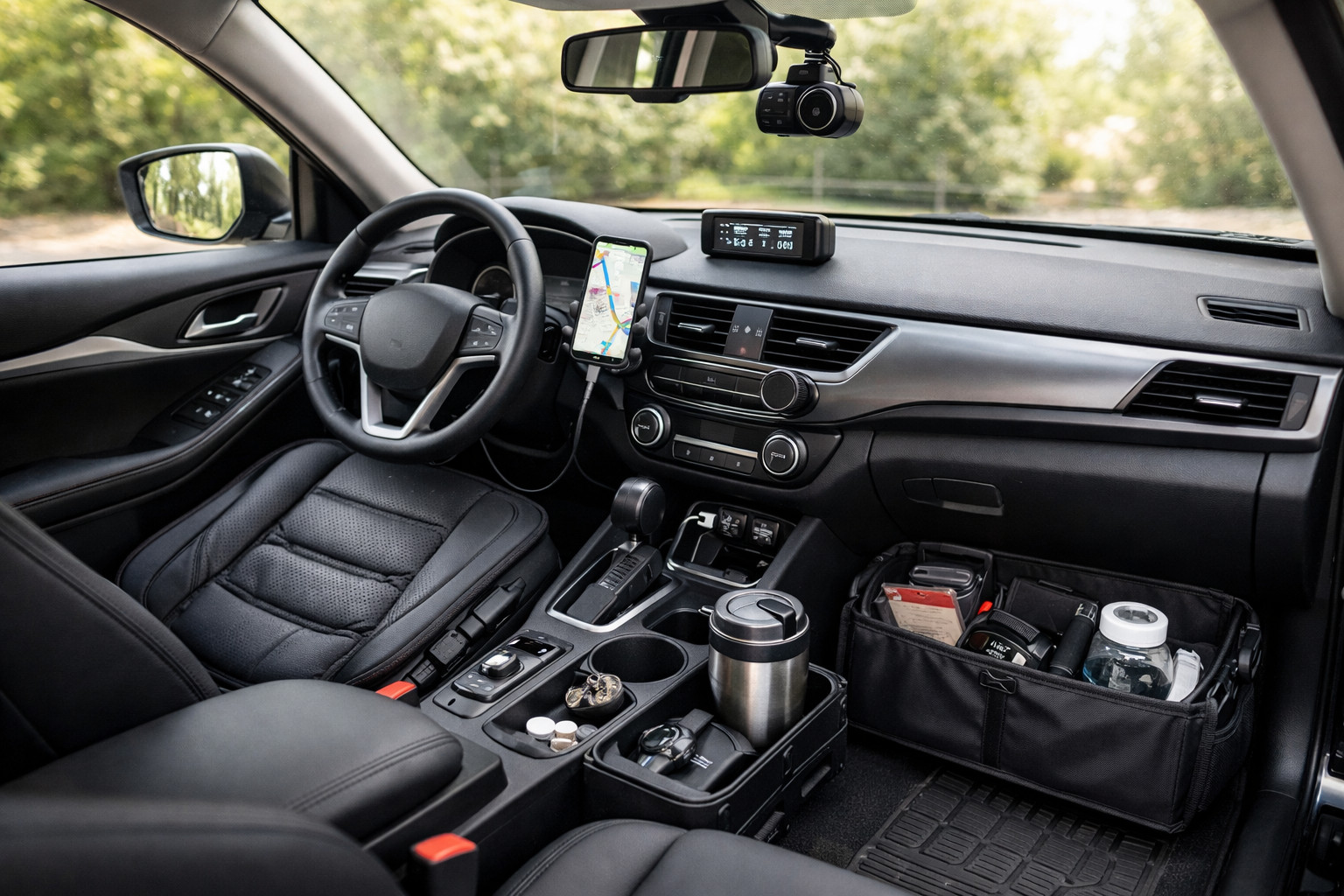
- Dash cam. If the car drives a lot in the city, parks outside, or often runs highways, a solid incident recording brings more real value than most dealer “add-ons.”
- Emergency kit and convenient navigation. A pressure gauge, flashlight, cables, first-aid kit, gloves, warning devices—this is the basic minimum. A phone mount makes sense if the car doesn’t have convenient factory phone integration in the infotainment.
Upgrade: why you need it, who benefits (table)
| Upgrade | Why it’s needed | Who really benefits |
|---|---|---|
| Season-appropriate tires and tire pressure control | Improve grip, braking, predictability, and reduce unnecessary wear | Everyone without exception, especially those who drive highways, in winter, or have high mileage |
| Vehicle-specific all-weather floor mats | Contain water, dirt, and road chemicals; make interior cleaning easier | City drivers, families, rainy or snowy climates, daily trips |
| Trunk liner | Protects the trunk floor from liquids, sand, dirt, and scratches | Crossovers, wagons, vehicles used for pets, tools, kids’ items, and shopping |
| Dash cam | Provides a record of events on the road and, if needed, in the parking lot | Those who park outside, drive a lot without witnesses, or want solid evidence |
| Emergency kit | Helps you avoid getting stuck due to a minor issue or a forced stop | Everyone, especially those who drive between cities or in winter |
| Phone mount | Keeps navigation in your line of sight without constantly grabbing the phone | Those who don’t have a convenient factory infotainment/navigation setup |
DD Tuning expert comment: The most common mistake after buying a car is buying for someone else’s scenario—following a forum checklist instead of your own needs. The second typical miss is saving on mat fitment and choosing universal mats that sit poorly and contain dirt worse. If the car sleeps outside, it’s better to solve the dash cam early than to spend on decorative items.
What makes sense to add in the second stage
The second stage starts when the basics are already covered. Here the upgrades don’t save you from big mistakes—they tailor the car to your daily life.
For a hot region or street parking, it’s logical to add a windshield sunshade. If that’s not enough and the car really bakes every day, then you can think about tint. If a basic dash cam covers driving incidents but the car often stays outside, the next step can be a version with a rear camera or parking mode.
This also includes seasonal additions to the emergency kit: for winter—a scraper, shovel, warm clothing; for long trips—water, gloves, a blanket. If you skipped trunk protection at first but after a month you see dirty cargo constantly flying in, the liner moves from “nice to have” to “should’ve installed it right away.”
What’s more about comfort or appearance
Some things can be useful, but they shouldn’t come before the basics. First of all, that includes tint if the issue isn’t critical, as well as small interior organizing accessories that don’t solve any urgent problem on their own.
It’s important not to confuse comfort with priority. If the car is on tired tires and the trunk already has stains from spills, spending money on looks or “interior vibe” is simply too early. Start with what actually works every day, not what looks good in the first week.
This basket also includes things that depend heavily on habit. Some people don’t need a separate mount if the factory infotainment is convenient. Others don’t need tint if the car stays in a garage. These aren’t useless purchases—they’re just not the first line of spending.
What people often buy for nothing
Most often, people waste money on what’s sold as a “package” and pushes эмоtions: like, if you’re buying a car, you should immediately close everything at once. In reality, many dealer add-ons can be safely postponed—or skipped entirely.
- Dealer anti-corrosion and protection packages—often presented as mandatory, although for many modern cars this isn’t a top priority.
- Engraving, extra fabric protection, nitrogen in tires—typical candidates for the list of things that sound important but rarely deliver noticeable everyday value.
- Universal floor mats—chosen for a lower price, then you get worse fit, weaker protection, and extra dirt underneath.
- “For looks” purchases before the basics—the classic mistake where exterior upgrades come before tires, a dash cam, or a basic safety kit.
The main rule is simple: if an item doesn’t reduce risk, protect the interior, or save you daily hassle, it belongs closer to the end of the list.
What to install first, what to postpone, what isn’t required (table)
| Scenario | What to install first | What you can postpone | What isn’t required |
|---|---|---|---|
| City, daily driving | Tires and pressure check, floor mats, dash cam | Trunk liner if the trunk is almost empty; windshield sunshade | Dealer protection packages, decorative add-ons |
| Winter, highway, intercity trips | Seasonal tires, pressure, emergency kit, dash cam | Tint, small interior organization items | Nitrogen in tires, cosmetic upgrades |
| Family, kids, pets, cargo | Floor mats, trunk liner, emergency kit | A more expensive dash cam with extra features | “For beauty” purchases instead of interior protection |
| Heat, street parking | Windshield sunshade, basic interior protection, dash cam if needed | Tint can be planned after assessing the real need | Any expensive add-ons purely due to fashion or someone else’s advice |
This table is useful because it shows not “the longest shopping list,” but the right sequence. The order of spending is what determines whether the upgrade is smart—or just expensive.
A ready upgrade plan for this scenario
- Check tire condition, seasonal suitability, and set the correct pressure on cold tires.
- Install vehicle-specific all-weather floor mats; for a crossover, wagon, or an actively used trunk, add a trunk liner right away.
- Put together a complete emergency kit and don’t scatter it across different corners of the cabin.
- Install a dash cam with solid recording quality; for most scenarios, a basic level is already enough.
- Add a phone mount if factory navigation or infotainment is inconvenient.
- If the car sits in the sun, buy a windshield sunshade; if heat truly bothers you every day, plan tint as a second round.
- After a few weeks of use, buy only what has already shown itself to be a real problem—not what you simply liked in someone else’s list.
When it makes sense to buy more expensive solutions
A more expensive dash cam makes sense not by itself, but when a simple one no longer covers the task. If the car regularly sleeps outside or you need recording both front and rear, then versions with an extra channel and parking mode are justified. Before buying, it’s worth comparing basic criteria in the article on choosing a dash cam.
With tint, it makes sense to pay extra when the car really sits in the sun for hours and simple sun protection is no longer enough. In that scenario, a more expensive option can be justified—but only if it’s legal in your region and you understand the practical effect, rather than buying it “because someone recommended it.” For this, it’s useful to separately understand what car tinting actually does in practice.
If your budget allows you to add not just the basics but the next layer of useful small items, take a look at useful car accessories. But the rule doesn’t change: more expensive should be only where it truly fits your scenario, not just where it increases the check.
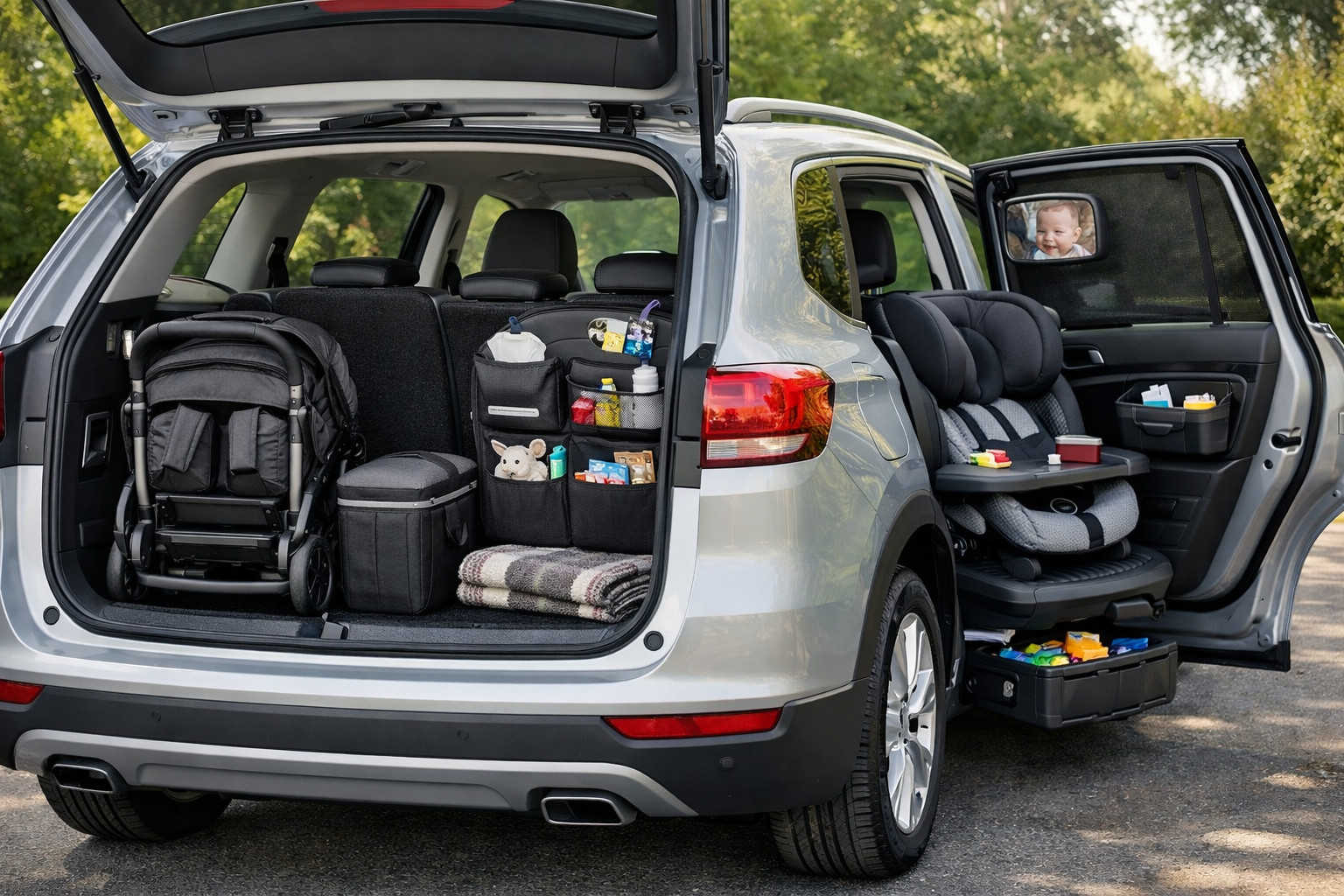
From a customer’s experience: after buying a city crossover, the person initially wanted tint and decorative trim, but daily carried kids’ items, a dog, and parked outside. In the end, the first purchases were mats, a trunk liner, a pressure gauge, and a dash cam, and tint was moved to summer. The biggest satisfaction came not from how the car looked, but from the interior stopping to get dirty so quickly—and from having footage of a parking incident.
Conclusion
If you want maximum value for every hryvnia, the order is: first tires and pressure, then interior and trunk protection, then a dash cam and an emergency kit, after that—navigation and seasonal small items, and only then comfort and appearance. That’s exactly how you cut out marketing clutter and keep the purchases that truly work.
There’s no universal list for every car, but the priority logic is the same: the first-priority items should reduce risks, the desired ones should simplify daily life, and secondary ones shouldn’t get in the way of the basics. This material is based on real selection experience, practice, and real usage scenarios, so the main advice is simple: buy for the task, not for the emotion.
How it works
- Check basic safety Start with the tires: they must match the season, and the pressure should be set on cold tires. This is the first and most important step, because it affects grip, braking, and wear.
- Protect the cabin and trunk Install custom all-weather floor mats, and if you have a crossover, wagon, or cargo vehicle, add a trunk liner right away. This will reduce the amount of dirt, water, and scratches, and cleaning will be easier.
- Prepare a basic emergency kit Put together an emergency kit: a pressure gauge, flashlight, jumper cables, first-aid kit, gloves, and warning devices. This will help you avoid getting stuck because of a minor fault or an unplanned stop.
- Add useful recording and navigation tools Install a dash cam if you often drive in the city, park outdoors, or travel on highways. Add a phone mount only if the car does not have convenient built-in multimedia for navigation.
- Add seasonal and climate-related items For heat and street parking, start with a windshield sunshade, and plan tinting only if there is still a real need. In winter, add an ice scraper, shovel, warm clothes to the emergency kit, and for long trips — water and a blanket.
- Put off everything secondary until you check the need Decorative add-ons, dealer protection packages, tire nitrogen, and purchases “for appearance” should not come before the basics. After a few weeks of use, buy only what has actually proven necessary in your specific scenario.
Pros and cons
Starting with tires and pressure monitoring has a direct impact on grip, braking, and the car’s predictability, not just its appearance. For everyday driving, this is one of the most practical purchases after buying the car.
Model-specific all-weather floor mats and a trunk liner really reduce the amount of dirt, water, and scratches in the cabin and trunk. This is especially useful for city driving, family trips, pets, and regularly carrying cargo.
A dash cam adds evidence in driving and parking situations, especially if the car is parked outside or often driven without witnesses. Its usefulness is practical even without expensive extra features.
An emergency kit covers small but real problems on the road: from a simple stop to a minor breakdown. On out-of-town trips and in winter, its usefulness is especially noticeable.
The article’s logic helps avoid spending the budget on “for looks” items before basic needs. This allows you to buy only what really works in your situation — from the climate to the type of parking.
The list depends heavily on the specific scenario, so there is no universal plan for all cars. If you buy “by the list” without tying it to your own conditions, you can end up spending money on unnecessary things.
Some useful items will have to be postponed to the second stage, even if they seem necessary right away. For example, tinting, extra dash cam functions, or organizational small items do not always make sense before the basics are covered.
Some purchases can easily be made inefficiently if you choose a universal option instead of a model-specific one. The text separately emphasizes that such mats often fit worse and protect less effectively.
The need for some accessories may become clear only after a few weeks of use, so part of the budget still has to be left on hold. This does not let you buy everything at once without the risk of misjudging priorities.