18.05.2026
12086
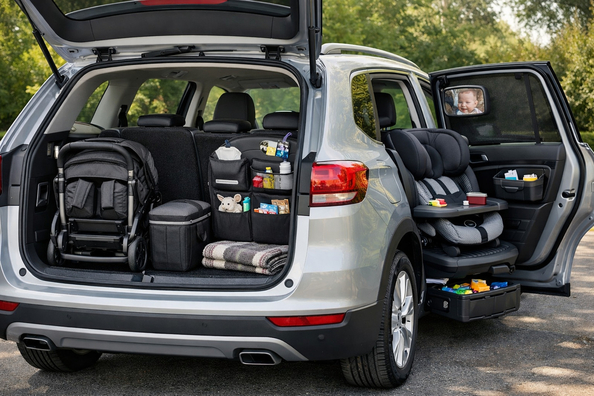
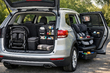
This upgrade package is for a family car that carries two kids every day: daycare, school, activities, short trips around town, and occasional weekend getaways. The goal isn’t to “freshen up the cabin” — it’s to keep the car from getting dirty as quickly, stop small items from flying around, and make sure child seats stay installed correctly.
The logic is simple: start with what removes dirt and chaos every day, then add what brings order to the trunk, and only after that focus on comfort items. Anything that touches the child seat or blocks access to the anchors needs to be checked separately: with two kids, a small everyday mistake quickly turns into constant annoyance — or a safety risk.
In a family car with two kids, there are three main tasks: keep dirt in controlled zones, secure items that would otherwise roll around the cabin or trunk, and avoid interfering with factory safety systems. This applies not only to the floor, but also to the trunk: a stroller, scooter, spare clothes, bottles, wipes, and small purchases can turn the car into a storage unit very quickly.
A separate point is child seats. Kids should ride in the back at least until age 12, and a booster is needed until the factory seat belt fits correctly. If one seat is rear-facing and the other is forward-facing, any upgrade around the second row should be judged not by convenience, but by whether it interferes with seating, belts, lower anchors, and the top tether anchor.
Top priority is all-weather cabin floor mats and trunk protection. They take the daily hit from water, snow, sand, crumbs, marks from kids’ shoes, and leaks from bottles. If the car is often used in wet weather or the kids play sports, this brings more value than any decorative accessory.
The second must-have is a simple solution for trash and small items: a sealed container or a dedicated bin for wipes, wrappers, and small clutter. At the same time, use the car’s factory storage compartments instead of immediately hanging extra pockets everywhere. After any changes near the second row, check whether child-seat installation has gotten worse — in real life, this is what people underestimate most often.
| Upgrade | Why it’s needed | Who truly benefits |
|---|---|---|
| All-weather cabin floor mats | Collect water, dirt, crumbs, and snow in one place that’s easy to shake out or wash | All families with daily driving, especially in fall and winter |
| Trunk mat or tray | Protects from dirty stroller wheels, wet bags, shoes, sports gear | Anyone constantly carrying a stroller, scooter, groceries, or spare clothes |
| Trunk organizer or rigid box | Keeps the first-aid kit, wipes, tools, and kids’ items from sliding around the trunk | Sedan owners with deep trunks and crossover owners who use the cargo space daily |
| Sealed trash container | Collects wrappers, used wipes, and small trash without chaos in the cabin | Families with small children and frequent short trips |
| Only a manufacturer-approved item under the child seat | May protect upholstery, but must not worsen seat retention | Only for those where it’s explicitly allowed by the child-seat and vehicle manufacturer |
DD Tuning expert comment: a common mistake is buying lots of small accessories for the second row while not covering the basic dirt-and-order tasks. The second mistake is putting hard items in pockets near the kids: a flashlight, a metal bottle, a power bank. If an accessory makes it harder to see the child-seat anchors or complicates daily buckling in, it’s already working against your use case.
In the second stage, it makes sense to install things that save time, not just take up space. That means a trunk organizer, net, or box to separate kids’ items, the car first-aid kit, a compressor, spare clothes, and small purchases. In a sedan, it’s important that it doesn’t eat up half the trunk depth; in a crossover or minivan, it should not interfere with folding the third row or access to mounting points.
If your summers are extremely hot, the second stage can include sunshades or other shading solutions — but only for comfort. The cabin heats up very quickly, and no shade solves the safety issue of overheating. In other words, for daily usefulness they’re secondary, not essential.
This group includes seat covers, decorative covers, trim pieces, and neat small items for visual tidiness. They can be pleasant and can make cleaning certain areas easier, but they don’t cover the main family use case the way mats, trunk protection, and proper item organization do.
This also includes sunshades and light pockets for soft items. They’re useful on a long summer road trip, but it’s important not to confuse comfort with real value. If your budget is limited, push all of this back until after the basic package.
Most often, people waste money on seat-back organizers with lots of pockets where they end up storing hard, heavy objects. It looks practical in photos, but in real life it often creates extra mess and potentially dangerous impact points in a sudden stop. With two kids, it’s almost never a first purchase.
The second common mistake is universal under-seat protectors without explicit approval from the child-seat manufacturer. They’re often bought “so the seat won’t get compressed,” but they can worsen the child seat’s fit. Equally questionable are small belt accessories, swivel cushions, cupholder expanders, and other items sold as convenience but offering no tangible daily benefit.
| Scenario | What to install first | What can be postponed | What isn’t required |
|---|---|---|---|
| Daily city driving: daycare, school, activities | Cabin mats, trunk protection, trash container | Trunk organizer, separate bag for kids’ items | Decorative covers, complex seat-back pocket systems |
| Frequent weekend trips | Mats, trunk protection, securing items in the trunk | Sunshades, extra soft organizers for wipes and blankets | Accessories that duplicate factory compartments and bins |
| One rear-facing seat, the other forward-facing | Free access to anchors, checking the top tether, minimal items near the second row | Manufacturer-approved seat protector | Thick universal pads and pockets with hard contents |
More expensive solutions are justified when the car truly works as daily family transport, not just a couple times a month. Precise-fit rubber cabin floor mats make sense if you regularly drive kids in wet weather, clean the interior often, and want to keep dirt from creeping under the edges. The same applies to sturdier or better-designed trunk organizer bags when you need to carry a stroller, first-aid kit, spare clothes, and groceries without constant reshuffling.
But pricier second-row accessories should be bought with a cool head. If you’re still considering seat-back organizers, they only make sense as a light storage spot for wipes, soft toys, or thin books. Don’t pay for models with lots of pockets if you’ll be putting bottles, gadgets, and other hard items there: in a family scenario, that’s not about usefulness anymore — it’s unnecessary risk.
From a customer’s experience: at first they looked for seat covers and seat-back pockets because the cabin was always full of small stuff. After selecting the right setup, they settled on mats, trunk protection, a separate trash container, and a trunk organizer for wipes, spare clothes, and the first-aid kit. The biggest change wasn’t the cabin’s appearance — it was that after daily trips the car could actually be tidied up quickly.
For a car with two kids, the best upgrade package isn’t a set of pretty little add-ons — it’s a clear sequence: control dirt first, then organize the trunk and small items, and only after that add comfort features. Priority upgrades deliver daily value, desirable ones save time, and secondary ones often just mask clutter or burn your budget.
In short, install what doesn’t interfere with factory safety and actually works for your driving routine. The material is based on real selection experience, practical use, and real-world scenarios, so the main reference point here isn’t visual effect — it’s what makes a family’s daily life easier.
| ✔ | All-weather floor mats and a cargo liner really reduce everyday dirt: they collect water, snow, sand, crumbs, and traces of children's shoes in one place that can be easily shaken out or washed. |
| ✔ | A sealed trash container helps quickly clear away wrappers, napkins, and small clutter so they don't build up in the door pockets, under the seats, or in the compartments. |
| ✔ | An organizer or a rigid box in the trunk secures the first-aid kit, napkins, tools, and children's items that would otherwise roll around the trunk during daily trips. |
| ✔ | A separate place for children's things in the trunk saves time on cleaning and packing up the car after kindergarten, school, or clubs, especially when the car is used every day. |
| ✔ | The upgrade package is built with safety as the priority: after changes near the second row, it is recommended to separately check car seat installation and access to the belts and anchors. |
| ✘ | Many accessories for the second row can interfere with car seat installation, access to the lower anchors and top tether, and that is no minor issue in a family car. |
| ✘ | Universal car seat protectors without manufacturer approval may worsen the fit of the seat, although they are often bought precisely “so the seat won't get pressed in.” |
| ✘ | Back-of-seat organizers with lots of pockets often create extra clutter and also keep unwanted hard items closer to children. |
| ✘ | Decorative blankets, covers, curtains, and other comfort items do not solve the basic problem of dirt and chaos, so with a limited budget they will have to be put off. |
Shipping to EU
Wholesale and retail
Own warehouse
Опис продукту
Подарунки не надаються при оформленні покупки у кредит під 0,01% або при покупці частинами.