
12.06.2026
281
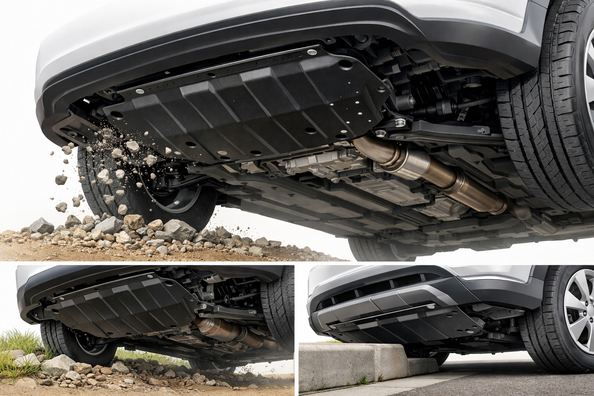
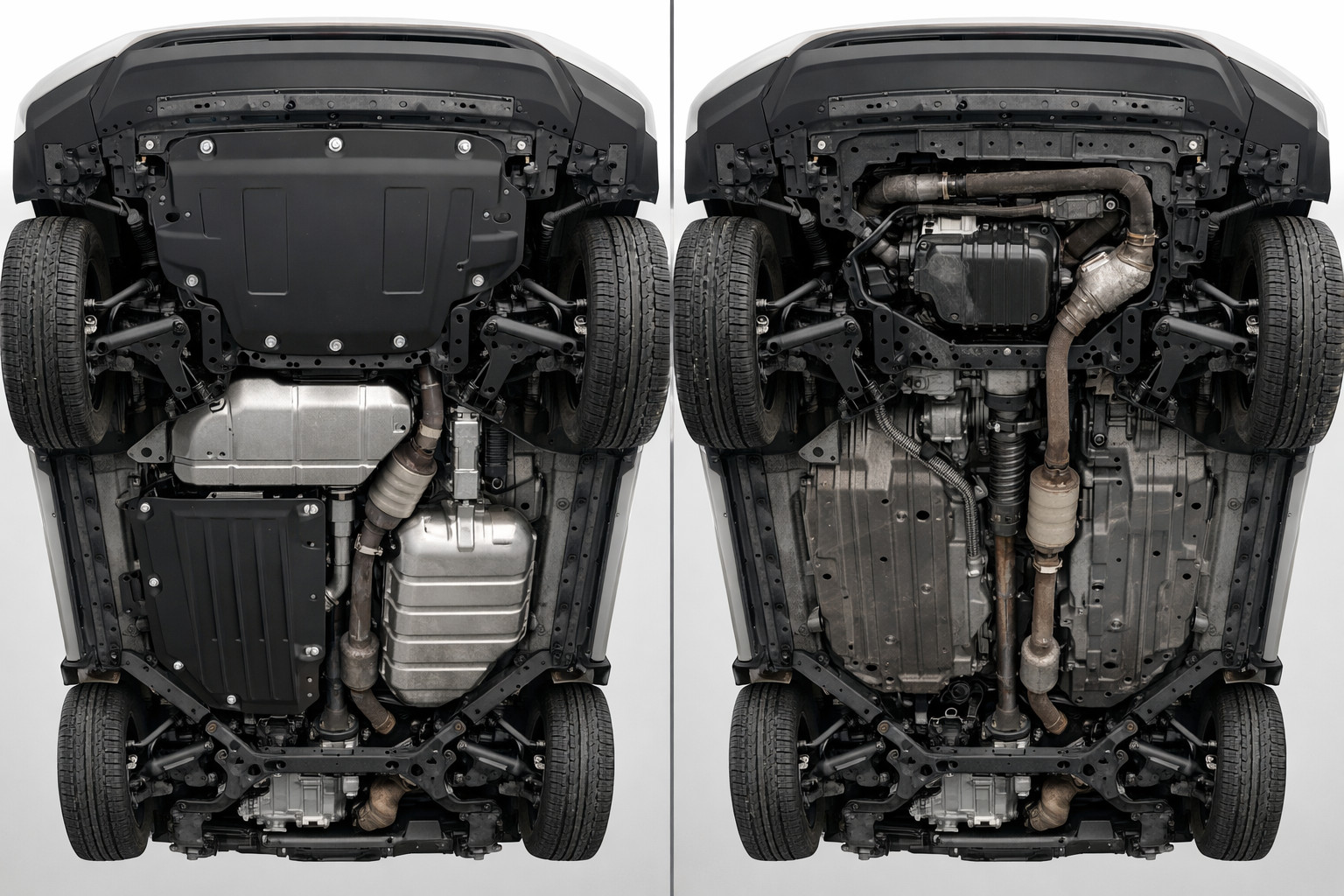
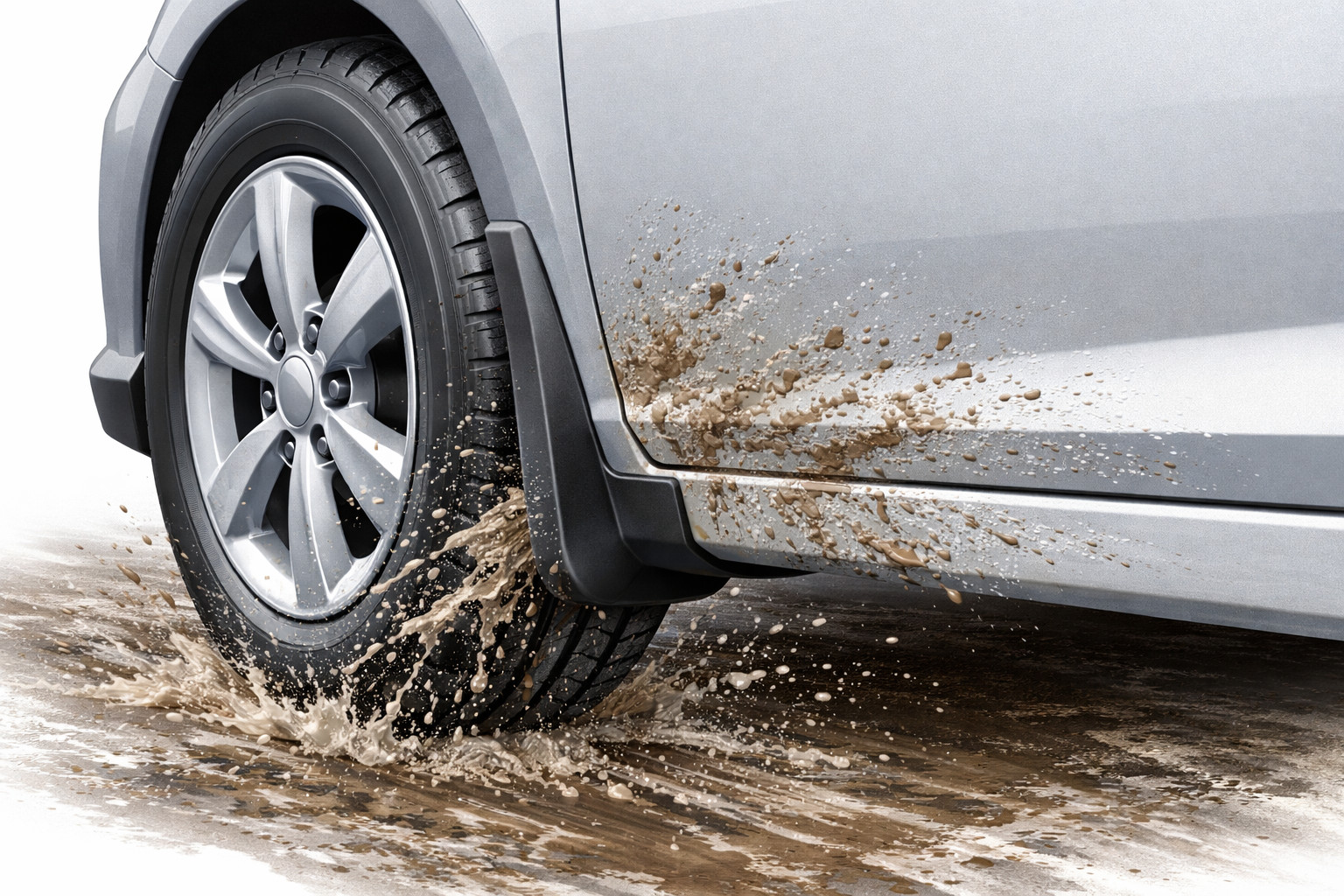
For gravel, dirt roads, and city curbs, the first thing to install isn’t decorative trim, but what actually takes the hit: underbody protection for critical components, and for side contact—heavy-duty rock sliders. Mud flaps are useful too, but they reduce dirt and stones rather than replace protection for the engine, transmission, or fuel tank.
There’s an important correction depending on the vehicle type. If it’s a passenger car with low ground clearance and the factory undertray has already been torn off, you should first restore the OEM plastic panels, wheel-arch liners, and fasteners. If it’s a crossover, pickup, or a vehicle that truly scrapes underneath on dirt roads, the priority is rigid underbody protection—not another cosmetic add-on for looks.
Gravel, dirt roads, and curbs hit different areas of the car. Stones reach the front part of the underbody, the wheel arches, and the lower door area. On dirt roads you also get mud, ice, and ruts, which under load make not only the liners work, but also the undertrays, fasteners, and lower edges. A curb often catches not the center of the underbody, but the front overhang or the rocker from the side.
That’s why one part can’t cover all risks. Long mud flaps are good at holding back dirt, but they can also snag on uneven surfaces themselves. Decorative side steps may hang lower than the useful point of the body and fail to take the impact. And a poorly chosen underbody guard sometimes steals ground clearance or complicates service if it’s made without accounting for the specific model.
DD Tuning expert comment: most often, owners confuse protection with bolt-on cosmetics and try to start with what’s visible from the side. In practice, you should first remove any hanging OEM parts, check the contact points, and only then decide whether you need a metal skid plate, heavy-duty rock sliders, or just properly chosen mud flaps. Another common mistake is installing mud flaps that hang too low on a vehicle that already barely clears curbs.
| Symptom | Likely cause | What to do |
|---|---|---|
| Grinding or rustling underneath on a smooth road | Loose or torn underbody undertray, missing clips | Lift the car, check fasteners, replace damaged plastic and hardware |
| Rattling or rubbing in a turn | Wheel-arch liner or mud flap touching the tire | Check wheel clearances, adjust or replace the part, don’t leave rubbing “as is” |
| Impact when driving onto or off a curb | Long front overhang, no lower front protection | Change the approach angle, reduce speed, and if contacts are regular, install protection for critical components |
| Scratches and dents on the rockers | Side contact with a curb or ruts | Consider heavy-duty rock sliders rather than cosmetic side steps |
| Constant dirt and stones on doors and arches | No mud flaps or they are too short | Choose vehicle-specific or properly sized mud flaps without excessive loss of ground clearance |
If you have regular contact in the center or at the front of the underbody, it’s worth starting with underbody protection. It’s the logical first step when you need to shield expensive components, not just reduce dirt.
If the problem is on the sides—hits against curbs, marks on the rocker, risk of denting the lower door edge—you need heavy-duty rock sliders. And when the main issue is small stones, water, slush, and dirt on the arches and doors, properly chosen mud flaps are enough.
| Solution | When it works | When it’s not worth spending money |
|---|---|---|
| Restore the OEM undertray, wheel-arch liners, and fasteners | There’s noise, hanging plastic, missing clips, tire rubbing | If the issue is already impacts on metal components, not bolt-on plastic |
| Model-specific underbody protection | Risk of impact to the engine, transmission, fuel tank, transfer case; the car drives on gravel and dirt roads | If the main contact happens on the side at the rocker, or the kit significantly reduces ground clearance |
| Heavy-duty rock sliders | There’s side contact with curbs, ruts, stones; the rocker takes damage | If the car only catches the front overhang or you need protection for the center underbody |
| Mud flaps | You need to reduce stones, dirt, water, and salt on the sides and arches | If overly low parts are chosen for bad roads, or they’re installed instead of underbody protection |
| Change driving line and speed | Contact is occasional and related to how you pass an obstacle | If the car consistently hits the same component even with careful driving |
From a customer’s experience: a crossover driver was looking for “something for curbs and gravel,” but after inspection it turned out the biggest issue wasn’t the rocker, but the front lower area and a torn undertray. First, he restored the OEM plastic and installed underbody protection, and only then added mud flaps. As a result, the rustling and small impacts disappeared, and dirt on the doors became noticeably less—without wasting money on unnecessary side steps.
The sequence is simple: first remove damaged OEM parts and protect critical components from below, then address side contact with heavy-duty rock sliders, and only after that add mud flaps as protection from stones, dirt, and salt. If a part hangs lower than the useful point of the body, it has every chance of becoming a new problem. This material is based on real selection experience, hands-on practice, and real use cases—not the idea that one accessory solves everything at once.
| ✔ | It is first recommended to restore the factory splash guards, wheel arch liners, and mounts if they have already come off. This is a practical first step for a passenger car, as it eliminates noise, rubbing, and the risk of snagging from hanging plastic. |
| ✔ | For gravel and dirt roads, the priority is said to be lower protection for critical components. This approach really covers the engine, gearbox, transfer case, or fuel tank, rather than just shielding the body from the outside. |
| ✔ | Reinforced side steps are recommended when the problem is specifically side contact with curbs or ruts. They are more useful than decorative running boards because they protect the sill where it actually gets hit. |
| ✔ | Mud flaps are considered useful for stones, water, snow, and dirt around the arches and doors. If selected to the correct height, they reduce soiling without unnecessarily reducing ground clearance. |
| ✔ | The article gives a clear sequence of actions: first check the contact points, then choose protection for a specific driving scenario. This helps avoid spending money on accessories that do not solve the real problem. |
| ✘ | Universal protection sheets are often worse than model-specific ones if they are installed just to cover more. They can eat into ground clearance and make access to service points more difficult. |
| ✘ | Long full-width mud flaps on bad roads can catch bumps themselves. In that case, they create a new contact point instead of protection. |
| ✘ | Decorative sills and tubular side steps without load-bearing mounting do not provide the needed protection. They may end up lower than a useful body point and only increase the risk of snagging. |
| ✘ | Simply fitting thicker metal is not enough if the problem is a poor approach angle or damaged factory plastic. Without eliminating the root cause, the protection may not produce a noticeable effect. |
Shipping to EU
Wholesale and retail
Own warehouse
Опис продукту
Подарунки не надаються при оформленні покупки у кредит під 0,01% або при покупці частинами.