 Author: Radomskyi Maksym Vasyliovych
This upgrade plan is for those who live in the city every day: short trips, traffic jams, courtyards, parking near home, a dirty interior, and the constant feeling that there’s stuff in the car but it’s not actually useful. The task is simple: separate the things that genuinely help every day from what only takes up space, adds weight, or drains your money.
The logic here is straightforward: start with what affects grip, visibility, and distractions behind the wheel. Then move to what saves time in everyday routines. And only after that should you think about protecting the interior, small comfort add-ons, or looks.
What this upgrade should accomplish
For daily city driving, a useful upgrade needs to solve four tasks: the car should hold the road properly, provide clear visibility in rain and grime, not distract the driver with small annoyances, and not turn the cabin and trunk into storage for random stuff. If a mod doesn’t improve at least one of these points, its value for city use is questionable.
City driving loads the car differently than highway driving: more starts and stops, more potholes, curbs, puddles, parking bumps, and small messes. That’s why a long shopping list works worse here than a precise set of items for your scenario: where the car is parked, how often you carry passengers, whether you have kids, and how much you drive in rain and snow.
What to upgrade first
Top priority is tires. Check pressure at least once a month on cold tires, because in the city even a small deviation quickly hits grip, wear, and fuel consumption. If the tread is already near the 1.6 mm limit, invest not in accessories but in tires: it delivers more benefit than any “cosmetics.”
Second priority is visibility. Fresh wiper blades, proper washer fluid, a clean windshield, working bulbs, and floor mats that don’t slide under the pedals matter more in the city than any decor. Smearing wipers and a slippery mat are not minor issues—they’re a constant risk.
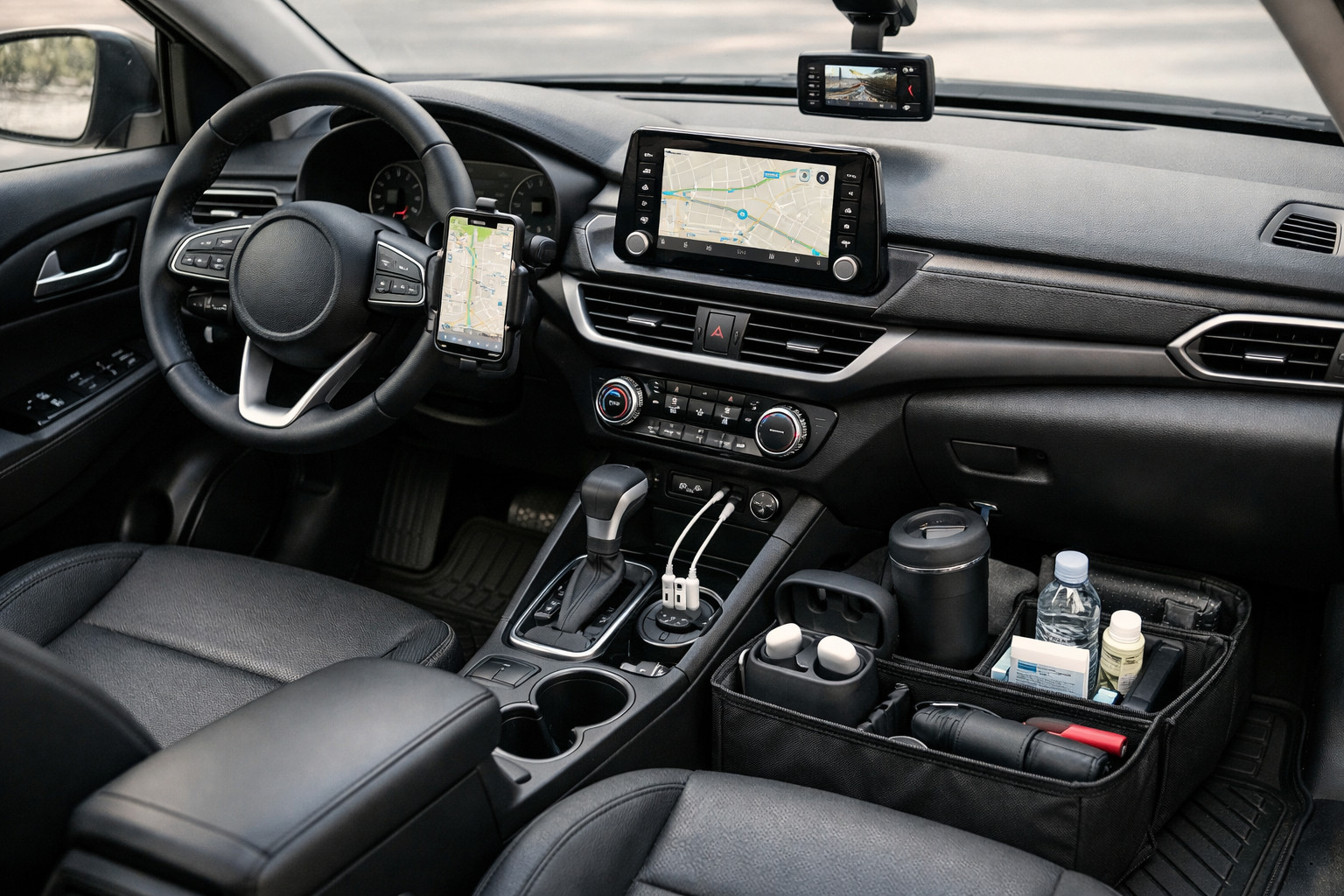
Third is basic day-to-day functionality: a reliable phone mount, charger, tire pressure gauge, and a compact compressor or tire repair kit. This is the minimum that actually works in real life—not once a year, but weekly or monthly.
Upgrade: why you need it, who benefits (table)
| Upgrade | Why it’s needed | Who truly benefits |
|---|---|---|
| Monitoring tire pressure and condition | Improves grip, even wear, and predictability over potholes and in rain | Everyone without exception, especially those driving daily on rough city roads |
| New wipers and proper washer fluid | Restores visibility in rain, snow, dirt, and at night | Anyone who drives daily, not only in dry weather |
| Dash cam | Provides video evidence for disputes in traffic and while parked | Those who often park in courtyards/on the street or drive a lot in dense traffic |
| Phone mount and charger | Reduce distractions and provide stable navigation and connectivity without cables all over the cabin | Those who actively use their phone as a work tool on the road |
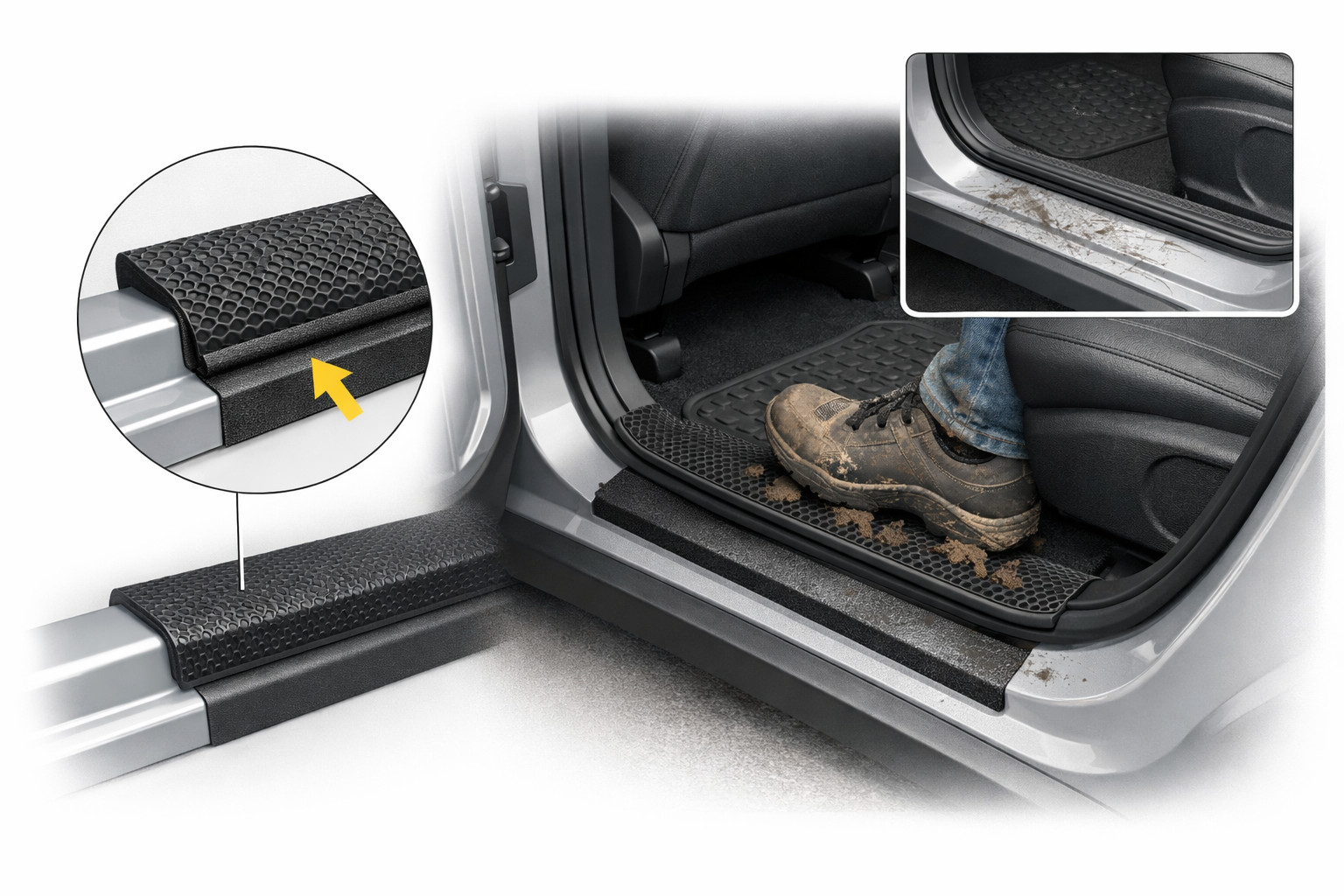
| All-weather floor mats and a trunk liner | Protect the interior from water, salt, sand, and small spills | Those in a wet climate, with kids, pets, or frequent grocery runs |
| Trunk organizer | Eliminates small-item chaos and keeps things from rolling around in the trunk | Those who carry tools, car care chemicals, kids’ items, or shopping |
DD Tuning expert comment: the most common mistake is starting with what’s visible on the outside and postponing what works every day. For the city, that’s the wrong order: big wheels, decor, or a roof box won’t compensate for worn wipers, old tires, or a messy cabin. Another typical story is buying an organizer but still hauling around things you haven’t needed even once in six months.
What makes sense to add in the second stage
After the basics, it makes sense to install a dash cam. For city use it’s genuinely useful, but not everyone needs an expensive setup. If the car sleeps in a garage and isn’t driven much, a simple, stable model is enough. If the car is parked outside, then it’s worth thinking about parking mode and proper hardwiring.
The second stage also includes items that remove routine hassles: all-weather mats, trunk protection, one good organizer, and a dedicated place for trash. In the city they don’t deliver a wow effect—they mean less cleaning, less stress, and less small-scale chaos.
If the car is used as a family or work vehicle, this is the stage to add a small emergency kit: reflective triangles, gloves, a flashlight, a charging cable, a pressure gauge. The key is not to inflate the kit to half the trunk.
What’s more about comfort or looks
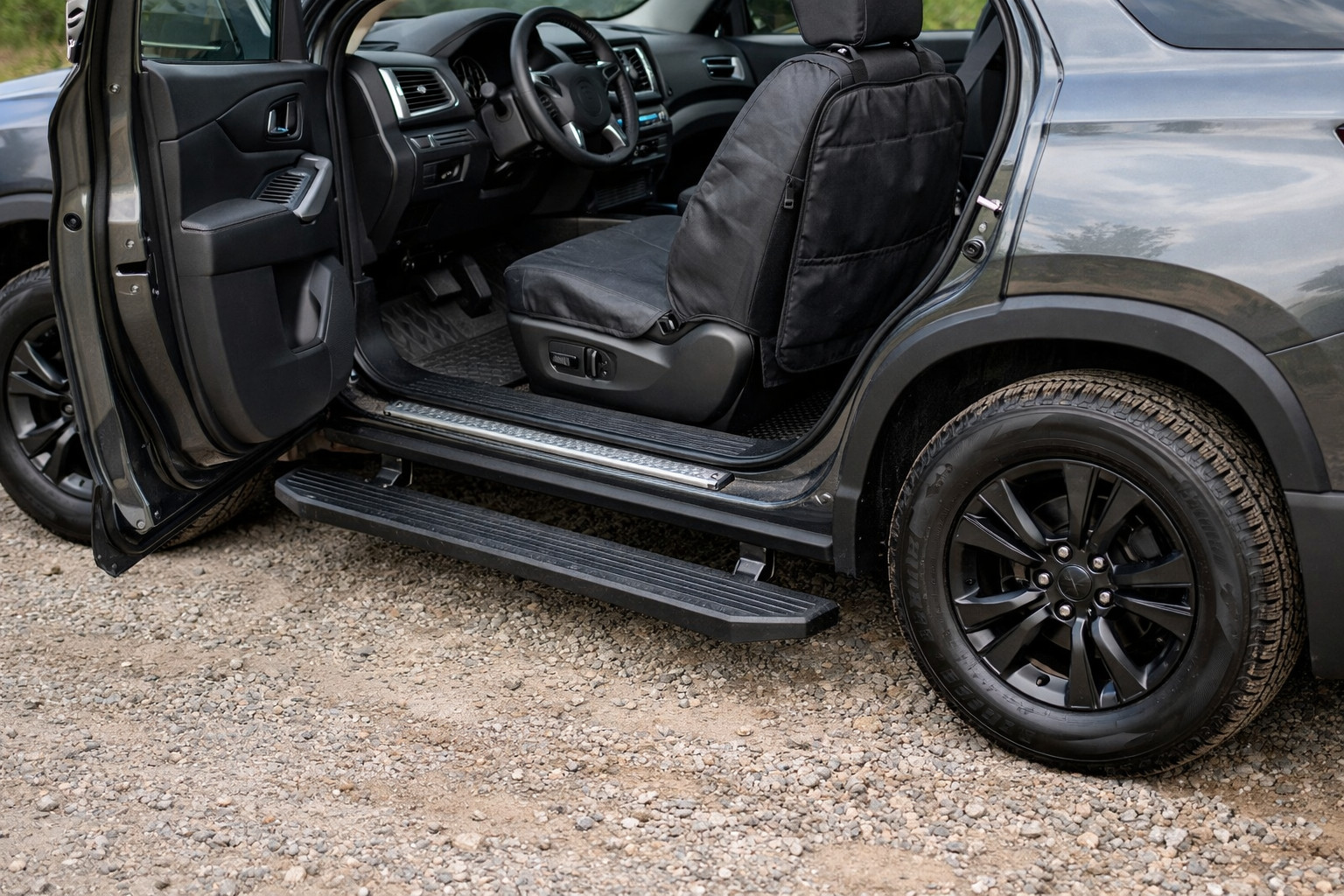
This is where window deflectors, seat covers for the look, decorative trims, extra ambient lighting, and expensive larger-diameter wheels come in. They can be appealing, but for daily city driving they rarely provide measurable benefit. If the basics aren’t covered, it’s simply too early to spend money on this.
Mats and trunk organization sit on the line between comfort and practicality. In a dry climate you can safely postpone them. In wet weather, with kids, or with frequent shopping trips, it’s no longer a decorative detail—it’s real time saved on cleaning.
What people often buy for nothing
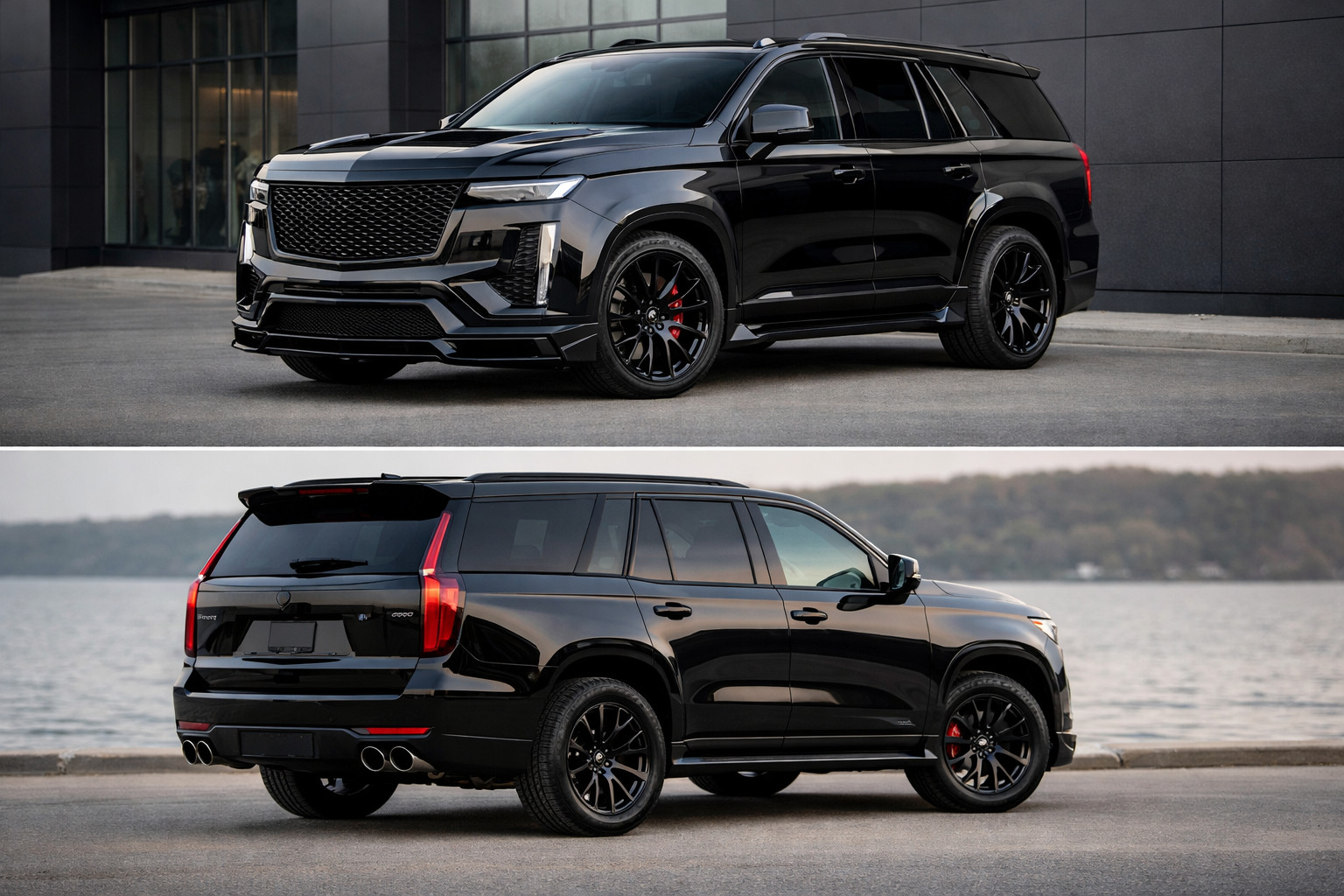
The most typical misstep is big wheels and low-profile tires for a daily city car. In photos it looks striking, but in reality it means a harsher ride, higher vulnerability to potholes and curbs, and extra costs without daily benefit.
The second mistake is a roof box or other external cargo carrier that’s carried all the time without a real need. In the city it’s noise, extra aerodynamic drag, and extra fuel consumption. The same applies to unnecessary weight in the trunk: old canisters, “for every occasion” tool sets, off-season items in season. They don’t help—they just take up space.
The third point is overpaying for features you barely use: expensive built-in navigation, an excessive multimedia setup, several identical organizers, duplicate cables and chargers in every cabin pocket. In the end, it’s less useful than one well-chosen kit.
What to install first, what to postpone, what’s optional (table)
| What to install first | What you can postpone | What isn’t essential |
|---|---|---|
| Check tires: pressure, tread, seasonality | Trunk mat if the cabin is dry and clean | Larger-diameter wheels |
| Wipers, washer fluid, clean glass, secure floor mats | Trunk organizer if you currently carry minimal items | Low-profile tires for the city |
| Phone mount, a proper charger | Seat covers if the factory upholstery is in good condition | A roof box without regular need |
| Pressure gauge, compressor or tire repair kit, a minimal emergency kit | All-weather mats in a dry climate | Keeping a constant stash of seasonal items all year |
| Dash cam if the car is often parked on the street | Small interior decor | Overpaying for navigation if your phone covers everything |
A ready upgrade plan for this scenario
- Audit what you already have in the car: remove unnecessary load, off-season items, and duplicate small stuff.
- Check the tires: pressure on cold wheels, tread wear, sidewall condition, and match to the season.
- Improve visibility: install proper wipers, top up washer fluid, check the lights, and secure the floor mats.
- Add basic city functionality: a phone mount, charger, pressure gauge, compressor or tire repair kit.
- Install a dash cam if you often park in a courtyard/on the street or drive a lot in dense traffic.
- If the cabin gets dirty quickly, add all-weather mats and trunk protection.
- Only after that decide whether you need an organizer, seat covers, or other items for your actual usage pattern.
When it makes sense to choose more expensive solutions
Paying more makes sense not when you simply want “better,” but when your scenario truly puts the item under load. A more expensive dash cam makes sense for overnight street parking, not just for short store—home trips. Higher-end mats are justified where water, salt, and dirt are brought into the cabin every day. If you want to double-check the selection logic, take a look at useful accessories, the article about rubber floor mats, and the breakdown of which organizer won’t annoy you every day.
In all other cases, a more expensive option often just means better materials or a more complex design, not more day-to-day usefulness. For the city, almost always the winner is not the priciest kit, but the right minimum without extra clutter.
From a customer’s experience: a typical request sounds like “I need something useful for the car,” but after a short conversation it turns out the main problem isn’t the lack of accessories—it’s old wipers, chaos in the trunk, and a phone that constantly slides around the cabin. In a real scenario, a simple set worked best: new wipers, a convenient charger, a dash cam, and one trunk organizer instead of bags of small items. After that, the car became more convenient every day, without the feeling that you just threw more stuff into it.
Conclusion
For daily city driving, what you really need aren’t the most expensive or the most noticeable upgrades, but the ones that reduce risk, chaos, and small inconveniences every day. So the right order is simple: tires and visibility first, then functional items like a charger, pressure gauge, and dash cam, and then interior protection and organization.
In short, don’t turn your daily car into a warehouse or an accessory showcase. It’s better to build a compact kit for your route, weather, and parking style. This material is based on real selection experience, practical work, and real use cases, so the main advice is simple: install what works in your exact routine, not what just looks good in a catalog.
How it works
- Clear out the extra items from the car First, go through the cabin and trunk: remove out-of-season items, duplicate small things, and anything you have not used for a long time. This will free up space and help you understand what you truly need.
- Check the tires Assess the pressure on cold tires, tread wear, the condition of the sidewalls, and whether they match the season. If the tread is already close to the 1.6 mm limit, replacing the tires should take priority over accessories.
- Update visibility Install fresh wipers, top up proper windshield washer fluid, clean the windshield, and check the lights. Also make sure the floor mats do not slide under the pedals, because this directly affects safety.
- Add basic city essentials Install a reliable phone holder, a proper charger, a tire pressure gauge, and a compact compressor or repair kit. This is a set that really saves time and comes in handy not just once a year, but in everyday driving.
- Add protection against city dirt If the cabin gets dirty quickly, add all-weather floor mats and trunk protection. For a family or work car, a trunk organizer also makes sense so items do not roll around in the trunk.
- Put off impractical upgrades Do not rush into large wheels, low-profile tires, a roof box without a need, unnecessary decorative add-ons, or overpaying for features you almost never use. In city driving, they often add expenses but bring no everyday benefit.
Pros and cons
Tyres and tire pressure monitoring provide the biggest practical benefit: better grip, predictability on potholes and in the rain, as well as less wear. For city driving, this matters more than any decorative upgrade.
Fresh wipers, a proper washer fluid and a clean windshield really improve visibility in dirt, snow and dark hours. This is especially useful for daily trips, not just in dry weather.
A phone holder and a proper charger reduce distractions and eliminate cable clutter in the cabin. It’s a convenient solution for those who constantly use navigation or a phone on the road.
A pressure gauge, a compact compressor or a repair kit cover typical city problems without extra gear in the trunk. Such a set is needed not once a year, but in regular minor situations.
All-weather floor mats, a trunk mat and one organizer noticeably reduce dirt and clutter in the cabin. They are especially useful if you have children, pets or frequent shopping trips.
Large wheels and low-profile tires on a daily city car look impressive, but make the ride harsher and increase the risk of damage from potholes and curbs. At the same time, they offer little everyday benefit.
A roof box or a permanent exterior cargo carrier in the city creates noise, extra air resistance and additional fuel consumption. If you don’t have a regular need for it, it’s just extra weight and inconvenience.
Extra cargo in the trunk — old canisters, tools for every occasion, off-season items — doesn’t help in everyday driving. It only takes up space and turns the car into a storage room.
Overpaying for expensive built-in systems, duplicate cables or several identical organizers doesn’t solve daily city tasks. The material explicitly states that there is less benefit from this than from one well-chosen set.