26.06.2026
685
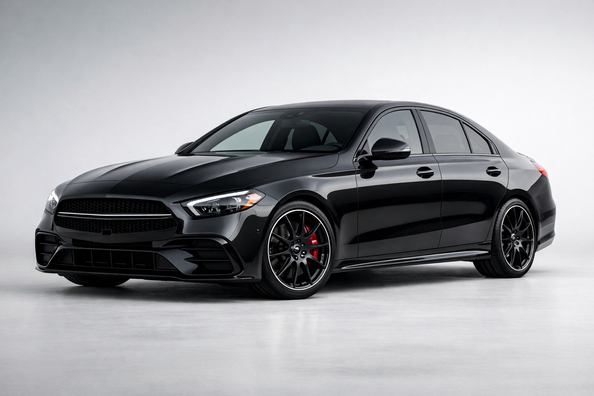
If you look at Mercedes primarily as a platform for upgrades, there are realistically five body styles that make sense today: C-Class, E-Class, GLC, GLE, and G-Class. C-Class and GLC strike the best balance between size, weight, dynamics, and access to strong versions; E-Class is more about everyday comfort; GLE is about family duties, luggage, and long trips; G-Class is about status, an expensive build, and real off-road hardware.
The key difference between them isn’t the badge—it’s the use case. The C-Class has a modest trunk, the GLC isn’t a cargo-capacity champ, the GLE gets expensive fast with options, and the G-Class is almost never a rational purchase. So below—no fluff: which generations to consider, which engines are genuinely interesting, and where tuning makes sense versus where it’s just spending for looks.
In the Mercedes lineup, these five body styles cover almost every real-world need. C-Class is a compact premium sedan for city and highway, E-Class is a step toward more silence and mature comfort, GLC is the most versatile crossover, GLE is a large family vehicle with extra space, and G-Class is its own segment for those who want not a compromise but character. For tuning, the healthiest logic is simple: the closer the car is to an everyday scenario, the more sense practical accessories make—rather than an aggressive body kit.
| Body | Generations that are most interesting right now | Why |
|---|---|---|
| C-Class | W205 2014-2021, W206 from 2021 | A solid base for a city build, strong AMG lineup, moderate dimensions |
| E-Class | W213 2016-2023, W214 from 2023 | Focus on comfort, quietness, and long-distance driving |
| GLC | X253 2015-2022, X254 from 2022 | The most practical mid-size Mercedes format for daily use |
| GLE | W166 2015-2019, W167 from 2018 | A large family body with a big trunk and tow-capable versions |
| G-Class | Classic W463 1990-2018, modern body from 2018 | Expensive, but the most expressive option for an off-road or image build |
If we’re talking about an active accessories market and a sensible budget, the main interest today is in later generations. They’re not outdated yet, have strong factory versions, and don’t demand a hobbyist approach like very old bodies do.
The best Mercedes for tuning are valuable because even the base versions aren’t empty. In the C-Class and GLC, a key reference point is the 2.0-liter turbo engine with 255 hp paired with a 9-speed automatic. In the E-Class and GLE, the sweet spot is the 3.0-liter turbo inline-six: E 450 has 375 hp, and GLE 450 also has 375 hp. Above that are AMG versions, where what matters is not just the power figure, but whether you’re ready to live with a higher price, higher consumption, and greater complexity.
| Body | Real-world engines and power | Dimensions | Trunk | Ground clearance or feature |
|---|---|---|---|---|
| C-Class Sedan | C 300 2.0 l turbo, 255 hp; AMG C 43 416 hp; AMG C 63 S E Performance 671 hp | 4719×1890×1438 mm, wheelbase 2865 mm | 329 l | Published ground clearance depends on the version |
| E-Class Sedan | E 450 3.0 l turbo, 375 hp; AMG E 53 Hybrid 3.0 l, 430-450 kW depending on package | 4950×1880×1471 mm, wheelbase 2962 mm | 360 l | Ground clearance isn’t listed on public pages for all versions |
| GLC | GLC 300 2.0 l turbo, 255 hp; AMG GLC 63 S E Performance 671 hp | 4719×2075×1641 mm, wheelbase 2873 mm | 620-1594 l | For GLC 43, 151-157 mm is officially stated |
| GLE | GLE 450 3.0 l turbo, 375 hp; AMG GLE 53 429 hp; GLE 580 4.0 l V8, 510 hp | 4935×2156×1796 mm, wheelbase 2995 mm | 943-2121 l | Towing up to 3493 kg |
| G-Class | G 550 4.0 l V8, 443 hp; AMG G 63 4.0 l V8, 577 hp | 4826×2187×1973 mm, wheelbase 2891 mm | 1059 l | Frame, low-range gearing, three locking differentials |
There’s a nuance with Mercedes ground clearance: the brand publishes this spec inconsistently. For some current bodies you have to verify it separately by version, so for choosing it’s more important to look not at a single number but at the real architecture: on the G-Class it’s a frame and lockers, on the GLC and GLE it’s road-oriented versatility rather than heavy off-roading.
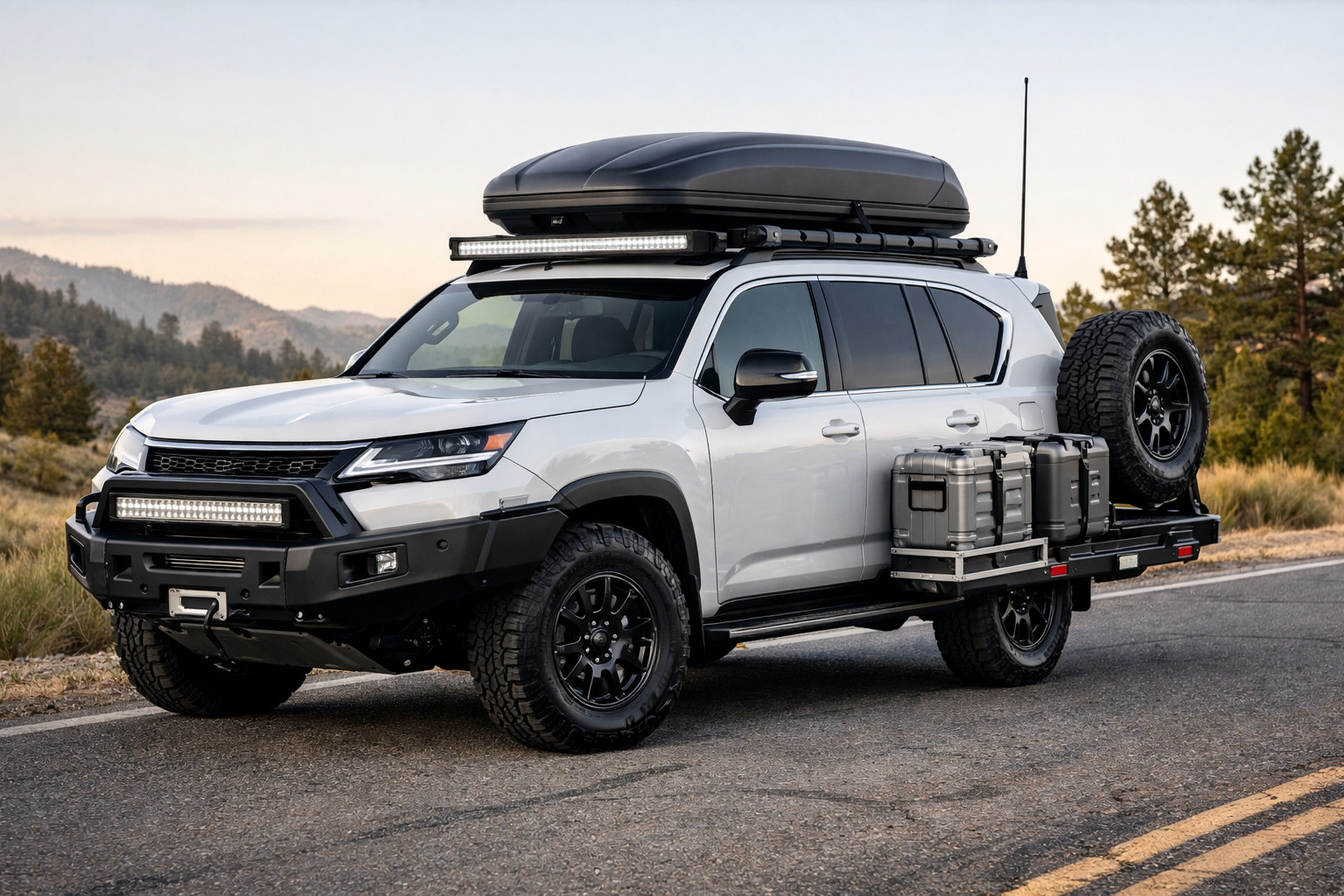
C-Class and E-Class are the pick when you want a sedan with proper handling and without the excess mass of a crossover. GLC is the most convenient compromise: it’s not bulky yet, but it already offers a large trunk. GLE fits those who truly need space, a higher roofline, load capacity headroom, and towing muscle. G-Class stands apart: it’s not just a big body, but a different chassis philosophy where off-road hardware is built in from the factory.
For everyday comfort, E-Class and GLE look best: a quieter cabin, a softer response to bumps, less fatigue on the road. GLC also feels mature, but cargo space isn’t class-leading. C-Class attracts with design and dynamics, but comfort feedback is mixed. G-Class surprises by riding more civilized than you’d expect from a body-on-frame vehicle, yet it’s still not about saving money or effortless ownership.
C-Class suits those who drive mostly in the city or as a couple and want a compact Mercedes without the feel of a big car. E-Class is for those who do a lot of highway miles. GLC is the smartest choice as a one-car solution for all roles. GLE is worth it for families, long trips, and anyone who truly uses a large trunk. G-Class isn’t for someone who simply wants a convenient premium daily without high costs.
| Body | Pros | Cons |
|---|---|---|
| C-Class | Compact size, strong AMG versions, a convenient format for the city | 329 l trunk, comfort isn’t its strongest suit |
| E-Class | Quietness, comfort, a strong engine lineup for daily use and highway | Touch controls take getting used to, rear row isn’t class-leading |
| GLC | A good balance of size, handling, and practicality | Trunk isn’t the best in class, fuel efficiency doesn’t impress |
| GLE | Large trunk, towing pull, family versatility | Price rises quickly with options, third row is tight |
| G-Class | The best off-road base, strong image, high attention liquidity | Very expensive, heavy, and costly to run |
If you boil it down to one line: C-Class and GLC are the best bases for sensible tuning, E-Class is for a comfort-focused daily build, GLE is for practicality with extra space, and G-Class is for those who consciously are ready to pay for effect and capability.
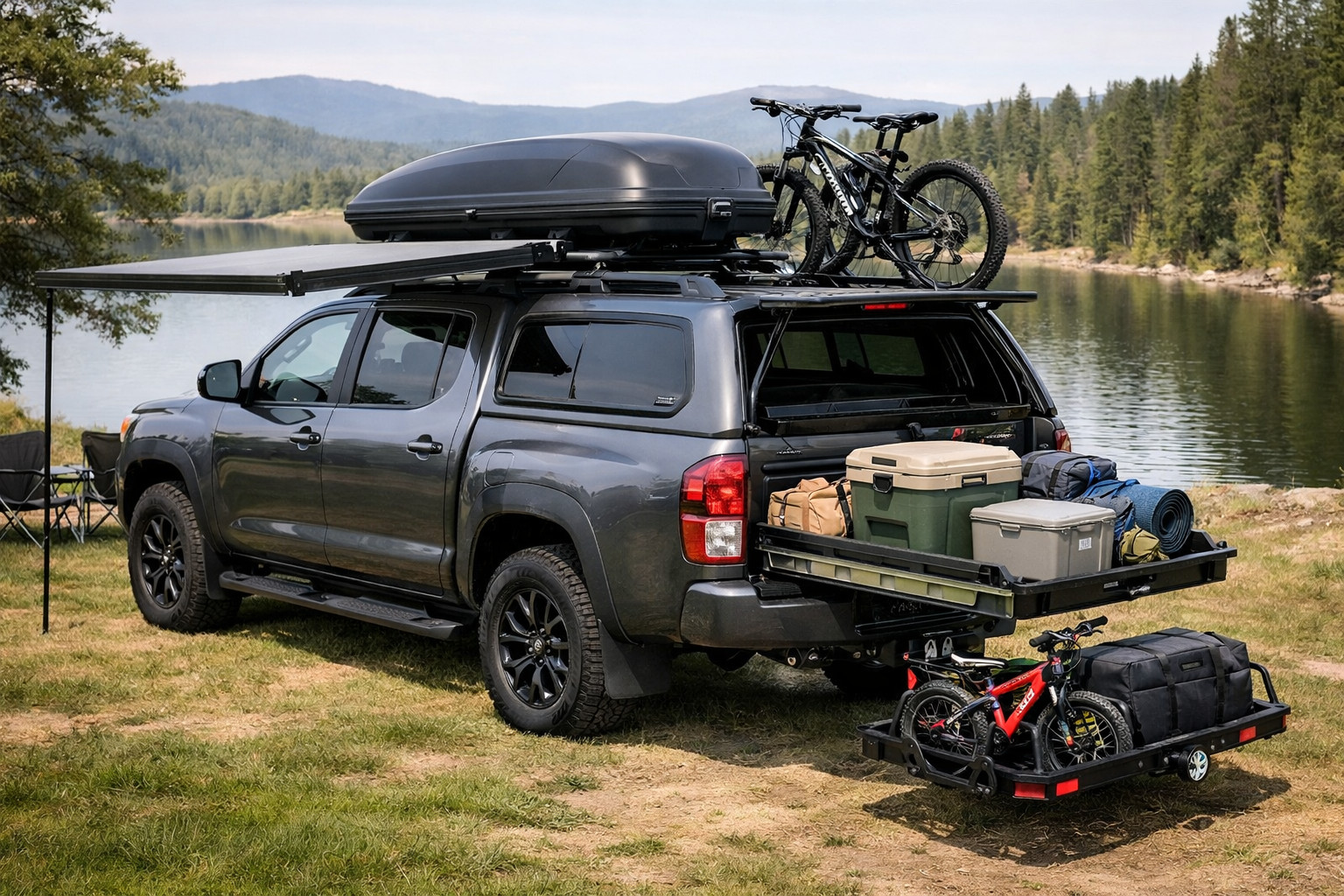
With Mercedes, the best results come from logical tuning rather than showy mods. For C-Class and E-Class, that’s usually restrained exterior styling and interior protection; for GLC and GLE—cargo solutions, side steps, mud flaps, floor mats; for G-Class—more expensive off-road or image-oriented upgrades. If the car is used daily, it’s best to start with what reduces wear and adds convenience.
If you want a Mercedes that’s truly worth upgrading without unnecessary hype, the best start is C-Class or GLC. E-Class is strong as a comfort-focused daily driver, GLE as a family all-rounder, and G-Class only makes sense when you’re sure you want exactly that format and understand its costs. This material is based on real selection experience, practice, and real use cases—not abstract love for a badge.
| ✔ | C-Class and GLC look like the best bases for upgrades: they combine moderate dimensions, solid dynamics, and access to strong versions. This makes them convenient both for the city and for everyday use. |
| ✔ | E-Class is a good fit for those who drive a lot on the highway and value quietness and comfort. In the material, it is directly highlighted as a strong option for calm daily use. |
| ✔ | GLE has a large trunk, plenty of space, and towing capacity, so it is more practical than smaller body types for family use and long trips. It is one of the few Mercedes models in the selection where upgrades can be truly practical, not just cosmetic. |
| ✔ | G-Class has the strongest off-road foundation: a frame, low-range gearing, and three differential locks. If you need a project with real off-road capability, not just a large crossover, this is a major advantage. |
| ✘ | C-Class has a modest 329 l trunk, and comfort is not called one of its strong points. For family use or frequent long-distance driving, this can already be a limitation. |
| ✘ | GLC is not a record holder in cargo capacity and does not impress with fuel efficiency. So as a versatile car it is successful, but without clear strengths in these two practical areas. |
| ✘ | GLE gets expensive quickly because of options, and this directly affects the project budget. Also, its third row is cramped, so not all the space in the body is used as usefully as it may seem. |
| ✘ | G-Class is almost never a rational purchase: it is very expensive, heavy, and costly to run. Its purpose lies in its character and capabilities, not in practical everyday use. |
Shipping to EU
Wholesale and retail
Own warehouse
Опис продукту
Подарунки не надаються при оформленні покупки у кредит під 0,01% або при покупці частинами.