23.06.2026
236
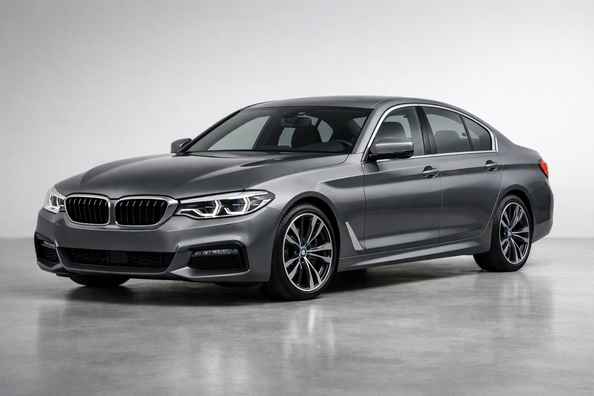

BMW 5 Series G30/G31 is that “5” that no longer tries to constantly prove its sportiness. It’s quiet, composed, very mature on the highway, and comfortable day to day. That’s exactly why it’s often chosen not for a 10-minute thrill, but for its ability to calmly and quickly cover long distances, carry a family, or do the job of a proper business sedan or wagon without unnecessary flash.
This generation was produced from 2017 to 2023: G30 is the sedan, G31 is the Touring wagon. After the 2020/2021 facelift, the model received more modern electronics and, in some versions, a 48-volt mild hybrid. But on the used market it’s important to look not only at the engine, but also at the origin market, equipment level, service history, and the status of recall campaigns.
The G30/G31 sits in the upper part of the mid-size executive class. It’s a car for those who need quietness, stability at speed, a spacious cabin, and a solid reserve of pull without stepping up into the large flagship segment. The sedan is more about business-like presence, while the Touring offers the same ride quality but with a genuinely useful cargo area.
Who this model suits: those who do a lot of highway driving, value quality sound insulation, want a quick but not nervous car, and are ready for more complex electronics. Who it doesn’t really suit: those who expect the old BMW sharpness from a “5”, want high ground clearance, or are looking for the simplest and cheapest car to own.
G30/G31 is the seventh generation of the BMW 5 Series. In 2017, the G30 sedan and G31 wagon launched, and in 2020/2021 the model received an update. Along with cosmetic changes, BMW upgraded the infotainment, digital instrument cluster, connectivity systems, and some powertrains.
It’s in this generation that the “5” finally shifted its focus toward comfort and maturity. It still handles well, but it’s no longer as sharp in feel as older BMWs. For many buyers that’s a plus: the car became calmer, quieter, and more logical in daily use.
The engine lineup depends on the market and model year. Most commonly you’ll find an 8-speed automatic; drivetrain can be rear-wheel drive or xDrive AWD. An important nuance: the same trim name can have different figures depending on the country, so below are not “average numbers” but specific real-world versions.
| Version | Engine | Power | Torque | Transmission |
|---|---|---|---|---|
| 520i | 2.0 L petrol | 135 kW | 290 N·m | 8-speed automatic, mild hybrid |
| 530i | 2.0 L petrol | 185 kW | 350 N·m | 8-speed automatic |
| 540i / 540i xDrive | 3.0 L petrol | 250 kW | 450 N·m | 8-speed automatic |
| 530e / 530e xDrive | plug-in hybrid | 215 kW combined | depends on mode | 8-speed automatic |
| 520d | 2.0 L diesel | 140 kW | 400 N·m | 6-speed manual or 8-speed automatic |
| 530d xDrive | 3.0 L diesel | 195-210 kW | 620-650 N·m | 8-speed automatic |
Practically speaking, the 530i is one of the smartest petrol choices: already quick, but without the extra weight and complexity of the higher versions. The 540i is a genuinely strong highway car. The 530d is very convincing in terms of pulling power, but used diesels in particular require a more careful check because of electronics, EGR, the particulate filter, and overall service history. The 530e makes sense when you have somewhere to charge and most trips are urban.
In terms of size, the G30/G31 is a full-fledged executive car. A 2,975 mm wheelbase provides good cabin space, but the low ground clearance immediately reminds you: this isn’t a car for curbs, battered courtyards, and winter indifference to road surfaces. The chassis uses a double-wishbone front and five-link rear suspension, so the car holds speed well and doesn’t fall apart over small imperfections.
| Parameter | G30 sedan | G31 Touring |
|---|---|---|
| Length | 4 963 mm | 4 943 mm |
| Width | 1 868 mm | 1 868 mm |
| Height | 1 479 mm | 1 498 mm |
| Wheelbase | 2 975 mm | 2 975 mm |
| Ground clearance | 144 mm | 140 mm |
| Trunk | 530 L | 570-1 700 L |
| Fuel tank | 68 L | 68 L |
| Turning circle | 12.0 m | 12.05-12.22 m |
The practical numbers are solid too: permissible braked trailer weight is up to 2,000 kg; unbraked is 750 kg; roof load is 100 kg. For a wagon, that’s more than just a “big trunk”—it’s a car you can realistically use for long family trips or an active lifestyle.
The strong point of the G30/G31 is the cabin feel. The car is quiet, the seats are comfortable, there’s no nervousness at high speed, and the overall impression is composed and substantial. It’s one of those cars where several hundred kilometers go by more calmly than you’d expect.
After the update came a 12.3-inch central display, BMW Live Cockpit Professional, iDrive 7, standard Apple CarPlay, Android Auto, and remote updates. The Touring adds practicality: 40:20:40 folding backrests and a power tailgate are genuinely useful. But there are also small everyday complaints: there isn’t enough space for small items everywhere, and some controls aren’t always the most intuitive.
In daily driving, the G30/G31 is pleasant precisely because it doesn’t wear you out. The petrol 530i in mixed use can be quite reasonable for its class, while the 540i uses a bit more but pays it back with extra pulling reserve. European diesels look very economical on paper, but for a used car what matters more than the spec-sheet number is the condition of the fuel system, exhaust aftertreatment, and the service discipline of previous owners.
Practical nuances: 140-144 mm of ground clearance requires care in winter and in parking lots, and the rich electronics mean a higher cost of mistakes when buying. For 2020-2022 cars it’s worth checking the VIN separately for recall campaigns. If you want a simple ownership experience without surprises, it’s better to choose a less complicated spec and not chase a diesel solely for fuel consumption.
As a daily car, the G30/G31 is strong exactly where you expect: comfort, quietness, a mature ride, a good cabin, and strong engines. But this is a newer type of BMW—less edgy in steering feel and more dependent on electronics and proper servicing.
| Area | Pros | Cons |
|---|---|---|
| Driving | Quiet and stable on the highway, smooth automatic | Less of the old BMW sharpness |
| Engines | 530i, 540i and 530d deliver a noticeable reserve of pull | Diesels are more sensitive to the condition of exhaust aftertreatment systems |
| Practicality | 530 L in the sedan, up to 1,700 L in the Touring | Ground clearance is low for bad roads |
| Equipment | Strong infotainment and lots of electronics | Options are expensive; packages can easily inflate the budget |
| Everyday comfort | Comfortable seats, pleasant on long trips | Not enough storage space for small items everywhere |
From an owner’s perspective the conclusion is simple: it’s a very successful car if you need a quick and calm executive-class vehicle. But if you want cheap upkeep, maximum simplicity, or the old mechanical “liveliness,” the G30/G31 may miss your expectations.
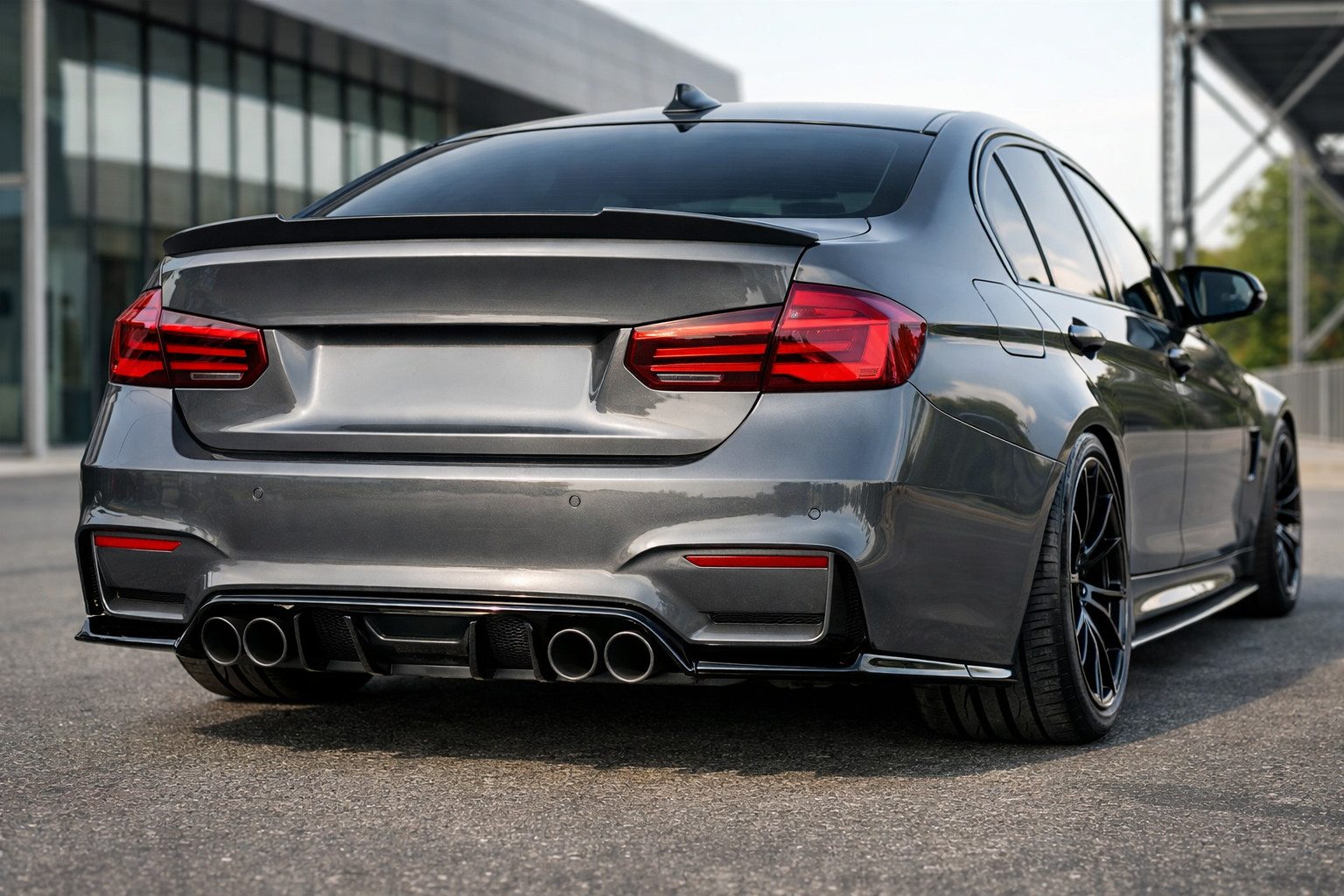
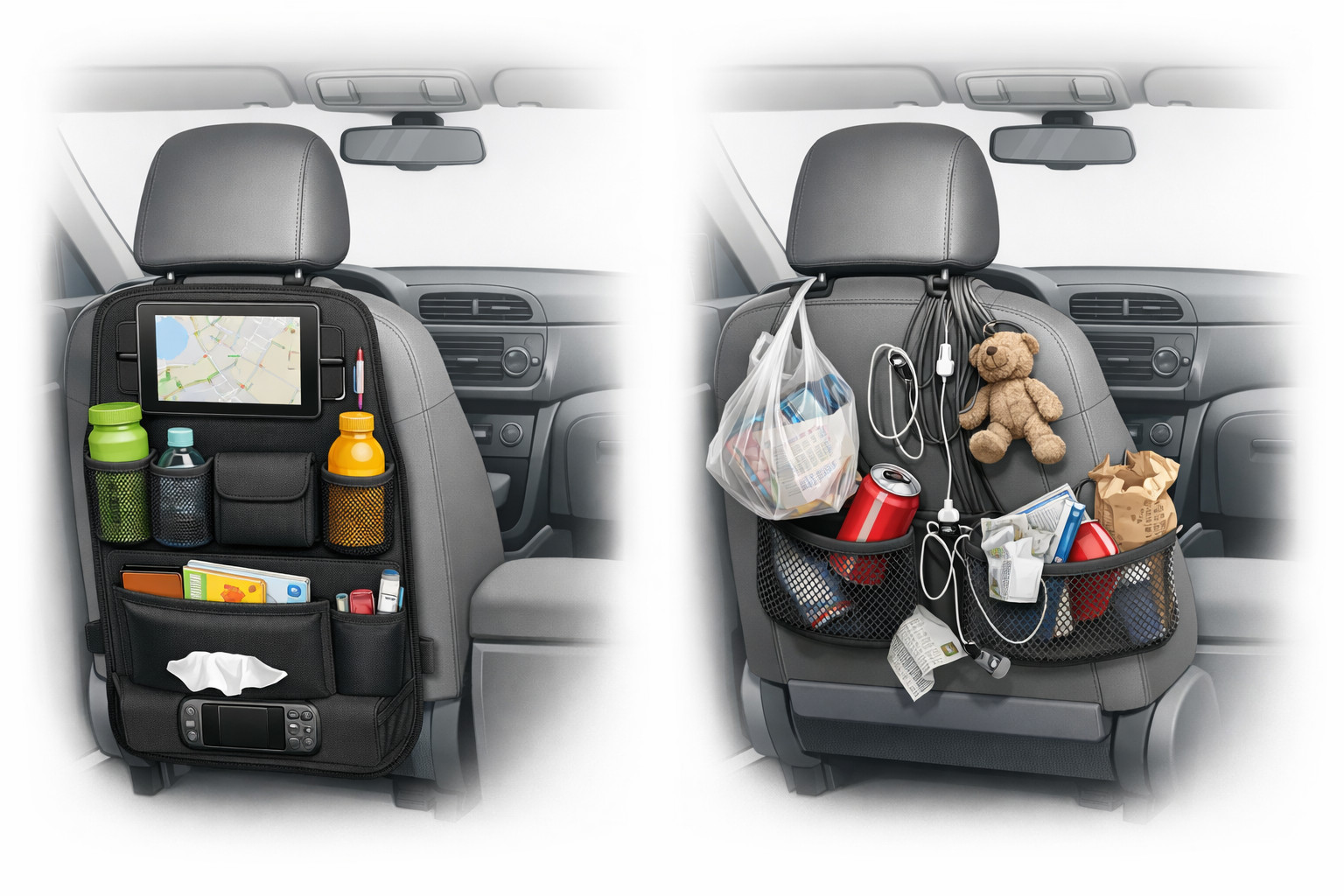
For this model, the smartest tuning is practical rather than showy. With low ground clearance, an expensive interior, and a large cargo area, protection, cleanliness, and everyday convenience make more sense here than random decorative pieces. This is especially relevant for cars that drive in the city every day, carry kids and stuff, or spend a lot of time on the highway.
If you want exterior changes, it’s worth building on the car’s restrained style: neat protective elements, interior solutions, and care accessories look more appropriate here than aggressive decor that only highlights the cost of parts if repairs are needed.
The BMW 5 Series G30/G31 2017-2023 is a strong option for those who need a quiet, spacious, and quick executive-class car without unnecessary theatrics. It shines best on the highway, in daily driving, and as a long-distance family cruiser in the Touring version. But when buying used, you need to take a sober look at the engine, electronics, service history, and recall campaigns. This material is based on real selection experience, practice, and real usage scenarios, so the main advice is simple: choose not the “loudest” version, but the one that matches your routes, budget, and readiness to maintain a complex modern car.
| ✔ | Quiet and stable on the highway, so it’s well suited for frequent long trips and doesn’t tire the driver out. The automatic transmission works smoothly, and the overall feel of the car is composed and mature. |
| ✔ | There are solid powertrain options with a good reserve of torque: 530i, 540i and 530d. This lets you choose either a moderate petrol version or a very powerful highway-oriented trim. |
| ✔ | The cabin is comfortable on long journeys: supportive seats, good sound insulation, and calm behavior at high speeds. After the update, modern multimedia features appeared, including CarPlay, Android Auto and iDrive 7. |
| ✔ | The Touring wagon is very practical: a 570–1700 l trunk, 40:20:40 folding rear seats and an electric tailgate. For family trips or hauling cargo, this is a truly useful format. |
| ✔ | The chassis and dimensions fit the business class segment well: the long wheelbase provides cabin space, while the suspension holds speed better and smooths out minor bumps. |
| ✘ | Low ground clearance of 140–144 mm makes the car inconvenient on poor roads, in winter, and in yards with high curbs. It’s not the best choice if the route often includes broken pavement. |
| ✘ | This model is already less sharp to drive than older BMWs. If you’re buying a 5 Series specifically for driving feel, the G30/G31 may seem too calm. |
| ✘ | Used diesel cars require especially careful inspection: the condition of the EGR, particulate filter, fuel system, and service history are important. Fuel savings here can easily be outweighed by maintenance risks. |
| ✘ | Rich electronics and options can significantly inflate the purchase budget and future repair costs. For 2020–2022 cars, it’s also recommended to check the VIN separately for recall campaigns. |
| ✘ | There isn’t enough storage space for small items throughout the cabin, and some controls aren’t very intuitive. In everyday use, it’s a minor issue, but still noticeable. |
Shipping to EU
Wholesale and retail
Own warehouse
Опис продукту
Подарунки не надаються при оформленні покупки у кредит під 0,01% або при покупці частинами.