 Author: Radomskyi Maksym Vasyliovych
This upgrade plan is for a Mercedes GLS X167 owner who needs to solve two practical tasks: less dirt in the door-sill area after wet roads, and easier entry for kids, shorter passengers, or older people. It’s easy to make the wrong choice here, because side cleanliness and ease of entry are handled by different parts, and “buying for looks” often doesn’t deliver the result you expect.
On the GLS X167, the key is not to mix up the selection logic. For this model there are separate front mud flaps for vehicles with running boards and without them, and the running boards themselves reduce ground clearance. So the correct scenario is: first decide whether you really need side steps for entry, then choose compatible front mud flaps, and add the rear ones later depending on how you use the car.
What this upgrade should accomplish
If your main complaint is that the front wheels throw dirt onto the lower part of the doors and the sill area, what works best is not decorative tuning but proper splash control. For the GLS X167, that primarily means front mud flaps, because the main stream of water and abrasive hits the side from the front.
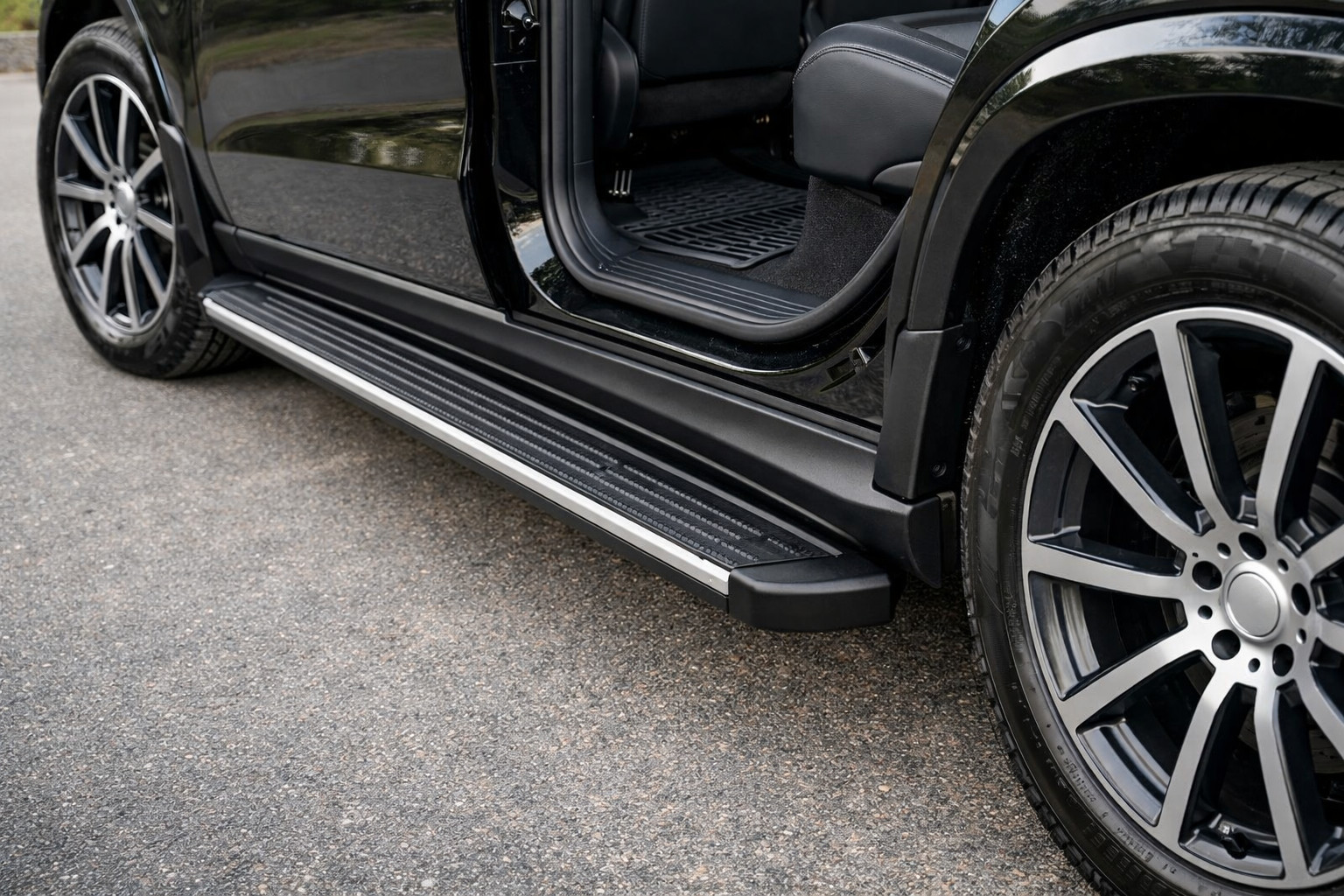
If the second task is easier entry, then you need more than cosmetics—you need a proper foot support. Side steps really help here, but not equally for everyone: for an average-height driver they may be secondary, while for a family car with kids or elderly passengers they’re very relevant. An important nuance: any running boards reduce ground clearance, so you need to be more careful around high curbs and breakover points on ramps/driveways.
What to do first
Top priority isn’t the steps themselves—it’s the correct configuration. If the car already has running boards or you’re sure you’ll install them, choose front mud flaps specifically for the version with running boards right away. If the car is currently without them and you still haven’t decided whether you need them at all, it’s more logical to first solve the cleanliness issue with front mud flaps for the factory configuration.
The second step depends on your passengers. If kids, shorter people, or older relatives ride in the car regularly, side steps move from “nice to have” to “must have.” If you mostly drive alone or with adult passengers and the only issue is dirt, there’s no need to rush running boards or pay for something that doesn’t provide the main cleanliness effect.
Upgrade: why it’s needed, who benefits (table)
| Upgrade | Why it’s needed | Who really benefits |
|---|---|---|
| Front mud flaps | Reduce the flow of water, dirt, and small stones onto the lower part of the doors and the sill area | Anyone who often drives in rain, in winter, or on dirty asphalt |
| Side steps | Provide a foot support when getting in and out | Families with children, shorter passengers, older people, owners who prefer a higher step-in height |
| Rear mud flaps | Add protection for the rear area and reduce dirt thrown behind | Those who drive a lot on wet highways, in winter, or through slush mixed with sand |
| Wider or illuminated running boards | Can make the step more comfortable or simply change the vehicle’s visual perception | Those who truly need more width; not for people who only want cleaner sides |
| Power-deployable solutions | Provide a lower step-in point without a permanently protruding element | Only if entry is genuinely difficult and you’re ready for a more expensive purchase and more careful fitment |
DD Tuning expert comment: the most common GLS X167 mistake is buying steps based on photos first, and only then discovering that the mud flaps need a different version. The second typical mistake is choosing narrow decorative running boards while expecting real help with entry. Before ordering, always verify the VIN, the presence of running boards, and the body package—especially if the car has the AMG package.
What makes sense to add as a second stage
The second stage is usually rear mud flaps. They don’t produce as noticeable an effect on the cleanliness of the front doors as the front ones, but they make sense if the GLS often sees snow slush, wet highways, or dirt access roads. In other words, it’s not a mandatory starting point—it’s an upgrade based on operating conditions.
Only after installing the front mud flaps and, if needed, the side steps can you clearly see whether it makes sense to go further. If the side stays noticeably cleaner and entry feels fine, there’s no reason to inflate the budget. If the rear still gets heavily sprayed, then rear mud flaps are a logical continuation—not an impulse buy.
What’s more about comfort or appearance
Everything related to lighting, decorative trims, an eye-catching step shape, or a very narrow “sporty” profile more often serves looks than the scenario. For easy entry, what matters isn’t the light elements but the usable platform width, mounting rigidity, and an intuitive position under your foot.
More expensive deployable solutions only make sense if you want to combine a lower step with a less noticeable side silhouette. But here you can’t follow the “everything fits X167” principle: you must check the exact trim, because different running board types and different body versions can vary in compatibility. Also remember the everyday detail: step only on the functional ribbed area, not on the smooth edge.
What people often buy for nothing
First—running boards themselves, when what the person really needed was simply less dirt on the sills. If entry doesn’t bother you and it’s the film of grime on the side that annoys you, you should start with mud flaps, not with an expensive set of steps.
Second—overpaying for visual effect: lighting, very expensive decorative versions, or electrics that don’t change your scenario. Third—the wrong mud flap version: for the GLS X167, the configuration with running boards and without them is different, so selection mistakes are very common. Another frequent misstep is choosing an overly cheap set of steps without understanding the installation, and then paying extra for fitting and adjustment.
What to install first, what to postpone, what isn’t mandatory (table)
| What to install first | What can be postponed | What isn’t mandatory |
|---|---|---|
| Front mud flaps in the correct version for your configuration | Rear mud flaps, if your driving is mostly urban and dry | Running board lighting |
| Side steps, if entry is genuinely inconvenient for your family or passengers | Switching to a more expensive type of steps, if the basic function is already covered | Power-deployable steps just for the effect |
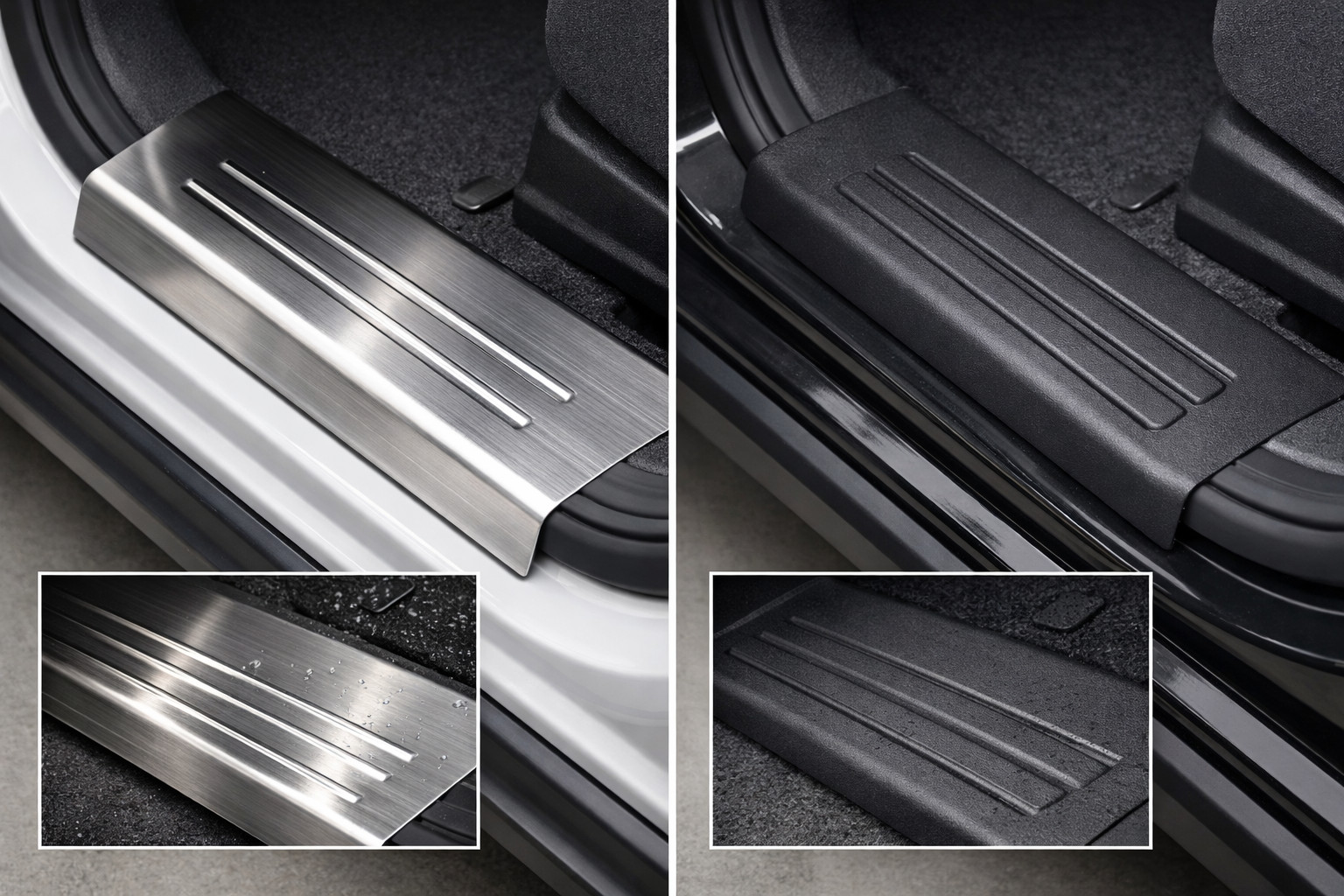
| Compatibility check by VIN and body package | Decorative sill trims | Any narrow solutions that don’t provide proper foot support |
A ready upgrade plan for this scenario
- Check whether the car has factory or already installed running boards, and verify compatibility by VIN.
- Identify the main pain point: if it’s dirt on the side—start with front mud flaps; if it’s entry for kids and older passengers—plan side steps right away.
- If side steps are definitely going in, choose front mud flaps for the configuration with running boards—not “something similar.”
- After that, evaluate whether entry comfort is sufficient and whether the reduced ground clearance interferes with your daily routes.
- If the car often drives on wet highways or in winter, add rear mud flaps as the second stage.
- Anything decorative—only after side cleanliness, compatibility, and real step comfort are solved.
When it makes sense to choose more expensive solutions
A more expensive scenario is justified not when you want it to “look richer,” but when you need better geometry, cleaner execution, and a lower chance of missing compatibility. If you want the OEM logic for entry and appearance, it’s worth looking at original side steps. If the priority is a cleaner side without experimenting with shape, it’s logical to start with original mud flaps. And if you’re still comparing configurations and want to understand what running board options exist for the model, see running boards for GLS X167.
This is especially relevant for cars with the AMG package, non-standard wheels, or a scenario where you often have to approach high curbs. In such cases, a mistake with a cheap kit costs more than choosing a compatible solution from the start. An expensive option makes sense when it truly reduces the risk of rework—not when it simply adds flashy details.
From a customer’s experience: a GLS X167 owner initially wanted to install only running boards because he was tired of washing the lower part of the doors. After clarifying the use case, we started with front mud flaps in the correct configuration, and added the steps later for the kids’ convenience. As a result, the sill area became noticeably cleaner and entry became easier—without unnecessary purchases at the beginning.
Conclusion
For the Mercedes GLS X167 in this scenario, the correct sequence is: first compatibility and front mud flaps, then side steps if easier entry is truly needed, and only then rear mud flaps depending on driving conditions. Most overpay exactly where function is confused with decor: buying steps for cleanliness, or expensive flashy solutions instead of basic splash protection.
In short, what’s useful here is the correct mud flap version, proper running boards for your scenario, and a VIN check. Everything else can be postponed. This material is based on real fitment experience, practice, and real usage scenarios—not an abstract list of “what else you can buy.”
How it works
- Check the vehicle configuration First, verify the VIN code and see whether the GLS X167 has factory-fitted or already installed running boards. For this model, mud flaps are selected differently depending on whether there are side steps or not.
- Define the main task If dirt on the lower part of the doors and side sills is the main annoyance, start with front mud flaps. If the main problem is inconvenient entry for children, shorter passengers, or elderly people, then side steps are needed.
- Install the front mud flaps in the correct version Choose front mud flaps specifically for your configuration, especially if you plan to have or already have running boards. This is the most practical step to reduce dirt on the sides after wet roads.
- Add side steps if you need a foot support Side steps make sense when entry is really inconvenient for family members, children, or older passengers. Keep in mind that any running boards reduce ground clearance, so you need to be more careful on curbs and uneven surfaces.
- Assess the need for rear mud flaps This step makes sense if the vehicle often drives on wet highways, in winter, or through slush with sand. For city use and dry conditions, they can be postponed.
- Do not overpay for decoration instead of function Lighting, narrow decorative solutions, and electric retractable options do not solve the problem of dirty side sills by themselves. Add such elements only after compatibility, splash protection, and real entry convenience are taken care of.
Pros and cons
Front mud flaps really reduce the spray of water, dirt, and small stones onto the lower part of the doors and the sill area. This is the most practical starting point if the problem is specifically dirty sides after rain or in winter.
Side steps help when getting into the GLS X167 is inconvenient for children, shorter passengers, or older people. They provide proper foot support rather than just changing the car’s appearance.
For vehicles that often drive on wet highways, in winter, or on dirty asphalt, rear mud flaps make sense as a second stage. They add protection to the rear section when the front ones are no longer enough.
The article has a clear logic for matching the trim: if there will be side steps, you need to choose the corresponding mud flaps for that version. This reduces the risk of buying an incompatible set and then having to modify it.
The authors directly recommend solving the function first and only then adding decorative elements. This approach helps avoid spending money on lighting or narrow trim pieces if you only need cleaner sills or more convenient entry.
Side steps do not improve sill cleanliness as well as mud flaps do. If the problem is only dirt on the doors and lower body, the steps may be an unnecessary expense.
Any running boards reduce ground clearance. This makes the vehicle less convenient on high curbs and on breakover angles, where you need to be more careful.
There is a risk of choosing the wrong version of the kit: for the GLS X167, configurations with and without running boards differ. Because of this, buying based on photos can end in incompatibility or extra fitting costs.
More expensive solutions such as lighting, decorative trims, or electric retractable mechanisms do not always provide practical benefit in everyday use. If you only need easier entry or cleaner sides, these options may turn out to be unnecessary.