01.07.2026
339
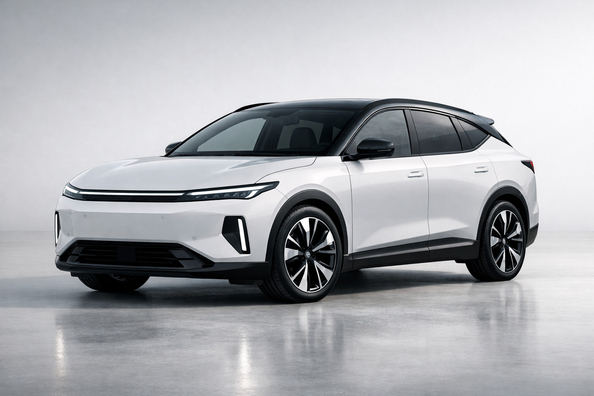

Xiaomi YU7 is a large electric crossover that the brand is using to enter not the budget segment, but a technology-rich and fast one. If you look at the YU7 in the context of 2027, the key point here is not the country of origin but the set of qualities: a large body, powerful EV versions, an emphasis on a digital environment, and a bet on striking design.
An important nuance: it’s incorrect to talk about engine displacement for the YU7, because this is not an ICE model. What you should evaluate here are the electric motors, power output, drivetrain, weight, charging infrastructure, and the cost of daily operation. It’s on these points that the model either fits—or quickly starts to annoy.
The YU7 sits where a buyer wants a crossover with a sense of novelty, but without compromising on dynamics. This is not a compact city car and not a utilitarian family vehicle in the old sense. In format, it’s a large, heavy, and technically packed machine for those who care about ample pulling power, a spacious cabin, electronics, and looks.
Who the YU7 suits: those who consciously choose an EV, have a place to charge at home or at work, aren’t afraid of a large body in the city, and want a crossover not for off-road use, but for asphalt, highways, and everyday driving. Who it doesn’t suit: those looking for the simplest possible design, a mature service network with no questions, or who don’t want to depend on a software ecosystem.
The YU7 is Xiaomi’s first-generation electric crossover. The logic behind its appearance is simple: after launching the SU7 sedan, the brand expands the lineup toward a more versatile body style, which for many markets is even more important than a sedan.
Based on available data, the YU7’s series production cycle starts in the mid-2020s, and the version commonly searched as “2027” belongs to that same first generation. There is no confirmed second generation or full model relaunch for 2027, so when choosing, it’s better to look not at a loud year in the headline but at the specific version, battery, drivetrain, and equipment list.
| Item | What matters |
|---|---|
| Generation | First generation YU7 |
| Relevance period | Mid-2020s and beyond |
| Model origin | Development of Xiaomi’s automotive lineup after the SU7 |
| What to check before buying | The exact powertrain version, battery, software equipment, and supply market |
The YU7 has no gasoline or diesel engines, so the “displacement” field doesn’t apply. The real technical language for this model is electric motor power, the number of motors, and the type of drivetrain. Based on preliminary announced production configurations, we’re talking at least about rear-wheel-drive and all-wheel-drive setups.
For everyday driving, the key difference is this: one motor means less complexity and usually lower consumption; two motors mean better launch, traction, and stability on slippery surfaces, but higher weight and more expensive tires. There is no multi-speed gearbox here: the electric drive works through a reduction gear, like most modern EVs in this class.
| Version | Powertrain | Power | Drivetrain | Comment |
|---|---|---|---|---|
| Base | 1 electric motor, displacement not applicable | 235 kW, about 320 hp | Rear | A more rational option for city and highway |
| More powerful | 2 electric motors, displacement not applicable | 220 kW + 288 kW, total 508 kW, about 691 hp | All-wheel | Focus on dynamics and grip |
| Transmission | Single-speed reduction gear | — | Depending on version | A typical solution for an electric crossover |
In terms of body, the YU7 is a large five-door crossover, and the numbers confirm it. A length of almost five meters and a 3000 mm wheelbase immediately mean two things: there should be plenty of cabin space, but maneuvering in a tight city will take getting used to. This is not a car that “disappears” in a parking lot.
From a chassis perspective, it’s important to remember the weight. Large electric crossovers feel planted on the highway and accelerate well, but they are very sensitive to tire quality, tire pressure, and wheel size. That’s why choosing wheels for the YU7 isn’t a decorative issue—it’s part of handling and suspension longevity.
| Parameter | Data |
|---|---|
| Body type | Five-door electric crossover |
| Length | 4999 mm |
| Width | 1996 mm |
| Height | 1600 mm |
| Wheelbase | 3000 mm |
| Ground clearance | Must be verified for the specific version and supply market |
| Trunk volume | Depends on the measuring method and specification; before buying, it’s better to verify the official data for the specific vehicle |
The YU7’s strong point isn’t just a big screen—it’s the car’s overall digital logic. For the buyer, that means a fast interface, deep integration of vehicle systems, over-the-air updates, and lots of customization. But there’s also a risk: if you don’t like a car being highly dependent on a software environment, the YU7 can become tiring.
In terms of comfort, expect a good amount of space, quiet motion in the city and on the highway, smooth pull without gear changes, and a supportive seating position. For safety, the main practical guideline is this: you should look not at marketing names for systems, but at the real set of driver-assistance features, camera quality, how sensors perform in rain and in winter, and whether regenerative braking calibration is sensible.
In real life, the YU7 depends most on two things: where you charge it and how often you drive in dense city traffic. If you have your own charger, the large battery and electric drive work in your favor. If charging is only public, the car can easily turn from a technological advantage into a schedule of trips between stations.
The second practical point is consumables. A heavy and powerful electric crossover puts more load on tires, and large wheels are never cheap. Add insurance, possible ties to software services, and questions about resale liquidity on the used market—and you get an honest picture: the YU7 can be a very pleasant daily driver, but only if you consciously accept its format.
| Pros | Cons |
|---|---|
| The large body and long wheelbase provide a good amount of space | The dimensions make parking and maneuvers in a tight city harder |
| Powerful EV versions promise very strong dynamics | Power and weight increase load on tires and brakes |
| Modern digital architecture and rich functionality | High dependence on a software ecosystem |
| Low center of mass is beneficial for stability at speed | Publicly confirmed specs may differ by version and market |
| Electric drive is convenient in daily driving with no pauses for shifting | Without home or workplace charging, the model’s advantages noticeably shrink |
From an owner’s perspective, the YU7’s strengths are the combination of pull, space, and a modern interface. The weaknesses are weight, the price of wheels and tires, dependence on a charging routine, and the fact that a new model always requires more careful attention to trim and equipment than long-familiar rivals.
For the YU7, the smartest start isn’t decorative trim pieces, but wheels and practical small items. A heavy electric crossover needs the right wheel specs, an appropriate load index, and a clear scenario: a separate set for summer, a separate set for winter, or a universal solution without unnecessary experimentation. This is where tuning really affects longevity, comfort, and handling.
If you’re choosing accessories without extra spending, the first items should be wheels matched to the vehicle’s real weight and your driving style, and only then visual details. For a new model, it’s important not to chase rare designs, but to verify offset, fitment parameters, and wheel load rating.
Xiaomi YU7 2027 should be considered not as “just another Chinese EV,” but as a large, technology-focused crossover for those who clearly understand their usage scenario. It suits a buyer who needs space, power, and a digital environment; it’s unlikely to appeal to someone who wants the simplest possible car without dependence on charging, large wheels, and software nuances.
The final logic of the purchase here is decided not by emotions from acceleration, but by small practical things: drivetrain version, tire costs, charging availability, exact equipment, and properly selected accessories. This material is based on real selection practice, hands-on experience with accessories, and real-world usage scenarios, so the main advice is simple: verify the specific vehicle specification and don’t tune the YU7 blindly.
| ✔ | The nearly 5-meter dimensions make parking and maneuvering in tight city streets more difficult. You’ll need to get used to the large size. |
| ✔ | High power and weight increase the load on the tires and also place higher demands on the wheels. This directly affects running costs. |
| ✔ | The model depends heavily on the software ecosystem, so for those who don’t like “digital” cars, it may quickly become tiresome. This is not a car for fans of an especially simple design. |
| ✔ | Without home or workplace charging, the benefits of the electric crossover noticeably decrease. Without convenient charging, daily use becomes less comfortable. |
| ✔ | Publicly confirmed specifications may vary depending on the version and market of supply. Before buying, you need to separately check the specific trim. |
| ✘ | The large body and 3000 mm wheelbase provide a good amount of space in the cabin. This is useful for family trips and long journeys. |
| ✘ | There are powerful electric versions, so the model is aimed not at calm driving, but at strong dynamics. For highways and quick acceleration, this is a practical advantage. |
| ✘ | A modern digital architecture with over-the-air updates and deep system integration makes the car convenient in everyday use. Many settings can be customized to suit yourself. |
| ✘ | The single-speed electric drive delivers smooth traction and comfortable driving in the city and on the highway. The low center of mass also helps stability. |
| ✘ | For those who have home or workplace charging, YU7 looks like a convenient everyday car. In such a scenario, the electric setup works in the owner’s favor. |
Shipping to EU
Wholesale and retail
Own warehouse
Опис продукту
Подарунки не надаються при оформленні покупки у кредит під 0,01% або при покупці частинами.