 Author: Radomskyi Maksym Vasyliovych
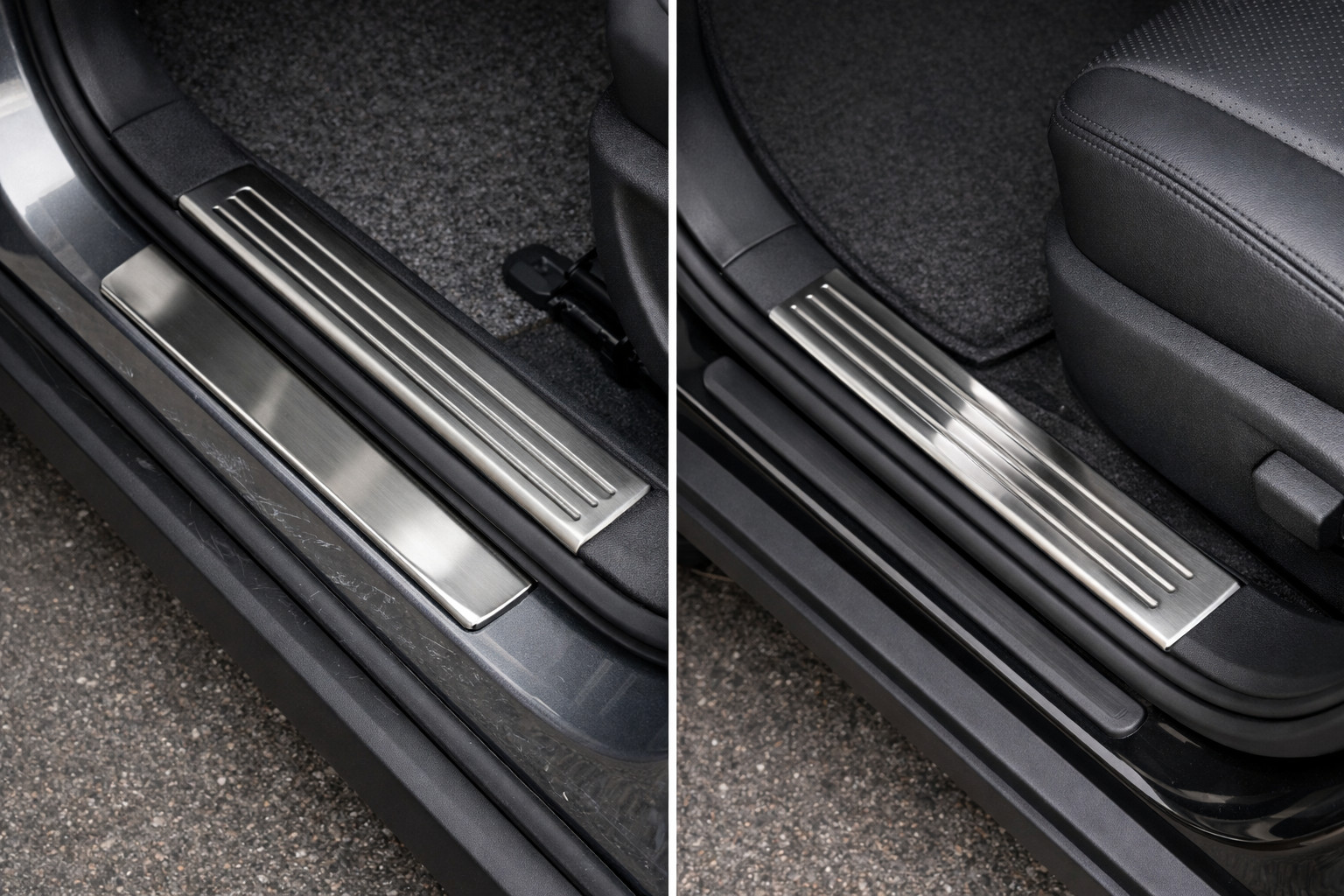
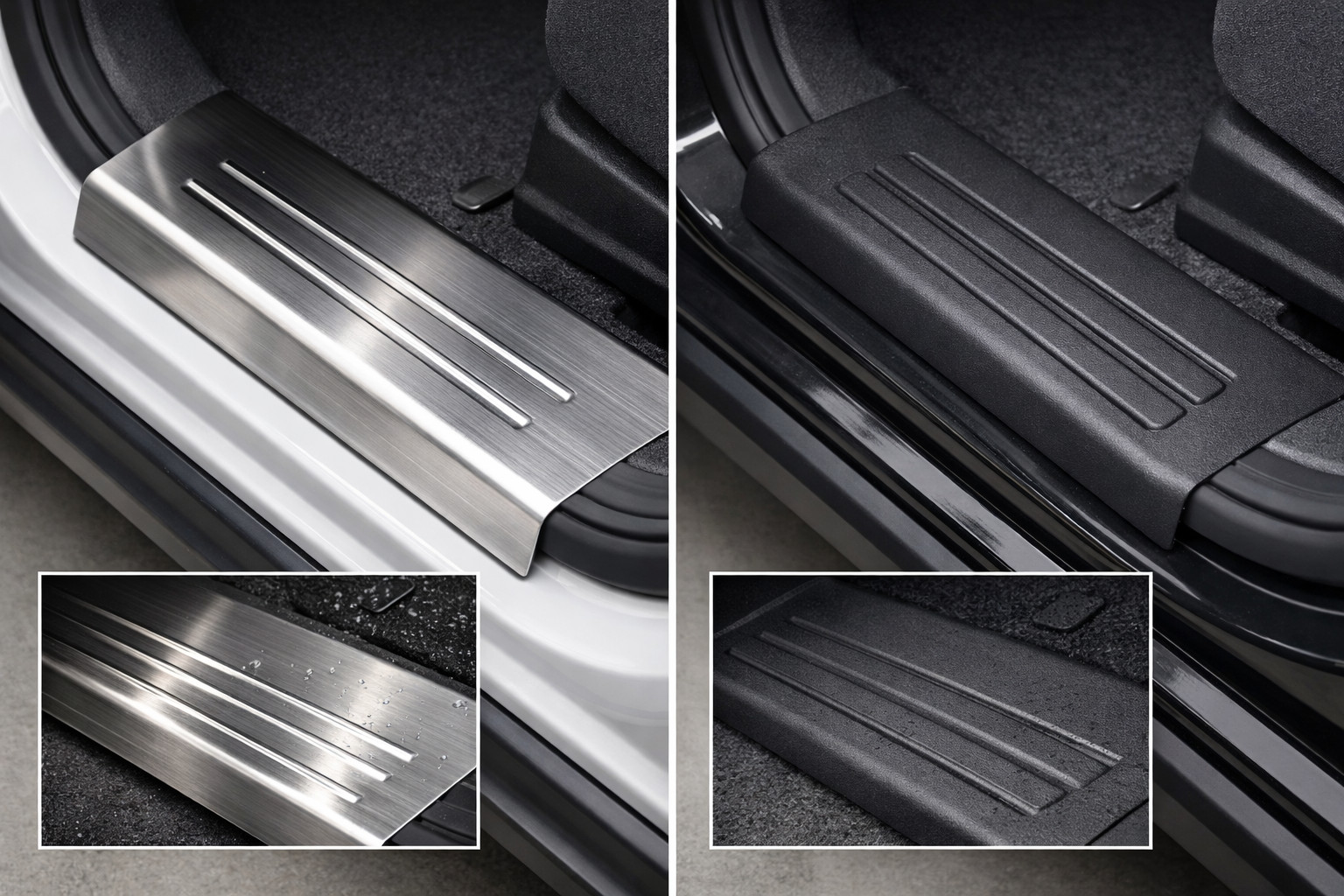
For a daily driver, plastic or thermoplastic door-sill protectors usually turn out to be the more practical choice. They’re cheaper, handle dirty shoes in city use more calmly, and small wear marks are less noticeable on a textured surface. Stainless steel wins on appearance and the feel of a more premium accessory, but you have to pay noticeably more for it.
The main mistake when choosing is looking only at the material. In practice, the shape of the trim, the accuracy for a specific body, and the installation matter just as much: if the piece overlaps the edge of the door seal or is stuck onto a cold surface, you can end up not with protection, but with issues—leaks, water ingress, and extra noise.
What the choice really comes down to
The essence is simple: plastic is about everyday utility, stainless steel is about looks and a stronger visual accent in the entry area. For a car where the sills are constantly rubbed by soles, kids’ boots, bags, and sand, practicality is often more important than shine. That’s why in urban use plastic or thermoplastic often looks like the smarter option.
That said, metal itself isn’t a bad solution. If you want a neat, more premium look and the owner is willing to put up with a higher price and more visible scratches from sand, stainless steel makes sense. For some OEM-style sets, the price difference can be up to about 2.4×, so the extra cost here is not symbolic.
What criteria you should compare by
- Installation. Most sill protectors are installed without drilling, using an adhesive backing or mounting tape. A clean, dry surface and normal temperature during installation are critical.
- Noise and sealing. The material itself has almost no effect on noise. Problems appear if the trim presses on the door seal or lifts at the edge—then you may get air whistling, moisture, and dirt.
- Service life. Stainless steel isn’t afraid of corrosion, but marks from sand show up more clearly. Plastic often hides small daily scuffs better, especially with a textured surface.
- Practicality. For winter, wet shoes, and regular dirt, textured plastic is usually the better option because it doesn’t look tired after every trip.
- Price and compatibility. You should look not only at the material, but also whether the kit is made specifically for your body style and number of doors. One wrong piece cancels out any material advantages.
Quick comparison of options (table)
| Option | Strengths | Weaknesses | Who it’s for |
|---|---|---|---|
| Plastic or thermoplastic | Lower price, lighter weight, practical texture, small marks from daily use are less noticeable | Simpler look, a lot depends on plastic quality and the accuracy of the shape | Those who drive daily in the city, get in and out often, carry kids and stuff, and drive in winter |
| Stainless steel | More premium look, corrosion resistance, rigid shape, a strong accent in the sill area | Higher price, sand scratches show up sooner, less forgiving of careless use | Those who want a neat, more premium look and are ready to pay extra for the visual effect |
DD Tuning expert comment: most often the mistake isn’t the material, it’s the geometry. People pick a trim that looks good in photos but don’t check whether it overlaps the seal area and whether it fits their exact body. The second typical problem is installing in the cold: even a good trim later lifts at the edges and starts collecting dirt.
Detailed breakdown of each option
Plastic or thermoplastic
For a daily car, this is usually the most hassle-free option. Good plastic is cheaper, often offers a larger useful coverage area, and has a relief pattern that works better with sand, water, and winter slush. If people regularly step on the sill with wet or dirty shoes, this surface is more practical in everyday life.
The weak point of plastic isn’t the lifespan as such, but the quality difference between manufacturers. Cheap smooth plastic can quickly lose its tidy look. That’s why what matters here isn’t the wording in the name, but the thickness, texture, and a precise fit without interfering with the seal.
Stainless steel
Stainless sill protectors are chosen not so much for utility as for the visual sense of quality. They’re appropriate on cars where you want to emphasize the sill as a visible detail, not just cover the paint from boots. Plus, metal handles moisture calmly and isn’t afraid of corrosion.
The downside is that wear marks show up faster on metal. If people often get in with sand on their soles, the surface can lose its neatness sooner than the owner expects. That’s why stainless steel is better where appearance matters and there’s readiness to care for the part more often.
Which option is better for different scenarios
For a typical city car that gets opened dozens of times a day, plastic wins more often. It’s less irritating with marks from everyday routine and offers a better balance between price and benefit. This is especially noticeable on family cars, taxis, work vehicles, and any scenario where the sill is used, not just looked at.
Stainless steel is more logical on a car where the owner values a tidy appearance of the details, drives through dirt less often, and doesn’t want compromise in visual perception. In terms of noise, neither material has an advantage: if the trim is installed correctly and doesn’t intrude into the seal, both plastic and metal work quietly.
For winter and dirty weather, the more practical choice is usually not shiny metal, but textured plastic or thermoplastic. What matters here isn’t the “status” of the material, but how it looks after a few months of real use.
Usage scenario and what to choose (table)
| Scenario | What to choose | Why |
|---|---|---|
| Daily city driving | Plastic or thermoplastic | Less overpaying, handles constant contact with shoes and bags better |
| Family car with kids | Textured plastic | Easier in day-to-day care, marks from dirty shoes are less noticeable |
| Winter, chemicals, wet dirt | Textured plastic | Texture hides daily scuffing better and looks calmer after the season |
| Car for trips and a tidy exterior look | Stainless steel | Gives a more expressive look in the entry area and holds its shape well |
| Weekend car | Stainless steel | With less harsh use, its visual advantages show better |
| Work vehicle or taxi | Plastic or thermoplastic | More rational on budget and calmer for constant load |
Common mistakes when choosing
- Buying protectors based only on photos, without checking the shape for your exact body and model year.
- Ignoring the number of pieces in the kit: some bodies need 2 parts, others 4.
- Installing protectors on a cold, damp, or poorly degreased surface.
- Choosing a model that overlaps the edge of the door seal. This is exactly where water, air, and extra noise come from.
- Assuming stainless steel is automatically more durable in every way. It’s corrosion-resistant, but it doesn’t necessarily look better after constant sand under shoes.
When a more expensive solution makes sense
More expensive stainless steel makes sense when the sill area is truly visible to you and important as part of the overall cabin look, not just a place you need to cover from scratches. In that case, it’s worth browsing the whole category of door sill protectors and filtering options not only by material, but also by shape and fit quality.
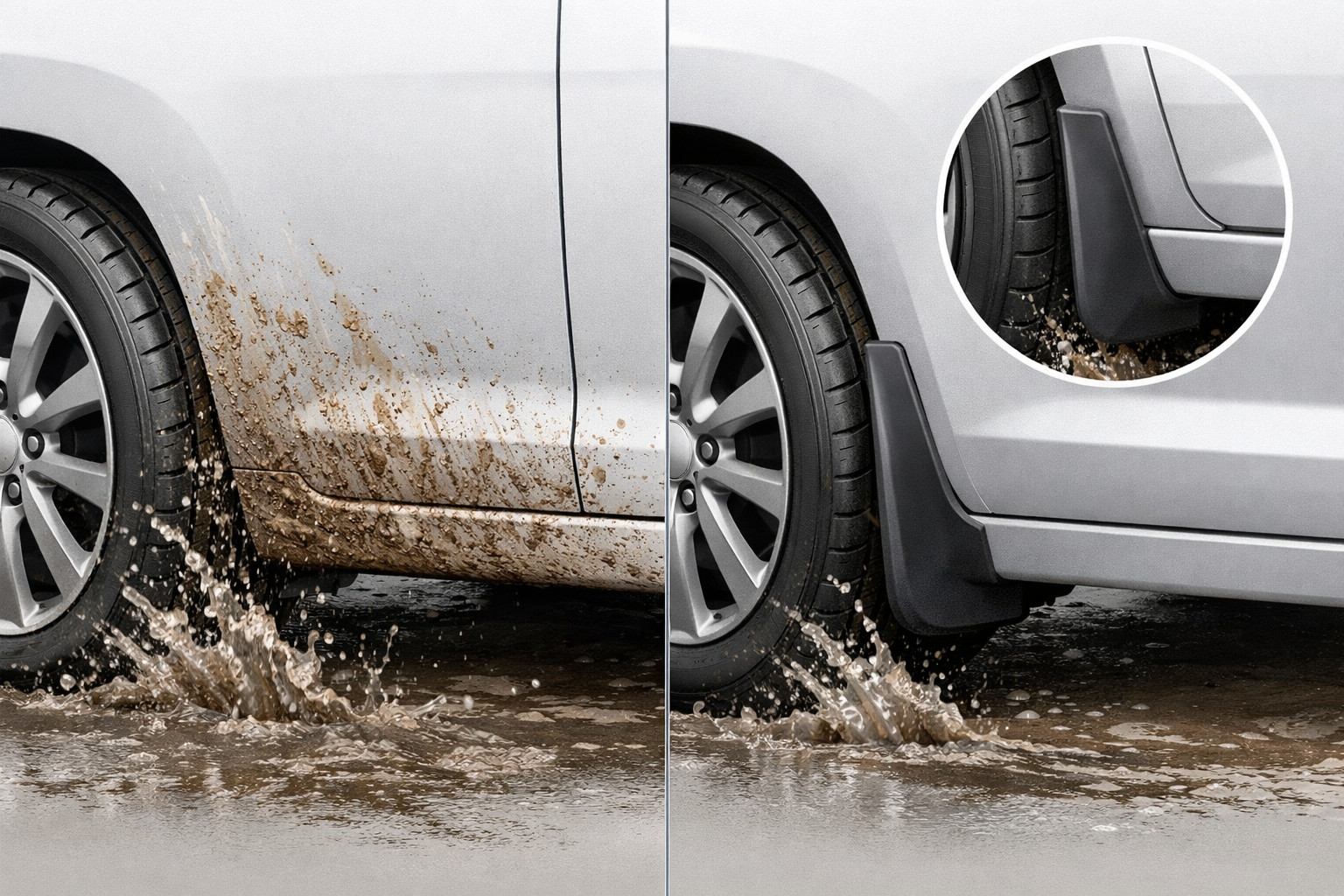
If you want the benefit without unnecessary overpaying, it makes sense to compare plastic door sill protectors first. And when the main enemy of the sill is sand and water thrown up from the wheels, sometimes the right move is not just switching to metal, but adding protection with mud flaps as well.
From customer experience: the owner of a family crossover initially wanted stainless steel for the more expensive look, but after selection chose textured plastic. The reason was simple: in winter kids constantly get into the car, there’s lots of sand and snow on the sills, and the matte surface stays tidy longer. What decided it was that the model didn’t touch the seal and installed without any fitting.
Conclusion
If the car is truly used daily, plastic or thermoplastic is the more practical choice in most cases. Stainless steel is justified when looks, visual neatness, and the willingness to pay more for a decorative effect matter more. But in both cases, it’s not only the material that matters—so do the trim profile, body compatibility, and correct installation.
This conclusion is based not on nice descriptions, but on real selection experience, installation practice, and real-world usage scenarios: for city driving and winter, textured plastic wins more often; for a neater, more premium visual result—stainless steel.
How it works
- Determine how the car is used For everyday city driving, a family car, a taxi, or a work vehicle, plastic or thermoplastic will usually be more practical. If the side sills are also part of the exterior look for you, stainless steel is worth considering.
- Compare the material in real-world conditions Plastic better hides minor signs of use, especially if it has a textured surface, and is usually cheaper. Stainless steel wins in appearance and corrosion resistance, but scratches from sand show up on it faster.
- Check compatibility with the body Choose sill covers not only by photo or material, but by the shape specifically for your body and number of doors. Incorrect geometry can ruin the fit and cancel out any advantage.
- Assess the installation method Most covers are installed without drilling — on an adhesive base or mounting tape. The surface must be clean, dry, and at the proper temperature, otherwise the cover may peel away at the edges.
- Avoid mistakes in the seal area The cover must not extend onto the edge of the door seal. If this is ignored, water, air whistling, dirt, and extra noise are possible.
- Choose the option for your scenario For winter, wet shoes, and dirt, textured plastic or thermoplastic is more practical. Stainless steel makes sense if a more premium look matters more and you are ready for a higher price and more noticeable signs of use.
Pros and cons
Plastic or thermoplastic trims are cheaper, so for a daily car this is a less costly option without a noticeable premium for appearance.
Textured plastic better hides small signs of everyday use, so in city driving the sill looks neat for longer.
For winter, wet shoes and dirt, plastic is more practical, as it does not show wear marks as quickly and handles routine more calmly.
Stainless steel is not afraid of corrosion and gives a neater, more expressive look in the entry area if the owner values the visual effect specifically.
With the correct shape and installation, neither plastic nor stainless steel causes noise issues on its own, so the key factor becomes fitment to the body.
Stainless steel is noticeably more expensive, and in some factory sets the price difference can reach about 2.4 times.
Scratches and sand marks become more noticeable on metal faster, so it may lose its neat appearance sooner than the owner expects.
Cheap smooth plastic depends on the manufacturer’s quality: if the material is weak or the shape is inaccurate, the appearance quickly deteriorates.
Incorrect installation or a poorly chosen trim shape can create sealing problems, moisture, dirt and even extra noise, regardless of the material.