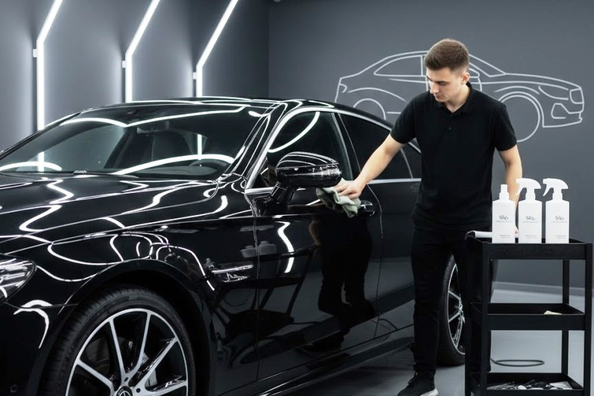
Ceramic coating for a car (also called ceramic coating, nano-ceramic) — is a liquid, high-tech compound based on silicon dioxide (SiO₂) that, after application and polymerization, forms a transparent hard layer on the paintwork (clear coat) about 0.5–3 µm thick. To keep a car looking presentable, owners also use various tuning accessories and body-care items, which you can choose in our product catalog.
Key benefits of a ceramic coating
- Hydrophobic effect and easy cleaning: Water, dirt, road chemicals, and bird droppings bead off the surface, leaving almost no marks. Washing takes 2–3 times less time.
- Protection from light scratches and «spider-web» swirls: The hard layer effectively resists micro-abrasion from dust, branches, automatic car washes, and light contact.
- Resistance to UV rays and chemicals: Reduces UV impact and slows paint aging. Acid rain, bird droppings, and road chemicals don’t cause corrosion.
- Deep gloss and rich color: The body looks like it just left the showroom: a deep «wet» effect, mirror-like shine, enhanced color depth.
- Durability: Quality ceramic coatings last 2–5 years for most professional systems; premium ones — longer with proper care, unlike wax (3–6 months).
Drawbacks and important nuances
- High cost of professional application.
- Requires thorough paint preparation (polishing, degreasing) — otherwise the effect will be weak.
- Doesn’t protect against deep chips and heavy impacts (PPF film is needed for that).
- After 2–3 years the hydrophobic effect weakens — it needs maintenance (toppers).
Who really needs ceramic?
If you want to minimize washes, keep your car looking like new for years, and are ready to invest in quality service — ceramic is the best solution. For budget options, there are hybrid compounds with a 1–2 year lifespan.