 Author: Radomskyi Maksym Vasyliovych
With a roof rack on an SUV, the problem almost never comes down to the rack itself. Most often, mistakes happen in three places: the roof type is identified incorrectly, compatibility with panoramic glass isn’t checked, and only the cargo weight is counted—forgetting the weight of the crossbars, mounts, and the roof box. The result is whistling noise, the panoramic roof won’t open, the car becomes too tall for parking garages, or the system runs right at its load limit.
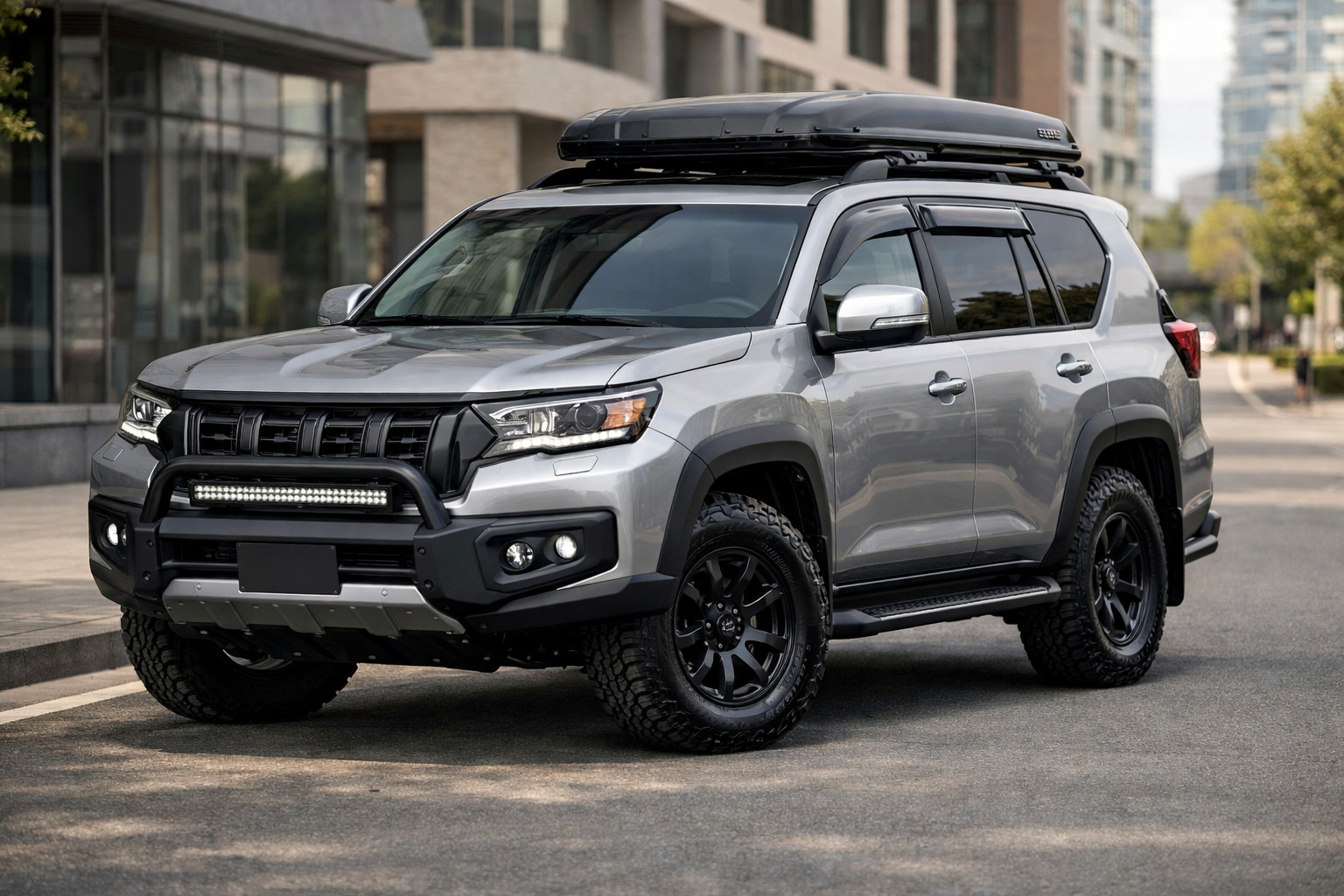
The working approach is simple: first determine exactly what you have on the roof, then verify the permissible load, and only after that choose a low, aerodynamic system. For a tall body this is especially important, because even a low-profile roof box adds about 33 cm above the crossbars, and at highway speed any extra height brings both more noise and higher sensitivity to crosswinds.
Why this problem occurs
An SUV roof is higher than a passenger car’s, so any mistake in mounting geometry is felt more strongly in everyday use. What you can still ignore on a low body quickly turns into whistling at speed, trouble entering parking garages, or awkward loading on a tall vehicle.
The second reason is different roof designs. From the outside, two cars may have similar rails, but one needs a kit for raised rails, another for flush (integrated) rails, and a third for fixed points. And if there’s also a panoramic roof, a selection mistake isn’t just inconvenient—it can be potentially risky for the glass and the opening mechanism.
Main causes
- Wrong roof type identified. Raised rails, flush (integrated) rails, fixed points, and a bare roof require different feet and mounting hardware.
- Panoramic-roof compatibility not checked. If the manufacturer doesn’t confirm that the kit works with a panoramic roof, you shouldn’t install it blindly.
- Load calculated incorrectly. The limit includes the weight of the crossbars, feet, accessories, and the cargo itself. Always use the lower limit between the vehicle and the rack system.
- System is too tall. Tall crossbars and a tall box quickly increase overall vehicle height, which is critical for parking garages and low branches.
- Expecting a universal solution. Universal kits can sometimes be installed physically, but that doesn’t mean proper fitment, acceptable noise, or safe operation at speed.
How to understand the cause in your case
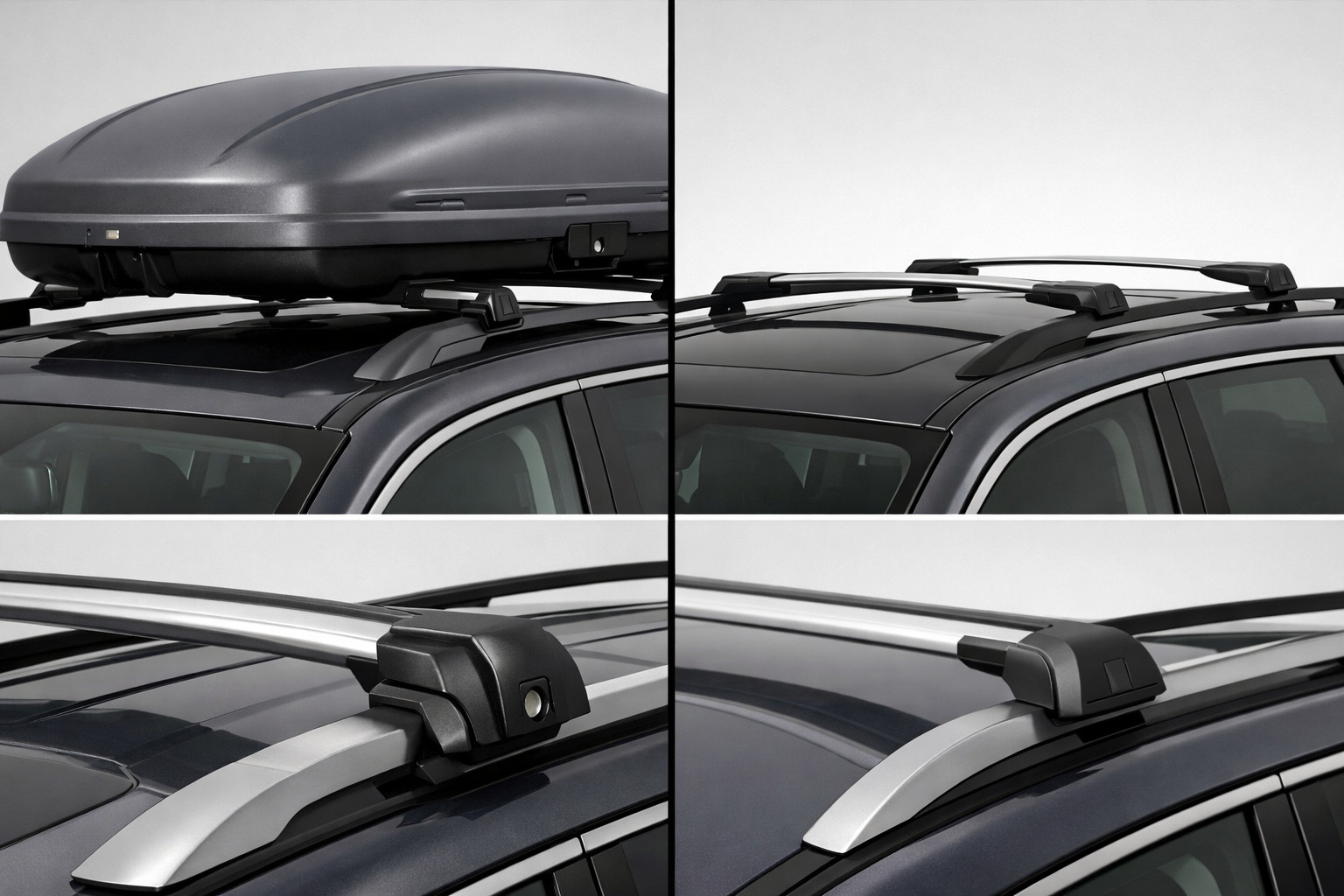
- Look at the rails from the side. If there’s a gap between the rail and the roof along the entire length, they’re raised rails. If the rail sits almost flush to the roof, they’re integrated rails. If there are no rails but there are mounting points under covers, those are fixed points.
- Find the roof load limit. If the vehicle allows less than the rack system, follow the vehicle limit. Out of a typical 75 kg, part is immediately “used up” by the system itself.
- Measure the height. Add the height of the crossbars and the accessory you plan to install to the vehicle height. With a tall body, the clearance margin for parking garages often runs out faster than it seems.
- Check the panorama separately. If compatibility isn’t confirmed by the kit manufacturer, don’t open the roof with crossbars or a roof box installed.
- Do a short highway test. If the noise appears sharply after 80–90 km/h, the cause is usually the crossbar shape, its position, or airflow over the panoramic roof. If the car becomes twitchy in crosswinds, the issue isn’t only noise—it’s also height and windage of the load.
DD Tuning expert comment: Most mistakes happen before the purchase—people see rails and order the first kit they find without уточнення the roof type. The second typical mistake is counting only the weight of the items, even though the roof limit includes the crossbars, mounts, and the box. If there’s a panoramic roof, compatibility must be confirmed before installation, not after you notice a few millimeters of clearance.
Symptoms, causes, and what to do (table)
| Symptom | Likely cause | What to do |
|---|---|---|
| Loud whistling after 80–90 km/h | Tall or non-aerodynamic crossbar, poor position of the front bar, airflow over the panoramic roof | Verify the correct kit; within allowed limits adjust the crossbar position; if needed switch to a lower aerodynamic system |
| Panoramic roof won’t open or opens dangerously close | Kit isn’t designed for vehicles with a panoramic roof, or it sits too low or too far forward | Do not open the roof until compatibility is confirmed; if needed replace the system rather than “forcing” it to fit |
| Vehicle doesn’t fit into a parking garage | Total height of the vehicle, crossbars, and box wasn’t accounted for | Measure height with real numbers; switch to lower crossbars or avoid a box of that height |
| Rails or feet are working at the limit | Permissible load exceeded due to system weight plus cargo | Recalculate the weight of all components; reduce the load or choose a lighter system |
| Vehicle noticeably “catches” crosswinds more | Tall load, large box, or basket on a tall body | Reduce speed; simplify the roof setup; don’t carry an empty system without need |
| Fasteners loosen after the first trip | Installation without a re-check or a tightening mistake | Check the tightening torque and do the first re-check after some mileage, not at a seasonal inspection |
What really helps
- Vehicle-specific kit for your exact roof. It fits the geometry best and leaves fewer chances to choose the wrong feet.
- Low-profile aerodynamic crossbars. They’re usually quieter and add less height than tall or square options.
- Confirmed panoramic-roof compatibility. If the manufacturer explicitly allows it, it’s a workable scenario. If not, the risk doesn’t justify the savings.
- The right usage scenario. When you don’t need the rack every day, a removable system truly reduces noise and air resistance.
- Post-installation check. After the first drive, the fasteners should be re-checked, and with a roof box you shouldn’t accelerate as if nothing has changed above the roof.
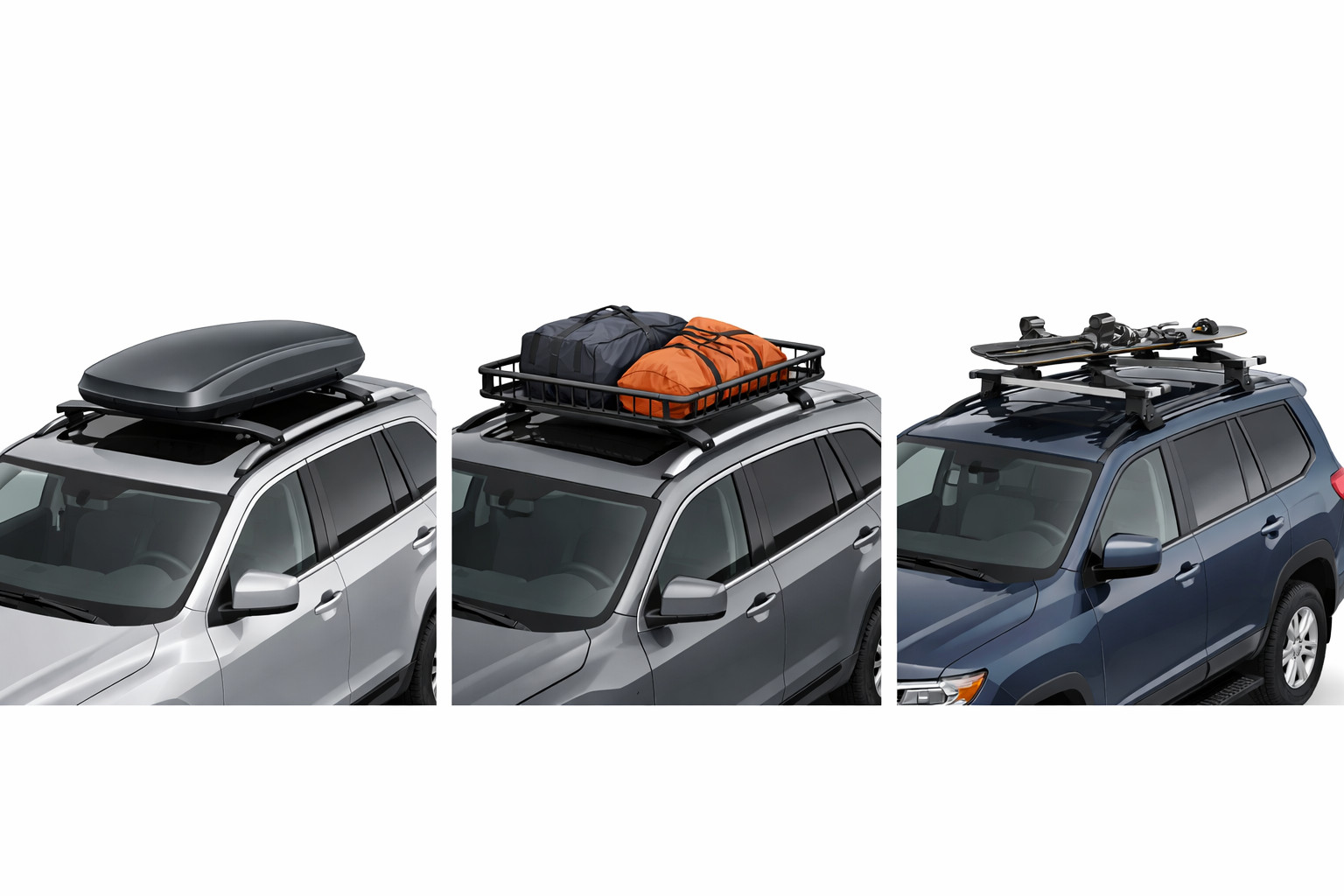
If you need a roof box, for a tall SUV it’s better to look at low models and immediately consider not only liters of volume but also centimeters on top. In practice, it’s height—not box length—that more often creates problems in the city.
What almost doesn’t work or helps only briefly
- A universal kit “as long as it fits.” It’s often bought because of the price, but later you pay with noise, misalignment, and having to re-select the setup.
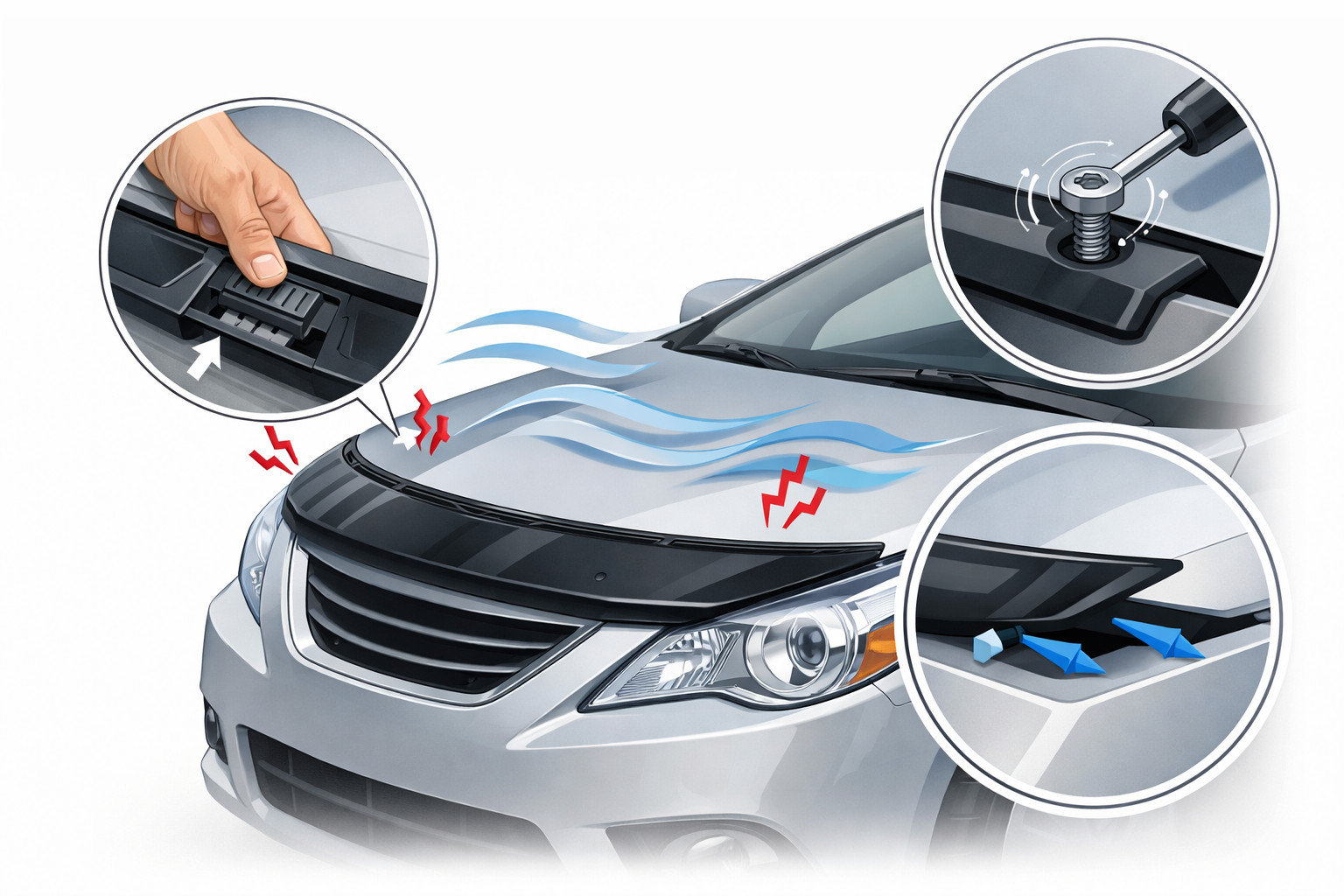
- Trying to fix the wrong rack with a wind deflector. A deflector can reduce noise, but it won’t correct wrong foot geometry or a dangerous clearance to the panoramic roof.
- Over-tightening the fasteners. This doesn’t make the system more correct, and sometimes only increases the risk to the rails and the paintwork.
- Driving with empty crossbars all the time. If you need them a few times a month, there’s no point in keeping a constant noise source on the roof.
- Installing heavy accessories without a separate check. This especially applies to rooftop tents and large baskets on vehicles with a panoramic roof or weak rails.
When accessories or replacing components makes sense
It makes sense when the problem is already understood. If you have the correct mount type but it’s noisy, lower crossbars or a deflector can help. If you lack cargo space, a roof box or basket solves it—but only after checking height and load. If the kit is incompatible with the panoramic roof or the roof type from the start, you should replace not small parts but the entire system.
For a basic compatibility-check algorithm, see choosing a roof rack for an SUV. As examples of vehicle-specific solutions for a large SUV, roof racks for rails and roof bars and roof racks are suitable: the first option is appropriate when the vehicle already has classic raised rails, the second when you need a complete kit matched to the specific roof geometry.
Solutions: when they work and when it’s not worth spending money (table)
| Solution | When it works | When it’s not worth spending money |
|---|---|---|
| Vehicle-specific low-profile kit | When the roof type is identified точно and you need a quiet, lower system | When you haven’t yet checked panoramic-roof compatibility and the real load limit |
| Repositioning the front crossbar | When the system allows it and the noise source is related to airflow over the windshield or panoramic roof | When the kit is already at the clearance limit to the panoramic roof or has rigidly fixed points |
| Wind deflector | When the main kit is selected correctly but you need to reduce whistling on the highway | When the rack itself is mismatched, too tall, or interferes with the panoramic roof |
| Low-profile roof box | When you need volume without maximum height growth | When the vehicle is already close to parking height limits or you’re carrying something heavy and near the roof limit |
| Removable system | When the rack is needed сезонно or for trips | When you carry roof loads constantly and removing the system each time is inconvenient |
| Heavy basket or rooftop tent | Only when the roof, rails, and crossbars explicitly allow such a load | When there’s a panoramic roof without confirmed compatibility or the load margin is minimal |
From a customer’s experience: the owner of a large crossover with a panoramic roof first chose tall universal crossbars because they seemed simpler and cheaper. After the first trip, a whistle appeared on the highway, and entering an underground parking garage became stressful due to lack of height clearance. After switching to a vehicle-specific lower system and recalculating the height, the daily-use problem disappeared, and the rack started being installed only for trips.
Conclusion
The right roof rack for an SUV starts not with the brand and not with the price, but with three checks: roof type, panoramic-roof compatibility, and the real load and height. If at least one of these points doesn’t match, universal compromises usually only postpone a repeat purchase. Most often, a vehicle-specific low-profile system works—not “something with a similar mount.”
If the manufacturer doesn’t confirm compatibility with a panoramic roof, it’s not worth spending money on experiments. If the height or weight limit is already close, it’s better to change the configuration or abandon part of the roof plans. This material is based on real selection experience, practice, and real use cases—where the goal isn’t just to mount a rack, but to get a system that’s genuinely convenient to live with every day.
How it works
- Determine the roof type Check exactly what is installed on the vehicle: standard roof rails, integrated roof rails, fixed points, or a bare roof. This determines which set of mounts and attachments you need.
- Check panoramic roof compatibility If the SUV has a panoramic roof, verify whether the manufacturer explicitly confirms that the roof rack works with this design. If there is no confirmation, do not open the panoramic roof with the crossbars or cargo box already installed.
- Calculate the actual load Take into account the weight of the crossbars, mounts, accessories, and the cargo itself, not just the items in the box. Use the lower limit — the one set either by the vehicle or by the roof rack system itself.
- Assess the total height Add the height of the crossbars and the future box or basket to the height of the SUV. For a tall body, this is critical, because even a low-profile box noticeably increases the overall height and can create parking issues.
- Choose a low-profile vehicle-specific system For most such vehicles, a kit designed for the specific roof type with low aerodynamic crossbars works better. It is usually quieter, adds less height, and fits the geometry better than universal solutions.
- After installation, do a check After the first trip, check the fastenings and make sure there is no whistling, play, or problems with opening the panoramic roof. If noise appears after 80–90 km/h or the vehicle catches more side wind, you should adjust the setup or switch to a lower system.
Pros and cons
You can choose a system for a specific roof type — standard, integrated rails, fixed points, or a smooth roof. This reduces the risk of choosing the wrong feet and getting an improper rack fit.
If the manufacturer confirms compatibility with a panoramic roof, the system works more safely and predictably. This is especially important because otherwise you can create problems with opening the panorama or damage the mechanism.
Low-profile aerodynamic crossbars add less to the vehicle’s overall height. For a tall SUV, this is practical because it makes parking structures easier to clear and reduces road noise.
When the rack is not needed every day, a removable system creates less constant noise and air resistance. This is convenient for seasonal use or vacation trips.
There is a clear check sequence: determine the roof type, verify the load, measure the height again, and check the panorama separately. This order helps avoid unnecessary purchases and rework after installation.
Universal kits often seem like a simple solution, but they can cause noise, misalignment, and fitment issues. In other words, a cheaper purchase often ends up requiring a second selection later.
On a tall body, even a low box or high crossbars quickly increase the car’s overall height. Because of this, problems can arise with parking garages, branches, and everyday maneuvering.
Load limits need to be calculated not only by the weight of the items, but also with the crossbars, feet, accessories, and the box itself taken into account. If this is not done, the rails or feet may operate at the limit.
If the kit is not designed for a panoramic roof, you cannot just install it and hope for a better result. In such a case, it is risky even to open the panorama until compatibility is confirmed.
Heavy accessories like a roof tent or a large basket are not suitable for everyone. Without enough load reserve or confirmed compatibility with the panorama, this is a bad solution.