10.04.2026
275
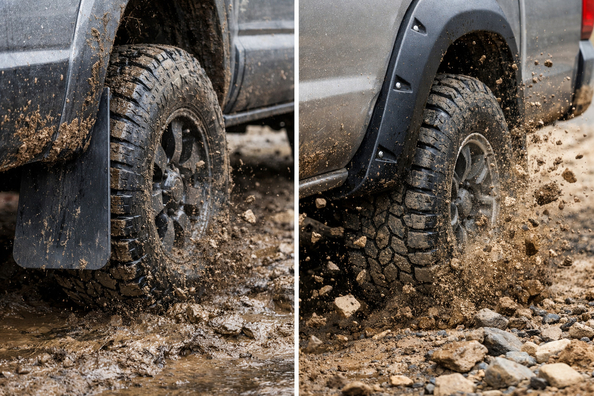
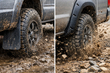
If the goal is to actually reduce the amount of dirt, slush, and small stones hitting the doors, sills, and sides, in most cases mud flaps win. They sit closer to the wheel’s throw trajectory and catch what flies backward and sideways.
By “Bushwackers” here we mean fender flares. They’re useful when the wheel setup gets wider—more offset, spacers, or a lift—but on their own they don’t replace mud flaps: their main job is to add coverage around the arch, not to stop the entire stream behind the wheel.
This isn’t a choice between “two identical protections,” but between two different tasks. Mud flaps are for directly cutting off water, dirt, road chemicals, and gravel. Bushwackers are for when the tire or wheel sticks out past the factory body line and you need to cover the edge of the wheel.
On a stock vehicle without much wheel poke, Bushwackers often deliver only a partial effect. On a lifted vehicle, with spacers or wider tires, they can already be useful—but most often as a complement to mud flaps, not a replacement.
| Option | Strengths | Weaknesses | Who it’s for |
|---|---|---|---|
| Mud flaps | Better at holding back water, slush, dirt, and small stones; easier to explain the result; often easier installation | A wrong size or overly soft material can be noisy; universal models don’t always work after a lift or spacers | Anyone who wants fewer chips on doors, sills, and rear quarter panels |
| Bushwackers | Add arch coverage; hide wider tires; useful when the wheel sticks out past the body | On their own, they stop the stream behind the wheel less effectively; can trap dirt between the flare and the body; more expensive | Those running wide wheels, a lift, spacers, or needing additional arch coverage |
| Combination of both | Best coverage for both the throw zone and the wheel protrusion | Most expensive scenario; precise selection and installation matter | For highways, winter, gravel, travel, and modified vehicles |
DD Tuning expert comment: The most common mistake is installing universal mud flaps on a vehicle with changed wheel offset and expecting factory-like results. The second typical issue is choosing Bushwackers as the only protection from stones, even though they cover the arch, not the stream behind the wheel. If you have a lift, spacers, or wider tires, you need to choose based on the wheel’s actual geometry—not the spec-sheet configuration.
Their strongest point is their position relative to the wheel. They work exactly where dirt and stones leave the tread. That’s why on a typical crossover, minivan, pickup, or passenger car, mud flaps most often deliver noticeably cleaner sills and less sandblasting on the lower part of the doors.
The key difference within the category is material and size. Flexible polyurethane versions survive impacts, cold, and contact with obstacles better. Budget thin versions can be fine for city driving, but on gravel and in winter their lifespan and shape stability are usually lower.
Fender flares are useful when the wheel truly extends beyond the factory body contour. Base series often add about 25–51 mm of coverage, and the widest up to 64 mm. This helps reduce side spray and cover the tire edge—the part that throws dirt outward.
But there’s a nuance: a Bushwacker sits along the arch edge, not behind the wheel, so it doesn’t cut off the stream as effectively as a mud flap. Plus, sand and dirt can collect between the arch and the flare, and if you don’t control it, there’s a risk of paint abrasion.
For most stock vehicles, the answer is simple: if the priority is a cleaner body and fewer chips, choose mud flaps. It’s more practical and usually cheaper than installing fender flares for a job they weren’t designed to do.
Bushwackers start to make sense when the vehicle is already modified: wider wheels, 27-mm spacers, a suspension lift, larger tires. In those setups, a mud flap alone may also be too small, and then the right logic is either an oversized mud flap or a combination with a fender flare.
| Scenario | Best choice | Why |
|---|---|---|
| City car with no modifications | Mud flaps | Provides the most direct protection for sills, doors, and fenders without extra expense |
| Winter, highway, slush, de-icers | Mud flaps | Better at catching the stream of water and dirt right behind the wheel |
| Gravel, dirt roads, frequent trips out of town | Flexible mud flaps | Handle impacts better and don’t overload the mounting points |
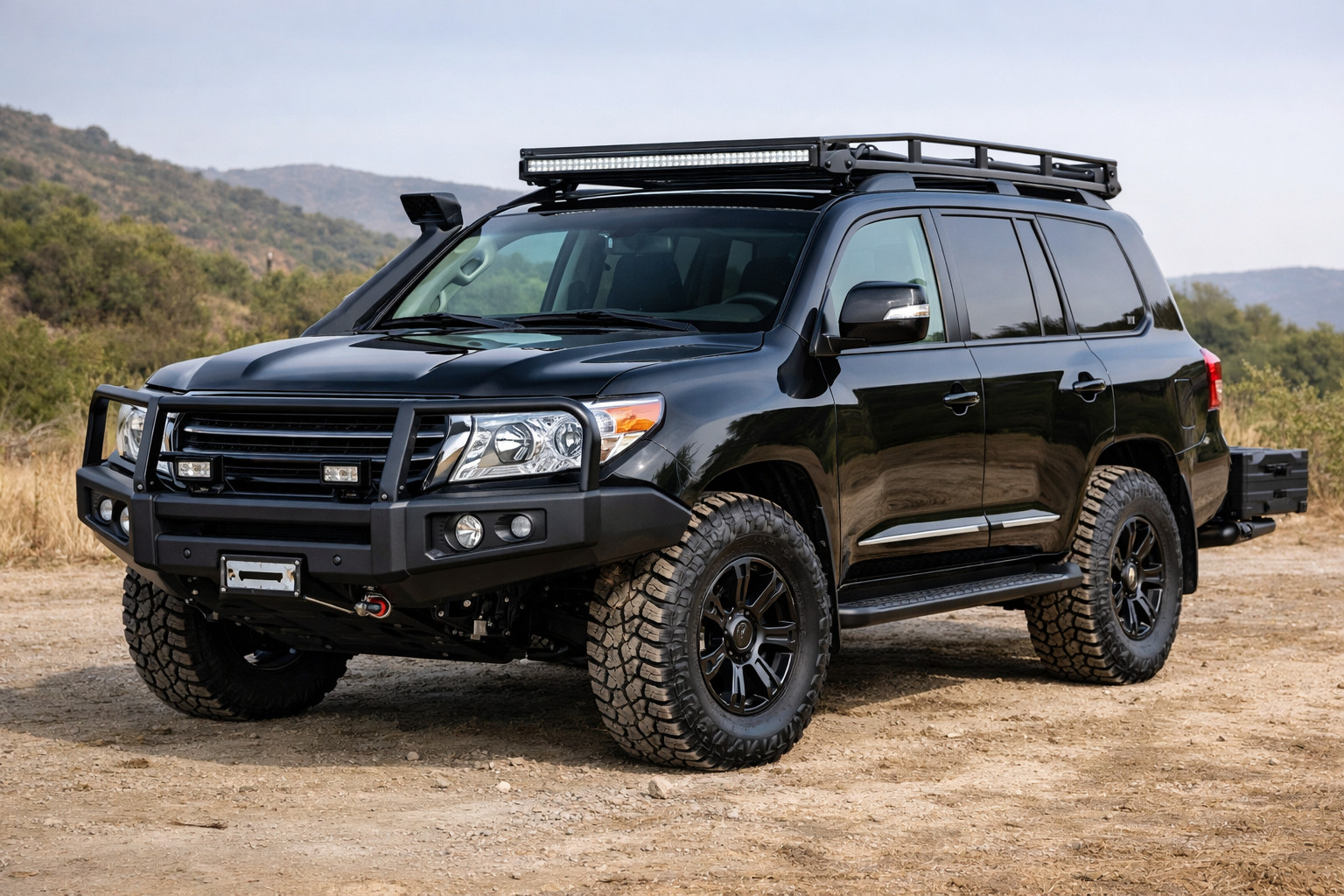
| Pickup or SUV with wide tires | Bushwackers plus mud flaps | The arch covers the wheel protrusion, while the mud flap cuts off the actual dirt throw |
| Vehicle with a lift and spacers | Oversized mud flaps or a combination | The stock protection geometry no longer matches the real throw trajectory |
Paying extra makes sense not when you simply want “something pricier,” but when the vehicle’s configuration has changed. If you need precise mounting without drilling, proper stiffness, and performance right in the throw trajectory, look at vehicle-specific mud flaps. If the wheel protrudes beyond the body and you need additional arch coverage, then it’s logical to look at Bushwackers. And when you’re choosing between a budget and a more precise kit, it’s useful to separately understand when paying extra for mud flaps is actually justified.
The most expensive—but also the smartest—solution for modified vehicles is not picking between two parts at random, but building a setup for the specific wheel poke. This is especially relevant for pickups and SUVs, where a wide wheel hits both the doors and the arch edge at the same time.
From a customer’s experience: after a lift and wider tires, a pickup owner first installed only fender flares to cover the wheel protrusion. Visually the issue was gone, but dirt and small gravel still hit the doors. After switching to a set of larger mud flaps together with the arch flares, the body became noticeably cleaner, and complaints about spray along the sides virtually disappeared.
In short: for holding back dirt and stones, mud flaps are usually better. Bushwackers make sense when you need to cover a wider wheel and add arch coverage, but as the only protection they’re more often weaker. For a stock vehicle the choice is simple: mud flaps. For a vehicle with a lift, spacers, or aggressive tires—either oversized mud flaps or a combination with Bushwackers.
This material is based on real selection experience, practical know-how, and real use cases: what works on a city car, what you need for highway driving and winter, and what only makes sense on a modified vehicle.
| ✔ | Mud flaps better intercept water, slush, dirt, and small stones because they sit closer to the wheel’s spray path. On a stock car, this gives the most noticeable effect on the doors, sills, and rear fenders. |
| ✔ | Vehicle-specific mud flaps are often installed in factory mounting points without drilling, so installation is usually simpler. This is more convenient for those who do not want complicated body part fitting. |
| ✔ | Flexible polyurethane mud flaps handle cold, impacts, and deformation better. This is practical for winter use and driving on gravel. |
| ✔ | Bushwackers are useful when the wheels stick out beyond the factory body contour because of wider tires, spacers, or a lift. They cover the tire edge and add coverage along the arch. |
| ✔ | The combination of mud flaps and bushwackers works best on modified vehicles because it covers both the spray area and the wheel protrusion. This is especially relevant for pickups, SUVs, and cars used on the highway or gravel. |
| ✘ | Bushwackers on their own stop the flow of dirt and stones behind the wheel less effectively than mud flaps. They sit along the fender edge, not behind the wheel, so they do not block the spray as effectively. |
| ✘ | Fender flares are often more demanding in terms of fitment and installation precision. If installed carelessly, dirt can build up between the part and the body and rub the paint. |
| ✘ | Some mud flaps can flap at speed or in strong crosswind, especially if they are too soft or too long. This is uncomfortable on highway trips. |
| ✘ | Good bushwackers are usually more expensive than mud flaps, and painted kits raise the budget even more. So for a regular car, this is often an unjustified overpay. |
Shipping to EU
Wholesale and retail
Own warehouse
Опис продукту
Подарунки не надаються при оформленні покупки у кредит під 0,01% або при покупці частинами.