21.03.2026
992
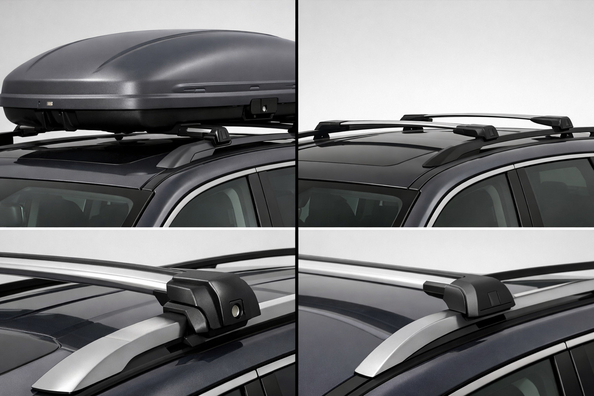
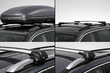
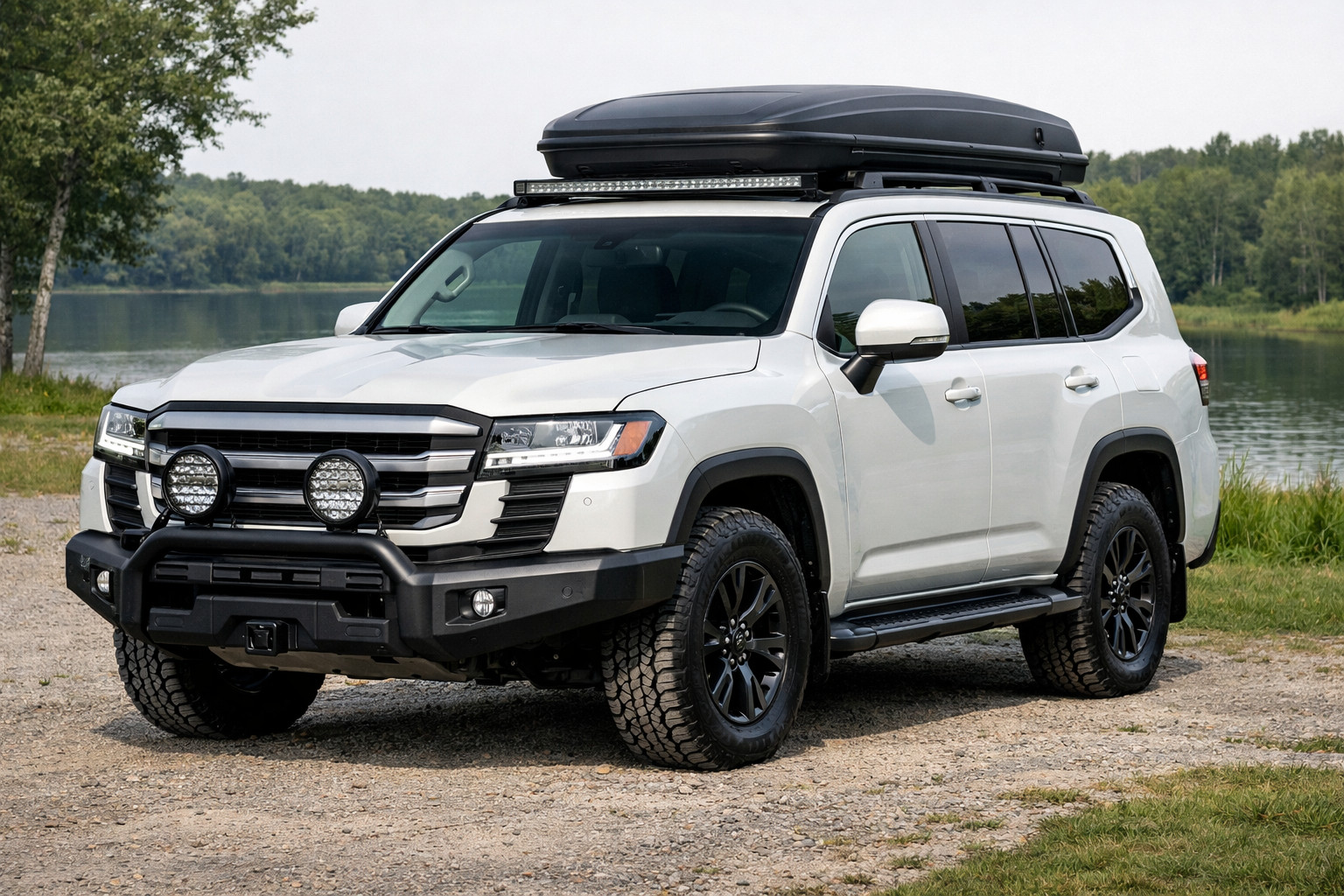
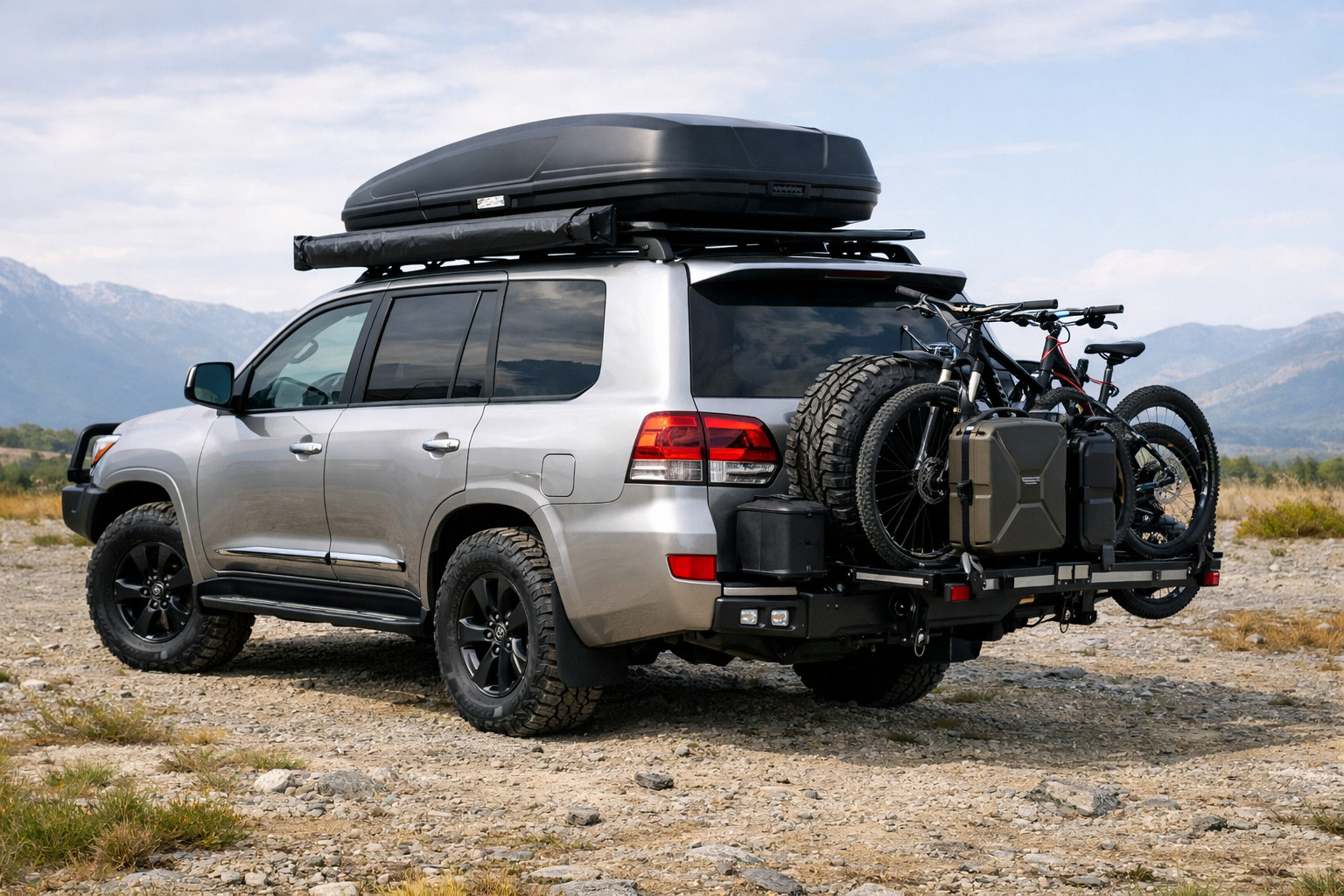
Crossbars for a roof box must withstand not only the “weight on top”, but also real loads while driving: crosswinds, bumps, and different braking/acceleration modes. That’s why, in real-world selection, what matters is not how the roof rails look, but whether the crossbars have an official load rating, compatibility with the mounting system, and the correct spacing between the bars.
The rule of thumb is simple: the roof box eats into the total limit, so the lowest value among the three components applies — your vehicle, the crossbars, and the box itself. With decorative or unrated roof rails, there’s often no guarantee they can be loaded with a roof box.
A roof box requires a load-bearing setup: “crossbars + brackets/rails + correct crossbar spacing”. If at least one element isn’t designed for carrying cargo, the system may end up being “for looks” — everything seems to hold visually, but there are no verified limits and no understanding of how it will behave at speed or on rutted roads.
The right approach is to look at official dynamic/operational limits and installation requirements. For example, roof system recommendations emphasize that for safety it’s important to consider the lowest limit in the “car–crossbars–accessory” chain, and to follow crossbar spacing and speed limits when driving with a load.
Installation and compatibility. Whether there are mounts for your roof/rail type, whether adapters are needed, and whether the manufacturer allows fitting a roof box specifically on these crossbars. If the system requires special parts (for example, a T-track adapter), it should be accounted for right away.
Load (capacity). Compare the official load rating specifically for roof use, not “by looks” or “what you can hold by hand”. Also calculate the total load: the weight of the box, the crossbars, and the cargo, with a safety margin.
Noise and aerodynamics. An aero profile usually runs quieter than bulky designs, but you won’t eliminate noise entirely: the roof box itself increases air resistance. So this is a “comfort” criterion, not “safety”.
Practicality. How easy it is to remove/install the crossbars and the box, whether tools are needed, and how quickly you can check the mounts. For frequent use, quick locks and straightforward installation matter.
Price. Compare not only the cost of the crossbars. Cheaper “looks like load-bearing” options sometimes mean extra spending on adapters—or the risk that the box won’t be approved by the manufacturer.
| Option | Strengths | Weaknesses | Best for |
|---|---|---|---|
| Thule WingBar Evo (aero crossbars) | Official 100 kg limit; aerodynamic profile; convenient installation system | Any box will still add noise/drag; correct crossbar spacing is required | Most scenarios where both safety and highway comfort matter |
| Thule WingBar Edge (aero crossbars) | Official 75 kg limit; low weight; aero profile | Lower limit than 100 kg solutions; the overall “corridor” is defined by the lowest point in the system | When the planned load stays within 75 kg for the crossbar system |
| Thule SquareBar Evo (square crossbars) | Official 100 kg limit; rugged construction | Square profile is usually noisier than aero shapes; correct selection for the box is required | For those who value “strength” more and accept some noise |
| Yakima JetStream (aero crossbars) | Official 75 kg limit for 2 crossbars; aerodynamic profile | The limit may be lower than your cargo/box plans | Regular trips when you need a basic “quiet + reliable” setup |
| Yakima HD Bar (heavy-duty crossbars) | Very high on-road/off-road limits; suitable for heavy-duty tasks | Likely more expensive; not always necessary for light use | Regular long-distance trips with heavier loads |
| “Roof rails just for looks” (unrated/decorative) | Visually may have mounting points | No confirmation it’s a load-bearing system for a roof box; in some cases manufacturers explicitly do not recommend it | No — not for a roof box without official approval/rating |
| Example roof box: Thule Motion 3 XXL | 75 kg limit; compatible with a range of crossbars (under installation conditions) | The lowest limit will still cap the system at 75 kg or less | When you need volume and stay within the box’s limit |
WingBar Evo/Edge, SquareBar Evo, JetStream are the types most often chosen for a roof box because they combine an official limit with suitable geometry for mounting a box. For a box, it’s critical that the crossbars are designed specifically for use with cargo, not merely as a decorative “rail zone”.
The advantage of an aero profile is less air resistance compared to bulkier profiles, which usually means less noise. But noise from the roof box will be there anyway: it changes airflow over the roof, so don’t expect it to be “almost like without a box”.
SquareBar Evo is often perceived as “stronger-looking”. In reality, the deciding factors are the official limit and compatibility with your brackets/box. In terms of noise, square profiles usually lose to aero crossbars, but from a load-capacity standpoint it’s a perfectly workable option if it passes as the lowest-limit component in your system.
Practically speaking: if you drive not only in the city but also regularly on the highway, and noise matters, an aero profile will often be more comfortable.
HD solutions are chosen when use is expected to be more frequent and/or heavier: longer trips, regular loading, and more buffer within the system. The logic is simple: even if the car/box/mounts impose a lower limit, having “strong” crossbars helps prevent them from being the weak link.
It’s important to remember: a high crossbar rating doesn’t mean you can ignore installation rules and speed limits. Roof systems with cargo also have recommendations for maximum speed and behavior on rough surfaces.
Even the strongest crossbars can turn out to be “not the right fit” if the box requires a specific distance between crossbars or clearance to the tailgate. Roof system recommendations often include a minimum crossbar spacing requirement (for example, minimum 700 mm for Thule) and separate requirements for long loads.
Also, in some cases additional adapters are required. For example, for Thule Motion 3 XXL, compatibility is specified with a range of crossbars, but for some systems a T-track Adapter 697-6 may be needed. This isn’t a “minor detail”: if the adapter is missing or doesn’t fit, the box may not mount correctly.
| Scenario | Best choice | Why |
|---|---|---|
| City driving, occasional use | Aero-profile system rated 75 kg (e.g., WingBar Edge / JetStream) | Usually sufficient by limit, easy to install/remove, and noise is less critical in the city |
| Highway driving, comfort matters | 100 kg aero crossbars (WingBar Evo or similar) | Aero profile runs quieter; extra capacity reduces the risk of “hitting” the lowest limit |
| Frequent trips with a roof box, but without “heavy cargo” | 75–100 kg aero crossbars + a box with a limit around 75 kg (if you plan matching loading) | The box more often becomes the weak link, so the crossbars shouldn’t be rated lower than it |
| Regular long-distance trips, heavier loads, buffer always needed | HD crossbars (like Yakima HD Bar) | Crossbars are less likely to be the “limiter”; but speed and installation are still critical |
| Only “for looks” roof rails with no official load-bearing information | No: you need a load-bearing crossbar system compatible with your car and box | Without a rating and approval, it doesn’t guarantee safety or correct load distribution |
| Scenario | Best choice | Why |
|---|---|---|
| You want to install a roof box and carry it 1–2 times per season | Aero crossbars rated 75 kg or 100 kg + a roof box with a matching limit | For seasonal loads, 75–100 kg is most often enough; from there, safety is defined by the lowest point in the system |
| You drive often and notice noise at speed | Aero crossbars (WingBar/JetStream type) instead of square ones | Profile shape affects aerodynamics; while the box adds noise, an aero profile reduces the baseline “extra” portion |
| You need maximum strength for regular trips | HD crossbars | Higher rating increases the chance that the crossbars won’t become the weak link in real-world conditions |
| You’re considering OEM/budget solutions because they “fit by size” | First verify the official rating and compatibility, then buy | Dimensions without a rating don’t guarantee the rail/bracket is designed for a roof box |
More expensive crossbars or HD lines make sense when you don’t want the system to turn into a limits lottery and you plan regular trips with a roof box. They’re also appropriate if your scenario includes not only “smooth highways”, but also frequent bad roads and wind.
To assemble the system correctly, it helps to double-check which parameters matter for crossbars and how the box works together with them: roof rack and selection criteria. With the same approach, keep in mind that without correct installation and correct spacing, even expensive components can perform worse than expected.
If your vehicle has specific roof limitations or the rails are not load-bearing, overpaying for HD crossbars sometimes won’t help: the lowest component will still define the limit. That’s why moving into the premium segment only makes sense after verifying compatibility and documented limits.
Crossbars “hold” a roof box not because they look sturdy, but because they have an official rating and correct compatibility with the mounts, the box, and your car. The rule works like this: the lowest limit among the vehicle, the crossbars, and the roof box applies; the total weight of all elements is considered.
If you want a practical verdict: for most trips, choose aero crossbars rated 75–100 kg and follow spacing and installation conditions, and don’t consider “for looks” rails as a load-bearing base. Choose more expensive HD solutions when you truly plan regular loads and want to remove the crossbars from the list of potential weak links.
| ✔ | An official load capacity rating for roof use gives a clear limit, not just an assumption based on appearance. This helps build a system where the crossbars will not become the weak link. |
| ✔ | Proper compatibility of the crossbars with the brackets and the specific roof box (including adapters if needed) reduces the risk of incorrect installation. Then the box truly fits as intended by the manufacturer. |
| ✔ | Aerodynamic crossbars (aero bars) usually have less air resistance, so the basic noise from the structure itself is lower than with bulky profiles. Comfort is better, although the box noise will still be there. |
| ✔ | Taking into account the distance between the crossbars and the installation requirements for a specific system reduces the likelihood of load issues while driving. This directly affects performance at speed or on the track. |
| ✘ | Even if the crossbars have a high rating, the overall “weakest link” is determined by the lowest limit in the car–crossbars–box chain. So it is easy to overpay for strength that still will not be used. |
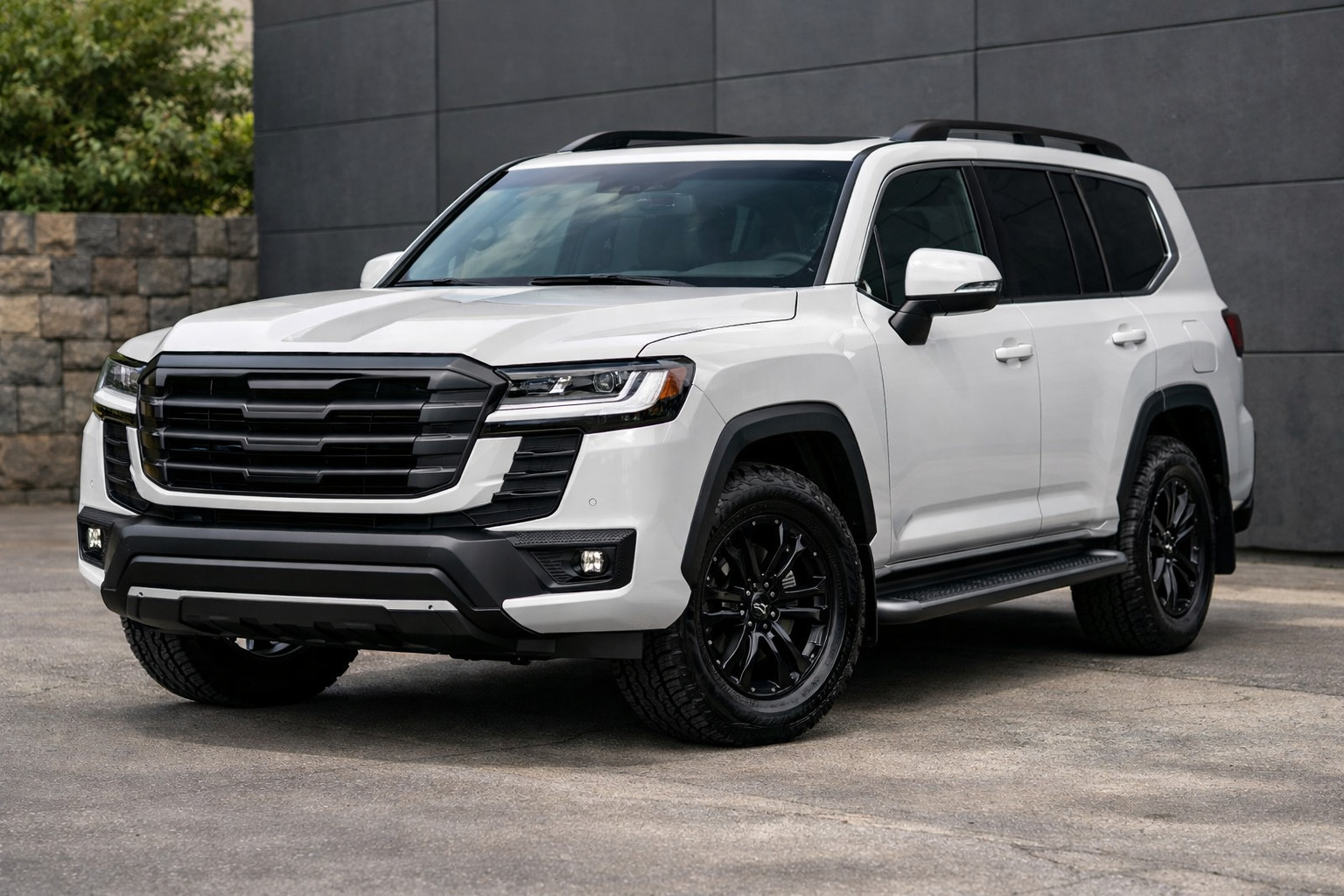
| ✘ | Non-rated or decorative rails may visually seem load-bearing, but without official approval/recommendations for a roof box, there are no safety guarantees. In fact, it is a system “for show”. |
| ✘ | For proper installation, additional adapters may sometimes be needed (for example, a T-track Adapter), and without them the box may not fit correctly. This adds cost and complicates selection. |
| ✘ | Aerodynamic improvements do not eliminate noise completely: the very presence of a roof box increases air resistance. So expectations of being “almost like without a box” may not be met. |
Shipping to EU
Wholesale and retail
Own warehouse
Опис продукту
Подарунки не надаються при оформленні покупки у кредит під 0,01% або при покупці частинами.