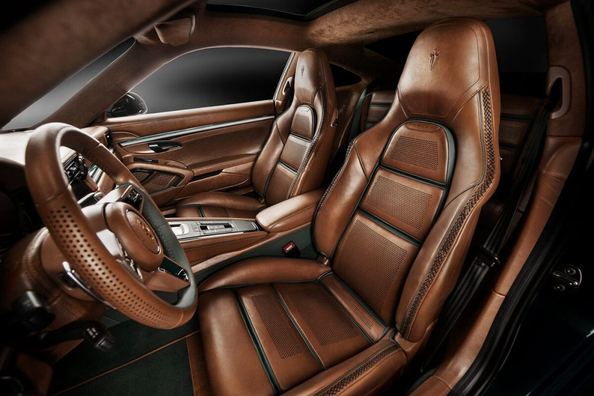
A leather car interior adds luxury, but over time, leather can fade, dull, or become stained. Restoring leather is a way to bring your interior back to its former beauty without the expense of expensive repairs. This article will tell you how to properly renew your leather interior while maintaining its durability. You can also increase the comfort in your car and improve the functionality of your car by using tuning accessories, which are available in our online store in a large assortment.
The main "enemies" of a leather interior
Understanding the causes of wear and tear helps to properly care for the interior in the future:
- Ultraviolet: Direct sunlight dries out the material and destroys the coloring pigment.
- Friction: Constant contact with clothing, especially on the side supports of the seats, leads to mechanical abrasion of the paint.
- Chemicals: Incorrectly selected or aggressive cleaning agents can damage the protective layer.
- Temperature fluctuations: Sharp temperature changes lead to loss of elasticity and the appearance of microcracks.
Restoration Stages: Step-by-Step Process
Professional color restoration is a complex procedure that includes several mandatory stages.
1. Surface preparation:
- Deep cleaning: Removal of all old dirt using specialized pH-neutral formulations.
- Degreasing: Surface treatment to ensure the best adhesion of paint to the skin.
2. Repair of defects:
- Repairing Damage: Minor scratches, cracks, and abrasions are filled with elastic restoration materials such as “liquid leather.”
- Leveling: The surface is carefully sanded to create a perfectly smooth base for painting.
3. Dyeing:
- Color selection: The shade can be selected using a spectrophotometer and computer tinting, which guarantees a 100% match with the original.
- Applying paint: The pigment is applied in layers using an airbrush, which allows you to achieve an even coating without streaks and preserve the unique texture of the skin.
4. Finishing protection:
- Varnishing: The surface is covered with a special protective varnish, which can be matte, satin or glossy.
- Consolidating the result: The varnish not only protects the new color from abrasion and UV rays, but also gives the interior a finished, well-groomed look.
By entrusting this work to professionals, you are guaranteed a long-lasting and high-quality result.