12.01.2026
259
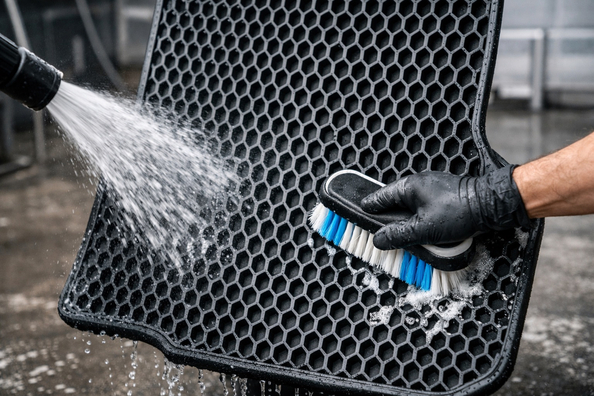
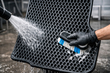
Regular car mat cleaning is an essential part of interior care, especially when it comes to modern EVA mats. These mats have a unique cell structure (honeycomb or diamond pattern) that traps dirt and moisture inside, preventing them from spreading throughout the car. This design is a big plus for cleanliness but also requires proper maintenance. In this article, we’ll look at how to wash EVA mats correctly so that fine “sand” doesn’t accumulate in the cells and the mats don’t lose their appearance over time. You’ll learn about the best washing methods, common mistakes, compare EVA mats with rubber and textile ones, and see the expertise of our company, which has its own production and patented solutions.
Contents:
EVA mats are made from EVA (Ethylene Vinyl Acetate) – a modern polymer. They are lightweight, flexible, durable, and waterproof, resistant to temperature changes and most household and automotive cleaning agents. The main feature of EVA mats is their surface with recesses (cells) about 7 mm deep that collect dirt, sand, water, and snow. Thanks to this, dirt doesn’t spread across the mat or get onto the car floor – all debris stays inside the cells.
However, if EVA mat care is neglected, these advantages can turn into drawbacks. Dirt and dust accumulated in the cells eventually compact and look like light “sand” at the bottom. This makes the mat look untidy, and fine dust can rise into the air when shaken. Moreover, with heavy dirt buildup, the mats lose efficiency – they trap less moisture and dirt. Proper regular maintenance helps avoid these issues: the mats look new longer, and the interior stays clean and protected. Some EVA mat designs can hold a significant amount of moisture and dirt (up to several liters depending on shape and size) – if not removed, this mass will remain inside your car.
Thus, timely cleaning of EVA mats is not only about aesthetics but also hygiene and durability. By maintaining them regularly, you extend their lifespan and ensure maximum interior protection. Next, let’s go over how to wash EVA mats properly.
Fortunately, cleaning EVA mats is quite simple – usually easier than traditional rubber or fabric ones. Follow these steps:
After these steps, you’ll have clean mats with no sand traces in the cells – they’ll look like new. Often, simple rinsing with water is enough to refresh EVA mats, while regular rubber mats would require more scrubbing. Next, let’s look at common mistakes to avoid when washing these mats.
Despite being easy to maintain, some car owners make mistakes that can damage EVA mats or reduce cleaning efficiency. Here are the most common ones:
By avoiding these mistakes, you’ll keep your mats intact for a long time. Following the proper cleaning technique ensures maximum cleanliness with minimal effort.
In addition to regular washing, here are a few tips to keep your EVA mats in perfect condition for years. Follow these recommendations – and your mats will last as long as possible:
Following these tips will help you get the most out of your mats. With proper care, EVA mats can serve for many years, maintaining a neat look and protecting your interior in any season.
To better understand EVA mat care specifics, let’s briefly compare them with traditional car mats made of rubber and textile. Here’s a summary table:
| Characteristic | EVA mats | Rubber mats | Textile mats |
|---|---|---|---|
| Ability to retain water and dirt | Cells trap dirt, dust, and water inside, reducing the risk of spreading. Capacity depends on shape, area, and cell height. | Raised edges (depending on model) hold some water and dirt. Large amounts may overflow onto the floor. | Moisture is absorbed by the pile. When oversaturated, it soaks through and wets the floor. Dirt stays in fibers and can smear. |
| Ease of cleaning | Very easy: just shake out debris and rinse with water. Detergents are needed mainly for greasy stains. | Moderate: dirt sticks to rubber and often requires scrubbing, especially dust film. | Difficult: needs vacuuming, beating, and occasional washing. Stains are harder to remove, drying takes longer. |
| Drying time after washing | Fast: material doesn’t absorb water, usually enough to shake and wipe off droplets. | Fast: rubber also doesn’t absorb water, but moisture may remain in grooves. | Long: pile absorbs water; full drying may take several hours to a day. |
| Weight of set (4 pcs) | Usually light, easy to remove and wash. | Usually heavier, harder to shake (especially large front mats). | Medium weight, but much heavier when wet. |
| Resistance to wear and chemicals | High under normal use; withstands temperature changes and seasonal dirt well. | High wear resistance, but some petroleum products may affect rubber. In severe frost, rubber can harden. | Medium: pile wears out gradually, stains appear, fabric loses appearance faster with heavy use. |
As we can see, in many aspects EVA mats either outperform or match other types. This is especially true for ease of cleaning and moisture protection. Of course, each type has its advantages: textile mats may look more “premium,” and rubber ones are often seen as “indestructible.” However, in terms of practicality, EVA combines key benefits: excellent interior protection, easy maintenance, and long service life.
Finally, let’s highlight why the information in this article is truly expert. Our company Digital Designs (part of the DD Tuning group) is a direct manufacturer and importer of EVA mats. We have our own production facility equipped with modern machinery (including laser cutting for perfect fit). Our experience and expertise allow us to share proven care tips backed by practice.
Moreover, Digital Designs holds officially registered Ukrainian patents for inventions related to EVA mat design, as well as a registered trademark for our products. This means you get an original product protected by intellectual property – with no compromises in quality or questionable copies. We take pride in the quality of our mats and in offering innovative solutions to Ukrainian motorists.
As a manufacturer, we offer a wide range of EVA mats for specific car models. You can purchase both EVA mats for the cabin and EVA mats for the trunk of your car – for full interior protection. Our catalog also includes other car mats (rubber, polyurethane, textile) for every taste. But EVA mats are our specialty and pride.
Conclusion: caring for EVA mats is neither difficult nor time-consuming if you know the right approach. With simple water washing and periodic cleaning, you can easily keep your car interior clean and your mats in great condition. Invest a little time in their maintenance – and they’ll reward you with long service life, stylish appearance, and reliable dirt protection in any weather.
Author: DD Tuning Team
Created by: material prepared with AI assistant participation; final editing and verification — DD Tuning team.
Updated:
Shipping to EU
Wholesale and retail
Own warehouse
Опис продукту
Подарунки не надаються при оформленні покупки у кредит під 0,01% або при покупці частинами.