 Author: Radomskyi Maksym Vasyliovych
In winter, a side step is slippery when wet snow, ice glaze, or a salty film from de-icers lies on it, and the sole of your shoes is wet. Three habits work most reliably: shake snow off the step and your footwear before getting in, don’t chip ice with metal but melt it or rinse it off, and once a week rinse off de-icers and check that the brackets are tightened. This is about side steps/running boards you put your foot on, not the body sill: we covered how to protect the body itself from salt in a separate article.
Contents
- Why the step is slippery in winter
- Which step surface slips less
- How to remove snow and ice from the step
- What de-icers do to the step and mounts
- Ground clearance and snow: what the step changes
- How to use a step safely in winter
Why the step is slippery in winter
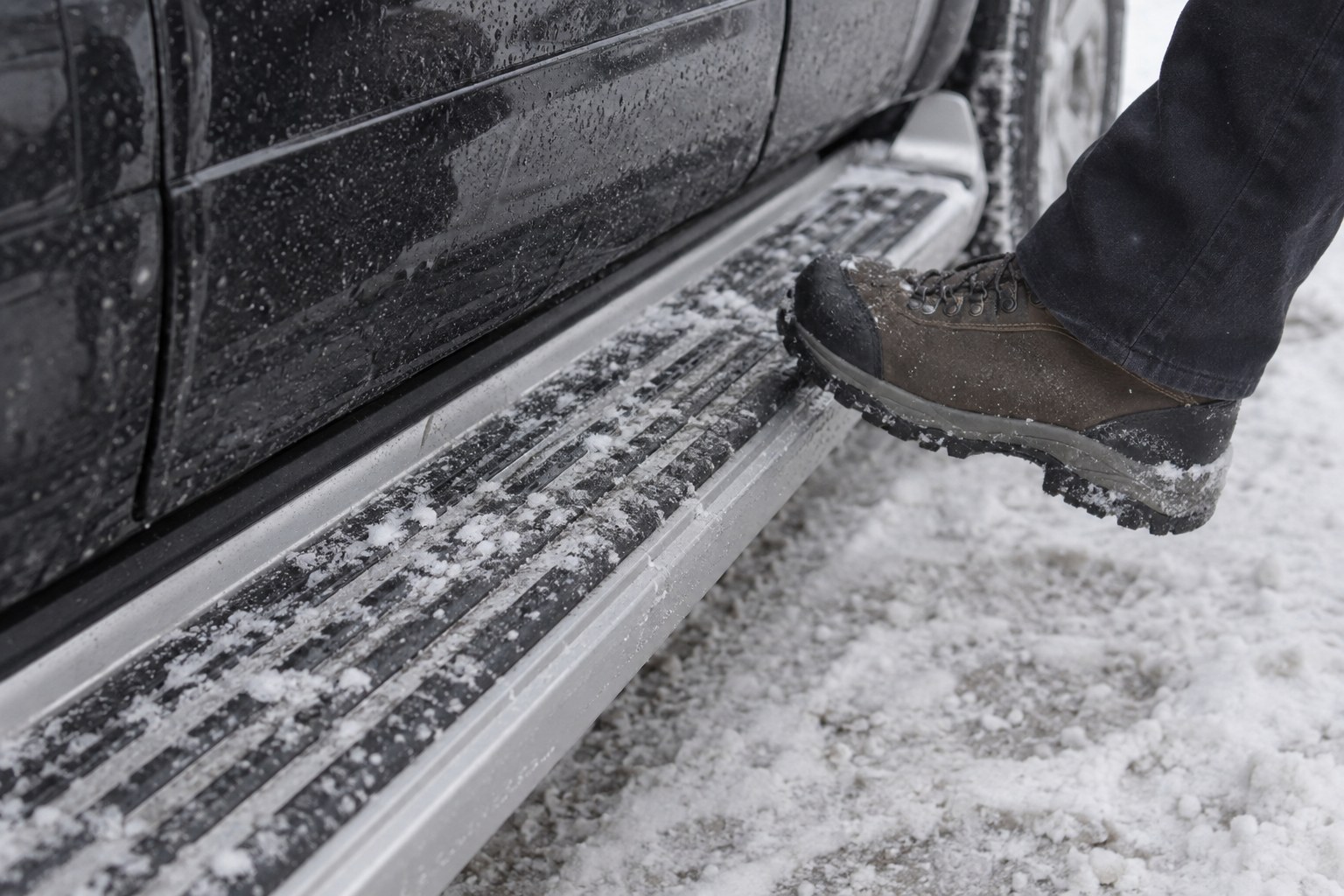
The step is mounted low, so everything thrown up by the wheels settles on it: wet snow, slush, salt. During the day, snow melts from the warmth of your shoes and water, and at night it freezes into a thin film of ice that is almost invisible. The second reason is the sole itself: snow stuck to your shoes will be carried onto the platform, and a wet sole slips even on dry metal.
So it’s not only ice that’s slippery. Just as dangerous are wet metal with road slush on it and a smooth surface without texture. A wide platform that supports the whole foot is more convenient than a narrow tube, but it won’t help if there’s a layer of snow on it.
Which step surface slips less
Customers most often ask whether a step is slippery and what to do about it. The general rules are:
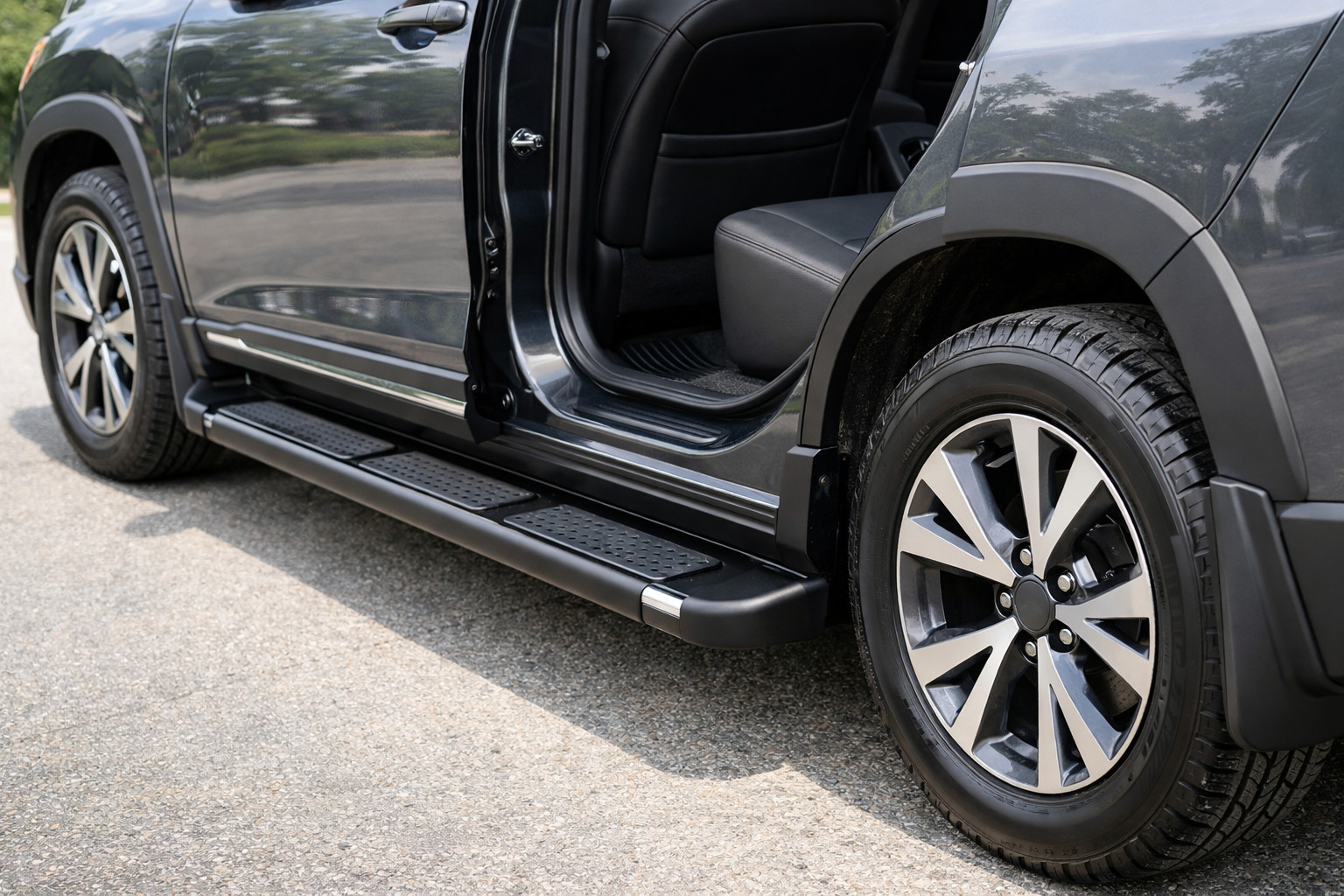
- Ribbing, rubber, and rough inserts reduce slipping, but only where they are present. Look at the contact surface of the specific product, not the overall appearance in the photo.
- A smooth tube is not always convenient as a step: your foot holds worse on it than on a platform with treads. Tubes may have plastic or rubber foot pads, and whether they are included depends on the model.
- An aluminum-profile platform with transverse ribbing holds your foot better than solid smooth metal. Check the profile, platform width, and type of ribbing in the product specifications.
- Color and matte finish. A matte surface hides scratches from snow and sand better. It does not, by itself, change how slippery it is.
If you’re choosing steps with winter in mind, in the side steps catalog compare first of all the platform width and the surface type. We’ve collected vehicle-specific sets for individual brands in facets, for example for Toyota.
How to remove snow and ice from the step
The step’s metal is easy to scratch, so remove snow and ice gently. After scratches, salt and moisture reach bare metal or get under the coating, and that’s where streaks and corrosion appear faster.
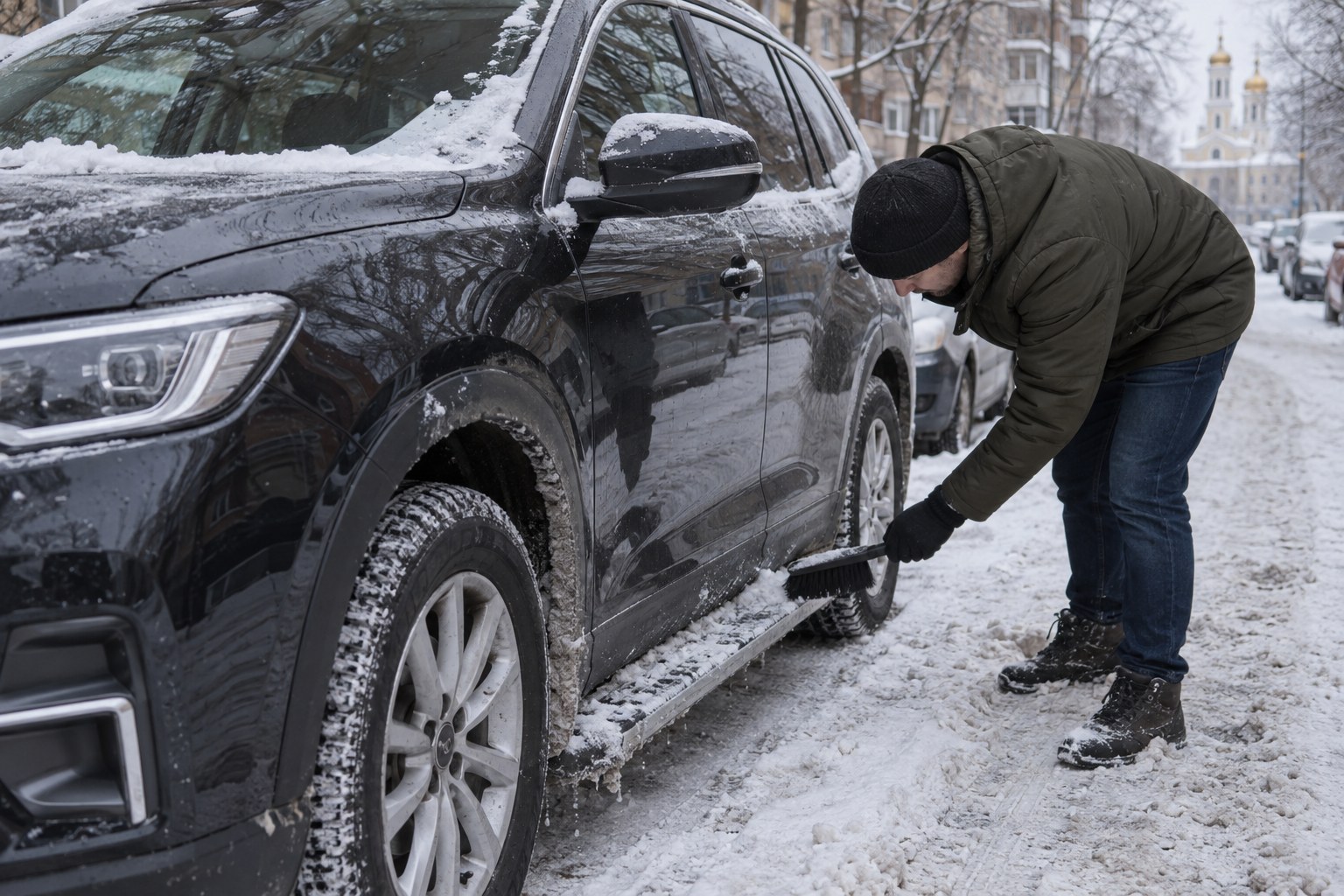
- Snow should be brushed off with a soft brush or simply wiped away with a glove, rather than kicked off against the brackets.
- Thin ice should be melted with cabin heat: turn on the heater, let the car warm up for a few minutes, and only then clean. A plastic ice scraper for glass is suitable for a thin ice film.
- Thick ice should not be chipped off with a crowbar, shovel, or metal scraper. It’s better to let it melt in warmth and immediately wipe the water dry. You must not pour boiling water onto cold paint, plastic, or glass: the temperature difference causes cracks.
- After cleaning wipe the platform with a cloth so it doesn’t freeze again overnight.
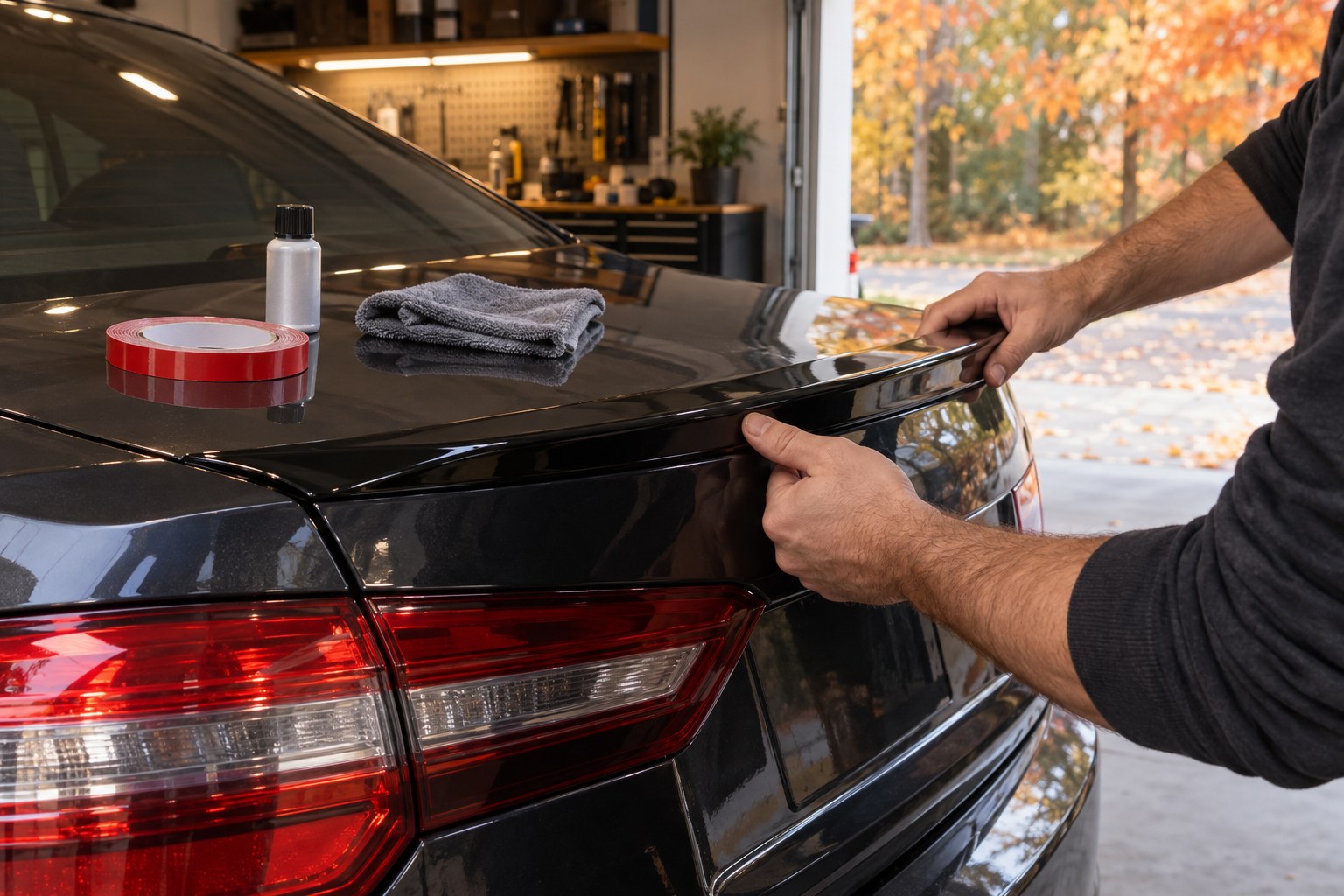
Protective films and trims that are glued to the metal or plastic of the sill should be removed just as carefully: the adhesive layer doesn’t like scrapers. Door-sill trims are surface protection and decoration, not a step, so you step only on the designated running board. You can choose trims for your vehicle in the door-sill trims section.
What de-icers do to the step and mounts
Road mixtures are mostly chlorides, which absorb moisture and stay wet on metal for a long time. Aluminum and stainless steel resist corrosion, but the salty film leaves streaks and a dull residue, and at mounting points—where bolts and brackets are steel—rust appears first. We talked separately about the body itself and the sill drain holes in the article how to protect sills from salt and de-icers in winter.
What really helps the step itself:
- Rinse salt off the steps, brackets, and underbody with water every one to two weeks, and after trips on heavily salted highways—more often.
- Wash on a warm day or indoors, and after washing wipe the platform and joints: water in gaps freezes overnight and leaves a slippery crust.
- Do not use abrasive sponges: they wear away the coating, and salt gets onto bare metal.
- Stainless steel can be polished, but damaged coating reduces metal protection, so it’s better not to leave scratches.
Ground clearance and snow: what the step changes
A step that sits lower than the body can reduce ground clearance, so you assess not only the platform thickness, but also the bracket height and the step position. In winter this matters twice: in deep snow the platform is the first to catch a snowdrift, and on a high curb or in ruts you can catch the edge.
What to consider:
- A wide platform protrudes beyond the body more and collects snow faster, while a tube is more compact but works worse as a step.
- Mud flaps, fender liners, and pipes under the car can interfere with brackets, and sometimes the mud flaps need to be removed or repositioned.
- For winter off-road driving and deep snow, consider whether you need a step at all: heavy-duty off-road rock sliders and a regular side step are different products.
How to use a step safely in winter
- Step only on the step intended for this purpose with the appropriate mounts. You cannot step on a trim, and the step is not used as a jacking point.
- Clear snow off your footwear on a floor mat or tire before stepping onto the platform.
- Hold onto the door handle or the pillar when getting in, and don’t jump on the step.
- Permissible load depends on the mounts and the model, so using “100–150 kg” as a general number isn’t a good idea: check for your specific set.
- Tighten all brackets. Install all the brackets provided, because a slight sag between them is possible; after the first frosts and the first kilometers on uneven roads, re-tighten the bolts.
Separately about what’s included: brackets and bolts may come in the kit or be sold separately, so it’s worth verifying the комплект before ordering. Mounting hardware for different models is collected in the mounts for steps section. See Erkul aluminum sets with brackets in the Erkul side steps facet; we always recommend уточнювати model compatibility (generation, body, wheelbase) with a manager before ordering.
We ship via Nova Poshta across Ukraine.
How to Care for Side Steps in Winter
- Shake snow off your shoes Before stepping in, wipe the soles against the mat or wheel so snow doesn’t get onto the platform.
- Brush off the snow with a soft brush Do not kick it off and do not use a shovel or a metal scraper.
- Melt thin ice with cabin heat Warm up the car for a few minutes, remove the film with a plastic scraper, and wipe the platform dry.
- Wash off the de-icing agents Every week or two, rinse salt off the steps, brackets, and underbody, and after washing, wipe the joints so the water does not freeze.
- Tighten the brackets After the first frosts, check all bolts and tighten them; install all предусмотрені brackets.
- Inspect the coating and ground clearance Look for scratches that expose the metal, and marks from curbs or snowdrifts.