
































































 Author: Radomskyi Maksym Vasyliovych
In winter, car owners with window visors most often ask one thing: will the deflector crack from ice, will it come unstuck in the cold, and wouldn’t it be easier to remove it until spring. The short answer: quality acrylic or polycarbonate deflectors are designed for year-round use, so there’s no need to take them off for winter. But there are a few rules worth knowing so your visors make it through freezing temps without cracks or peeling.
Contents
- In short
- Why window visors are useful in winter
- Do deflectors ice up?
- Stick-on vs in-channel: which is better for winter
- Car wash with deflectors in winter
- Installing deflectors in cold weather
In short
- No need to remove them for winter — neither stick-on (tape-mounted) nor in-channel (installed in the window channel).
- Ice on the deflector is not a problem; the only danger is chipping it off with a scraper or lowering the window when the edge is frozen solid.
- It’s best to install stick-on visors in a warm place — adhesive tape bonds poorly to a cold surface.
- A car wash is safe as long as you don’t aim a high-pressure jet right up close at the edge of the deflector.
Why window visors are useful in winter
In winter, deflectors are even more useful than in summer. They let you crack the window open a little to ventilate the cabin and clear fogged glass when it’s snowing or raining outside — water and snow won’t blow inside. In addition, some of the dirt and road chemicals are diverted away from the gap between the glass and the seal.
Do deflectors ice up?
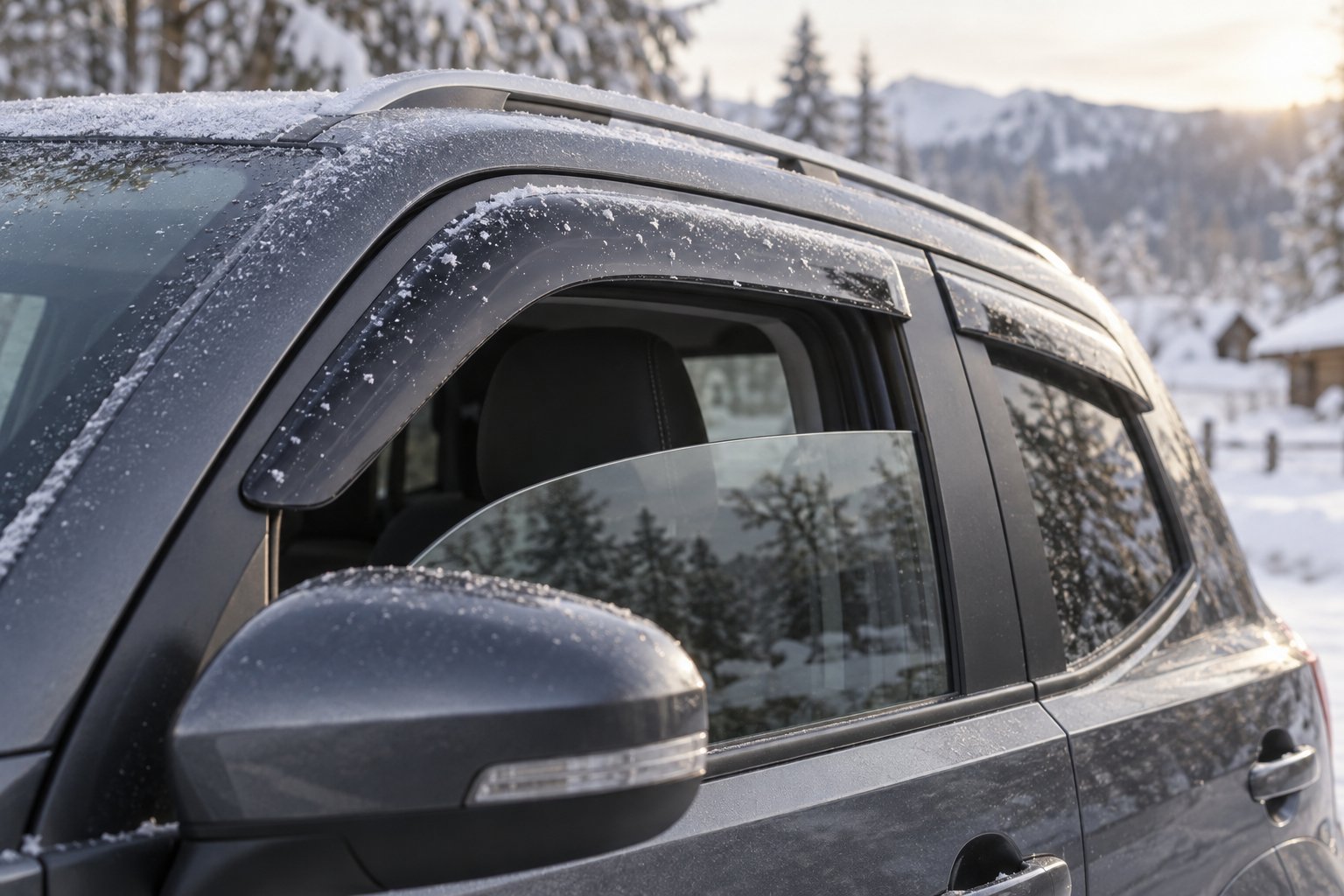
Yes, in wet snow or during a thaw, an ice crust can form on the visor, just like on any other part of the body. The plastic itself doesn’t suffer: acrylic and polycarbonate handle мороз just fine. Problems arise because of the driver’s actions:
- scraper — you shouldn’t chip ice off the deflector with a glass scraper: the plastic gets scratched and can crack at the mounting point;
- lowering a frozen window — if the glass is frozen to the seal and you press the window switch, the load goes to the mechanism and to an in-channel deflector in the window channel;
- boiling water — a sudden temperature change is harmful to both the glass and the plastic.
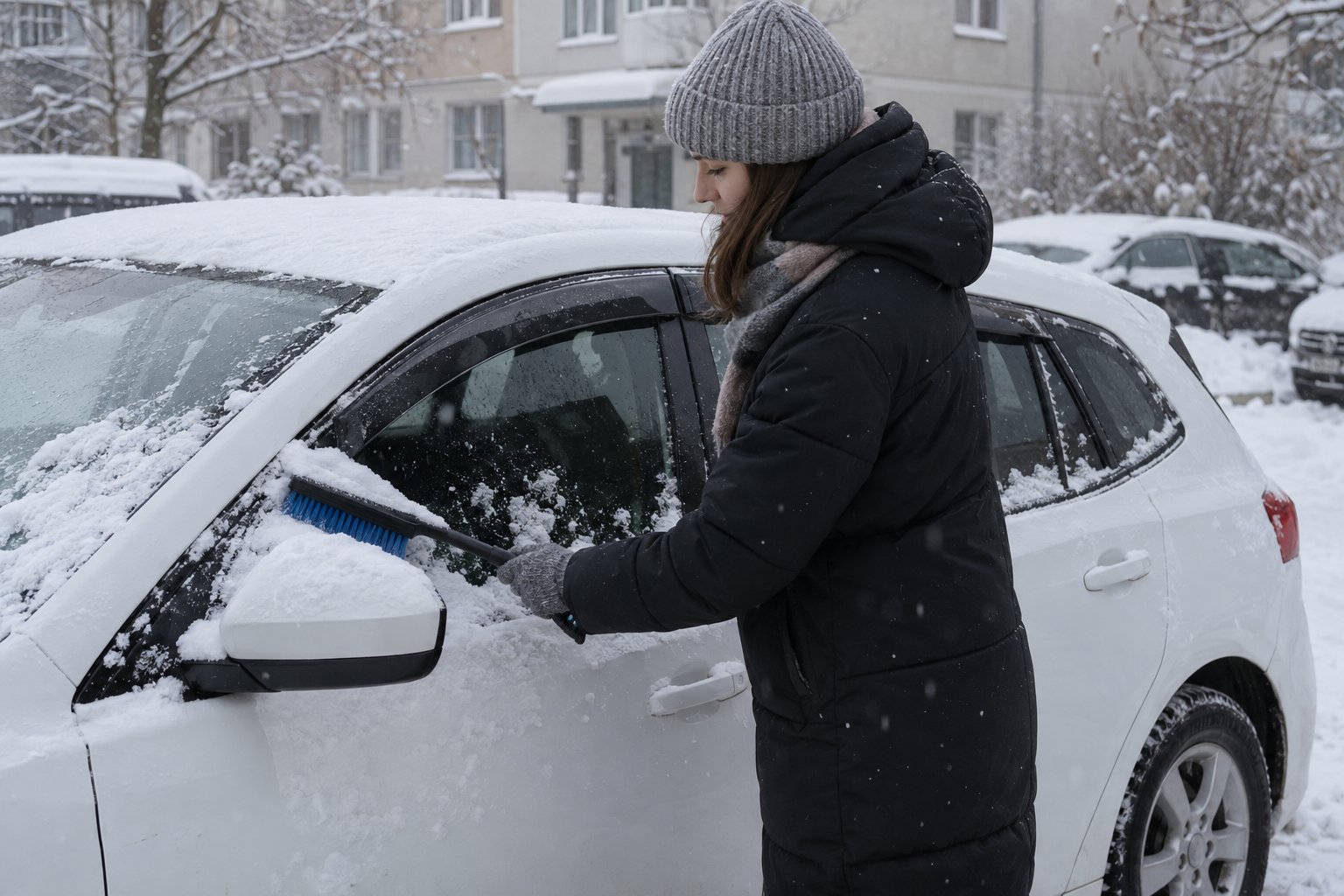
The best way to remove ice from a visor is to warm up the cabin: after a few minutes of heating, it comes off on its own. Sweep snow off with a brush, not a scraper.
Stick-on vs in-channel: which is better for winter
| Type | How it’s mounted | In winter |
|---|---|---|
| Stick-on | with double-sided adhesive tape to the outside door frame | stay secure if installed in warmth; not worth installing in freezing temperatures |
| In-channel | in the window channel, under the seal, without adhesive | installation doesn’t depend on temperature, but in severe мороз do not lower the window until the glass has thawed |
Both types are suitable for Ukrainian winter conditions. Stick-on visors don’t touch the glass and don’t affect window regulator operation; in-channel ones look neater and have no adhesive layer. The choice comes down to preference and the конкретный car model: check out our window deflector catalog with подбор by make and model.
Car wash with deflectors in winter
A regular car wash won’t harm window visors. If you use a high-pressure washer yourself, keep the nozzle at a distance and don’t aim the jet right up close at the edge of a stick-on deflector — that way water won’t get under the adhesive tape. After washing in мороз, wipe the deflectors and seals dry so water doesn’t freeze in the gaps.
Installing deflectors in cold weather
In-channel visors can be installed at any time of year. Stick-on ones are different: double-sided tape gains strength on a warm, dry, degreased surface. If you bought deflectors in winter, install them in a warm garage or at a heated car wash and let the car sit in warmth for a few hours. Step-by-step instructions are in the block below.
We deliver with Nova Poshta across Ukraine; orders from 15,000 ₴ — free with our own transport.
How it works
- Warm up the car Drive the car into a warm space (garage, heated car wash) and let the body warm up to at least +15 °C.
- Test-fit the deflector Place the wind deflector against the door frame, without removing the protective film from the tape, and mark the position with masking tape.
- Degrease the surface Wipe the bonding area with a degreaser or an alcohol wipe and let it dry.
- Apply the deflector Remove the protective film, align the wind deflector with the marks, and press it firmly along its full length for 30–60 seconds.
- Let the tape set Leave the car in a warm place for several hours and do not wash it for the first 24 hours after installation.