 Author: Radomskyi Maksym Vasyliovych
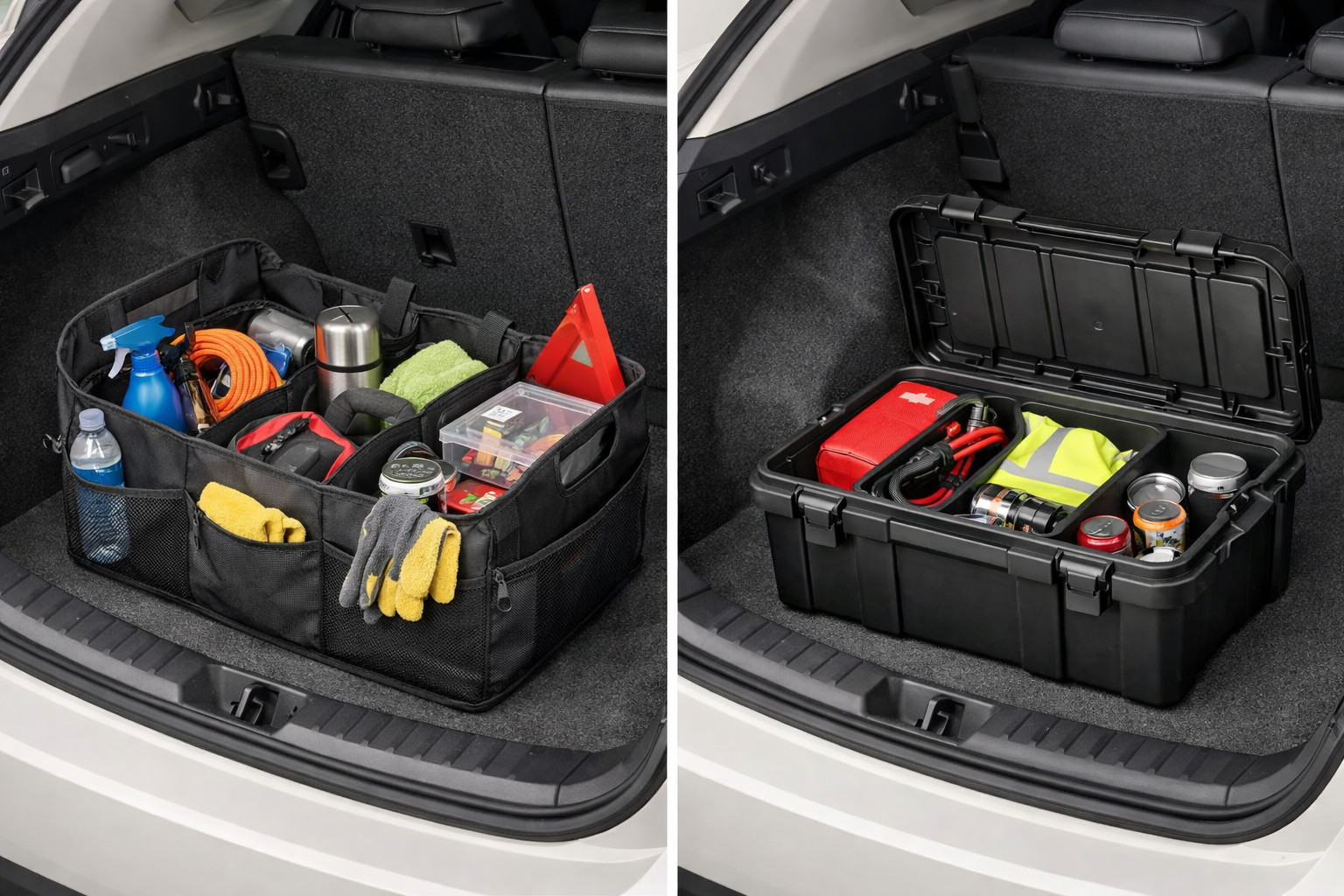
If you need order in the trunk every day and don’t want to lose usable space, a bag organizer is often more convenient. But if you regularly carry tools, jerry cans, wet items, or anything that can leak and make a mess, a rigid container is more practical.
In practice, the choice rarely comes down to two extremes. For most drivers, the smartest compromise is a foldable organizer with a rigid bottom, inserts, and proper securing. It’s the mounting, not the format name, that often determines whether the trunk stays tidy without sliding and rattling.
What the choice is really about
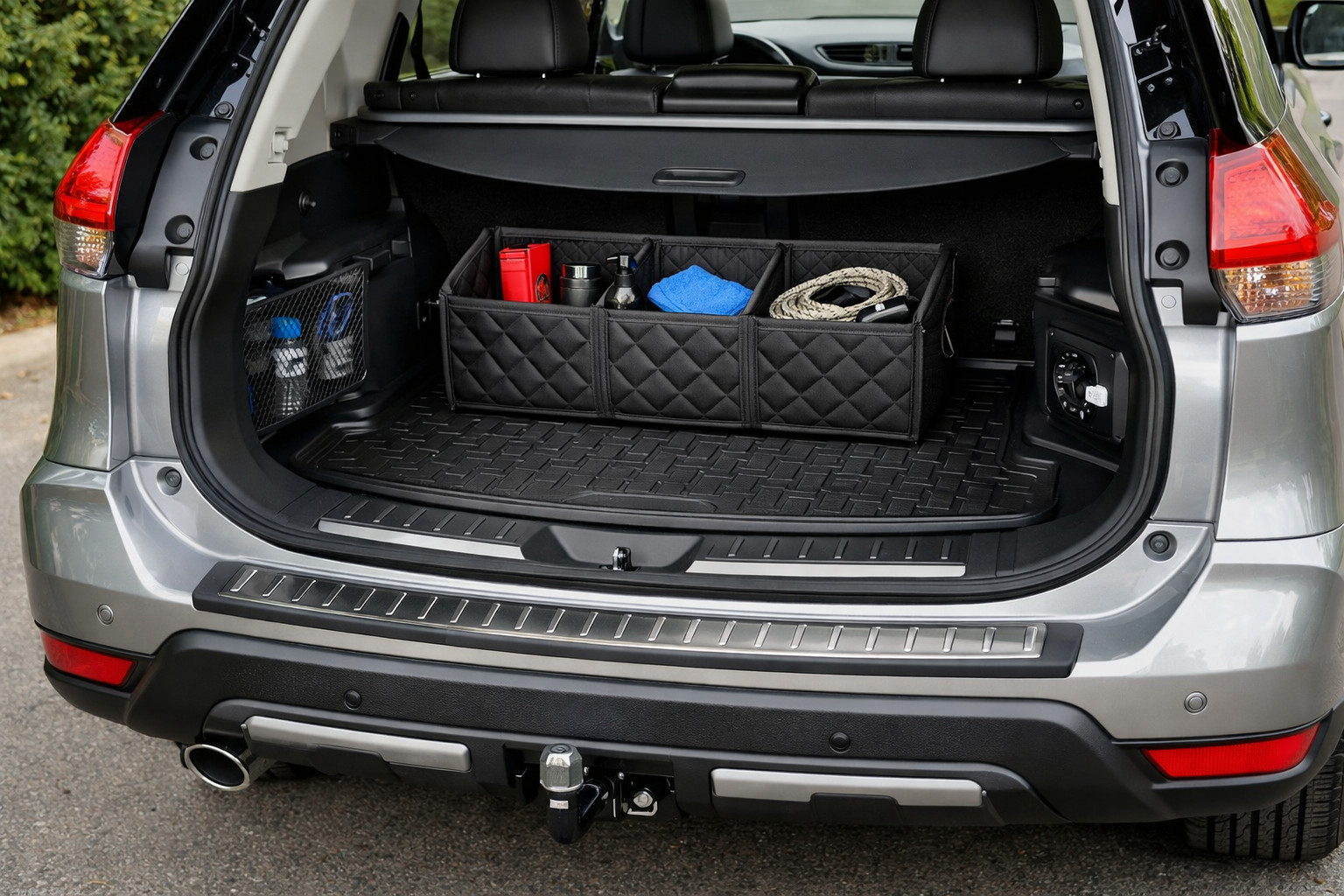
A bag organizer wins on flexibility. It’s lighter, usually has compartments and pockets, folds almost flat, and doesn’t take up space when you need to quickly free the trunk for a suitcase, stroller, or boxes.
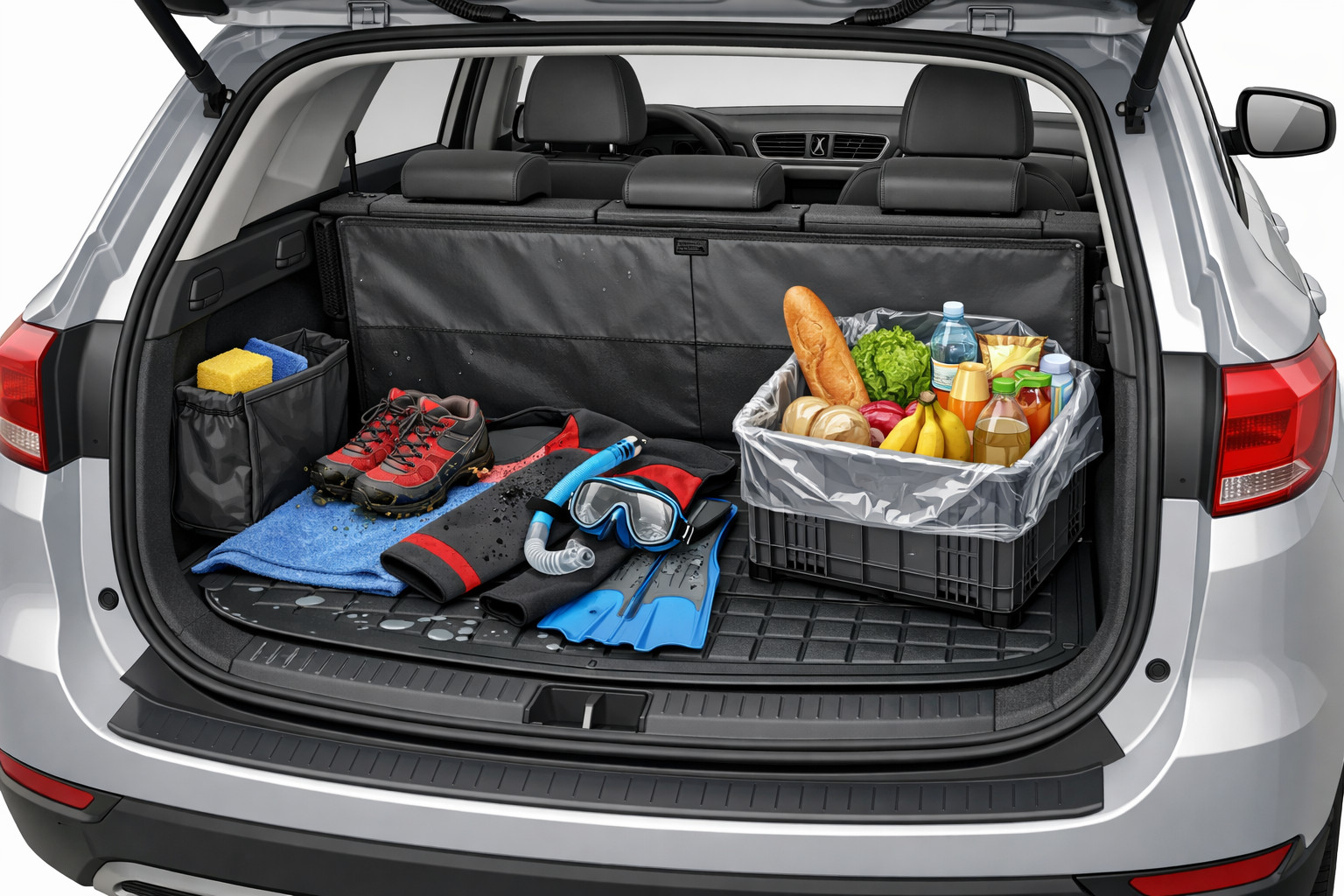
A rigid container wins where shape and easy cleaning matter. It won’t sag under heavy items, holds bottles, car chemicals, tools, an emergency kit, and anything that shouldn’t scatter across the trunk floor more securely.
What criteria to compare by
Mounting. First, look at how it’s secured: Velcro, straps, a non-slip base, the ability to hook onto tie-down loops. Without this, any format can slide during braking.
Noise. A soft organizer is usually quieter because it doesn’t bang hard edges against plastic. A container more often knocks if it sits loose or if metal items inside aren’t separated into sections.
Durability. In budget soft models, weak points are seams, dividers, and loss of shape after overload. With a container, it depends on the plastic, latches, and handles. With hybrids, it depends on the rigid bottom, side panels, and mountings.
Practicality. For groceries and small items, compartments are more convenient. For dirt, water, and sharp items, a smooth shell that you can wipe quickly is better. Also check the height under the cargo cover and access to the underfloor storage.
Price. The cheapest bag isn’t always the cheapest to use: if it loses its shape in a season, you’ll have to buy again. A more expensive organizer or container makes sense only if you actually use it regularly.
Quick comparison of options (table)
| Option | Strengths | Weaknesses | Who it suits |
|---|---|---|---|
| Soft bag organizer | Lightweight, folds flat, convenient for daily groceries and small items | Holds shape worse, cheap models wear out faster, slides without fastening | City driving, family trips, small trunks |
| Semi-rigid foldable organizer | Holds walls better, handles more weight, still foldable for storage | More expensive and heavier than a soft bag; quality heavily depends on the base and fastening | Those who want daily order without a permanent plastic box |
| Rigid container | Stable shape, easy to wash, better for tools, dirt, bottles, and chemicals | Takes up space permanently, adapts worse to trunk shape, can be noisy | Work vehicles, long trips, heavy or dirty cargo |
DD Tuning expert comment: Most people go for maximum volume but don’t measure the height under the cargo cover or access to the spare tire. The second common mistake is buying a model without fastening and expecting it to stay put on a slippery trunk floor. If you plan to carry heavy items, look not at the number of pockets, but at a rigid base, walls, and the mounting method.
A detailed look at each option
Soft bag organizer
This is the most convenient format for everyday tasks. Typical models hold about 50–65 liters—enough for groceries, small gear, a first-aid kit, a compressor, and cleaning supplies. They’re easy to take out, carry, and fold when you need the trunk for bulky items.
The weak point is shape stability. With heavy bottles or tools inside, a cheap soft construction sags faster and the sides collapse inward. This option is best for light and dry contents.
Semi-rigid foldable organizer
This is an in-between solution that often turns out to be the best. A rigid bottom, wall inserts, dividers, and straps provide what a simple bag lacks: it keeps its shape, cargo stands more securely, and the organizer can still be folded down to an almost flat state.
This is where you get the fewest compromises in noise, durability, and practicality. For a family car, city driving, and weekend trips, it’s often the smartest choice—provided you don’t skimp on the fastening.
Rigid container
A rigid box is useful when the contents shouldn’t contact the trunk lining and everything needs to be wiped down quickly after a trip. In this format, it’s easier to carry tools, a tow kit, cables, dirty shoes, fluids, and work consumables.
But a container needs especially careful measuring. Fixed dimensions may not fit under the shelf, may block the underfloor compartment, or take up too much height. If the box is full, it’s also harder to remove than a foldable organizer.
Which option is better for different scenarios
If 80% of your tasks are city driving, supermarket runs, kids’ items, seasonal small stuff, and the need to free the trunk from time to time, there’s not much point in a rigid container. It disciplines the contents, but permanently takes up volume.
If your use is mixed—groceries, trips, sometimes tools, sometimes wet items—a semi-rigid organizer works better. It’s quieter than a container and far more convenient day to day than a simple soft bag.
A rigid container is worth it when the priority isn’t compactness but cargo stability, protection from dirt, and quick cleaning. For a work vehicle or frequent trips on bad roads, it’s not a whim but a logical tool.
Use scenario and what to choose (table)
| Scenario | Best choice | Why |
|---|---|---|
| Daily groceries and small items | Soft bag organizer | Doesn’t take extra space, has compartments, folds quickly |
| Family trips, stroller, blankets, kids’ items | Semi-rigid foldable organizer | Keeps its shape, but doesn’t get in the way when you need to load bulky luggage |
| Tools, car chemicals, tow ropes, cables | Rigid container | Handles weight better, easier to wash, lower risk to the trim |
| Slush, fishing, construction site, wet cargo | Rigid container | Dirt and water are quicker to clean than from a fabric model |
| Small trunk or frequent need to clear everything out | Soft or semi-rigid foldable model | After use, you can fold it and restore full trunk space |
| Mixed use without extremes | Semi-rigid foldable organizer | Best balance of order, quietness, durability, and flexibility |
Common mistakes when choosing
- Focusing only on liters and not measuring width, height under the cargo cover, and access to the underfloor compartment.
- Buying a soft model for heavy metal tools and expecting it to hold its shape for years.
- Ignoring fastening. Without Velcro, straps, or a non-slip base, even a good organizer will slide around.
- Choosing a rigid container for occasional shopping when the main need is the ability to quickly free the trunk.
- Confusing a neat look on the product page with real convenience in your specific car.
When a more expensive solution makes sense
A more expensive option makes sense when the trunk is truly used every day, not once a week. In that case, it’s better to look not at the simplest bag but at car bag organizers with a rigid bottom, dividers, and proper fastening.
If the mess in your car isn’t limited to the trunk, it makes sense to build a storage system: move some small items to seat back organizers, and keep only what needs to be at hand or can handle weight in the trunk.
For cars that are often loaded up to the shelf, a pricier solution is also justified when you need a closed, more disciplined space. In that scenario, it’s also worth checking trunk covers so items aren’t left in the open and it’s easier to keep everything tidy within one volume.
From a customer’s experience: for a family wagon, they initially wanted a rigid plastic box because it seemed more reliable. After measuring, it turned out it blocked access to the underfloor compartment and got in the way of fitting a stroller, so they chose a foldable organizer with a rigid bottom and fastening. As a result, groceries and small gear stayed organized, and when a large trunk is needed, the organizer folds down in a minute.
Conclusion
For most everyday tasks, the more convenient choice is not a purely soft bag and not a large plastic box, but a foldable organizer with a rigid bottom and reliable fastening. A fully rigid container wins where the cargo is heavy, dirty, wet, or work-related—and where easy cleaning matters more than saving space.
Choose not by the format name, but by your real scenario: what you carry, how often you clear the trunk, whether you have a cargo cover, underfloor storage, and tie-down points. This material is based on real selection experience, practice, and real use cases, so the main takeaway is simple: without proper fastening, even a well-chosen organizer won’t deliver the order you’re buying it for.
How it works
- Assess what you carry First, define the main scenario: everyday shopping, family trips, tools, car care products, wet items, or dirty cargo. For light and dry items, an organizer bag is usually more convenient, while for heavy, wet, or dirty contents, a rigid container is better.
- Check the trunk dimensions Before buying, measure the width, the height under the parcel shelf, and access to the underfloor storage. Don’t rely on capacity alone, because a container or a tall organizer may block useful space or not fit under the shelf.
- Evaluate the fastening method Look at Velcro, straps, a non-slip base, and the ability to hook onto loops. It is the mounting that determines whether the organizer will stay in place during braking and cornering.
- Choose a format for your usage pattern For the city, small items, and frequent clearing of the trunk, a soft or foldable model will do. If you need a balance between order, quietness, and versatility, a semi-rigid foldable organizer with a hard base and inserts works best.
- Consider noise, durability, and ease of care Soft models are usually quieter and more compact, but they hold their shape worse under weight. A rigid container is easier to wash and holds cargo better, but it always takes up space and may rattle if left loose.
- Don’t overpay for unnecessary extras A more expensive solution only makes sense if the trunk is used every day and the load is truly regular. If your needs are mixed, the most practical option is a foldable organizer with reliable fastening, not just the cheapest bag or a large plastic box.
Pros and cons
The organizer bag doesn’t take up much space: it can be folded almost flat when the trunk needs to be cleared for large items. This is convenient for everyday shopping and small items.
A semi-rigid foldable organizer offers a good balance: it holds its shape better than a soft bag, yet it can still be folded. For a family car and mixed trips, this is a practical compromise.
A rigid container is better suited for dirt, moisture, car chemicals, and tools. It is easier to wipe clean after a trip, and the contents are less likely to dirty the trunk lining.
Foldable models with a rigid base and proper fixation move around less and rattle less. This is especially important during braking and on a slippery trunk floor.
For mixed use — shopping, trips, occasional wet items, or tools — a semi-rigid organizer works best. It is quieter than a container and more convenient for everyday use.
A soft organizer bag holds its shape poorly, especially if it contains heavy bottles or tools. Cheap models sag faster and may become unusable after just one season.
A rigid container constantly takes up trunk volume and adapts less well to its shape. In a small car, it may also block access to the underfloor compartment or not fit under the parcel shelf.
Rigid boxes can be noisy if they are loose or if they contain metal items without separation. For a quiet ride, this is a noticeable downside compared with a soft organizer.
Without proper fixation, any format will shift under braking. So the format itself does not solve the order problem if the mounting is weak.