 Author: Radomskyi Maksym Vasyliovych
This upgrade plan is for drivers who often travel on highways, run into roadwork sections, gravel, or simply keep catching small stones to the front end. If the task is simple—reduce chips on the bumper, hood, and headlights without spending on decorative items—the order of solutions here matters more than the number of accessories.
The core logic is: first install a physical barrier on vulnerable painted areas, then remove the source of stones from under your own wheels, and only after that think about auxiliary add-ons. Because ceramic coatings, trim pieces, or stylish elements don’t replace protection where impacts actually happen.
What this upgrade needs to handle
In this scenario, the upgrade has to solve three separate problems. First, it must take the hits from small stones on the paint and plastic at the front. Second, it must reduce the amount of debris the car throws into its own front wheel arches and lower body. Third, it must not block airflow or damage the body with drilling or poor installation.
The most vulnerable zones are almost always the same: the front bumper, the hood edge or the entire hood, the front fenders near the nose, the headlights, and on some cars even painted grille elements. If your car has a large open honeycomb grille and the radiator or condenser sits low behind it, you also need to think separately about that area.
Effectiveness depends on body type and driving conditions. Low sedans and wagons take hits faster on the lower bumper and the hood edge. Crossovers with wide tires more often also throw stones up from their own wheels. That’s why the same accessory list doesn’t work for every car.
What to upgrade first
First priority is protective polyurethane film on the front painted areas. If the budget is limited, the minimum I’d consider is the front bumper, the hood impact zone that actually gets hit, and the headlights. If the car often sees highway driving or gravel, it’s more logical to cover the entire front end right away: bumper, hood, front fenders by the nose, headlights, and painted grille elements if present.
Second priority depends on the debris trajectory. If chips show up not only up front, but also along the bumper edges, near the arches, or along the lower body, it means stones often fly from under your own wheels. In that case, add front mud flaps right away. They don’t replace film, but they intercept part of the debris stream before impact.
Before any protection, check the fender liners, fasteners, and factory arch shields. If something is missing or dangling, the flow of dirt and stones will hit wherever it wants, and you’ll just be protecting the result, not the cause.
Upgrade, why it’s needed, who benefits (table)
| Upgrade | Why it’s needed | Who really benefits |
|---|---|---|
| Protective film on bumper, hood, fenders | Takes small impacts and abrasive wear on the paint | Those who often drive on highways, behind trucks, through roadwork, and on gravel |
| Film on headlights | Reduces the risk of sandblasting and small chips on the optics | Those who do a lot of night driving and have expensive headlights |
| Front mud flaps | Reduce stones and dirt flying from under your own wheels | Crossovers, cars with wide tires, and those who drive on crushed stone and in winter slush |
| Restoring fender liners and arch shields | Restores proper protection from spray and debris | Cars after minor repairs, curb hits, with broken fasteners |
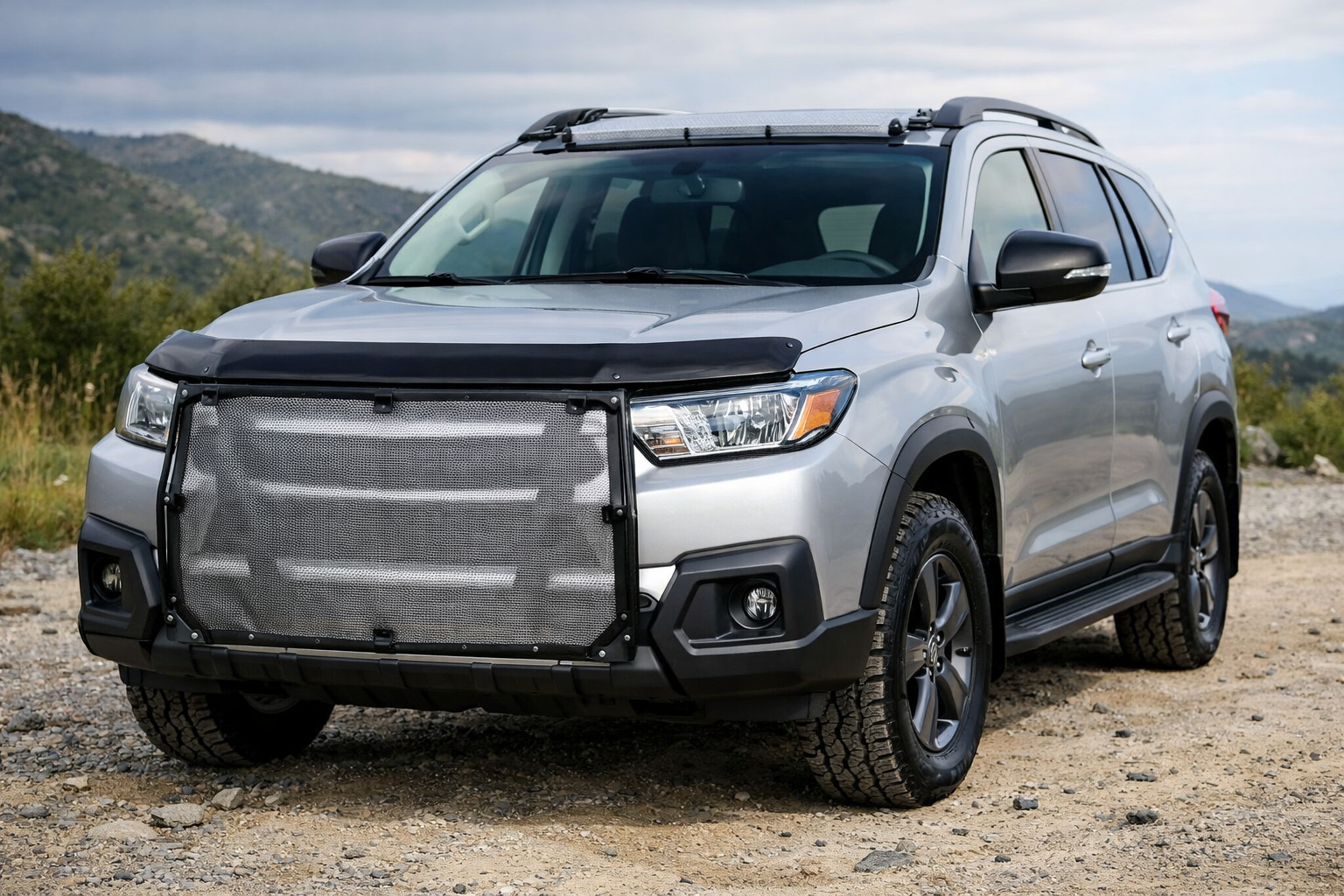
| Dedicated grille protection | Covers the area in front of the radiator if stones hit there | Cars with a large open grille and a vulnerable heat exchanger behind it |
| Hood deflector | Partly redirects debris from the hood edge and windshield | Those who already did the basic protection and want a local add-on |
| Ceramic coating over film | Makes washing and care easier, but doesn’t replace impact protection | Those who drive a lot on highways and want less scrubbing of dirt and insects |
DD Tuning expert comment: the most common mistake is buying ceramic or a deflector and expecting it to solve chips the same way film does. The second typical story is installing very small mud flaps because they look cleaner, and then being surprised by chips along the bumper edges. If the car is already throwing stones from under the wheels, first look at the trajectory, tire width, and the condition of the fender liner—not at the catalog picture.
What makes sense as a second stage
After the basic paint protection, the second stage should target what hits the specific weak points of your car. If you already have film on painted areas but after trips you see impacts on the grille or marks on the fins in front of the radiator, then dedicated grille protection is the logical next step. It’s not about looks—it’s about reducing risk for what sits behind it.
If in the first stage you limited yourself to just the front end, but small gravel still flies into the arches and lower body, then in the second stage install front mud flaps or correct their size and shape. This is especially noticeable on cars where the factory parts are narrow and don’t cover the working ejection zone of the stones.
Another solid second stage is ceramic over already installed film. It won’t make the front end more impact-resistant, but it will make it easier to wash off bugs, tar, and road grime after highway driving.
What’s more about comfort or appearance
In this group I’d include ceramic coating and the hood deflector. Ceramic adds easier maintenance and less dirt adhesion, but it won’t save you from stones. So it’s not a first purchase—it’s a finishing step for a car that’s already protected.
The hood deflector also shouldn’t be seen as a full replacement for film. It works locally, helps along the hood edge, partly redirects insects and debris, but it doesn’t cover the bumper, headlights, and large painted surfaces. If you like this format—install it after the basic protection, not instead of it.
Any trim pieces, surrounds, decorative inserts, or tinting can change the look of the car, but they rarely solve the chip problem. It’s important not to confuse tuning with protection.
What people often buy for nothing
Most often, money is wasted on things that don’t match the source of the problem. If stones hit straight into the bumper and hood, buying only ceramic is a mistake. If the car is throwing gravel from under its own wheels, a decorative front add-on won’t help at all.
The second typical mistake is overpaying for looks. People install nice but narrow mud flaps, grille trim, or strips of film only on the hood edge, even though the main chips occur lower on the bumper. As a result, the money is spent, but the main risk zone stays exposed.
The third mistake is choosing universal solutions where proper fitment to a specific body is needed. If an accessory hangs off the arch shape, covers the wrong area, or requires extra drilling, its benefit is questionable.
What to install first, what to postpone, what’s optional (table)
| Scenario | What to install first | What can be postponed | What is not mandatory |
|---|---|---|---|
| Stones hit directly into the bumper and hood | Protective film on the front end and headlights | Ceramic over the film | Hood deflector |
| Stones fly from under your own wheels | Front mud flaps and checking fender liners | Film on secondary areas | Decorative trim pieces |
| The grille or what’s behind it suffers | Dedicated grille protection | Hood deflector | Exterior decorative inserts |
| You want less hassle washing after highway driving | Start with basic impact protection | Ceramic as a second stage | Anything that doesn’t cover the impact zone |
| Budget is limited | Bumper, critical hood zone, headlights | Full hood, fenders, grille | Looks-only elements |
A ready upgrade plan for this scenario
- Inspect the front end after your usual routes and understand exactly where it hits: bumper, hood edge, headlights, grille, or the edges near the arches.
- Check the fender liners, fasteners, and factory shields. A broken or missing element must be restored before any tuning.
- Cover the impact zones with protective polyurethane film. For frequent highway trips, it’s better to do a proper front-end package right away rather than small patches.
- If it’s clear the car is throwing stones itself, add front mud flaps. This is a separate working tool, not a minor accessory.
- If the grille area suffers or there’s a vulnerable radiator behind it, install dedicated protection right there.
- After that, if desired, add ceramic for easier care or a hood deflector as an auxiliary element.
- After a few trips, check for new marks. If they remain in another area, don’t change the whole list—fix the specific weak point.
When it makes sense to choose more expensive solutions
A more expensive approach is justified when the car lives on the highway, drives on crushed stone, or already has an expensive fresh repaint on the front end. In that case, it’s better not to save on coverage area: full front-end protection makes more sense than patching only separate strips. If your car has an open front and there’s risk to the heat exchangers, take a look at solutions for the radiator grille. When the problem clearly comes from your own wheels, it’s smarter to install vehicle-specific mud flaps right away rather than random universal ones. And if after the basic protection you want to cover the hood edge locally as well, then it makes sense to consider a hood deflector.
Another reason not to economize is when you want to do it once and for the long run. Quality film, proper surface prep, and correct installation cost more up front, but they don’t force you to redo everything after the first season. But it’s important to understand the limits: even good protection doesn’t make the front end invulnerable to a large sharp stone.
From a customer’s experience: a crossover driver came in with recurring chips along the lower bumper, the hood edge, and light sandblasting on the headlights after frequent intercity trips. At first he was leaning toward ceramic and a deflector, but after inspection it turned out stones were hitting both from the front and from under his own wheels. In the end, the combo that worked was film on the front end, headlight protection, and front mud flaps, while the deflector was left as an optional second stage.
Conclusion
If you often catch stones on the front end, the right order is: first protective film on vulnerable painted areas and headlights, then mud flaps and restoring fender liners if debris is coming from under the wheels, and only then auxiliary items like ceramic or a hood deflector. Dedicated grille protection isn’t for everyone—only for cars where impacts are concentrated in that zone or there are vulnerable components behind it.
The key idea is simple: what’s useful here is what works along the impact trajectory, not what just adds looks. This material is based on real selection experience, hands-on practice, and real-use scenarios, so the logic of upgrades matters more than trendy accessories.
How it works
- Assess where the stones are actually coming from After your usual drives, inspect the front end and identify the weak spots: the bumper, the edge of the hood, the headlights, the grille, or areas near the wheel arches. This will help you avoid adding unnecessary accessories and instead cover the real impact path.
- Check the wheel arch liners and factory arch protection Before gluing or installing anything, look at the wheel arch liners, fasteners, and factory shields. If any element is broken or missing, restore it first, because otherwise stones and dirt will fly anywhere.
- Install protective polyurethane film on impact areas The first effective protection is film on the bumper, the critical area of the hood, and the headlights. If you drive on highways or gravel often, it is better to cover the entire front end rather than limit yourself to small sections.
- Add front mud flaps if debris is coming from under the wheels When chips appear along the edges of the bumper, near the arches, or under the body, the problem comes from your own wheels. In this case, mud flaps reduce the flow of stones before impact, but they do not replace film.
- Protect the grille or add auxiliary elements if needed If the grille area or what is behind it is affected, install separate protection there specifically. Ceramic coating over film or a hood deflector makes sense only after the basic protection, as a supplement, not a replacement.
- Check the result and adjust only the weak point After a few drives, inspect the front end again. If the marks remain in a different area, refine that exact area: the film coverage, the size of the mud flaps, or separate grille protection.
Pros and cons
Protective polyurethane film really takes on minor impacts and abrasion on the bumper, hood, fenders, and headlights. For those who often drive on highways, gravel roads, or behind trucks, it’s the most direct way to reduce chips.
Front mud flaps reduce the amount of stones and dirt the car kicks up from under its own wheels. This is especially useful for crossovers, vehicles with wide tires, and trips on gravel or winter mud.
Restoring the wheel liners and factory shields in the arches brings back proper protection and removes a source of excess debris. If the mounts are broken or the parts are loose, other add-ons will work worse.
Separate grille protection makes sense for cars with a large open grille when stones hit exactly this area. It reduces the risk of damaging what sits behind the grille, such as the radiator.
Ceramic coating over already applied film makes post-highway washing easier and reduces the buildup of dirt and insects. It does not replace impact protection, but it complements it well as a second step.
Ceramic coating by itself does not protect against chips if stones hit the front end directly. Buying it instead of film is missing the point.
A hood deflector works locally and does not cover the bumper, headlights, or large painted surfaces. Here it should be seen only as an addition after the basic protection.
Narrow or “stylish” mud flaps may look neat, but they do not cover the stone-throwing working area. In that case, the money is spent, but the chips along the bumper edges remain.
Universal accessories without being matched to a specific body often hang not in line with the wheel arch or cover the wrong area. Because of this, their benefit is questionable, and sometimes you even have to drill into the body.