
































































 Author: Radomskyi Maksym Vasyliovych
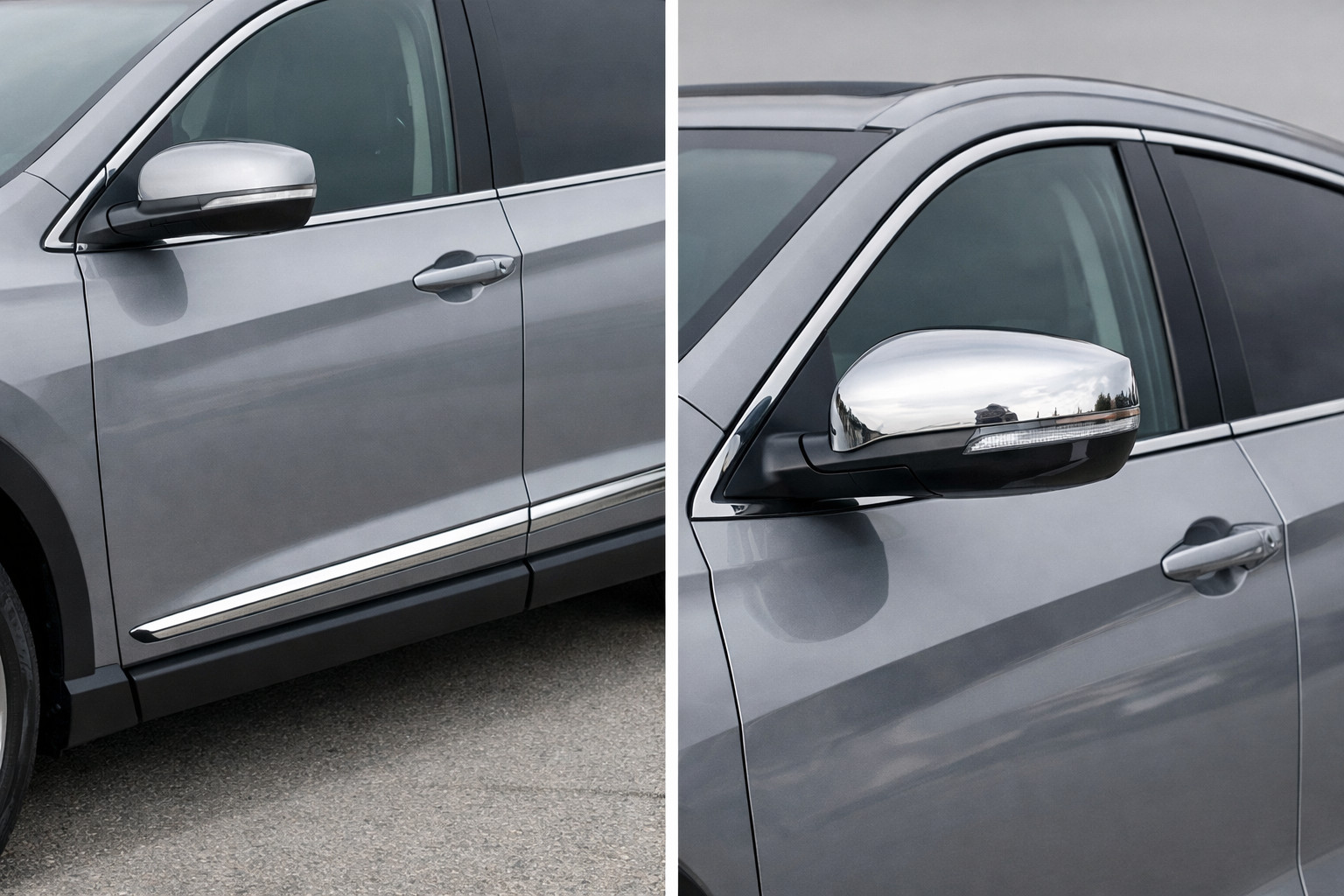
If you want the car to change noticeably and also get a practical bonus, door trims or side moldings more often win. If the task is to quickly refresh the look without major interference with the bodywork, it’s more logical to look at mirror covers.
The difference between these options doesn’t come down to taste. It’s about how noticeably the silhouette changes, whether there’s real benefit in the city, how the part will handle car washes and frost, whether noise will appear from a poor fit, and how much a mistake with a cheap product will cost.
What this choice is really about
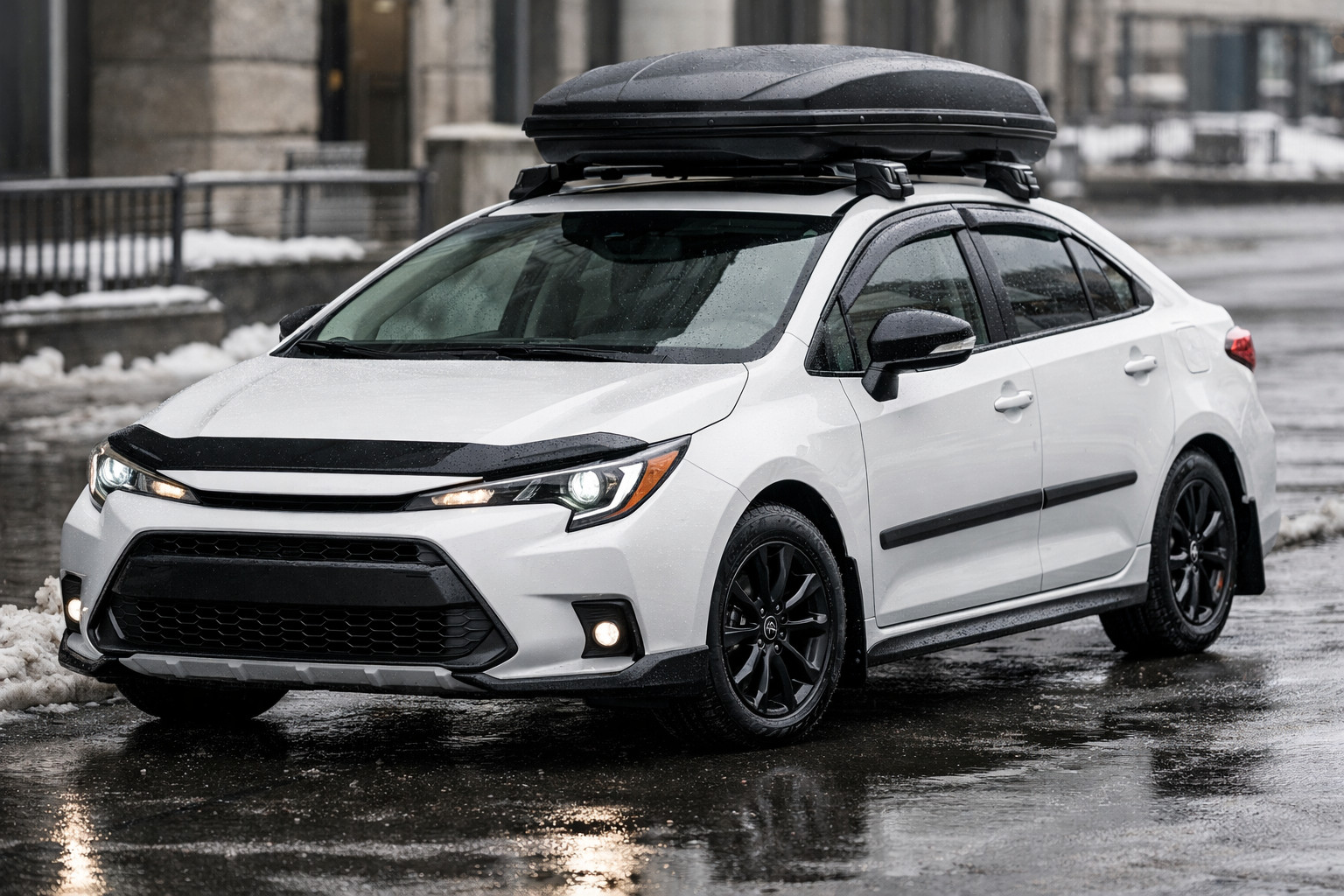
Door trims work across a large area of the body, so they have a stronger effect on how the car looks from the side. They can also take some of the minor contacts in parking situations—other people’s doors, a cart, light rubbing in a tight passage. It’s not armor and not protection from every impact, but the day-to-day benefit here is real.
Mirror covers are a smaller, more localized accent. They don’t change the car’s profile as much, but they deliver a quick cosmetic effect: the car looks fresher, sometimes with a slightly sportier or more premium vibe. They’re less practical, but installation is usually simpler.
Criteria to compare by
- Installation. For door elements, accurate marking, a clean surface, and an even fit along the body line are important. Mirrors have a smaller area, but higher demands on geometry: even a small misalignment or gap is immediately visible.
- Noise. By themselves, neither option should make noise. Problems appear when the trim has play or forms a gap; on mirrors it’s more noticeable because they sit in a highly wind-exposed zone.
- Service life. Not only the material and finish matter, but also the mounting method. For mirrors, weak points are often clips or an imprecise shape; for doors, surface prep and the quality of the adhesive layer.
- Practicality. If you need not only looks but at least minimal protection, door trims have the advantage. Mirror solutions are almost always about appearance.
- Price. Up front, mirror covers are often cheaper. But a bad fit, replacing clips, or buying again quickly eats the savings. Door elements are usually more expensive because of their size and more complex installation, but their benefit is more tangible.
Quick comparison of options (table)
| Option | Strengths | Weaknesses | Who it’s for |
|---|---|---|---|
| Door trims / side moldings | Noticeably change the side silhouette, add extra protection in the city, suitable for daily use | Require more careful installation, can look unnecessary on some cars, don’t protect outside their zone | For those who want not only decor, but practical value |
| Mirror covers | Quick visual effect, easier start in terms of installation, less interference with the body | Mostly decorative; cheap options more often have gaps, weak clips, or peeling | For those who want a light accent without bulky decor |
DD Tuning expert comment: the most common mistake is confusing a decorative part with a protective one. Mirror covers are bought based on photos without checking fit and mounting type, while door elements are installed without precise alignment to the body line—so they both look worse and work less effectively. Before ordering, look not only at the material, but also at the geometry, the installation method, and whether the part actually covers the risk zone on your car.
Detailed breakdown of each option
Door trims / side moldings. This is the better option when you want the change to be visible immediately, even without other modifications. A long horizontal line “pulls together” the side of the car, makes it look more finished, and brings practical benefits in tight parking. But precisely because the area is large, even installation, symmetry, and correct height matter: if the molding isn’t on the body line, it looks like a random add-on.
In terms of longevity, door trims largely depend on preparation before installation. If the surface wasn’t properly degreased or the part was bonded in poor conditions, peeling starts at the edges. As for noise, this is usually a quiet option: with a tight fit, there shouldn’t be any extra sounds.
Mirror covers. This is the choice for those who want to change the car’s look faster and easier. The effect is local, but clearly noticeable because the mirrors are always in view. On dark or neutral body colors, this accent often looks cleaner than bulky door elements.
The main risk with mirror covers is fit accuracy. If the shape is off, you see it right away: gaps, an uneven edge, or play appears. This is where budget products lose most often. Because of airflow at speed, even a small gap can sometimes create a whistle or slight vibration, so for mirrors, build quality is more critical than it seems in photos.
Which option is better for different scenarios
For the city, daily parking, and family use, door trims are more practical. They don’t eliminate all risks, but this is exactly where the protective effect has a real chance to pay off. It’s especially noticeable on wide bodies, where the side panel is constantly exposed to other people’s doors.
For a quick cosmetic refresh when you don’t want to change the whole side of the car, mirror covers are better. It’s a good scenario for those who want an accent but don’t need extra bulk on the doors. They’re also appropriate when the car’s design is already busy and door decor can overload the profile.
If the car is new, well-kept, and you’re very sensitive to gaps, misalignment, and color mismatch, the deciding factor becomes not the type of part, but the level of execution. In that case, mirrors in the budget segment are riskier, while door elements will require more careful installation.
Use case and what to choose (table)
| Scenario | What to choose | Why |
|---|---|---|
| Tight city parking | Door trims | Not only a visual change, but also benefit from minor side contacts |
| Quickly refresh the look without a long installation | Mirror covers | Smaller work area; the effect is noticeable immediately |
| Family car or daily commuting | Door trims | Practicality matters more than a purely decorative accent |
| Want a lighter sporty touch | Mirror covers | Don’t overload the side of the body and don’t change the image too aggressively |
| The car already has a lot of exterior decor | Mirror covers | Adds an accent without the risk of making the profile look overloaded |
Common mistakes when choosing
- Buying based only on photos without matching the part’s shape, model year, and facelift.
- Expecting door trims to provide full protection from any impact. They work only within their height and width.
- Choosing the cheapest mirror covers and ignoring the mounting. That’s where gaps, play, and misalignment show up later.
- Underestimating installation. Poor surface preparation ruins the service life of even a decent part.
- Mixing finishes without logic: gloss, chrome, matte, and carbon-style on one car often clash instead of working together.
When a more expensive solution makes sense
Paying extra is justified when you care about precise fit, stable service life, and the absence of small issues after a few washes or a winter season. For mirrors, a pricier option often means better geometry and a lower risk of gaps; for door elements, more predictable installation and proper contact along the full length.
If you’re choosing an option to protect the side panel, it makes sense to compare door trims and side moldings. If you need a neat exterior accent without a large contact area with the body, it’s worth looking at mirror covers. In all three cases, the point of a more expensive product isn’t status—it’s that it less often requires rework.
From customer experience: someone was looking for a quick way to refresh a family crossover and initially focused on mirrors. After clarifying the conditions, it turned out the car is parked daily in a narrow lot, so they chose door trims—and the look became more expressive, with practical value appearing right away. In another scenario, when the car is driven less often and the task was purely a cosmetic update, the best result came from quality mirror covers without extra side decor.
Conclusion
In short: for a more noticeable exterior update and everyday usefulness, door trims or side moldings are better. If you need a quick, local, and more restrained accent, mirror covers work better.
It makes sense to pay extra not for the name of the accessory, but for fit accuracy, mounting quality, finish, and predictable service life. This material is based on real selection experience, hands-on practice, and real-world use cases: city parking, daily driving, cosmetic updates, and common mistakes after unsuccessful budget purchases.
How it works
- Assess what exactly you need to change First set the priority: if you want a more noticeable refresh of the side of the car and also some practical benefit in the city, look at door trims or side moldings. If the goal is only to quickly freshen up the look without major bodywork, it makes more sense to choose mirror covers.
- Compare the options by installation and fit For door elements, precise marking, a clean surface, and an even installation line are important. For mirror covers, geometry is more critical: even a slight misalignment, gap, or play will be immediately noticeable.
- Check whether you need a practical effect If you need not only decoration but also minimal protection in tight parking spaces, door trims have the advantage. Mirror covers mainly work as a visual accent and add almost no protective function.
- Evaluate the risks of noise and durability The trims themselves should not make noise, but problems appear with poor fit or gaps. On mirrors this is more noticeable because of airflow, and for door elements durability depends heavily on surface preparation and the quality of the adhesive layer.
- Choose according to your usage scenario For tight city parking, a family car, and daily routes, door trims are more practical. For a quick cosmetic update, a light sporty touch, or if the body already has too much decoration, mirror covers are a better fit.
- Do not skimp on precision and compatibility Before buying, check the part shape, model year, facelift, and mounting type, rather than relying only on the photo. A more expensive solution makes sense when it provides better fit, less risk of gaps, and does not require rework after car washes or winter.
Pros and cons
Door trim pieces or side moldings make a more noticeable change to the side of the car, since they cover a larger area of the body. They are a better choice if you want not only decoration, but also real practical benefit in everyday city driving.
Door trim pieces can partially protect the side from minor contact in parking lots — other car doors, a shopping cart, or light rubbing in a narrow passage. This is not full protection, but it does provide a practical bonus in daily use.
Mirror covers give a quick cosmetic effect without major changes to the body. They are a good choice when you simply want to refresh the car’s appearance or add a light accent.
Installing mirror covers is usually easier, since the surface area is smaller. For a quick update, it is a more convenient option if you do not want to spend much time on installation.
For a car that already has plenty of exterior trim, mirror covers look more restrained and do not overload the profile. This helps add an accent without unnecessary bulk.
Mirror covers are almost always mainly a decorative solution. They help little in practical terms compared with door trim pieces.
Mirror covers demand a more precise fit: even a slight misalignment, gap, or play is immediately noticeable. This happens especially often with budget products.
Because of airflow at speed, mirror covers can start to whistle or vibrate if the mounting or shape is inaccurate. In other words, saving on quality here quickly turns into problems.
Door trim pieces require more careful installation and precise alignment with the body line. If fitted crookedly, they will look like an accidental add-on and work worse.